

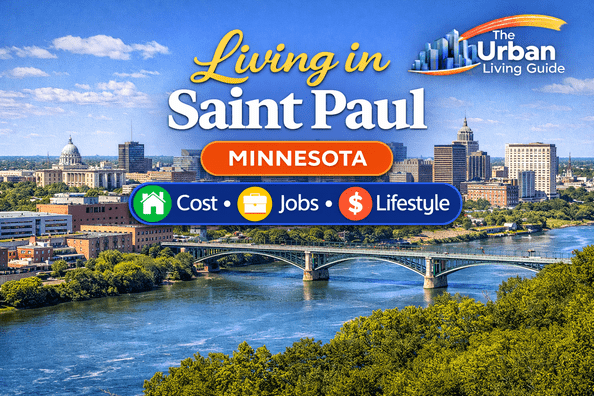
Living in Saint Paul, Minnesota in 2026: The Complete Local Guide to Historic Summit Avenue, Twin Cities Culture, and Mississippi River Living
Perched gracefully along the bluffs of the majestic Mississippi River, living in Saint Paul, Minnesota offers an inviting blend of Victorian-era architecture, public sector stability, and a relaxed, community-oriented urban lifestyle. As the capital city of Minnesota with a population of approximately 310,000 residents, Saint Paul forms the storied eastern anchor of the famous “Twin Cities” metropolitan area, sharing a vibrant cultural and economic ecosystem with its larger neighbor, Minneapolis.
Renowned for its breathtaking historic preservation, tree-lined boulevards, and world-class cultural institutions like the Ordway Center for the Performing Arts and the Science Museum of Minnesota, Saint Paul provides a traditional Midwestern warmth that feels both intimate and deeply rooted. Whether you are strolling past the grand Victorian mansions on historic Summit Avenue, exploring the conservatory at Como Park, or enjoying a craft brew in the West Seventh district, living here delivers a sophisticated yet unpretentious standard of living.
Municipal governance, public safety updates, and community programs are centrally administered through the official City of Saint Paul Government Portal.
If you’re new to this region, the map below will help you get a clear idea of the city’s location and surroundings within the Twin Cities metropolitan basin.
All quantitative metrics, economic data points, and community insights compiled within this living guide are synthesized from official municipal records, regional economic boards, and verified long-term resident feedback.
What Makes Saint Paul So Popular & Unique
Over recent decades, Saint Paul has established itself as one of the most livable, culturally rich, and architecturally stunning capital cities in the United States. Key factors driving its sustained popularity include:
- Unmatched Historic Architecture: Boasting the longest uninterrupted stretch of Victorian-era residential architecture in the country along Summit Avenue. Explore regional tourism initiatives via the Explore Minnesota Tourism Portal.
- Government and Public Sector Stability: Serving as the political seat of Minnesota, providing exceptional career stability across state agencies, public administration, and education.
- Twin Cities Synergy: Immediate access to the vast corporate employers, arts venues, and nightlife of Minneapolis while retaining a distinctly quieter, neighborly atmosphere.
- Parks and Riverfront Open Space: Hundreds of neighborhood parks, scenic parkways along the Mississippi River, and world-class horticultural attractions.
Saint Paul at a Glance: Key Living Metrics
| Evaluation Metric | Local Data Overview & Regional Reality |
|---|---|
| Population | Approx. 310,000 within city limits (Twin Cities metro area exceeds 3.5 million) |
| Median Monthly Rent | Ranges from $1,100 to $2,300+ depending on unit size and historic district |
| Average Annual Salary | Typically spans $65,000 to $115,000 across government, healthcare, and corporate finance |
| Primary Economic Pillars | State government administration, healthcare services, insurance, higher education, and corporate headquarters |
| State Income Tax | Progressive state income tax structure ranging up to 9.85% across Minnesota |
| Average Summer High | Routinely reaches 75°F to 85°F during comfortable, sun-drenched July and August afternoons |
| Primary Transit Mode | METRO Green Line Light Rail, Metro Transit bus network, and pedestrian pathways |
Famous Personalities, Local Icons & Major Brands in Saint Paul
Saint Paul has a distinguished history of nurturing literary giants, legendary authors, acclaimed broadcasters, and massive corporate financial enterprises:
- F. Scott Fitzgerald: The iconic American novelist and author of The Great Gatsby who spent his formative years growing up in Saint Paul. Explore local literary heritage via the F. Scott Fitzgerald Society Portal.
- Garrison Keillor: The celebrated radio personality, author, and humorist famous for hosting the beloved public radio broadcast A Prairie Home Companion.
- Judy Garland: The legendary Hollywood actress and singer with deep, formative artistic ties to the broader Minnesota region.
- Ecolab & Securian Financial: Major corporate giants maintaining their global headquarters in downtown Saint Paul, driving high-tech chemistry, hygiene services, and financial security (Ecolab Corporate Portal).
- Minnesota Wild: The fierce NHL professional hockey franchise bringing roaring sellout crowds and electric sports energy to the Xcel Energy Center in downtown Saint Paul (Minnesota Wild Official Portal).
Job Market & Business Opportunities with Major Employers
The employment landscape in Saint Paul offers exceptional professional stability, high average earnings, and diverse career pathways across public and private sectors:
- Public Sector and State Government: As the state capital, Saint Paul provides thousands of stable administrative, policy, and legal careers within state government agencies.
- Healthcare and Medical Systems: Major regional hospital networks delivering advanced clinical, nursing, and specialized medical research positions.
- Financial Services and Insurance: Large financial institutions, insurance corporations, and regional banking headquarters offering analytical and executive roles.
- Higher Education & Public Research: Esteemed private universities and community institutions supporting extensive faculty and administrative careers.
Housing & Real Estate Overview in Saint Paul
Navigating the real estate market in Saint Paul requires understanding its historic preservation ordinances, neighborhood diversity, and affordability relative to Minneapolis:
- Varied Architectural Stock: Features magnificent Victorian brownstones and Queen Anne mansions in Summit Hill, classic 1920s bungalows in Highland Park, and modern loft apartments downtown. Track property assessments via the City Assessor Department Portal.
- Affordability Advantage: Home purchase prices and rental overhead generally remain slightly more accessible than in neighboring Minneapolis while offering comparable urban amenities.
- Rental Market Inventory: Average monthly rent spans $1,100 to $1,400 for studio units, $1,300 to $1,700 for one-bedroom apartments, $1,700 to $2,300 for two-bedroom properties, and $2,700 to $4,200+ for single-family home rentals.
- Market Competitiveness: Steady demand from young professionals and families keeps historic residential inventory moving briskly.
Best Neighborhoods in Saint Paul: Finding Your Ideal Community
| Neighborhood Name | Vibe & Lifestyle Character | Housing & Price Profile |
|---|---|---|
| Summit Hill | Historic residential district renowned for grand Victorian mansions, tree-canopied streets, and old-world elegance. | Historic Victorians, brownstone condos, and premium market valuations. |
| Highland Park | Established, highly desirable residential community offering neighborhood shopping villages, parks, and family warmth. | Classic 1920s homes, brick houses, and stable residential pricing. |
| Downtown Saint Paul | Bustling commercial core featuring corporate offices, government buildings, restaurants, and sports arenas. | Modern high-rise apartments, converted lofts, and urban market values. |
| Macalester-Groveland | Charming neighborhood anchored by Macalester College, offering leafy residential blocks, cafes, and bookstores. | Tudors, craftsman homes, and competitive family-oriented pricing. |
| Como Park Area | Family-friendly neighborhood centered around Como Park, featuring golf courses, lakes, and the famous conservatory. | Traditional single-family houses, duplexes, and accessible family valuations. |
Watch a recent video by a popular vlogger to understand daily life and vibes in Saint Paul.
What It’s Really Like Living in Saint Paul (Daily Life & Vibe)
Daily life in Saint Paul is characterized by a peaceful, community-oriented, and culturally rich rhythm that values historic charm and neighborly connection:
- Active Riverfront & Park Routines: Residents spend weekends walking along Mississippi River Boulevard, biking regional trails, or visiting the Como Park Zoo and Conservatory. Explore park guidelines via the Saint Paul Parks and Recreation Portal.
- Arts and Theater Exploration: Evenings feature world-class performances at the Ordway Center, indie films at local historic cinemas, and vibrant neighborhood festivals.
- Culinary and Brew Scene: Enjoying cozy neighborhood bistros, historic pubs in the West Seventh district, and craft breweries lining revived industrial corridors.
- Social Atmosphere: Welcoming, traditional, civic-minded, and deeply proud of its literary and architectural heritage.
Cost of Living in Saint Paul: Monthly Expenses & Salary Needs
The cost of living in Saint Paul sits moderately above the national average, reflecting its high quality of public infrastructure and stable economy:
- Housing Overhead: $1,500 to $2,300+ covering standard apartment rentals across popular residential wards. Review regional economic data via the Bureau of Labor Statistics Midwest Information Office.
- Utilities & Power: $160 to $260 monthly for electricity, heating, water, and municipal services, with higher heating demands during freezing winter months.
- Groceries & Household Goods: $350 to $520 depending on family size and shopping choices between local markets and major supermarkets.
- Transportation Expenses: $120 to $220 covering METRO transit passes, rideshares, and vehicle upkeep.
- Required Household Income: Single professionals or working households typically require an annual income between $70,000 and $90,000 to comfortably cover local living expenses and savings goals.
Transportation, Commute Dynamics & Transit Realities
Saint Paul provides robust regional transportation connections linking commuters across the Twin Cities metropolitan basin:
- METRO Green Line Light Rail: Rapid transit rail service connecting Saint Paul directly through downtown to the University of Minnesota and Minneapolis (Metro Transit Official Portal).
- Comprehensive Bus Networks: Frequent bus lines operating across all historic neighborhoods and commercial corridors.
- Highway Connectivity: Excellent freeway access via Interstate 94, Interstate 35E, and State Highway 5, ensuring smooth regional travel.
- Commute Times: Average daily commutes hover around a manageable 24 minutes during standard hours.
Weather Patterns, Seasonal Realities & Climate Factors
The environmental rhythm of Saint Paul follows a classic Midwestern humid continental climate featuring dramatic four-season variations:
- Warm Summers: Summer daytime high temperatures routinely average 75°F to 85°F with low humidity, providing ideal weather for park picnics and river walks.
- Cold, Snowy Winters: Winter seasons bring freezing temperatures and significant snowfall, transforming historic boulevards into picturesque winter wonderlands for cross-country skiing and ice skating. Track active forecasts via the National Weather Service Twin Cities Portal.
-
Splendid Transition Seasons: Spring and autumn deliver vibrant foliage changes, crisp air, and stunning seasonal transitions across river bluffs.
Education, Schools & Major Universities
Educational infrastructure stands as a premier anchor for academic excellence, professional training, and intellectual community growth:
- University of St. Thomas: A prominent private Catholic university offering rigorous undergraduate and graduate programs across its historic campus (University of St. Thomas Official Portal).
- Macalester College: A globally revered private liberal arts college known for academic excellence and international student diversity (Macalester College Official Portal).
- Hamline University: Respected private university providing exceptional law, education, and liberal arts degree programs.
- Saint Paul Public Schools: Operating numerous neighborhood schools and magnet programs focused on student achievement.
Medical Facilities, Hospitals & Healthcare Systems
Healthcare infrastructure in Saint Paul is advanced, highly specialized, and anchored by premier regional medical networks:
- Regions Hospital: A premier 450+ bed teaching hospital and level-one trauma center delivering advanced emergency care, burn treatment, and specialized medicine (Regions Hospital Official Portal).
- M Health Fairview Bethesda & St. Joseph’s Campus: Historic healthcare facilities providing comprehensive outpatient care and specialized medical services.
- Twin Cities Medical Access: Immediate regional proximity to world-class academic medical centers across the river in Minneapolis.
Popular Hotels, Cafes, Dining & Culinary Scene
The hospitality and culinary identity of Saint Paul reflects historic grand hotel elegance, Victorian charm, and craft culinary innovation:
- The Saint Paul Hotel: Legendary historic luxury hotel operating since 1910 overlooking Rice Park, offering timeless European-inspired elegance and fine dining (The Saint Paul Hotel Portal).
- InterContinental Saint Paul Riverfront: Contemporary downtown high-rise hotel offering sweeping Mississippi River views and refined accommodations.
- Bustling Neighborhood Districts: Historic commercial strips featuring artisanal coffee houses, farm-to-table bistros, and local craft breweries.
Sightseeing, Cultural Spots & Tourist Attractions
Landmark cultural institutions and historic destinations significantly enhance the daily quality of life for local residents:
- Minnesota State Capitol: Magnificent 1905 Renaissance Revival capitol building featuring the second-largest unsupported marble dome in the world.
- Como Park Zoo and Conservatory: Beloved historic public park featuring a sparkling Victorian glass conservatory, exotic animal exhibits, and lush sunken gardens (Como Park Conservatory Portal).
- Cathedral of Saint Paul: Stunning national shrine and architectural masterpiece perched atop Cathedral Hill, offering breathtaking citywide views.
Regional Trade-offs: Pros and Cons of Living in Saint Paul
Pros of Living in Saint Paul
- Beautiful historic neighborhoods featuring preserved Victorian architecture and tree-lined streets.
- Strong job market anchored by state government administration, healthcare, and corporate finance.
- Excellent public transportation connections via the METRO Green Line and bus networks.
- Abundant parks, riverfront trails, and community-oriented public spaces.
- Slightly more relaxed, traditional city atmosphere compared to bustling Minneapolis.
Cons of Living in Saint Paul
- Freezing winter temperatures and heavy snowfall requiring diligent seasonal clothing and snow removal.
- Progressive state income tax structure reaching higher brackets across Minnesota.
- Traffic congestion during peak commuting hours along major bridges and freeway links.
- Rising housing demand and increasing rental competition in popular historic wards.
- Smaller late-night entertainment and club scene compared to neighboring Minneapolis.
Who Is Saint Paul Ideal For — And Who Should Avoid It?
Who Saint Paul Is Ideal For
- Public Sector and Government Professionals: Workers pursuing stable long-term careers in state administration and public policy.
- Families Seeking Historic Neighborhoods: Households wanting Victorian architecture, tree-lined streets, and strong community engagement.
- Culture and Architecture Lovers: Residents who appreciate historic preservation, classical museums, and traditional Midwestern warmth.
- Twin Cities Commuters Seeking Value: Professionals who want access to the broader Twin Cities economy while enjoying a quieter residential base.
Who Should Avoid Saint Paul
- Mega-City Nightlife Seekers: Residents looking for non-stop 24-hour metropolitan club scenes and dense urban nightlife.
- Warm-Weather Enthusiasts: People who despise freezing winter temperatures, snowstorms, and extended seasonal chill.
- Ultra-Low Budget Buyers: Homebuyers searching for hyper-depressed real estate markets on very modest budgets.
- Those Intolerant of State Taxes: Individuals fleeing progressive income tax states who prefer zero personal income tax environments.
Real Experiences: Perspectives from Long-Term Residents (5 to 10+ Years)
“Buying a historic home in Summit Hill ten years ago was the best decision my family and I ever made. The architecture is gorgeous, walking down Summit Avenue never gets old, and the neighborhood feels like a peaceful small town while still being right next to downtown. Winters are cold, but the community warmth, local libraries, and river parks make living in Saint Paul truly special.”
[Source: r/stpaul Community Discussions — u/SummitHillDave, resident of 11 years]
“The big reality check for newcomers is that winter requires serious winter tires and patience with snow parking rules. However, the trade-off is completely worth it. Housing is a bit more reasonable than Minneapolis, the public schools in Highland Park are fantastic, and the city has a rich literary and artistic soul that you don’t find everywhere.”
[Source: Local Resident Panels & Community Forums — Chloe P., Highland Park homeowner of 9 years]
Frequently Asked Questions About Living in Saint Paul, Minnesota
Is Saint Paul expensive to live in compared to other U.S. cities?
Saint Paul maintains a moderate cost of living compared to major U.S. coastal hubs, offering housing costs slightly below neighboring Minneapolis.
What level of annual salary do individuals need to live comfortably in Saint Paul?
Most single professionals require an annual salary between $70,000 and $90,000 to comfortably cover rent or mortgage payments, utilities, transportation, and discretionary spending.
Can residents successfully live in Saint Paul without owning a personal vehicle?
Yes. Many residents utilize the METRO Green Line light rail system, Metro Transit bus routes, and extensive bike pathways for daily commuting and errands.
What are the best residential neighborhoods to consider in Saint Paul?
Top neighborhoods include Summit Hill for historic Victorian elegance, Highland Park for suburban-style family living, Macalester-Groveland for college-town charm, and Downtown for urban high-rise convenience.
How does commuting work for professionals working across Saint Paul and Minneapolis?
Commuters primarily utilize Interstate 94 or the METRO Green Line light rail, experiencing average commute times of around 24 minutes during standard hours.
What are the primary natural and cultural highlights of Saint Paul?
Residents enjoy visiting the Minnesota State Capitol, strolling through the Como Park Conservatory, viewing art at the Science Museum, and relaxing along Mississippi River Boulevard.
🔗 Explore More Cities in Minnesota
Looking beyond Saint Paul? The Urban Living Guide has also covered multiple popular cities across Minnesota that you can explore further:
Before moving to Saint Paul, make sure you check:
- Cost of Living in Saint Paul, MN
- Pros and Cons of Saint Paul, MN
- Best Neighborhoods in Saint Paul, MN
For everything you need in one place, read our complete guide: Moving to Saint Paul, MN
These city guides provide detailed insights into everyday living, including housing costs, employment opportunities, neighborhoods, commute options, climate, education, local attractions, and key industries shaping each city.
By bringing all these insights together, The Urban Living Guide helps you compare different cities side by side and choose the one that aligns best with your lifestyle, priorities, and long-term goals.