

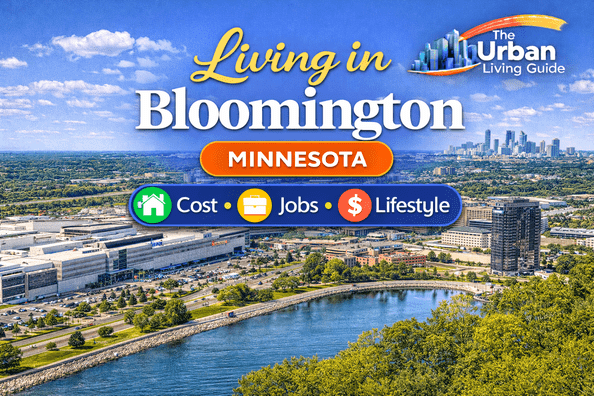
Living in Bloomington, Minnesota in 2026: The Complete Local Guide to Mall of America Access, Hyland Lake Park Reserve, and Twin Cities Suburban Convenience
Stretching northward from the scenic bluffs of the Minnesota River in southern Hennepin County, living in Bloomington, Minnesota offers an exceptional blend of sophisticated suburban comfort, thriving corporate enterprise, and immediate proximity to the Twin Cities metropolitan core. As the largest suburb of the Twin Cities and Minnesota’s fourth-largest municipality with approximately 90,000 residents, Bloomington successfully pairs post-World War II residential planning with world-class commercial innovation.
Globally renowned as the home of the legendary Mall of America—the largest retail and entertainment complex in North America—Bloomington attracts tens of millions of visitors annually while maintaining remarkably peaceful, tree-lined residential neighborhoods. Whether you are exploring the pristine wetlands of the Minnesota Valley National Wildlife Refuge, skiing down the artificial slopes at Hyland Hills Ski Area, or commuting into downtown Minneapolis via Interstate 35W, living here delivers a highly secure, well-connected, and family-oriented standard of living. Municipal services, public safety resources, and community programs are centrally administered through the official City of Bloomington Government Portal.
If you haven’t explored this area before, the map below will give you a better sense of its strategic geographic position south of Minneapolis.
All quantitative metrics, economic data points, and community insights compiled within this living guide are synthesized from official municipal records, regional economic boards, and verified long-term resident feedback.
What Makes Bloomington So Popular & Unique
Over recent decades, Bloomington has established itself as one of the most desirable, stable, and functionally convenient suburban communities in the United States. Key factors driving its sustained popularity include:
- World-Class Entertainment Anchor: Immediate access to the massive Mall of America, featuring over 500 stores, indoor theme parks, and global dining. Explore regional tourism initiatives via the Explore Minnesota Tourism Portal.
- Unrivaled Natural Reserves: Over 6,000 acres of parkland, including the sprawling Minnesota Valley National Wildlife Refuge and Hyland Lake Park Reserve.
- Exceptional Suburban Infrastructure: Meticulously maintained neighborhoods, highly regarded public school systems, and safe community environments.
- Strategic Twin Cities Proximity: Flawless highway connectivity and METRO light rail transit providing effortless commutes into Minneapolis and Saint Paul.
Bloomington at a Glance: Key Living Metrics
| Evaluation Metric | Local Data Overview & Regional Reality |
|---|---|
| Population | Approx. 90,000 within municipal city limits (Largest suburb in the Twin Cities metro) |
| Median Monthly Rent | Ranges from $1,100 to $2,300+ depending on unit size and neighborhood pocket |
| Average Annual Salary | Typically spans $70,000 to $120,000 across corporate management, healthcare, and retail |
| Primary Economic Pillars | Retail management, healthcare administration, manufacturing, medical technology, and corporate services |
| State Income Tax | Progressive state income tax structure ranging up to 9.85% across Minnesota |
| Average Summer High | Routinely reaches 75°F to 85°F during warm, sun-drenched July and August afternoons |
| Primary Transit Mode | METRO Blue Line Light Rail, Metro Transit bus routes, and personal vehicles via I-494 and I-35W |
Famous Personalities, Local Icons & Major Brands in Bloomington
Bloomington has a proud history of nurturing professional athletes, acclaimed animation directors, and massive international corporate entities:
- Chad Greenway: The legendary former NFL linebacker and defensive standout who anchored the Minnesota Vikings defense for a decade and settled in the Twin Cities suburbs.
- Pete Docter: The acclaimed Academy Award-winning Pixar film director and chief creative officer known for masterpieces like Inside Out and Up, with deep Minnesota roots.
- Kevin Garnett: The Naismith Memorial Basketball Hall of Fame NBA legend whose career with the Minnesota Timberwolves remains synonymous with Twin Cities sports culture (NBA Kevin Garnett Player Profile).
- HealthPartners Headquarters: A major regional healthcare and health maintenance organization maintaining its sprawling corporate headquarters in Bloomington (HealthPartners Official Portal).
- Toro Company & Donaldson Company: Global manufacturing and filtration giants maintaining their world headquarters and advanced engineering operations in the city (Toro Company Official Portal).
Job Market & Business Opportunities with Major Employers
The employment landscape in Bloomington offers exceptional professional stability, high average salaries, and robust career mobility across diversified corporate sectors:
- Corporate Headquarters and Retail Management: Thousands of high-paying administrative, supply chain, and marketing careers tied to Mall of America and major corporate offices.
- Healthcare Administration and Insurance: Major medical management organizations delivering secure professional, nursing, and health informatics paths.
- Advanced Manufacturing and Engineering: Global industrial leaders supporting specialized mechanical engineering, product design, and logistics careers.
- Twin Cities Regional Access: Seamless transit connections allowing residents to tap directly into the booming employment markets of downtown Minneapolis and Saint Paul.
Housing & Real Estate Overview in Bloomington
Navigating the real estate market in Bloomington requires understanding its distinctive neighborhood divisions, established mid-century homes, and high demand:
- Diverse Architectural Stock: Features spacious split-level and rambler homes in West Bloomington, affordable properties in East Bloomington, and modern luxury apartments in the South Loop District. Track property assessments via the Hennepin County Assessor Portal.
- Market Valuations: Sustained suburban desirability has kept housing demand competitive, rewarding long-term homeowners while offering solid asset appreciation.
- Rental Market Inventory: Average monthly rent spans $1,100 to $1,400 for studio units, $1,300 to $1,700 for one-bedroom apartments, $1,700 to $2,300 for two-bedroom properties, and $2,700 to $4,000+ for single-family home rentals.
- Master-Planned Communities: Well-organized residential blocks offering mature trees, community parks, and highly rated public school boundaries.
Best Neighborhoods in Bloomington: Finding Your Ideal Community
| Neighborhood Name | Vibe & Lifestyle Character | Housing & Price Profile |
|---|---|---|
| West Bloomington | Established, highly desirable residential enclave offering spacious mid-century homes, parks, and great schools. | Spacious single-family houses, multi-level properties, and stable valuations. |
| East Bloomington | Accessible residential area providing more moderate housing prices and convenient freeway access. | Traditional single-family homes, townhouses, and moderate market entry points. |
| Normandale Area | Picturesque neighborhood situated near lakes, nature preserves, and Normandale Community College. | Split-level homes, wooded residential lots, and family-oriented pricing. |
| Hyland Park Area | Scenic residential pocket bordering the massive Hyland Lake Park Reserve, offering exceptional outdoor access. | Custom homes, contemporary properties, and upscale suburban values. |
| South Loop District | Rapidly developing urban district near Mall of America featuring modern mixed-use high-rises and offices. | Luxury apartment complexes, corporate lofts, and urban market pricing. |
Watch a recent video by a popular vlogger to understand daily life and vibes in Bloomington.
What It’s Really Like Living in Bloomington (Daily Life & Vibe)
Daily life in Bloomington is characterized by a comfortable, highly organized, and recreation-focused suburban rhythm:
- Active Park & Wildlife Routines: Residents spend weekends hiking the boardwalks of the Minnesota Valley National Wildlife Refuge or skiing at Hyland Hills Ski Area. Explore park guidelines via the Three Rivers Park District Portal.
- Mall & Entertainment Access: Enjoying world-class dining, shopping, and family attractions at Mall of America without dealing with downtown traffic parking hassles.
- Community Engagement: Participating in local youth sports leagues, community arts programs at Bloomington Center for the Arts, and neighborhood festivals.
- Social Atmosphere: Safe, family-oriented, clean, and deeply appreciative of outdoor green spaces and suburban convenience.
Cost of Living in Bloomington: Monthly Expenses & Salary Needs
The cost of living in Bloomington sits moderately above the national average, reflecting its prime Twin Cities location and high standard of municipal services:
- Housing Overhead: $1,500 to $2,300+ covering standard apartment and single-family home rentals across popular wards. Review regional economic data via the Bureau of Labor Statistics Midwest Information Office.
- Utilities & Power: $160 to $260 monthly for electricity, heating, water, and municipal waste services, with increased winter heating requirements.
- Groceries & Household Goods: $350 to $520 depending on household size and shopping choices between local markets and supermarkets.
- Transportation Expenses: $120 to $220 covering METRO transit passes, fuel, and vehicle maintenance.
- Required Household Income: Single professionals or working households typically require an annual income between $70,000 and $90,000 to comfortably cover local living expenses and savings goals.
Transportation, Commute Dynamics & Transit Realities
Bloomington provides exceptional transportation infrastructure connecting commuters directly into the heart of the Twin Cities:
- METRO Blue Line Light Rail: Rapid transit rail service connecting Bloomington directly through the South Loop and airport to downtown Minneapolis (Metro Transit Official Portal).
- Highway Connectivity: Excellent freeway access via Interstate 35W, Interstate 494, and State Highway 77 (Cedar Avenue).
- Commute Times: Average daily commutes hover around a manageable 23 to 25 minutes during standard hours.
- Aviation Convenience: Immediate proximity to Minneapolis-Saint Paul International Airport (MSP), located right on the city’s eastern border.
Weather Patterns, Seasonal Realities & Climate Factors
The environmental rhythm of Bloomington follows a classic Midwestern humid continental climate featuring dramatic four-season variations:
- Warm Summers: Summer daytime high temperatures routinely average 75°F to 85°F, offering beautiful weather for wildlife refuge hikes and park visits.
- Cold, Snowy Winters: Winter seasons bring freezing temperatures and significant snowfall, transforming local parks into cross-country skiing and sledding havens. Track active forecasts via the National Weather Service Twin Cities Portal.
-
Splendid Transition Seasons: Spring and autumn deliver vibrant foliage changes, crisp air, and stunning seasonal transitions across river valleys.
Education, Schools & Major Universities
Educational infrastructure stands as a premier anchor for academic excellence, professional training, and workforce development:
- Normandale Community College: A prominent higher education institution offering accessible associate degrees, nursing programs, and seamless transfer pathways (Normandale Community College Official Portal).
- Bethany Global University: Respected private university providing specialized undergraduate education and global leadership training (Bethany Global University Portal).
- Bloomington Public Schools (ISD 271): Operating highly rated K-12 public schools recognized for academic rigor, language immersion, and student support.
Medical Facilities, Hospitals & Healthcare Systems
Healthcare infrastructure in Bloomington is advanced, highly accessible, and supported by premier regional medical networks:
- HealthPartners Bloomington Clinic: Sprawling outpatient medical center and corporate headquarters delivering comprehensive family medicine, specialty care, and urgent services (HealthPartners Official Portal).
- Fairview Clinics & M Health Fairview: Major regional healthcare providers offering advanced medical treatments and outpatient clinics across residential wards.
- Twin Cities Medical Access: Immediate regional proximity to world-class academic medical centers and trauma hospitals throughout Hennepin and Ramsey counties.
Popular Hotels, Cafes, Dining & Culinary Scene
The hospitality and culinary identity of Bloomington reflects world-class resort luxury, tourist hospitality, and diverse dining:
- Radisson Blu Mall of America: Upscale connected hotel offering direct access to Mall of America shopping, chic modern rooms, and fine dining (Radisson Blu MOA Portal).
- JW Marriott Minneapolis Mall of America: Luxurious high-rise hotel delivering refined elegance, spa services, and sophisticated cocktail lounges (JW Marriott MOA Portal).
- Hyatt Regency Bloomington: Premium contemporary hotel offering sustainable design, farm-to-table dining, and effortless light rail connectivity (Hyatt Regency Bloomington Portal).
Sightseeing, Cultural Spots & Tourist Attractions
Landmark cultural institutions and natural wonders significantly enhance the daily quality of life for local residents:
- Mall of America & Nickelodeon Universe: America’s largest retail and entertainment complex featuring indoor roller coasters, 500+ stores, and SEA LIFE Aquarium (Nickelodeon Universe Portal).
- Minnesota Valley National Wildlife Refuge: Expansive protected river valley sanctuary offering miles of serene hiking trails, bird watching, and visitor centers.
- Hyland Lake Park Reserve: 1,000-acre park featuring Richardson Nature Center, lake recreation, and the premier Hyland Hills downhill ski area.
Regional Trade-offs: Pros and Cons of Living in Bloomington
Pros of Living in Bloomington
- Exceptional geographic convenience offering immediate proximity to Minneapolis, Saint Paul, and MSP Airport.
- World-class shopping, dining, and entertainment anchored by Mall of America.
- Family-friendly suburban neighborhoods featuring great public schools and low crime rates.
- Abundant green spaces, nature reserves, and outdoor recreation areas like the Minnesota River valley.
- Strong local economy supported by major corporate headquarters and thriving retail industries.
Cons of Living in Bloomington
- Freezing winter temperatures and heavy snowfall requiring rigorous seasonal snow removal.
- Tourist traffic congestion and parking demand around the Mall of America during peak holiday seasons.
- Progressive state income tax structure reaching higher brackets across Minnesota.
- Rising housing demand and competitive suburban real estate inventory.
- Quieter local nightlife and entertainment outside of major commercial hotel and retail districts.
Who Is Bloomington Ideal For — And Who Should Avoid It?
Who Bloomington Is Ideal For
- Families Seeking Great Suburbs: Parents wanting safe neighborhoods, excellent public schools, and community parks.
- Frequent Travelers and Commuters: Professionals who value immediate access to MSP Airport and light rail transit into Minneapolis.
- Corporate and Retail Professionals: Workers pursuing stable careers in healthcare, corporate finance, and retail management.
- Nature-Loving Suburbanites: Households desiring suburban comfort paired with easy access to wildlife refuges and ski hills.
Who Should Avoid Bloomington
- Mega-City Urbanites: Residents looking for dense, gritty 24-hour urban nightlife and historic downtown walkable districts.
- Warm-Weather Enthusiasts: People who despise freezing winter temperatures, snowstorms, and extended seasonal cold.
- Those Intolerant of State Taxes: Individuals fleeing progressive income tax states who prefer zero personal income tax environments.
- Tourist-Averse Homebuyers: Residents who dislike crowds, retail traffic, and commercial activity associated with major destination hubs.
Real Experiences: Perspectives from Long-Term Residents (5 to 10+ Years)
“Buying a home in West Bloomington eleven years ago was the best decision for our growing family. The neighborhood schools are top-notch, we are minutes away from the Minnesota Valley Wildlife Refuge for weekend hikes, and having the light rail nearby makes getting into Minneapolis for work a breeze. People assume Bloomington is just the Mall of America, but the residential side is quiet, green, and wonderfully peaceful.”
[Source: r/bloomingtonmn Community Discussions — u/TwinCitiesSuburban952, West Bloomington resident of 11 years]
“The big reality check for newcomers is learning to navigate holiday traffic around the Mall of America if you live on the eastern side, and winter snow shoveling is part of life here. However, the trade-off is completely worth it. The city services are fantastic, property values hold steady, and you get unmatched suburban convenience combined with gorgeous parks like Hyland Lake.”
[Source: Local Resident Panels & Community Forums — Elena R., Normandale homeowner of 14 years]
Frequently Asked Questions About Living in Bloomington, Minnesota
Is Bloomington expensive to live in compared to other U.S. cities?
Bloomington maintains a moderate cost of living that sits moderately above the national average, offering median housing costs competitive with other Twin Cities suburbs.
What level of annual salary do individuals need to live comfortably in Bloomington?
Most single professionals and working households find that an annual income between $70,000 and $90,000 provides a comfortable lifestyle covering rent or mortgage payments, utilities, transportation, and discretionary spending.
Can residents successfully live in Bloomington without owning a personal vehicle?
Yes. Many residents utilize the METRO Blue Line light rail system, Metro Transit bus routes, and bike paths, especially when commuting to downtown Minneapolis or MSP Airport.
What are the best residential neighborhoods to consider in Bloomington?
Top neighborhoods include West Bloomington for family suburban living, Normandale for lake and college proximity, Hyland Park for nature reserves, and South Loop for modern urban high-rises.
How does commuting work for professionals working across Bloomington?
Commuters primarily utilize Interstate 35W, Interstate 494, and Highway 77, enjoying average commute times of around 23 to 25 minutes during standard hours.
What are the primary natural and cultural highlights of Bloomington?
Residents enjoy exploring the Mall of America, hiking through the Minnesota Valley National Wildlife Refuge, skiing at Hyland Hills, and visiting Normandale Lake Park.
🔗 Explore More Cities in Minnesota
If you’re considering options beyond Bloomington, The Urban Living Guide has also explored several other well-known cities across Minnesota. You may also want to check:
- Living in Minneapolis, Minnesota
- Living in Saint Paul, Minnesota
- Living in Rochester, Minnesota
- Living in Duluth, Minnesota
Thinking about Bloomington? Here are a few must-read guides:
- Cost of Living in Bloomington, Minnesota
- Pros and Cons of Living in Bloomington, Minnesota
- Best Neighborhoods in Bloomington, Minnesota
And if you’re planning your move, don’t miss our complete guide: Moving to Bloomington, Minnesota
Each of these guides highlights what daily life looks like in different cities, including insights on cost of living, housing trends, job opportunities, local neighborhoods, commute patterns, weather conditions, education options, popular areas, and major employers.
With The Urban Living Guide, all this information is organized in one place so you can easily compare cities and decide which one suits your lifestyle, budget, and future plans.