

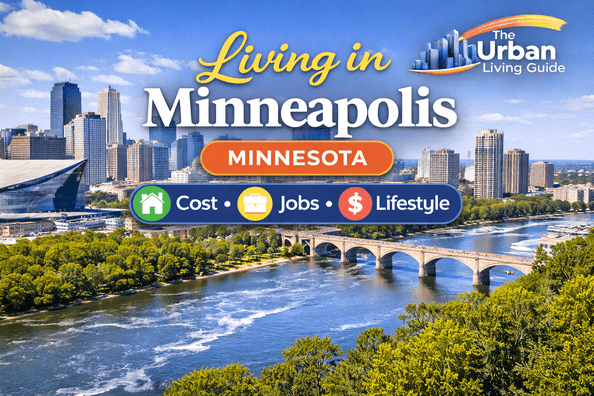
Living in Minneapolis, Minnesota in 2026: The Complete Local Guide to Chain of Lakes Living, Fortune 500 Careers, and Twin Cities Culture
Stretching along the sweeping banks of the Mississippi River in the heart of the Upper Midwest, living in Minneapolis, Minnesota offers an extraordinary blend of vibrant urban sophistication, pristine natural waterways, and a resilient, high-powered economy. As the largest municipality in the state with a population of approximately 430,000 residents, Minneapolis forms the beating western half of the famous “Twin Cities” metropolitan area alongside its historic sister city, Saint Paul.
Renowned globally as the “City of Lakes,” Minneapolis boasts an interconnected park and water system featuring the iconic Chain of Lakes, Minnehaha Falls, and over 200 miles of dedicated bike lanes that earned it national acclaim as one of America’s most bike-friendly urban centers. Whether you are exploring the trendy lofts of the North Loop, admiring modern masterpieces at the Walker Art Center, or commuting to a Fortune 500 corporate headquarters, living here delivers an active, highly educated, and culturally rich standard of living.
Municipal governance, public safety updates, and community development initiatives are centrally administered through the official City of Minneapolis Government Portal.
If you’re not familiar with the area, take a look at the map below to understand where the city is located within the northern Midwest.
All quantitative metrics, economic data points, and community insights compiled within this living guide are synthesized from official municipal records, regional economic boards, and verified long-term resident feedback.
What Makes Minneapolis So Popular & Unique
Over recent decades, Minneapolis has cemented its status as one of the most desirable, progressive, and economically vital urban centers in the United States. Key factors driving its sustained popularity include:
- Exceptional Natural Waterways and Parks: A legendary park system featuring the Chain of Lakes, Lake Calhoun (Bde Maka Ska), and Lake Harriet, encouraging an active outdoor lifestyle year-round. Explore regional tourism initiatives via the Explore Minnesota Tourism Portal.
- Robust Corporate and Financial Economy: A powerhouse commercial center anchored by multiple Fortune 500 corporate headquarters across retail, healthcare, and finance.
- World-Class Arts and Theater Culture: The highest concentration of theater seats per capita outside of New York City, featuring historic venues like the Guthrie Theater.
- Progressive Urban Infrastructure: Forward-thinking city planning, excellent public transportation via the METRO light rail, and award-winning bike greenways.
Minneapolis at a Glance: Key Living Metrics
| Evaluation Metric | Local Data Overview & Regional Reality |
|---|---|
| Population | Approx. 430,000 within city limits (Twin Cities metro area exceeds 3.6 million) |
| Median Monthly Rent | Ranges from $1,200 to $2,600+ depending on unit size and neighborhood pocket |
| Average Annual Salary | Typically spans $70,000 to $130,000 across finance, healthcare, and corporate sectors |
| Primary Economic Pillars | Retail headquarters, healthcare services, financial banking, technology, and manufacturing |
| State Income Tax | Progressive state income tax structure ranging up to 9.85% across Minnesota |
| Average Summer High | Routinely reaches 75°F to 85°F during comfortable, sun-drenched July and August afternoons |
| Primary Transit Mode | METRO Light Rail system, Metro Transit bus network, and extensive bike greenways |
Famous Personalities, Local Icons & Major Brands in Minneapolis
Minneapolis has a proud history of nurturing legendary musical innovators, literary Nobel laureates, and massive global corporate giants:
- Prince: The legendary, multi-Grammy-winning musician, composer, and cultural icon who defined the Minneapolis sound and operated his iconic Paisley Park studios nearby (Prince Official Legacy Portal).
- Bob Dylan: The Nobel Prize-winning singer-songwriter and legendary folk icon who spent his formative creative years immersed in the local Dinkytown arts scene.
- Josh Hartnett: The acclaimed Hollywood actor known for major cinematic blockbusters who grew up and attended schools in the Minneapolis area.
- Target Corporation: A massive retail behemoth maintaining its world-famous corporate headquarters and global design operations in downtown Minneapolis (Target Corporation Corporate Portal).
- UnitedHealth Group & General Mills: Fortune 500 corporate titans driving global healthcare management and food production innovation from the Twin Cities region (General Mills Official Portal).
Job Market & Business Opportunities with Major Employers
The employment landscape in Minneapolis offers exceptional professional stability, high average salaries, and robust career mobility across diversified industries:
- Finance and Banking: Major commercial banking institutions and financial services corporations offering secure analytical, management, and executive careers.
- Healthcare and Medical Technology: Elite hospital networks and medical device innovators driving clinical, nursing, and biomedical research roles.
- Retail and Corporate Headquarters: Fortune 500 retail giants supporting large-scale supply chain, marketing, corporate leadership, and tech positions.
- Technology and Software Development: A thriving tech cluster specializing in enterprise software, cybersecurity, and digital consulting.
Housing & Real Estate Overview in Minneapolis
Navigating the real estate market in Minneapolis requires understanding neighborhood diversity, historic architectural preservation, and seasonal market shifts:
- Diverse Architectural Stock: Features historic brick loft conversions in the North Loop, stately Victorians in Uptown, and modern high-rise luxury apartments downtown. Track property assessments via the City Assessor Department Portal.
- Market Valuations: Sustained desirability has kept housing demand competitive, rewarding long-term property owners while offering solid asset appreciation.
- Rental Market Inventory: Average monthly rent spans $1,200 to $1,600 for studio units, $1,400 to $1,900 for one-bedroom apartments, $1,900 to $2,600 for two-bedroom properties, and $3,000 to $4,500+ for single-family home rentals.
- Suburban Alternatives: Surrounding communities like Edina provide upscale residential living with top-rated public school districts.
Best Neighborhoods in Minneapolis: Finding Your Ideal Community
| Neighborhood Name | Vibe & Lifestyle Character | Housing & Price Profile |
|---|---|---|
| Downtown Minneapolis | Bustling commercial core offering modern high-rise apartments, corporate offices, theaters, and entertainment venues. | Luxury high-rise condos, corporate loft rentals, and urban market pricing. |
| North Loop | Trendy, fast-growing warehouse district known for acclaimed restaurants, chic loft living, and vibrant nightlife. | Converted brick industrial lofts, modern apartments, and premium valuations. |
| Uptown | Vibrant, youthful district highly popular with young professionals, featuring immediate lake access, cafes, and bars. | Historic multi-family homes, modern apartments, and competitive rental rates. |
| Linden Hills | Charming, village-like residential enclave nestled between Lake Calhoun and Lake Harriet, featuring boutique shops. | Cottages, custom single-family homes, and upscale residential pricing. |
| Northeast Minneapolis | Eclectic arts hub celebrated for craft breweries, historic industrial buildings, and vibrant artist studios. | Renovated houses, multi-family units, and creative community pricing. |
Watch a recent video by a popular vlogger to understand daily life and vibes in Minneapolis.
What It’s Really Like Living in Minneapolis (Daily Life & Vibe)
Daily life in Minneapolis is defined by an energetic, health-conscious rhythm that embraces all four seasons with enthusiasm:
- Active Lake & Trail Routines: Residents spend summer days cycling around the Chain of Lakes, kayaking the Mississippi River, or relaxing in expansive urban parks. Explore park guidelines via the Minneapolis Park and Recreation Board Portal.
- Arts and Theater Exploration: Evenings feature world-class performances at the Guthrie Theater, live music at historic clubs, and gallery hopping in Northeast.
- Winter Outdoor Culture: Embracing the cold weather through cross-country skiing, ice skating at local parks, and participating in the annual US Pond Hockey Championships.
- Social Atmosphere: Friendly, highly educated, environmentally conscious, and deeply devoted to community arts and civic engagement.
Cost of Living in Minneapolis: Monthly Expenses & Salary Needs
The cost of living in Minneapolis sits moderately above the national average, reflecting its thriving economy and high standard of public infrastructure:
- Housing Overhead: $1,600 to $2,600+ covering standard apartment and multi-family rentals across popular urban wards. Review regional economic data via the Bureau of Labor Statistics Midwest Information Office.
- Utilities & Power: $160 to $260 monthly for electricity, heating, water, and municipal waste services, with higher heating demands during winter months.
- Groceries & Household Goods: $350 to $520 depending on household size and shopping choices between local co-ops and major supermarkets.
- Transportation Expenses: $120 to $220 covering METRO transit passes, rideshares, and vehicle upkeep.
- Required Household Income: Single professionals typically require an annual salary between $70,000 and $90,000, while households generally need $120,000+ to comfortably cover local living expenses and savings goals.
Transportation, Commute Dynamics & Transit Realities
Minneapolis provides exceptional public transportation infrastructure that reduces car dependency across central districts:
- METRO Light Rail System: Rapid transit rail lines including the Blue Line and Green Line connecting Minneapolis directly to the airport, Mall of America, and Saint Paul (Metro Transit Official Portal).
- Extensive Bus and Bike Networks: Comprehensive bus routes and protected bike lanes (the “Nice Ride” bike culture) providing seamless year-round transit.
- Highway Connectivity: Excellent freeway access via Interstate 35W and Interstate 94, ensuring smooth regional travel.
- Commute Times: Average daily commutes hover around a manageable 24 minutes during standard hours.
Weather Patterns, Seasonal Realities & Climate Factors
The environmental rhythm of Minneapolis follows a distinct Midwestern humid continental climate featuring dramatic four-season variations:
- Warm, Beautiful Summers: Summer daytime high temperatures routinely average 75°F to 85°F with low humidity, providing perfect conditions for outdoor lake recreation.
- Cold, Snowy Winters: Winter seasons bring crisp, freezing temperatures and significant snowfall, transforming the city into a scenic winter wonderland for cross-country skiing and skating. Track active forecasts via the National Weather Service Twin Cities Portal.
-
Splendid Transition Seasons: Spring and autumn deliver vibrant foliage changes, crisp air, and stunning seasonal transitions across river valleys.
Education, Schools & Major Universities
Educational infrastructure stands as a premier anchor for academic excellence, scientific research, and workforce development:
- University of Minnesota Twin Cities: A world-class public land-grant research university driving academic prestige, scientific discovery, and cultural vibrancy (University of Minnesota Twin Cities Portal).
- Augsburg University: Respected private liberal arts university offering rigorous undergraduate and graduate programs in the urban core (Augsburg University Official Portal).
- Minneapolis College: Providing accessible associate degrees, technical certifications, and continuing education pathways.
Medical Facilities, Hospitals & Healthcare Systems
Healthcare infrastructure in Minneapolis is elite, highly specialized, and anchored by premier regional medical networks:
- M Health Fairview University of Minnesota Medical Center: A massive academic medical center delivering advanced trauma care, specialized surgery, and groundbreaking clinical research (M Health Fairview Portal).
- Allina Health & Hennepin Healthcare: Major regional hospital networks operating comprehensive acute care facilities, emergency centers, and community clinics.
- Specialized Pediatric Care: Children’s Minnesota providing elite pediatric medicine for families across the Upper Midwest.
Popular Hotels, Cafes, Dining & Culinary Scene
The hospitality and culinary identity of Minneapolis reflects historic grand hotel elegance, innovative gastronomy, and Scandinavian comfort:
- The Hewing Hotel: Acclaimed historic timber-and-brick boutique hotel located in the North Loop, offering refined Scandinavian-inspired design, rooftop pool lounging, and fine dining (The Hewing Hotel Portal).
- Four Seasons Hotel Minneapolis: Luxurious downtown high-rise hotel delivering world-class hospitality, spa services, and stunning Mississippi River views (Four Seasons Minneapolis Portal).
- Vibrant Culinary Districts: Acclaimed dining establishments lining the North Loop and Uptown serving innovative farm-to-table cuisine and artisanal roasts.
Sightseeing, Cultural Spots & Tourist Attractions
Landmark cultural institutions and natural wonders significantly enhance the daily quality of life for local residents:
- Minneapolis Sculpture Garden & Walker Art Center: Iconic cultural destination featuring the famous Spoonbridge and Cherry sculpture and world-class contemporary art galleries (Walker Art Center Portal).
- Stone Arch Bridge: Historic 19th-century granite stone bridge spanning the Mississippi River, offering breathtaking pedestrian views of the downtown Minneapolis skyline.
- Mall of America: Located just south in Bloomington, standing as the nation’s largest retail and entertainment complex.
Regional Trade-offs: Pros and Cons of Living in Minneapolis
Pros of Living in Minneapolis
- Strong and diversified economy supported by multiple Fortune 500 corporate headquarters.
- Exceptional park systems, lakes, and bike infrastructure encouraging an active outdoor lifestyle.
- World-class arts, theater, and music culture with legendary venues like the Guthrie Theater.
- Excellent public transportation via the METRO light rail and extensive bus and bike networks.
- High quality of life and community-oriented civic engagement.
Cons of Living in Minneapolis
- Very cold winter temperatures and heavy snowfall requiring rigorous seasonal clothing and home maintenance.
- Progressive state income tax structure reaching higher brackets compared to zero-tax states.
- Rising housing costs and increasing rental competition in popular lake-adjacent neighborhoods.
- Traffic congestion during peak morning and evening commuting hours along major freeways.
- Socioeconomic disparities across specific urban blocks requiring careful local neighborhood research.
Who Is Minneapolis Ideal For — And Who Should Avoid It?
Who Minneapolis Is Ideal For
- Corporate and Finance Professionals: Workers pursuing stable management careers within major Fortune 500 headquarters.
- Active Outdoor Enthusiasts: Residents who prioritize cycling, kayaking, lake recreation, and winter sports.
- Arts and Culture Lovers: Individuals drawn to vibrant theater scenes, independent art galleries, and live music heritage.
- Car-Free Urbanites: People who value light rail transit, bike greenways, and pedestrian-friendly urban living.
Who Should Avoid Minneapolis
- Warm-Weather Enthusiasts: People who despise freezing winter temperatures, snowstorms, and extended seasonal cold.
- Low Tax Seekers: Individuals fleeing progressive income tax states who prefer zero personal income tax environments.
- Ultra-Low Budget Buyers: Homebuyers searching for hyper-depressed real estate markets on very modest budgets.
- Those Intolerant of Urban Traffic: Drivers who detest rush-hour freeway congestion and competitive street parking.
Real Experiences: Perspectives from Long-Term Residents (5 to 10+ Years)
“Moving to the North Loop nine years ago after living on the East Coast was the best lifestyle move I could have made. The food scene here is incredible, I can jump on the light rail or bike trail easily, and the summer lake culture is unmatched. Winters are definitely cold, but once you learn to embrace the snow and enjoy outdoor skating and cozy coffee shops, Minneapolis feels like home.”
[Source: r/minneapolis Community Discussions — u/MplsLakesideLocal, North Loop resident of 8 years]
“The big reality check for newcomers is that winter requires serious gear and patience with shoveling. However, the trade-off is completely worth it because the public parks are gorgeous, the job market in corporate finance and healthcare is rock solid, and the community is remarkably progressive and friendly. It’s a clean, beautiful city with big-city perks and a neighborhood feel.”
[Source: Local Resident Panels & Community Forums — Anders H., Linden Hills homeowner of 12 years]
Frequently Asked Questions About Living in Minneapolis, Minnesota
Is Minneapolis expensive to live in compared to other U.S. cities?
Minneapolis maintains a cost of living moderately above the national average, though it remains significantly more affordable than coastal tech and finance hubs like New York or San Francisco.
What level of annual salary do individuals need to live comfortably in Minneapolis?
Most single professionals require an annual salary of $70,000 to $90,000, while families typically need $120,000+ to comfortably cover housing, utilities, transportation, and discretionary spending.
Can residents successfully live in Minneapolis without owning a personal vehicle?
Yes. Many residents live car-free or car-lite by utilizing the METRO light rail system, Metro Transit bus network, and extensive bike greenways, especially in central neighborhoods like Downtown and Uptown.
What are the best residential neighborhoods to consider in Minneapolis?
Top neighborhoods include North Loop for trendy loft living, Uptown for lake recreation and nightlife, Linden Hills for village charm, Northeast for arts and breweries, and Downtown for urban high-rises.
How does commuting work for professionals working across Minneapolis?
Commuters primarily utilize Interstate 35W, Interstate 94, and METRO transit lines, experiencing average commute times of around 24 minutes during standard hours.
What are the primary natural and cultural highlights of Minneapolis?
Residents enjoy visiting the Minneapolis Sculpture Garden, strolling across the historic Stone Arch Bridge, exploring the Chain of Lakes, and attending shows at the Guthrie Theater.
🔗 Explore More Cities in Minnesota
Looking beyond Minneapolis? The Urban Living Guide has also covered multiple popular cities across Minnesota that you can explore further:
Before moving to Minneapolis, make sure you check:
- Cost of Living in Minneapolis, MN
- Pros and Cons of Living in Minneapolis, MN
- Best Neighborhoods in Minneapolis, MN
For everything you need in one place, read our complete guide: Moving to Minneapolis, MN
These city guides provide detailed insights into everyday living, including housing costs, employment opportunities, neighborhoods, commute options, climate, education, local attractions, and key industries shaping each city.
By bringing all these insights together, The Urban Living Guide helps you compare different cities side by side and choose the one that aligns best with your lifestyle, priorities, and long-term goals.