

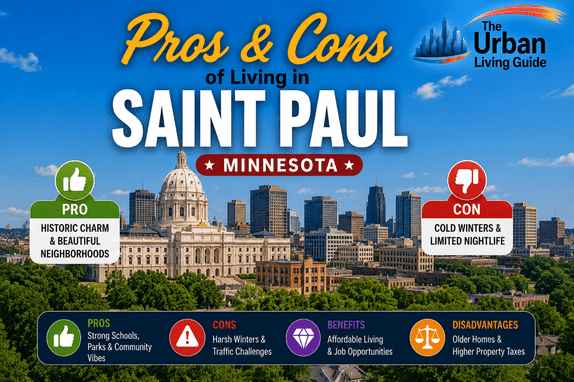
Pros and Cons of Living in Saint Paul Near Minnesota’s Historic Twin Cities Capital
If you’re planning a move to Minnesota, understanding the pros and cons of living in Saint Paul can help you decide whether this historic and family-friendly city is the right fit for your lifestyle.
Known as the quieter half of the famous Twin Cities, Saint Paul offers a mix of historic charm, strong education, cultural attractions, and a slower-paced urban environment compared to neighboring Minneapolis. The city is recognized for its beautiful architecture, riverfront views, government employment, and strong community feel.
At the same time, residents also deal with cold winters, rising housing costs in some neighborhoods, and limited nightlife compared to larger metro cities.
Whether you’re relocating for work, education, retirement, or family living, this guide covers the real pros and cons of living in Saint Paul before making the move.
Pros of Living in Saint Paul
Historic Charm and Beautiful Neighborhoods
One of the biggest advantages in the pros and cons of living in Saint Paul is the city’s historic atmosphere and unique architecture.
Unlike many modern cities, Saint Paul preserves much of its historic identity through older homes, brick buildings, churches, and tree-lined streets. Areas like Summit Avenue are famous for Victorian-era homes and historic mansions.
Popular neighborhoods include:
- Macalester-Groveland
- Highland Park
- Cathedral Hill
- Summit Hill
- Como Park
Many residents appreciate the quieter and more residential feel compared to nearby Minneapolis.
Strong Education and Universities
Education is another major positive when discussing the pros and cons of living in Saint Paul.
The city has access to quality public schools, private institutions, and respected universities.
The city offers:
- Public schools
- Charter schools
- Catholic schools
- Community colleges
- Universities and research institutions
Well-known schools nearby include Macalester College, University of St. Thomas, and the University of Minnesota system.
Families often choose Saint Paul because of its education-focused environment and community programs.
More Affordable Than Minneapolis in Some Areas
Although prices have increased across the metro area, certain parts of Saint Paul remain more affordable than neighboring Minneapolis.
Rent and housing prices in residential neighborhoods can sometimes offer better value for families or first-time buyers looking for more space.
Property sizes in many neighborhoods are also larger compared to denser urban districts nearby.
Strong Sense of Community
Another major benefit in the pros and cons of living in Saint Paul is the strong community atmosphere.
Residents often describe the city as:
- Friendly
- Family-oriented
- Community-driven
- Less hectic
- More relaxed
Local festivals, farmers markets, and neighborhood events create a welcoming environment throughout the year.
Many people who prefer quieter city living find Saint Paul more comfortable than faster-paced metropolitan areas.
Access to Parks and Riverfront Areas
Outdoor recreation is an important part of life in Saint Paul.
The city sits along the Mississippi River and offers many scenic parks, biking paths, and green spaces.
Popular outdoor destinations include:
- Como Park Zoo & Conservatory
- Mississippi River Boulevard
- Hidden Falls Regional Park
- Battle Creek Regional Park
- Harriet Island Regional Park
Residents enjoy walking, cycling, kayaking, and seasonal outdoor festivals during warmer months.
Stable Government and Healthcare Employment
As the capital city of Minnesota, Saint Paul benefits from stable government-related employment opportunities.
Healthcare, education, and public administration provide many reliable jobs across the metro area.
The city also benefits from economic opportunities connected to the broader Twin Cities economy.
Cons of Living in Saint Paul
Harsh Minnesota Winters
One of the biggest downsides in the pros and cons of living in Saint Paul is the winter weather.
Like the rest of Minnesota, Saint Paul experiences:
- Heavy snowfall
- Freezing temperatures
- Ice storms
- Long winters
- Wind chills below zero
Residents often spend several months dealing with snow-covered roads and cold conditions.
People moving from warmer states may need time to adjust to winter driving and freezing temperatures.
Limited Nightlife Compared to Minneapolis
Although Saint Paul has restaurants, breweries, and entertainment options, its nightlife is generally quieter than nearby Minneapolis.
Young professionals looking for:
- Large entertainment districts
- Trendy nightlife
- Bigger music venues
- Late-night city energy
may find themselves visiting Minneapolis more frequently.
The city appeals more to residents seeking a calmer and residential lifestyle.
Older Housing Stock
Because much of the city is historic, some homes in Saint Paul are older and may require maintenance or renovations.
Older homes can sometimes come with:
- Higher repair costs
- Aging plumbing
- Outdated electrical systems
- Heating efficiency issues
Homebuyers should inspect properties carefully before purchasing.
Traffic and Winter Road Conditions
Traffic congestion is common during rush hours, especially near major routes like I-94, I-35E, and downtown corridors.
Winter weather can also make commuting more stressful and dangerous during snowstorms or icy road conditions.
While public transportation exists throughout the metro area, many residents still depend heavily on cars.
Property Taxes Can Be High
Another challenge in the pros and cons of living in Saint Paul is property taxation.
Homeowners in some parts of the city may experience relatively high property tax rates compared to certain suburbs or smaller Midwest communities.
Combined with rising home values, this can increase long-term housing expenses.
Limited Big-City Feel
Some people relocating from larger metro areas may feel Saint Paul lacks the fast-paced energy of bigger U.S. cities.
The city is generally:
- Quieter
- More residential
- Less crowded
- Slower paced
For some residents, this is a major advantage. For others, it may feel too calm or suburban.
Is Saint Paul a Good Place to Live?
For many people, yes.
Saint Paul offers historic charm, strong schools, community-focused neighborhoods, parks, healthcare access, and stable employment opportunities. The city is especially attractive for families, professionals, and people who prefer a quieter urban environment.
However, cold winters, older homes, and limited nightlife may not fit everyone’s lifestyle preferences.
People seeking a balanced Midwest lifestyle with access to both urban amenities and residential comfort often find Saint Paul to be an excellent place to live.
Final Thoughts on the Pros and Cons of Living in Saint Paul
Understanding the pros and cons of living in Saint Paul is important before making a relocation decision.
The city stands out for its historic character, family-friendly atmosphere, educational opportunities, and scenic riverfront environment. At the same time, residents should prepare for long winters, traffic issues, and some higher housing-related costs.
For those looking for a calmer alternative within the Twin Cities region, Saint Paul continues to be one of the most appealing places to live in Minnesota.
FAQs
Is Saint Paul cheaper than Minneapolis?
In some neighborhoods, Saint Paul can be slightly more affordable than Minneapolis, especially for larger homes and family-focused areas.
Does Saint Paul get a lot of snow?
Yes, Saint Paul experiences long and snowy winters typical of Minnesota.
Is Saint Paul a good place for families?
Many families choose Saint Paul because of its schools, parks, quiet neighborhoods, and community atmosphere.
What is Saint Paul known for?
Saint Paul is known for being the capital of Minnesota, its historic architecture, riverfront setting, and connection to the Twin Cities region.
Is Saint Paul walkable?
Some neighborhoods in Saint Paul are walkable, especially historic districts and areas near downtown.