

Living in Greenville, South Carolina in 2026: Exploring Blue Ridge Foothills Beauty, Upstate Manufacturing Power, and Walkable Downtown Living
Stretching across the picturesque foothills of the Blue Ridge Mountains right along the booming Interstate 85 corridor between Atlanta and Charlotte, living in Greenville, South Carolina offers an extraordinary fusion of scenic mountain wilderness access, a globally competitive advanced manufacturing economy, and a nationally acclaimed walkable downtown. As the commercial anchor of the Upstate with an incorporated city population of approximately 75,000 residents (anchoring a broader metropolitan region exceeding 900,000 people), Greenville delivers sophisticated urban revitalization paired with accessible Southern comfort.
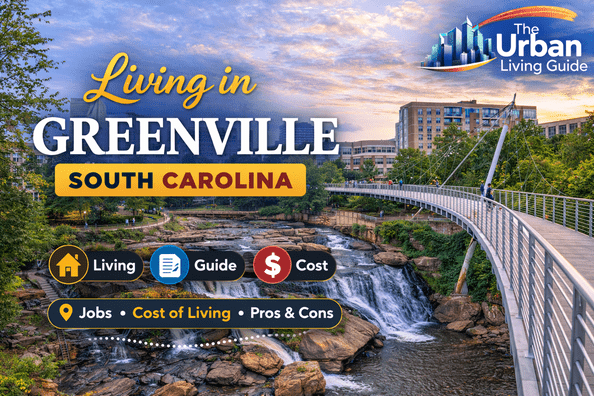
Universally celebrated across the American South as a masterclass in downtown renewal and economic transformation, Greenville commands a distinct identity shaped by the stunning pedestrian Liberty Bridge within Falls Park on the Reedy, the 22-mile Swamp Rabbit Trail, and massive international industrial investments. Whether you are cycling past historic brick warehouses, exploring upscale dining along Main Street, or making the quick 40-minute drive north into the Blue Ridge Mountains for weekend waterfall hiking, life here delivers an active, prosperous, and highly scenic standard of living. Local municipal governance, public safety programs, and regional development initiatives are centrally administered through the official City of Greenville Government Portal under the direction of city leadership.
Watch a recent video by a popular vlogger to experience daily life and authentic vibes in Greenville:
Why Greenville Has Evolved Into the Economic Crown Jewel of the Upstate
Over recent decades, Greenville has captured national acclaim as a premier destination for engineers, remote executives, active families, and outdoor enthusiasts seeking high-altitude recreation and robust career stability without coastal real estate inflation. Key factors driving its sustained popularity include:
- Masterclass Downtown Revitalization: A vibrant urban core anchored by Falls Park on the Reedy, the stunning Liberty Bridge, and a thriving pedestrian Main Street. Explore regional tourism and economic initiatives via the official Visit Greenville SC Tourism Portal.
- Globally Competitive Manufacturing Economy: Massive industrial investments from global giants like BMW Manufacturing, Michelin North America, and GE Aerospace establishing the Upstate as a manufacturing powerhouse.
- Unrivaled Outdoor Greenway Access: Immediate proximity to the 22-mile Swamp Rabbit Trail connecting downtown to Travelers Rest, alongside swift mountain getaways.
- Favorable Cost of Living and Low Property Taxes: Real estate valuations and property taxes sitting comfortably below national and regional coastal averages.
Greenville At a Glance: Key Living Metrics
Famous Personalities, Local Icons & Major Brands in Greenville
Greenville boasts a proud history of nurturing legendary baseball stars, minor league sports traditions, and massive international manufacturing giants:
- Shoeless Joe Jackson: The legendary early baseball star who spent his later years in Greenville, where a dedicated museum preserves his historic sporting legacy (Shoeless Joe Jackson Museum Portal).
- BMW Manufacturing: Operating its massive global assembly plant nearby, producing hundreds of thousands of vehicles and anchoring the Upstate economy (BMW Group Official Portal).
- Michelin North America & GE Aerospace: World-class corporate headquarters and advanced engineering facilities driving thousands of specialized technical careers.
- Greenville Drive & Swamp Rabbits: Beloved Minor League Baseball team playing at Fluor Field (modeled after Fenway Park) and energetic minor-league hockey action.
Career Landscape & Major Employers in the Upstate
The employment landscape in Greenville offers exceptional professional stability, high-paying engineering roles, and a globally competitive manufacturing job market:
- Advanced Manufacturing and Automotive: Anchored by BMW Manufacturing, Michelin North America, and GE Aerospace, supporting specialized mechanical engineering, robotics, and logistics careers. Track regional workforce data via the South Carolina Department of Labor.
- Healthcare and Medical Networks: Supported by Prisma Health Upstate and Bon Secours St. Francis Health System, delivering extensive clinical, surgical, and nursing employment.
- Technology and Corporate Services: Growing IT companies and corporate offices leveraging Greenville’s prime location along Interstate 85.
- Higher Education and Research: Academic institutions like Furman University supporting regional educational and institutional careers.
Housing Market Dynamics & Real Estate Overview in Greenville
Navigating the real estate market in Greenville requires understanding its master-planned suburban expansion, foothill topography, and high desirability:
- Diverse Architectural Stock: Features charming historic character homes in Augusta Road, modern urban lofts downtown, and master-planned single-family subdivisions across Five Forks. Track property assessments via the Greenville County Assessor Portal.
- Market Valuations: While appreciation has risen due to inward migration, Greenville remains significantly more affordable than major East or West Coast metropolitan markets.
- Rental Market Inventory: Average monthly rent spans $1,100 to $1,400 for studio units, $1,300 to $1,700 for one-bedroom apartments, $1,800 to $2,400 for two-bedroom properties, and $2,500 to $4,500+ for luxury suburban homes and historic estates.
- Low Property Taxes: South Carolina maintains remarkably low property tax rates for primary owner-occupied residences, providing long-term relief for homebuyers.
Best Neighborhoods in Greenville: Finding Your Ideal Community
Check the interactive map below to understand the geographical layout and foothill position of Greenville:
What Daily Life Really Looks Like in Greenville (Rhythm & Vibe)
Daily life in Greenville is characterized by an active, outdoor-obsessed, and sophisticated rhythm that blends professional engineering focus with natural recreation:
- Morning Espresso and Trail Routines: Residents often start mornings with artisanal espresso at local cafes before walking or biking down segments of the 22-mile Swamp Rabbit Trail. Check municipal recreation schedules via the official City of Greenville Parks and Recreation Portal.
- Afternoon Park and Cultural Outings: Spending warm afternoons exploring Falls Park on the Reedy, catching minor league baseball games at Fluor Field, or shopping along Main Street.
- Weekend Mountain Escapes: Driving 40 minutes north into the Blue Ridge Mountains for weekend hiking and waterfall exploration at Table Rock State Park.
- Social Atmosphere: Active, prosperous, welcoming, community-oriented, and tailored for outdoor lifestyles.
Cost of Living Breakdown: Monthly Expenses & Salary Expectations
Commute Realities, Highway Corridors & Transit Options
Greenville provides clean highway infrastructure designed for efficient Upstate commuting:
- Interstate 85 & Interstate 385: Primary arterial lifelines connecting Greenville directly to Atlanta, Charlotte, and local business districts (South Carolina Department of Transportation Portal).
- Commute Times: Average daily local commutes remain convenient at approximately 20 to 25 minutes.
- Greenlink Transit Bus Network: Municipal public bus routes providing urban coverage across key city corridors (Greenlink Public Transit Portal).
- Aviation Convenience: Proximity to Greenville-Spartanburg International Airport (GSP) just a 20-minute drive northeast of downtown.
Suburban Climate Realities, Seasons & Environmental Factors
The environmental rhythm of Greenville follows a classic humid subtropical climate featuring four distinct seasons:
- Warm, Humid Summers: Summer daytime highs routinely average 88°F to 92°F alongside regional humidity and afternoon thunderstorms. Track active forecasts via the National Weather Service Greenville-Spartanburg Portal.
- Mild, Pleasant Winters: Winter seasons bring mild temperatures with daytime highs averaging 45°F to 55°F and rare snowfall.
Higher Education, Schools & Major Universities
Educational infrastructure stands as a premier anchor for academic excellence, liberal arts scholarship, and professional training:
- Furman University: Premier private liberal arts university located just north of the city, widely recognized for its stunning campus, bell tower, and academic rigor (Furman University Official Portal).
- Greenville County Schools: Operating one of the largest and highest-rated public school districts in South Carolina.
- Clemson University Proximity: Nearby proximity providing extensive research partnerships and higher education opportunities.
Healthcare Infrastructure & Regional Medical Networks
Healthcare infrastructure in Greenville is advanced, highly specialized, and anchored by premier regional medical networks:
- Prisma Health Upstate: Dominant regional healthcare provider operating major acute-care hospitals, emergency departments, and children’s medical centers (Prisma Health Official Portal).
- Bon Secours St. Francis Health System: Award-winning health network maintaining multiple premier medical facilities across the Greenville area.
Hospitality, Mountain Lodges & Local Culinary Scene
The hospitality and culinary identity of Greenville reflects luxury riverside resort comfort, artisan coffee roasters, and award-winning dining:
- Grand Bohemian Lodge Greenville: Stunning luxury boutique hotel overlooking the river falls, featuring striking design and fine dining (Grand Bohemian Lodge Portal).
- Methodical Coffee & Spill the Beans: Acclaimed independent coffee roasters anchoring downtown Main Street.
- Soby’s & Halls Chophouse: Legendary local dining establishments serving exceptional regional cuisine.
Parks, Mountain Recreation & Iconic Sightseeing
Landmark public parks and natural wonders significantly enhance the daily quality of life for local residents:
- Falls Park on the Reedy: Urban crown jewel featuring waterfalls, manicured gardens, and the pedestrian Liberty Bridge (Falls Park Portal).
- Swamp Rabbit Trail: 22-mile multi-use greenway connecting downtown Greenville up through Travelers Rest alongside the Reedy River.
- Table Rock State Park: Dramatic granite cliffs, mountain lakes, and hiking trails located within 45 minutes in the Blue Ridge Mountains (Table Rock State Park Portal).
Regional Trade-offs: Pros and Cons of Living in Greenville
Who Is Greenville Ideal For — And Who Should Avoid It?
Who Greenville Is Ideal For
- Engineers and Manufacturing Professionals: Workers pursuing rewarding careers across BMW, Michelin, and GE Aerospace.
- Outdoor and Mountain Enthusiasts: People who prioritize cycling on the Swamp Rabbit Trail and weekend hiking in the Blue Ridge Mountains.
- Families and School Planners: Residents looking for top-rated public school districts in Greenville County and secure suburban enclaves.
- Retirees Seeking Balance: Active adults wanting a walkable urban core, mild winters, and lower property taxes.
Who Should Avoid Greenville
- Oceanfront Beach Purists: Individuals seeking an immediate Atlantic oceanfront coastline right outside their home.
- Extreme Humidity Avoiders: People who struggle with subtropical summer moisture and high afternoon temperatures.
- Subway and Heavy-Rail Purists: Residents requiring extensive urban underground rail rapid transit networks without driving.
- Mega-City Nightlife Seekers: Those looking for 24-hour ultra-dense metropolitan club and theater districts.
Real Experiences: Perspectives from Long-Term Residents (5 to 10+ Years)
“Moving to the Augusta Road neighborhood ten years ago after taking an engineering role at BMW was the best lifestyle choice we’ve ever made. The historic homes, the massive tree canopies, and being five minutes from Main Street is amazing. Fall weather in the foothills is unbeatable, and the community is so welcoming to newcomers.”
[Source: r/greenville Community Discussions — u/UpstateEngineer04, resident of 11 years]
“The big reality check for newcomers is learning to navigate traffic on I-85 during rush hour and adjusting to the July humidity. However, once you embrace the Swamp Rabbit Trail, the incredible food scene downtown, and weekend trips up to Table Rock, you realize Greenville is an absolute gem in the Southeast.”
[Source: Local Resident Panels & Community Forums — David L., Five Forks homeowner of 9 years]
Frequently Asked Questions About Living in Greenville, South Carolina
Is living in Greenville, South Carolina expensive compared to other southern cities?
No. Greenville offers a balanced cost of living that sits slightly below the national average, making it noticeably more affordable than coastal South Carolina hubs like Charleston while offering strong career opportunities.
What level of annual salary do individuals need to live comfortably in Greenville?
Most single professionals and working families require an annual household income between $60,000 and $115,000 to comfortably cover housing, utilities, transportation, and discretionary spending.
Can residents successfully navigate daily life in Greenville without owning a personal vehicle?
While downtown is famously pedestrian-friendly, the broader Greenville metropolitan area spans wide suburban reaches, making a personal vehicle essential for daily commuting and errands.
What are the standout residential neighborhoods recommended for new residents?
Top residential districts include Downtown Greenville for urban walkability, Augusta Road for historic charm and tree canopies, and Five Forks for master-planned family schools.
How do daily commute dynamics function for working professionals across the city?
Commuters primarily utilize Interstates 85 and 385, enjoying convenient average daily commute times of around 20 to 25 minutes during standard hours.
What core natural and cultural highlights define the local Greenville experience?
Residents enjoy visiting Falls Park on the Reedy, cycling along the Swamp Rabbit Trail, attending Greenville Drive baseball games, and hiking in the Blue Ridge Mountains.
🔗 Explore More Cities in South Carolina
If you’re exploring more options beyond Greenville, The Urban Living Guide has journeyed across several other vibrant destinations throughout South Carolina. You might also want to check out:
- Living in Charleston, South Carolina
- Living in Columbia, South Carolina
- Living in Myrtle Beach, South Carolina
- Living in North Charleston, South Carolina
Interested in uncovering more details about Greenville? Dive into these specialized resources:
- Cost of Living in Greenville, South Carolina
- Pros and Cons of Living in Greenville, South Carolina
- Best Neighborhoods in Greenville, South Carolina
For a complete, end-to-end perspective on transitioning to the Upstate, check out our dedicated regional breakdown: Moving to Greenville, South Carolina
Our detailed metropolitan summaries cut straight to the core of daily life—highlighting everything from hyper-local housing trends and school quality to major employers, commuting patterns across interstate corridors, and authentic neighborhood vibes.
By bringing these practical insights together in one hub, The Urban Living Guide helps you evaluate your options objectively, compare regional destinations side by side, and find the ideal community that matches your lifestyle and long-term goals.