

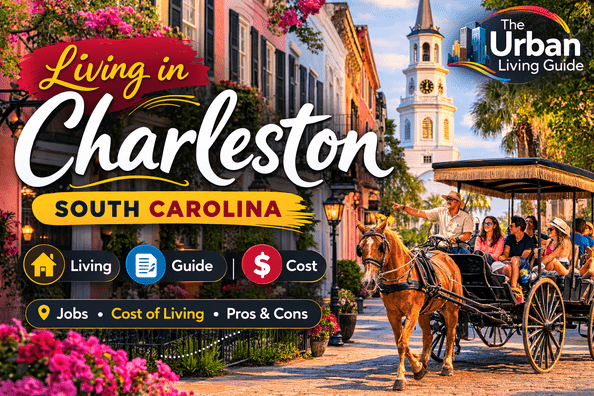
Living in Charleston, South Carolina in 2026: Navigating Peninsula History, Lowcountry Cuisine, and Atlantic Coastal Living
Stretching across the picturesque Atlantic coastal peninsula carved by the converging waters of the Ashley River and the Cooper River, living in Charleston, South Carolina offers an extraordinary fusion of preserved 18th-century pastel architecture, world-renowned Lowcountry cuisine, maritime heritage, and a rapidly expanding metropolitan economy. As the oldest and most historically significant municipality in South Carolina with a city proper population of approximately 155,000 residents (anchoring a thriving tri-county metropolitan area exceeding 800,000 people), Charleston delivers sophisticated urban culture paired with coastal serenity.
Universally celebrated across the globe as one of America’s most visually stunning and culturally rich destinations, Charleston commands a distinct identity rooted in southern hospitality, revolutionary history, and coastal leisure. Whether you are walking beneath the moss-draped live oaks of historic downtown parks, catching ocean breezes along the Battery wall, or dining on fresh local seafood in the French Quarter, life here delivers an art-infused, unhurried, and highly scenic standard of living. Local municipal governance, public safety initiatives, and historic preservation programs are centrally administered through the official City of Charleston Government Portal under the direction of city leadership.
Watch a recent video by a popular vlogger to experience daily life and authentic vibes in Charleston:
Why Charleston Has Evolved Into the Crown Jewel of the Southeast
Over recent decades, Charleston has captured international acclaim as a premier destination for out-of-state professionals, young families, and retirees seeking a sophisticated coastal lifestyle without sacrificing high-powered career opportunities. Key factors driving its sustained popularity include:
- Unmatched Historic and Architectural Preservation: Miles of cobblestone streets, gas-lit lanterns, and pastel antebellum townhouses creating a living museum across the downtown peninsula. Explore regional tourism initiatives via the official Charleston Area Convention & Visitors Bureau Portal.
- World-Class Lowcountry Culinary Arts: An internationally acclaimed dining scene celebrating fresh Atlantic seafood, farm-to-table Southern traditions, and award-winning chefs.
- Thriving Aerospace and Medical Economy: A robust economic engine anchored by Boeing manufacturing, Volvo Cars assembly, and the Medical University of South Carolina (MUSC).
- Immediate Barrier Island Access: Quick weekend escapes to pristine Atlantic beaches, including Folly Beach, Sullivan’s Island, and Isle of Palms.
Charleston At a Glance: Key Living Metrics
Famous Personalities, Local Icons & Major Brands in Charleston
Charleston boasts a proud history of nurturing legendary musicians, professional tennis tournaments, minor league baseball, and global manufacturing giants:
- Darius Rucker: The Grammy-winning musician, lead singer of Hootie & the Blowfish, and successful country music artist who was born and raised in Charleston (Darius Rucker Official Portal).
- Boeing Commercial Aircraft Assembly: Massive final assembly and manufacturing operations producing 787 Dreamliners, driving profound economic impact across the Lowcountry (Boeing Official Portal).
- Medical University of South Carolina (MUSC): A world-class academic medical center and premier research hospital anchoring regional healthcare (MUSC Official Portal).
- Charleston RiverDogs & Credit One Charleston Open: Beloved Minor League Baseball team affiliated with the Tampa Bay Rays and North America’s largest women’s-only professional tennis tournament.
Career Landscape & Major Employers in the Lowcountry
The employment landscape in Charleston offers robust professional diversity, high-tech manufacturing careers, and expanding medical sectors:
- Advanced Manufacturing and Aerospace: Anchored by Boeing assembly plants, Volvo Cars, and Mercedes-Benz Vans, supporting specialized mechanical engineering and robotics careers. Track regional workforce data via the South Carolina Department of Labor.
- Healthcare and Medical Research: Driven by MUSC Health networks, delivering extensive nursing, clinical research, and specialist medical careers.
- Port Logistics and International Trade: The bustling Port of Charleston manages extensive maritime shipping and international cargo logistics.
- Higher Education and Technology: Academic institutions and a growing tech corridor supporting software engineering and digital innovation.
Housing Market Dynamics & Real Estate Overview in Charleston
Navigating the real estate market in Charleston requires understanding its historic peninsula preservation, coastal flood zones, and high-demand master-planned suburbs:
- Diverse Architectural Stock: Features magnificent single-family piazza homes in the historic district, coastal suburban properties in Mount Pleasant, and established residential enclaves in West Ashley. Track property assessments via the Charleston County Assessor Portal.
- Market Valuations: High demand for coastal living and strict historic preservation guidelines have elevated property values and rental rates, rewarding long-term real estate buyers.
- Rental Market Inventory: Average monthly rent spans $1,300 to $1,600 for studio units, $1,600 to $2,200 for one-bedroom apartments, $2,200 to $3,100 for two-bedroom properties, and $3,200 to $5,000+ for historic downtown carriage houses and coastal homes.
- Flood Insurance Realties: Low-lying coastal geography requires prospective buyers to review flood zone maps and secure appropriate property insurance policies.
Best Neighborhoods in Charleston: Finding Your Ideal Community
Check the interactive map below to understand the geographical layout and peninsula orientation of Charleston:
What Daily Life Really Looks Like in Charleston (Rhythm & Vibe)
Daily life in Charleston is characterized by a graceful, outdoor-oriented, and culturally sophisticated rhythm that blends professional focus with coastal leisure:
- Morning Battery and Harbor Routines: Residents often start mornings walking along the historic Battery wall or grabbing artisanal coffee before heading to offices across the peninsula. Check municipal recreation schedules via the official City of Charleston Parks and Recreation Portal.
- Afternoon Island and Beach Escapes: Taking advantage of coastal proximity to surf at Folly Beach or sail near Sullivan’s Island during warm spring and autumn afternoons.
- Culinary and Cultural Evenings: Enjoying farm-to-table Lowcountry dining downtown or attending local arts festivals and historic home tours.
- Social Atmosphere: Warm, hospitable, historic, culturally refined, and deeply connected to maritime traditions.
Cost of Living Breakdown: Monthly Expenses & Salary Expectations
Commute Realities, Highway Corridors & Transit Options
Charleston provides coastal transportation infrastructure shaped by complex river networks, bridges, and causeways:
- Interstate 26: Main arterial highway connecting Charleston northwest toward Columbia and interior South Carolina (South Carolina Department of Transportation Portal).
- U.S. Route 17: Coastal route traversing north-south, linking Mount Pleasant directly to West Ashley across regional bridges.
- Commute Times: Average daily local commutes span 20 to 28 minutes, with peak bridge crossings introducing traffic bottlenecks.
- Aviation Convenience: Proximity to Charleston International Airport (CHS) situated centrally in North Charleston for swift domestic flights.
Coastal Climate Realities, Seasons & Environmental Factors
The environmental rhythm of Charleston follows a classic humid subtropical climate featuring warm summers and mild winters:
- Warm, Humid Summers: Summer daytime highs routinely average 88°F to 95°F alongside afternoon sea-breeze thunderstorms and heavy coastal humidity. Track active forecasts via the National Weather Service Charleston Portal.
- Mild, Pleasant Winters: Winter seasons bring daytime highs in the comfortable 50s and low 60s, making outdoor living enjoyable year-round.
Higher Education, Schools & Academic Excellence
Educational infrastructure stands as a premier anchor for historic scholarship, research, and professional training:
- College of Charleston: Founded in 1770, one of the oldest and most historically celebrated public liberal arts universities embedded directly within the downtown historic district (College of Charleston Official Portal).
- Medical University of South Carolina (MUSC): Premier national medical training ground, research institution, and university hospital system.
- Charleston County School District: Operating numerous specialized magnet schools and high-performing suburban campuses.
Healthcare Infrastructure & Regional Medical Networks
Healthcare infrastructure in Charleston is advanced, highly specialized, and serves as the premier medical capital for the southeastern seaboard:
- MUSC Health: Premier medical center operating advanced hospital campuses, specialized children’s hospitals, and adult trauma centers (MUSC Health Official Portal).
- Roper St. Francis Healthcare: Major regional hospital network operating multiple acute-care facilities and emergency clinics across the tri-county area.
Hospitality, Historic Inns & Local Culinary Scene
The hospitality and culinary identity of Charleston reflects world-class resort luxury, historic hotel elegance, and legendary Lowcountry dining:
- The Charleston Place & The Dewberry Charleston: Sophisticated luxury hotel properties offering fine dining, spa retreats, and refined southern hospitality (The Charleston Place Portal).
- Acclaimed Culinary Icons: Nationally celebrated restaurants like Husk, Magnolias, and Fleet Landing serving authentic Lowcountry shrimp and grits.
Cultural Venues, Landmarks & Iconic Sightseeing
Landmark cultural institutions and historic sites significantly enhance the daily quality of life for local residents:
- Rainbow Row: Famous string of thirteen vibrant pastel-colored historic Georgian townhouses stretching along East Bay Street.
- Fort Sumter National Monument: Historic island fortification where the opening shots of the American Civil War were fired, accessible via harbor ferry tours (Fort Sumter National Monument Portal).
- Charleston Waterfront Park: Breathtaking harbor-front park featuring the iconic Pineapple Fountain and shaded swings overlooking Cooper River.
Regional Trade-offs: Pros and Cons of Living in Charleston
Who Is Charleston Ideal For — And Who Should Avoid It?
Who Charleston Is Ideal For
- Beach and Coastal Lovers: Residents who prioritize weekend beach days at Folly Beach, sailing, and coastal island exploration.
- History Buffs and Preservationists: People who deeply appreciate 18th-century architecture, cobblestone streets, and southern heritage.
- Foodies and Culinary Seekers: Individuals looking for world-class farm-to-table dining, seafood, and acclaimed restaurant scenes.
- Healthcare and Aerospace Professionals: Workers pursuing robust career opportunities across MUSC, Boeing, and Volvo.
Who Should Avoid Charleston
- Budget-Friendly Home Seekers: Buyers looking for inexpensive real estate markets with zero market competition.
- Storm-Anxious Individuals: People who experience severe anxiety during Atlantic hurricane seasons and flood watches.
- Subway and Heavy-Rail Purists: Residents requiring extensive urban rail rapid transit systems without driving.
- Dry Climate Enthusiasts: Individuals who struggle with heavy coastal humidity and subtropical summer moisture.
Real Experiences: Perspectives from Long-Term Residents (5 to 10+ Years)
“Moving to Mount Pleasant eleven years ago after taking a mechanical engineering role at Boeing was the best lifestyle and family decision we’ve ever made. The public schools are fantastic, being ten minutes from Sullivan’s Island is a dream, and downtown Charleston feels like an open-air museum. Housing has gotten expensive, but the coastal quality of life is unbeatable.”
[Source: r/charleston Community Discussions — u/MountPleasantDad09, resident of 12 years]
“The big reality check for newcomers is learning to navigate bridge traffic during rush hour and staying mindful of hurricane preparedness every autumn. However, once you embrace the Lowcountry pace, the food, the friendly neighbors, and the historic beauty make it impossible to leave. It’s a city with unmatched soul.”
[Source: Local Resident Panels & Community Forums — Sarah M., West Ashley homeowner of 9 years]
Frequently Asked Questions About Living in Charleston, South Carolina
Is living in Charleston, South Carolina expensive compared to other southern cities?
Yes. Real estate values, property taxes, and coastal insurance rates in Charleston sit 15% to 25% higher than inland cities like Columbia or Greenville, though they remain more attainable than northeastern or West Coast metros.
What level of annual salary do individuals need to live comfortably in Charleston?
Most single professionals and working families require an annual household income between $65,000 and $130,000+ to comfortably cover housing, utilities, transportation, and discretionary spending.
Can residents successfully navigate daily life in Charleston without owning a personal vehicle?
While downtown historic districts are wonderfully walkable and bike-friendly, the broader tri-county metro area is spread out across rivers and bridges, making a personal vehicle necessary for daily commuting.
What are the standout residential neighborhoods recommended for new residents?
Top residential districts include Downtown Historic District for cobblestone walkability, Mount Pleasant for suburban luxury and beach proximity, West Ashley for historic oak-canopied value, and James Island for laid-back local flavor.
How do daily commute dynamics function for working professionals across the city?
Commuters primarily utilize Interstate 26 and U.S. Route 17, managing average daily commute times of around 20 to 28 minutes, keeping bridge bottlenecks in mind during rush hours.
What core natural and cultural highlights define the local Charleston experience?
Residents enjoy walking along Rainbow Row, visiting Waterfront Park, touring Fort Sumter, dining at award-winning Lowcountry restaurants, and spending weekends at Folly Beach.
🔗 Explore More Cities in South Carolina
If you’re evaluating relocation options across South Carolina, explore our other detailed city guides:
- Living in Columbia, South Carolina
- Living in Greenville, South Carolina
- Living in Myrtle Beach, South Carolina
- Living in North Charleston, South Carolina
Want to learn more about Charleston? Check out these helpful guides:
- Cost of Living in Charleston, South Carolina
- Pros and Cons of Living in Charleston, South Carolina
- Best Neighborhoods in Charleston, South Carolina
For a complete transition breakdown from initial research to settling in, explore our extensive relocation manual: Moving to Charleston, South Carolina
Our curated municipal profiles cut through the noise to examine what really matters on a day-to-day basis—from localized real estate inventory and school district ratings to regional job markets, seasonal micro-climates, and authentic neighborhood personalities.
By keeping all these hyper-local benchmarks in one place, The Urban Living Guide empowers you to weigh regional trade-offs effortlessly, evaluate employment corridors side by side, and secure a residential setting tailored precisely to your long-term personal and professional ambitions.