

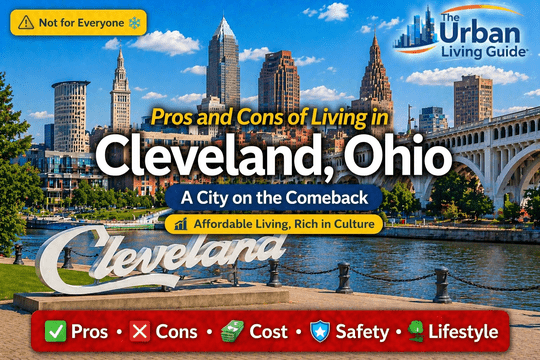
Pros and Cons of Living in Cleveland, Ohio
Some cities quietly reinvent themselves—and Cleveland is one of them. But the real question is, does that transformation actually translate into a better lifestyle? That’s why Pros and Cons of Living in Cleveland, Ohio is worth exploring before making a move.
Located on Lake Erie, Cleveland offers affordability, culture, and a growing downtown scene. But compared to cities like Columbus, it still carries some of its old industrial challenges.
👉 This video gives a real street-level look at Cleveland’s neighborhoods, cost of living, and daily lifestyle.
Advantages of Living in Cleveland
1. Very Affordable Housing Market
Cleveland is one of the most affordable major cities in the U.S. Many residents appreciate how accessible homeownership is compared to national averages.
2. Strong Healthcare Industry
The city is home to world-class healthcare institutions like Cleveland Clinic. This creates stable job opportunities in the medical sector.
3. Cultural and Sports Scene
From museums to major sports teams, Cleveland offers more entertainment than many similarly priced cities. One thing people often mention is the city’s underrated cultural depth.
4. Lake Erie Access
Living near Lake Erie provides scenic views, waterfront activities, and a unique lifestyle advantage.
5. Revitalizing Downtown Areas
Parts of downtown Cleveland have seen significant redevelopment, improving livability and attracting younger residents.
Challenges of Living in Cleveland
1. Harsh Winters and Lake-Effect Snow
Some newcomers find it challenging that winters can be long and intense due to lake-effect weather.
2. Economic Disparities Across Neighborhoods
Not all areas have developed equally, and some neighborhoods still face economic challenges.
3. Slower Job Growth Compared to Other Cities
While improving, Cleveland’s job market growth is slower than cities like Columbus.
4. Population Decline History
The city has experienced population loss in the past, which still affects certain areas and infrastructure.
5. Limited Public Transportation Reach
While available, transit options are not as extensive or convenient as in larger metros.
Who Should Consider Living in Cleveland
Cleveland is a strong choice for healthcare professionals, budget-conscious individuals, and those who want city amenities without high costs. It also suits people who appreciate culture and sports.
However, individuals sensitive to harsh winters or those seeking fast-growing job markets may find Cleveland less appealing.
Final Verdict – Is Cleveland Right for You?
Cleveland offers a rare mix of affordability and cultural value in a major city setting. However, the Pros and Cons of Living in Cleveland, Ohio show that weather and uneven development remain key factors.
The Urban Living Guide suggests Cleveland is ideal if you want city living on a budget and don’t mind colder climates.
FAQs
Is Cleveland, Ohio a good place to live in 2026?
Yes, especially for affordability and healthcare jobs, but winters can be tough.
Why is Cleveland so affordable?
Lower demand and past population decline have kept housing costs low.
What salary is needed in Cleveland?
Around $50,000–$75,000 is comfortable depending on lifestyle.
Is Cleveland better than Columbus?
Columbus has better job growth, while Cleveland offers more affordability and culture.
Is Cleveland good for families?
Yes, but neighborhood choice is important for safety and schools.
Explore more details
Learn more about cost, lifestyle, and neighborhoods.
Check the full guide by The Urban Living Guide on Living in Cleveland, Ohio