

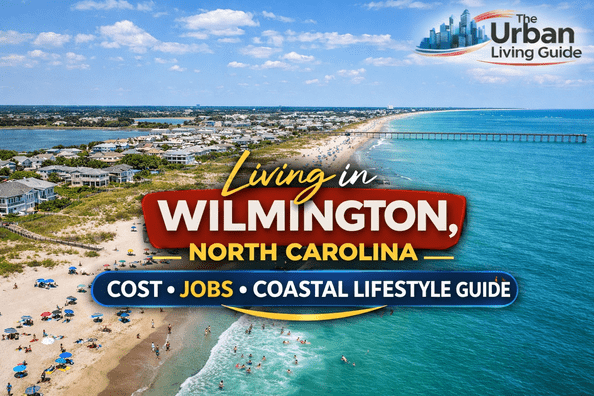
From Historic Riverwalks to Atlantic Breakers: What Living in Wilmington Actually Feels Like in 2026
Stretching along southeastern North Carolina’s Atlantic coast beside the Cape Fear River, Living in Wilmington, North Carolina offers a rare blend of historic Southern charm, vibrant coastal recreation, and a thriving film and tourism economy. As the state’s premier coastal city, Wilmington supports a core population of approximately 125,000 residents, with the broader metropolitan area nearing 300,000 people. Famously nicknamed “Hollywood East” for its legendary television and film production history, the city pairs its scenic riverwalk with world-class beach access.
Relocating to the Port City places you in an outdoor-focused environment anchored by the University of North Carolina Wilmington (UNCW) and steady healthcare employment through Novant Health New Hanover Regional Medical Center. Propelled by retirees, remote workers, and marine industries, the local economy supports a relaxed beach lifestyle while maintaining housing costs influenced heavily by coastal demand and insurance requirements. However, thriving here requires preparing for tropical weather exposure, hurricane season planning, and seasonal summer tourism traffic. Whether you want a luxury estate in Landfall or a historic home near the downtown riverfront, Wilmington delivers an authentic, scenic, and deeply rewarding coastal lifestyle.
What Makes Wilmington So Popular & Unique
Wilmington commands regional and national acclaim because it provides a rare combination of historic urban culture and pristine barrier island beaches like Wrightsville Beach and Carolina Beach. Centered around the award-winning Riverwalk and scenic Airlie Gardens, the city functions as a magnet for retirees, remote professionals, and marine enthusiasts. For newcomers looking to access municipal services, utility maps, or community event schedules, the official City of Wilmington portal serves as an essential digital gateway.
- Hollywood East Heritage: Internationally renowned as a major film and television production hub with state-of-the-art studio infrastructure.
- Pristine Coastal Access: Immediate proximity to world-class barrier island beaches including Wrightsville Beach and Carolina Beach.
- Higher Education & Health Leadership: Anchored by University of North Carolina Wilmington (UNCW) and Novant Health New Hanover Regional Medical Center.
- Historic Riverfront Culture: A vibrant 18th-century downtown core featuring a 1.75-mile boardwalk along the Cape Fear River.
Wilmington at a Glance: Key Relocation Metrics
Reviewing these baseline statistics helps establish realistic expectations for your transition to New Hanover County. These figures reflect current coastal North Carolina market conditions and regional economic benchmarks.
| Metric | Wilmington City Data | Metropolitan Context |
|---|---|---|
| City Population | Approximately 125,000 Residents | Nearing 300,000 across the greater Cape Fear metro area |
| Median Home Price | $420,000 – $550,000 | Reflects strong demand driven by coastal migration and retirement |
| Average 1BR Rent | $1,400 – $1,800 | Competitive rental market shaped by tourism and university demand |
| Average Commute | 20 – 25 Minutes | Navigates US-17, Oleander Drive, and seasonal bridge traffic |
| Top Industries | Tourism, Healthcare, Marine Operations, Film Production | Higher education, port logistics, and professional services |
If you haven’t explored this area before, the map below will give you a better sense of its location.
Famous Personalities, Cinematic History & Major Brands in Wilmington
Wilmington’s cultural footprint is heavily shaped by major Hollywood film productions, marine research breakthroughs, collegiate academics, and coastal health networks.
- Cinematic Heritage: Internationally famous as a Hollywood east production hub where major films and television series like Dawson’s Creek and One Tree Hill were filmed.
- Healthcare & Academic Excellence: Anchored by regional healthcare leaders including Novant Health New Hanover Regional Medical Center and University of North Carolina Wilmington (UNCW).
- Corporate Footprint: The regional economy acts as an operational base for life sciences enterprises like PPD (Thermo Fisher Scientific subsidiary) and port marine operations.
Job Market & Business Opportunities with Major Employers
Wilmington features a stable, lifestyle-driven job market anchored by healthcare administration, tourism hospitality, higher education, marine research, and film production. Whether you are providing clinical care or managing coastal logistics, professional opportunities here prioritize quality of life over corporate hustle.
Key employers driving local prosperity include Novant Health, UNC Wilmington, and PPD (Thermo Fisher Scientific subsidiary). Official economic reference data from the North Carolina Department of Commerce highlights that average salaries typically range between $60,000 and $85,000 annually for mid-level professionals, providing solid middle-class purchasing power relative to coastal housing costs.
- Entry-level salaries: Typically range between $40,000 – $55,000 across hospitality, administrative, and healthcare support roles.
- Mid-career professionals: Generally span $60,000 – $85,000 for experienced registered nurses, marine scientists, and educators.
- Senior medical and executive roles: Frequently scale to $100,000+, supporting comfortable homeownership across New Hanover County.
Housing & Real Estate Overview in Wilmington
Housing is universally the single largest monthly expense when evaluating Wilmington, with the real estate market shaped heavily by coastal demand and insurance requirements. In 2026, median home prices range between $420,000 and $550,000, while luxury waterfront properties in Landfall or Figure Eight Island easily exceed $1,000,000.
The rental market commands competitive pricing for apartments and coastal homes alike. Current average monthly rent projections are:
- Studio Apartment: $1,200 – $1,500
- 1 Bedroom Apartment: $1,400 – $1,800
- 2 Bedroom Apartment: $1,800 – $2,400
- Family Home Rentals: $2,500 – $3,800+
Achieving homeownership requires careful budgeting for property values and specialized coastal home insurance policies due to hurricane exposure.
Best Neighborhoods in Wilmington: Finding Your Ideal Community
Choosing the right neighborhood in Wilmington defines your daily commute, hurricane risk exposure, insurance rates, and lifestyle. Each district offers an entirely unique character. Neighborhood insights are based on local housing trends, safety reports, and resident surveys. The table below outlines the most prominent residential zones.
| Neighborhood / Category | Location, Pricing & Community Overview |
|---|---|
| Landfall (Luxury & Waterfront) | An exclusive gated golf and waterfront community featuring upscale estate homes. Median home price: $900,000+. Ideal for high-income retirees and corporate executives. |
| Figure Eight Island (Private Coastal) | A premier private barrier island community offering secluded oceanfront luxury properties and private beach access. |
| Ogden (Suburban Family Hub) | A highly popular suburban zone providing great access to local schools and convenient proximity to Wrightsville Beach. |
| Leland (Affordable Mainland) | Located just across the Cape Fear River, offering more affordable modern housing developments while staying right near Wilmington. |
| Downtown Wilmington (Historic Riverfront) | A vibrant historic district featuring restored brick architecture, loft apartments, riverfront dining, and energetic nightlife. |
What It’s Really Like Living in Wilmington, North Carolina (Daily Life & Vibe)
Daily life in Wilmington revolves around weather, seasonal tourism, and pristine beach access. Summers bring high visitor traffic, especially near Wrightsville Beach and Carolina Beach, while winters remain mild, quiet, and peaceful. The local work culture is relaxed compared to major inland cities, and daily commutes are typically under 25 minutes unless peak tourist traffic builds near coastal drawbridges.
Weekends are typically spent boating, fishing, kayaking, walking along the historic riverwalk, or relaxing on the sand. Social life is deeply community-focused, featuring seasonal waterfront festivals, outdoor markets, and coastal events. The overall lifestyle emphasizes outdoor living and environmental appreciation over corporate hustle.
Watch a recent video by a popular vlogger to understand daily life and vibes in Wilmington:
Cost of Living in Wilmington: Monthly Expenses & Salary Needs
Wilmington’s cost of living sits slightly above the North Carolina state average, driven primarily by coastal real estate demand and specialized property insurance rates. Cost estimates are derived from official statistics and city-level cost databases. To maintain a secure, comfortable standard of living and manage coastal expenses, an individual professional should target a salary of $75,000+, while households generally require $110,000+.
- Average Rent: ~$1,600 to $2,400 depending on apartment size and proximity to the water.
- Monthly Utilities: $150 – $220 (Covering electricity, water, and internet).
- Groceries & Household Goods: $350 – $450 per month for a single person.
- Transportation: $250+ per month due to necessary personal vehicle operating expenses.
- Coastal Home Insurance: Higher than inland cities due to hurricane and tropical storm exposure risk.
Transportation, Commute Dynamics & Transit Realities
Getting around Wilmington and connecting to the wider coastal region involves a primarily car-oriented transit network:
- Road Networks & Commuting: Excellent driving connectivity anchored by US-17, US-421, and Oleander Drive, keeping average daily commutes around a manageable 20 to 25 minutes.
- Seasonal Traffic: Bridge crossings and coastal arteries can experience heavy traffic congestion during peak summer tourism weekends.
- Airport Connectivity: Wilmington International Airport (ILM) provides convenient regional and domestic flight connectivity just minutes from downtown.
- Car Dependency: Most residents rely on personal vehicles for daily commuting and coastal errands.
Weather Patterns, Seasonal Realities & Climate Factors
Wilmington experiences a pleasant humid subtropical coastal climate featuring distinct seasonal traits:
- Spring: Mild temperatures and blooming coastal flora, making it an ideal time for outdoor recreation.
- Summer: Hot and humid with high coastal humidity, perfect for beach days and ocean breezes.
- Autumn: Crisp, pleasant weather following the peak summer season.
- Winter: Exceptionally mild with minimal freezing temperatures.
- Hurricane Exposure: Homeowners must prepare for seasonal tropical storms and hurricanes, making flood zone mapping and comprehensive insurance essential.
- Climate Reference: Official meteorological tracking and climate data are provided by the National Weather Service Coastal North Carolina region.
Education, Schools & Major Universities
Higher education serves as a major intellectual and cultural asset for the entire coastal region. Wilmington hosts the prestigious University of North Carolina Wilmington (UNCW), drawing students and academic professionals from across the country. For families navigating K-12 schooling, neighborhood options vary, with suburban zones like Ogden and Porters Neck offering strong public school environments.
Medical Facilities, Hospitals & Healthcare Systems
Access to advanced, cutting-edge healthcare is one of Wilmington’s premier community advantages. The city is home to major medical centers and regional health networks, anchored by Novant Health New Hanover Regional Medical Center. This premier hospital system provides comprehensive emergency care, specialized surgical units, and wellness clinics locally across southeastern North Carolina.
Popular Hotels, Cafes, Dining & Culinary Scene
Wilmington’s hospitality and culinary scene blends historic riverfront dining with fresh seafood and casual beach cafes.
- Popular Hotels: Visitors and executive travelers frequently book stays at standout local landmarks like Hotel Ballast (Downtown Riverfront), Blockade Runner Beach Resort, or Embassy Suites Wilmington Riverfront.
- Cafes & Social Hubs: Inspiring local coffee spots like Bitty & Beau’s Coffee and Blue Cup Roastery thrive throughout downtown and midtown blocks.
- Restaurants: From waterfront seafood dining at Elijah’s (Riverfront seafood) and Dockside Restaurant to neighborhood favorites like The Basics, Wilmington’s food scene is deeply coastal.
Sightseeing, Cultural Spots & Tourist Attractions
Residents live surrounded by historic riverwalks, barrier island beaches, and breathtaking botanical gardens.
- Wrightsville Beach & Carolina Beach: Pristine Atlantic barrier island beaches offering soft white sand, surfing, and coastal piers.
- Historic Downtown Riverwalk: A vibrant 1.75-mile boardwalk lined with historic brick storefronts, boutiques, and outdoor dining.
- USS North Carolina Battleship: A massive World War II battleship museum permanently anchored across the river from downtown.
- Airlie Gardens: A gorgeous 67-acre historic garden featuring towering live oaks, walking paths, and the historic Airlie Oak.
Regional Trade-offs: Pros and Cons of Living in Wilmington
Every major city requires compromise. Here is the unvarnished reality for anyone planning a move to the Port City in 2026:
Pros:
- An unbeatable coastal lifestyle with direct access to Wrightsville and Carolina beaches.
- Mild winter weather with very few freezing days.
- Strong retirement appeal and relaxed, welcoming community atmosphere.
- Abundant outdoor recreation including boating, fishing, and kayaking.
- A growing hub for remote workers seeking scenic environments.
Cons:
- Hurricane and tropical storm exposure risk requiring careful insurance planning.
- Higher home insurance and property costs due to coastal demand.
- A smaller specialized corporate job market compared to inland hubs.
- Seasonal summer tourism traffic creating congestion near coastal bridges.
- Rising housing costs driven by steady population migration.
Who Is Wilmington Ideal For (and Who Should Avoid It?)
Ideal For: Retirees, remote workers, healthcare professionals, marine enthusiasts, beach lovers, and individuals prioritizing environment and community over corporate salary ceilings.
Who Should Avoid It: Individuals seeking large high-tech corporate ecosystems, buyers looking for cheap inland real estate, and those who despise hurricane preparedness and high home insurance rates.
Real Experiences: Perspectives from Long-Term Residents (5 to 10+ Years)
Data gives you the metrics, but daily life gives you the truth. Here is what veteran locals have to say about navigating Wilmington:
“Moving down here after retiring from the Midwest was the best choice we’ve ever made—being twenty minutes from Wrightsville Beach and walking the riverwalk downtown is heavenly. You do have to keep a close eye on the tropics during hurricane season and brace for summer traffic over the bridges, but the coastal quality of life is unbeatable.”
[Source: r/WilmingtonNC Community Discussions]
“The job market is steady if you’re in healthcare at Novant or working remote, but housing prices have definitely climbed over the last few years. If you love boating, mild winters, and a slower southern beach vibe, it’s worth every penny.”
[Source: Local Neighborhood Survey Threads]
Frequently Asked Questions About Living in Wilmington, North Carolina
Is Wilmington, North Carolina expensive to live in?
Wilmington is moderately priced compared to national averages, though it sits higher than inland North Carolina cities due to coastal housing demand and specialized home insurance costs.
What salary do you need to live comfortably in Wilmington?
An annual salary of $75,000+ is generally sufficient for a single professional to live comfortably, while families typically require $110,000+ to manage housing and insurance expenses.
How do hurricanes and insurance impact living in Wilmington?
Coastal living involves exposure to tropical storms and hurricanes, requiring homeowners to account for flood zones, evacuation routes, and higher home insurance premiums.
Can you live in Wilmington without a car?
It is difficult. While downtown Wilmington is walkable, most residents rely heavily on personal vehicles to navigate suburban shopping centers and coastal bridge corridors.
What are the best neighborhoods for families in Wilmington?
Ogden, Porters Neck, and suburban Leland across the river are widely praised for their excellent local schools, family parks, and community safety.
How does Wilmington compare to living in Raleigh?
Wilmington offers a dedicated coastal beach lifestyle and a slower, relaxed pace, whereas Raleigh provides a much larger, technology-driven job market and corporate economy.
🔗 Explore More Cities in North Carolina
If you’re exploring more options beyond Wilmington, The Urban Living Guide has covered several other popular cities in North Carolina. You can also check:
- Living in Charlotte, North Carolina
- Living in Raleigh, North Carolina
- Living in Greensboro, North Carolina
- Living in Durham, North Carolina
Thinking about Wilmington? Here are a few must-read guides:
- Cost of Living in Wilmington, North Carolina
- Pros and Cons of Living in Wilmington, North Carolina
- Best Neighborhoods in Wilmington, North Carolina
And if you’re planning your move, don’t miss our complete guide: Moving to Wilmington, North Carolina
These guides offer a comprehensive view of life in different cities, covering key aspects like cost of living, housing, job opportunities, neighborhoods, commute, weather, education, popular spots, and major employers.
The Urban Living Guide brings all these insights together in one place, making it easier to compare cities and choose the one that best fits your lifestyle, priorities, and long-term goals.