

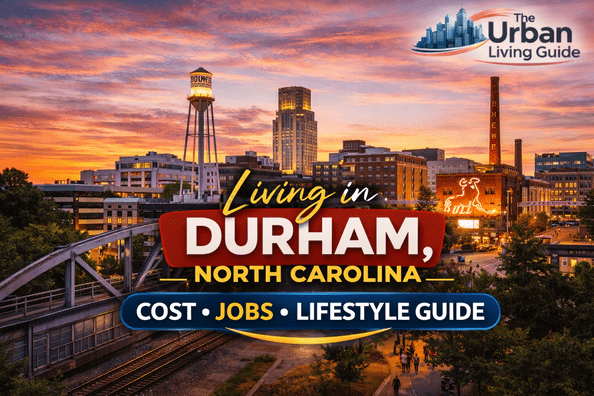
From Tobacco Town Heritage to Biotech Innovation: What Living in Durham Actually Feels Like in 2026
Positioned in the heart of the Research Triangle region alongside Raleigh and Chapel Hill, Living in Durham, North Carolina offers an intellectual, creative, and arts-driven urban experience rooted in academic excellence and life sciences. As a historic tobacco manufacturing center that has evolved into a powerhouse for biotechnology and higher education, Durham supports a core population of over 300,000 residents, with the broader metropolitan area exceeding 600,000 people.
Relocating to the Bull City places you in a progressive, research-driven environment anchored globally by Duke University and proximity to Research Triangle Park (RTP). Propelled by major employers like the Duke University Health System and cutting-edge biotech startups, the local economy supports high-earning research and healthcare careers while maintaining a moderate cost of living compared to major coastal tech metropolises. However, thriving here requires navigating steady real estate appreciation and suburban car dependency. Whether you want a historic estate in Hope Valley or a revitalized warehouse loft downtown, Durham delivers an inspiring, community-oriented lifestyle.
What Makes Durham So Popular & Unique
Durham commands national acclaim because it pairs world-class medical and academic institutions with an independent, arts-driven culinary and cultural scene, all while anchoring a premier global research corridor. Centered around the dynamic commercial spaces of Downtown Durham and the sprawling innovation campus of RTP, the city functions as a creative magnet for researchers, medical professionals, and entrepreneurs. For newcomers looking to access municipal services, utility maps, or community event schedules, the official City of Durham portal serves as an essential digital gateway.
- The Research Triangle Pillar: Anchored globally by Duke University and immediate proximity to Research Triangle Park (RTP).
- Healthcare & Biotech Leadership: Home to massive medical operations like the Duke University Health System and pioneering life sciences firms.
- Creative & Arts-Driven Culture: Celebrated statewide for an independent restaurant scene, local breweries, performing arts, and historic brick architecture.
- Exceptional Community Diversity: A welcoming, inclusive population fostering strong neighborhood engagement and entrepreneurial spirit.
Durham at a Glance: Key Relocation Metrics
Reviewing these baseline statistics helps establish realistic expectations for your transition to Durham County. These figures reflect current North Carolina market conditions and regional economic benchmarks.
| Metric | Durham City Data | Metropolitan Context |
|---|---|---|
| City Population | Over 300,000 Residents | Exceeds 600,000 across the greater metro area |
| Median Home Price | $430,000 – $520,000 | Reflects strong demand driven by Research Triangle expansion |
| Average 1BR Rent | $1,400 – $1,800 | Competitive rental market near university and biotech corridors |
| Average Commute | 20 – 25 Minutes | Navigates I-85, NC-147 (Durham Freeway), and RTP access roads |
| Top Industries | Healthcare, Biotechnology, Pharmaceuticals, Education | Technology startups, clinical research, and life sciences |
If you’re new to this region, the map below will help you get a clear idea of the city’s location.
Famous Personalities, Academic Leaders & Major Brands in Durham
Durham’s cultural footprint is heavily shaped by world-class academic researchers, pioneering medical leaders, collegiate sports legends, and global technology innovators.
- Academic & Medical Leaders: The city is closely associated with prominent researchers, physicians, and administrators driving global healthcare innovations at Duke University and the Duke University Health System.
- Athletic Traditions: College basketball runs through the absolute soul of the local community, supported by fierce fanbases cheering for Duke basketball and local ACC athletics.
- Corporate Footprint: The regional economy acts as the command center for world-class enterprises like IBM and thousands of life sciences firms anchored in Research Triangle Park (RTP).
Job Market & Business Opportunities with Major Employers
Durham features one of the most intellectually robust, high-paying job markets in the American Southeast, anchored by biomedical research, clinical healthcare, higher education, and technology. Whether you are conducting clinical trials or engineering software solutions, professional opportunities here command competitive compensation.
Key employers driving local prosperity include the Duke University Health System, Duke University, IBM, and major biotech firms connected to Research Triangle Park. Official economic reference data from the North Carolina Department of Commerce highlights that average salaries typically range between $85,000 and $110,000 annually for mid-level professionals, providing solid middle-class purchasing power.
- Entry-level salaries: Typically range between $60,000 – $75,000 across junior research, technical, and healthcare support roles.
- Mid-career professionals: Generally span $85,000 – $110,000 for experienced clinical researchers, software engineers, and university administrators.
- Senior medical and executive roles: Frequently scale to $120,000+, supporting strong upper-middle-class living.
Housing & Real Estate Overview in Durham
Housing is universally the single largest monthly expense when evaluating Durham, with the real estate market experiencing strong appreciation due to Research Triangle growth. In 2026, median home prices range between $430,000 and $520,000, though luxury historic estates in Hope Valley scale much higher.
The rental market commands competitive pricing for apartments and single-family homes alike. Current average monthly rent projections are:
- Studio Apartment: $1,200 – $1,500
- 1 Bedroom Apartment: $1,400 – $1,800
- 2 Bedroom Apartment: $1,700 – $2,300
- Family Home Rentals: $2,400 – $3,400+
Achieving homeownership requires careful budgeting for property values, though long-term investment potential remains exceptionally strong across Durham County.
Best Neighborhoods in Durham: Finding Your Ideal Community
Choosing the right neighborhood in Durham defines your daily commute, school access, and architectural surroundings. Each district offers an entirely unique character. Neighborhood insights are based on local housing trends, safety reports, and resident surveys. The table below outlines the most prominent residential zones.
| Neighborhood / Category | Location, Pricing & Community Overview |
|---|---|
| Hope Valley (Upscale & Historic) | Historic upscale neighborhood featuring large estate homes, mature trees, and golf course surroundings. Popular among executives and established professionals. Median home price: $800,000+. |
| Trinity Park (Academic & Historic) | Located immediately close to Duke University, featuring beautifully preserved historic homes and walkable, tree-lined streets. |
| Southpoint (Suburban Family Hub) | Modern suburban developments situated near major shopping centers and RTP, offering a 15–25-minute commute to major employment hubs. |
| Chapel Hill Border Areas (Academic Families) | Residential enclaves near the Chapel Hill border offering strong school access and a peaceful community environment popular with academic families. |
| Downtown Durham (Urban & Creative) | Walkable urban core featuring revitalized brick warehouses, local craft breweries, trendy restaurants, and dynamic coworking spaces. |
What It’s Really Like Living in Durham, North Carolina (Daily Life & Vibe)
Daily life in Durham offers a unique mix of innovation, education, healthcare, and creative culture. The city maintains a professional yet laid-back atmosphere, heavily influenced by Duke University, major medical institutions, and the broader Research Triangle economy. Residents enjoy strong career opportunities during the week and a vibrant local culture on weekends, creating a lifestyle that feels productive without the constant corporate intensity of a larger metropolitan area.
Weekends are typically spent exploring downtown farmers markets, attending food festivals, enjoying live music events, or visiting nearby parks and green spaces. While public transit options are limited and most residents rely on personal vehicles, Durham’s independent spirit, arts-driven energy, and approachable pace make everyday living exceptionally rewarding.
Watch a recent video by a popular vlogger to understand daily life and vibes in Durham:
Cost of Living in Durham: Monthly Expenses & Salary Needs
Durham is moderately priced within North Carolina, offering a slightly more approachable cost structure than Raleigh while remaining higher than national averages due to Triangle-wide growth. Cost estimates are derived from official statistics and city-level cost databases. To maintain a secure, comfortable standard of living and achieve financial stability, an individual professional should target a salary of $80,000+, while households generally require $115,000 to $120,000+.
- Average Rent: $1,400 to $1,800 for typical 1BR apartments.
- Monthly Utilities: $150 – $200 (Covering electricity, water, and internet).
- Groceries & Household Goods: $350 – $450 per month for a single person.
- Transportation: $250+ per month due to necessary personal vehicle operating expenses.
- Healthcare Costs: Varies by employer coverage, supported by world-class regional networks like the Duke University Health System.
Transportation, Commute Dynamics & Transit Realities
Getting around Durham and connecting to the wider Research Triangle involves a primarily car-oriented transit network:
- Road Networks & Commuting: Excellent highway connectivity anchored by I-85, NC-147 (Durham Freeway), and I-40, keeping average daily commutes around a manageable 20 to 25 minutes.
- Public Transit: GoDurham bus system provides urban transit coverage, though options remain limited compared to larger metropolitan networks.
- Airport Connectivity: Raleigh-Durham International Airport (RDU) provides strong domestic and international flight connectivity right in the heart of the Triangle.
- Car Dependency: While Downtown Durham is somewhat walkable, most residents rely on personal vehicles for daily commuting and errands.
Weather Patterns, Seasonal Realities & Climate Factors
Durham experiences a pleasant humid subtropical climate featuring four distinct seasons:
- Spring: Mild temperatures and blossoming flora, making it one of the most picturesque times of year to explore local parks.
- Summer: Hot and humid with daytime temperatures regularly pushing between 85°F and 95°F.
- Autumn: Crisp, comfortable weather accompanied by stunning fall foliage across Piedmont parks.
- Winter: Mild with very little snowfall and occasional cold snaps.
- Climate Reference: Official meteorological tracking and climate data are provided by the National Weather Service North Carolina region.
Education, Schools & Major Universities
Education serves as the crowning intellectual pillar for the entire Research Triangle. Durham hosts world-class institutions such as Duke University, alongside close proximity to the University of North Carolina at Chapel Hill and North Carolina State University. For families navigating K-12 schooling, neighborhood options vary, with suburban communities near Chapel Hill offering strong academic performance.
Medical Facilities, Hospitals & Healthcare Systems
Access to advanced, cutting-edge healthcare is one of Durham’s premier community advantages. The city is home to internationally renowned medical centers and research hospitals, anchored by the Duke University Health System. This premier hospital network provides exceptional specialized medical care across every clinical discipline locally.
Popular Hotels, Cafes, Dining & Culinary Scene
Durham’s hospitality and culinary scene blends historic tobacco warehouse architecture with an independent, arts-driven food movement.
- Popular Hotels: Out-of-town visitors and academic executives frequently book stays at standout boutique landmarks like The Durham Hotel, 21c Museum Hotel Durham, or JB Duke Hotel.
- Cafes & Social Hubs: Artisan coffee roasters and local cafes like Cocoa Cinnamon and Beyu Caffe thrive throughout downtown blocks and historic districts.
- Restaurants: From acclaimed southern dining at Mateo Bar Tapas and NanaSteak to innovative local eateries, Durham’s food scene is widely celebrated.
Sightseeing, Cultural Spots & Tourist Attractions
Residents live surrounded by historic architecture, world-class botanical gardens, and vibrant performing arts venues.
- Duke Lemur Center: The world’s largest sanctuary for rare and endangered strepsirrhine primates, located on Duke’s forest campus.
- Nasher Museum of Art: A striking contemporary art museum featuring world-class visual arts exhibitions on the Duke campus.
- Durham Performing Arts Center (DPAC): A premier regional theater hosting major Broadway tours, concerts, and comedy shows in downtown.
- Sarah P. Duke Gardens: A magnificent 55-acre public botanical garden featuring stunning specialized landscape displays and walking paths.
Regional Trade-offs: Pros and Cons of Living in Durham
Every major city requires compromise. Here is the unvarnished reality for anyone planning a move to the Bull City in 2026:
Pros:
- A powerful biotech, healthcare, and research-driven economy anchored by Duke University.
- A vibrant, creative, and arts-focused downtown culinary scene.
- Moderate cost of living compared to major East Coast innovation hubs.
- Strong community feel and welcoming population.
- Short 20-to-25-minute daily commutes across local highway arteries.
Cons:
- High car dependency outside of the immediate downtown core.
- Rising real estate prices and rental competition driven by Triangle growth.
- Limited public transportation options compared to larger metropolises.
- Hot, humid summer weather requiring robust air conditioning.
- Competitive research and academic job markets.
Who Is Durham Ideal For (and Who Should Avoid It?)
Ideal For: Healthcare professionals, biotech researchers, university academics, creative young professionals, and families seeking intellectual energy and community culture.
Who Should Avoid It: Individuals requiring extensive heavy rail transit networks, buyers seeking ultra-low living costs, and those craving a massive, high-density 24/7 big-city nightlife scene.
Real Experiences: Perspectives from Long-Term Residents (5 to 10+ Years)
Data gives you the metrics, but daily life gives you the truth. Here is what veteran locals have to say about navigating Durham:
“Working at Duke Health brought me down here, but the food scene, the indie music, and the creative energy in downtown Durham made me stay. Housing prices have definitely climbed since the tech boom hit the Triangle, but the community vibe here is so much more authentic and artsy than Raleigh.”
[Source: r/triangle Community Discussions]
“Traffic on 147 during rush hour can bottleneck, but my daily commute is still under twenty-five minutes, which is a massive upgrade from my old life in D.C. It’s smart, progressive, and a fantastic place if you’re in research or tech.”
[Source: Local Neighborhood Survey Threads]
Frequently Asked Questions About Living in Durham, North Carolina
Is Durham, North Carolina expensive to live in?
Durham is moderately priced compared to national averages, remaining cheaper than major coastal tech hubs like Boston or San Francisco, though housing costs have risen due to Research Triangle growth.
What salary do you need to live comfortably in Durham?
An annual salary of $80,000+ is generally sufficient for a single professional to live comfortably, while families typically require $110,000–$120,000 annually depending on housing choices and school preferences.
Is Durham safe for residents and families?
Safety varies by neighborhood; established residential communities like Hope Valley and Southpoint are generally considered secure, while some parts of East Durham require more research before renting or buying.
Can you live in Durham without a car?
It is difficult. While Downtown Durham is somewhat walkable, most residents rely on personal vehicles for commuting and daily errands due to limited public transit options.
What are the best neighborhoods for families in Durham?
Hope Valley, Trinity Park, and Southpoint are among the most popular residential areas praised for their historic charm, family parks, and community safety.
How does Durham compare to living in Raleigh?
Durham is more university-driven and biotech-focused, while Raleigh has a larger government and tech presence. Durham feels slightly smaller and more arts-oriented, whereas Raleigh is more structured and suburban.
🔗 Explore More Cities in North Carolina
If you’re exploring more options beyond Durham, The Urban Living Guide has covered several other popular cities in North Carolina. You can also check:
- Living in Charlotte, North Carolina
- Living in Raleigh, North Carolina
- Living in Greensboro, North Carolina
- Living in Wilmington, North Carolina
Want a better understanding of what life is like in Durham? Explore:
- Cost of Living in Durham, North Carolina
- Pros and Cons of Living in Durham, North Carolina
- Best Neighborhoods in Durham, North Carolina
When you’re ready, see our full guide: Moving to Durham, North Carolina
These guides offer a comprehensive view of life in different cities, covering key aspects like cost of living, housing, job opportunities, neighborhoods, commute, weather, education, popular spots, and major employers.
The Urban Living Guide brings all these insights together in one place, making it easier to compare cities and choose the one that best fits your lifestyle, priorities, and long-term goals.