

The Mall City That’s Actually More Than Just Mall of America
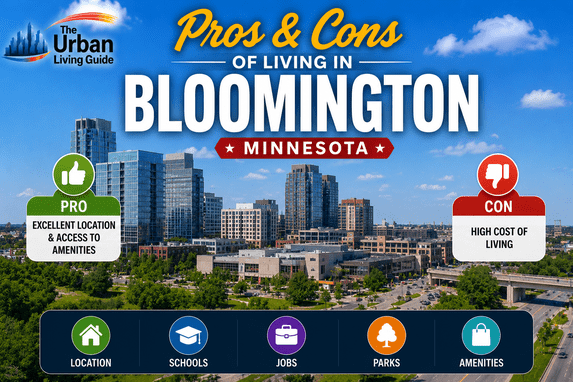
Bloomington has spent decades living in the shadow of its most famous landmark — Mall of America — but the pros and cons of living in Bloomington, Minnesota reveal a city with considerably more complexity than tourists ever see. This is the Twin Cities’ third-largest city, home to Minneapolis-St. Paul International Airport, and a suburban community where nearly 90,000 residents have built lives that have nothing to do with shopping tourism.
Many residents appreciate that Bloomington offers something genuinely unusual: suburban infrastructure with urban job access, family-friendly neighborhoods minutes from downtown Minneapolis, and housing costs that remain meaningfully lower than comparable Twin Cities suburbs. But some newcomers find it challenging that the city’s identity crisis — suburban bedroom community, tourist destination, or business hub — creates an environment where neighborhood character varies dramatically within a few miles.
Here’s what daily life in Bloomington actually looks like when the tourists go home.
Why People Choose and Stay – Pros of Living in Bloomington
Exceptional Transit Access for a Suburban City
Bloomington has something most American suburbs lack entirely — genuine public transit infrastructure. The Metro Blue Line Light Rail runs directly through the city with multiple stops, connecting residents to downtown Minneapolis in under 30 minutes and Minneapolis-St. Paul International Airport in under 10 minutes. For remote workers specifically, this means occasional downtown meetings don’t require car ownership, and for airport employees, the commute becomes genuinely manageable without paying downtown parking rates.
Major Employer Concentration Creates Local Career Density
Bloomington isn’t just a bedroom community — it’s a significant employment center. HealthPartners, Toro Company, Donaldson Company, Ceridian, and the sprawling Mall of America complex (which employs over 11,000 people directly) create genuine career density without requiring daily commutes into Minneapolis or St. Paul proper. Many residents appreciate that job opportunities exist within the city limits rather than forcing reverse commutes that define most suburban life.
Family Infrastructure That Actually Works
Bloomington Public Schools serves over 9,000 students across multiple elementary schools feeding into Jefferson, Kennedy, and Lincoln High Schools — all of which consistently rank among Minnesota’s better-performing public secondary schools. Families will find that the park system here is genuinely exceptional — Hyland Lake Park Reserve, Bush Lake, and the Minnesota Valley National Wildlife Refuge provide nature access that rivals anything in the Twin Cities metro without requiring weekend drives to find it.
Affordable Compared to Neighboring Twin Cities Suburbs
Some newcomers find it surprising that Bloomington housing costs remain 15-20 percent lower than nearby Edina, Eden Prairie, or Minnetonka — suburbs with similar school quality and job access. Median home prices hover around $375,000-$425,000 compared to $500,000-$650,000 in those western suburbs, making Bloomington one of the last genuinely middle-class accessible communities this close to downtown Minneapolis.
Four Genuine Seasons With Manageable Winters
Minnesota winters are legendary, but Bloomington’s position in the southern metro means winter temperatures run 3-5 degrees warmer than northern suburbs and snow accumulation tends toward the lower end of Twin Cities averages. The city’s aggressive snow removal budget means roads clear quickly, and the extensive trail system remains accessible year-round for those willing to bundle up.
Diverse Community With Established Immigrant Networks
Bloomington has become one of Minnesota’s most genuinely diverse communities — significant Somali, Hmong, Latino, and South Asian populations have established businesses, religious institutions, and community infrastructure that makes the city feel considerably more multicultural than most Midwest suburbs. One thing people often mention is how the restaurant scene here reflects that diversity in ways neighboring suburbs simply don’t match.
What Doesn’t Always Advertise – Cons of Living in Bloomington
Mall of America Tourism Saturation Is Real
Living near Mall of America sounds convenient until you realize that 40 million visitors annually create traffic nightmares on Interstate 494, 24th Avenue, and American Boulevard corridors essentially year-round. Some newcomers find it challenging that weekends mean gridlock in the western half of the city, and the tourist economy shapes everything from restaurant pricing to parking availability in ways that don’t benefit actual residents.
Neighborhood Character Varies Wildly by Geography
Bloomington isn’t one community — it’s essentially three different cities sharing one municipal government. The western neighborhoods near Nine Mile Creek feel like affluent suburbs, the eastern sections near the airport corridor skew working-class and industrial, and the central districts around Old Shakopee Road retain mid-century character that hasn’t seen renovation investment in decades. Many residents appreciate the affordability that comes with this variation, but buyers should understand that “Bloomington address” doesn’t guarantee consistent neighborhood quality.
Airport Noise Is Non-Negotiable for Eastern Neighborhoods
Minneapolis-St. Paul International Airport’s flight paths run directly over eastern Bloomington neighborhoods. If you’re moving from a bigger city like Chicago or New York, the aircraft noise might not register as unusual, but families relocating from quieter suburbs often find the constant jet noise genuinely disruptive to outdoor activities and sleep quality in affected areas.
Limited Walkable Urban Core or Downtown Identity
Bloomington never developed a traditional downtown — it’s a post-war suburban city built around car infrastructure from day one. For young professionals specifically, this means limited walkable restaurant districts, no genuine bar scene outside hotel establishments, and a social life that requires driving to Minneapolis, St. Paul, or Edina for evening activities. The city has exceptionally functional suburban infrastructure but zero urban energy.
Public School Quality Doesn’t Match Western Suburbs
While Bloomington Public Schools performs solidly overall, it doesn’t match the academic reputations of Edina, Minnetonka, or Wayzata school districts that draw families willing to pay premium housing costs. Some newcomers find it challenging that the 15-20 percent housing savings come with measurable differences in test scores, college placement rates, and extracurricular program depth.
Winter Still Means Winter — Just Slightly Less Brutal
Bloomington’s winters remain genuinely challenging by national standards even if marginally milder than northern Twin Cities suburbs. Temperatures regularly drop below zero Fahrenheit, snow removal is a constant November-through-March reality, and outdoor lifestyle effectively pauses for 4-5 months annually unless you actively embrace winter sports. If you’re moving from a warmer climate, the seasonal adjustment remains significant regardless of Bloomington’s southern metro position.
Who Thrives Here?
Bloomington is an outstanding fit for airport employees and frequent travelers valuing 10-minute commutes and light rail access, middle-income families seeking good schools without paying Edina premiums, immigrant families finding established community networks, and remote workers wanting suburban space with urban job access via transit.
Who should reconsider? Young professionals seeking walkable urban lifestyle, anyone requiring genuinely quiet residential environments free from aircraft noise, families prioritizing top-tier school districts over housing affordability, and anyone expecting Bloomington to offer the cultural energy of Minneapolis proper.
Final Verdict on Bloomington
Bloomington in 2026 is a pragmatic suburban choice — genuinely functional infrastructure, meaningfully lower costs than neighboring suburbs, and real diversity that distinguishes it from Minnesota’s more homogeneous communities. The pros and cons of living in Bloomington, Minnesota ultimately favor practical families and professionals who prioritize functional living over lifestyle aesthetics and recognize that the best suburban value in the Twin Cities metro comes with trade-offs in neighborhood consistency and urban energy. Come for the affordability and transit access, stay for the genuinely good schools and park system that nobody outside the metro ever hears about.
FAQs
Is Bloomington, MN safe to live in?
Safety varies considerably by neighborhood. Western Bloomington areas near Nine Mile Creek, Penn-American, and Valley View neighborhoods consistently rank among the metro’s safer suburban areas. Eastern sections near the airport and 35W corridor experience higher property crime rates typical of commercial/industrial zones. The Minnesota Valley National Wildlife Refuge areas remain exceptionally safe. Overall crime rates sit slightly above Twin Cities suburban averages but well below urban Minneapolis or St. Paul levels.
What salary do you need to live comfortably in Bloomington?
A single professional typically needs $55,000-$70,000 annually to live comfortably in Bloomington given median rents of $1,400-$1,800 for one-bedrooms and overall costs that run 8-12 percent below Minneapolis proper. Families generally need $90,000-$120,000 depending on housing choices — homeownership with median prices around $400,000 requires higher income than renting in the city’s more affordable eastern neighborhoods.
Is Bloomington cheaper than Minneapolis?
Yes, meaningfully so. Bloomington housing costs run 15-20 percent lower than comparable Minneapolis neighborhoods with similar school quality, and property taxes remain lower due to the strong commercial tax base from Mall of America and airport corridor businesses. The trade-off is less walkable urban lifestyle and longer commutes for jobs concentrated in downtown Minneapolis.
Is Bloomington good for families?
Very good for families prioritizing school quality, park access, and affordability over urban amenities. Bloomington Public Schools perform solidly, the park system is genuinely exceptional with over 1,000 acres of parkland, and the Blue Line Light Rail makes family outings to downtown Minneapolis genuinely feasible without driving. The diverse community means children grow up with considerably more cultural exposure than many Minnesota suburbs offer.
How bad is airplane noise in Bloomington?
Eastern Bloomington neighborhoods directly under MSP Airport flight paths experience constant aircraft noise — jets pass overhead every 2-3 minutes during peak travel hours. Western Bloomington sits far enough from flight paths that noise becomes occasional background rather than constant presence. Before buying or renting, spend time in the specific neighborhood during different times of day — noise tolerance varies dramatically by individual, and what some residents barely notice drives others to move within months.
Does Bloomington have good public transit for a suburb?
Yes — genuinely exceptional for an American suburb. The Metro Blue Line Light Rail provides consistent service to downtown Minneapolis with multiple Bloomington stops, and Metro Transit bus routes connect to St. Paul and surrounding suburbs. You can genuinely live car-light here if your job and lifestyle center around transit corridors — something almost impossible in comparable Twin Cities suburbs like Eden Prairie or Minnetonka that lack rail infrastructure entirely.
Explore More
- 📍 Living in Bloomington, Minnesota — Complete guide covering neighborhoods, job market, and what suburban life near Mall of America actually demands
- 💰 Cost of Living in Bloomington, Minnesota — Detailed breakdown of housing, utilities, groceries, and whether Bloomington’s affordability advantage still holds in 2026
- 🏘️ Best Neighborhoods in Bloomington, Minnesota — Which areas offer the best schools, lowest aircraft noise, and strongest property values in the Twin Cities’ third-largest city