

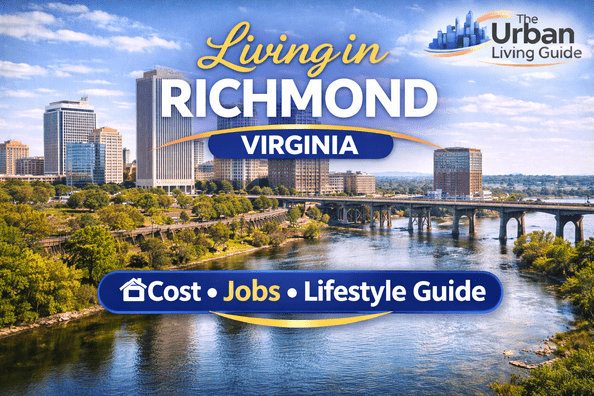
Living in Richmond, Virginia: A Historic River Metropolis Balancing Fortune 500 Enterprise, Arts Innovation, and James River Recreation
Living in Richmond, Virginia delivers an invigorating fusion of deep American history, rapid economic evolution, and a vibrant local arts culture anchored right along the banks of the historic James River. As the capital commonwealth city of Virginia with a population hovering around 230,000 residents and a broader metropolitan reach exceeding 1.3 million people, Richmond bridges the gap between small-town charm and bustling urban enterprise. Known affectionately as the River City, the municipality offers an authentic alternative to heavy northern East Coast metropolises, pairing affordable historic neighborhoods with an expanding tech ecosystem and world-class culinary innovation.
Navigating municipal resources, public governance data, and city initiatives is streamlined through the official City of Richmond Government Portal.
If you are exploring the geographic layout of Virginia’s capital region for the first time, the interactive map below highlights the city’s central thoroughfares and surrounding natural boundaries.
All quantitative metrics, economic data points, and community insights compiled within this living guide are synthesized from official municipal resources, regional economic boards, and verified long-term resident feedback.
What Makes Richmond So Popular & Unique
Over the past decade, Richmond has emerged as one of the most talked-about mid-sized cities in the eastern United States. Key factors driving this sustained popularity include:
- James River Outdoor Access: Rapid whitewater rapids running directly through an urban center, paired with miles of hiking and biking trails along the James River Park System. Explore conservation efforts via the Virginia Department of Conservation and Recreation Portal.
- Historic Architectural Identity: Stunning Victorian and Edwardian row houses lining iconic neighborhoods like The Fan District and Church Hill.
- Thriving Craft Brewery Scene: An internationally recognized craft beverage culture centered around industrial districts like Scott’s Addition.
- Strategic East Coast Location: Convenient positioning offering effortless driving access to Washington, D.C., Virginia Beach, and the Blue Ridge Mountains.
Richmond at a Glance: Key Living Metrics
| Evaluation Metric | Local Data Overview & Regional Reality |
|---|---|
| Population | Approx. 230,000 within city limits (Metro area exceeds 1.3 million) |
| Median Home Price | Ranges from $350,000 to $430,000 depending on the historic neighborhood pocket |
| Average Monthly Rent | $1,400 to $2,600 covering apartments, townhomes, and rental properties |
| Primary Economic Pillars | Banking and finance, state government administration, healthcare, and higher education |
| State Income Tax | Progressive state income tax structure ranging up to 5.75% across Virginia |
| Average Summer High | Routinely reaches 85°F to 95°F during humid July and August afternoons |
| Primary Transit Mode | Car-dependent urban grid supplemented by the regional bus network |
Famous Personalities, Local Icons & Major Brands in Richmond
Richmond has nurtured an impressive legacy of legendary athletes, influential artists, and corporate powerhouses. Notable local icons and entities include:
- Arthur Ashe: Legendary tennis champion, humanitarian, and civil rights icon who grew up in the city, celebrated via local monuments and sports facilities. Discover regional cultural heritage via the Visit Richmond Cultural Portal.
- Chris Brown: Acclaimed Grammy-winning recording artist, singer, and dancer who spent his formative years developing his performance style in the city.
- Capital One Financial Corporation: Built its massive corporate foundation here, anchoring a premier national financial services presence (Capital One Official Portal).
- Dominion Energy: Major energy and electric utility corporation headquartered downtown, shaping regional infrastructure and commercial growth (Dominion Energy Official Portal).
Job Market & Business Opportunities with Major Employers
The employment landscape in Richmond operates as a stable, diversified economic engine driven by banking, public administration, and healthcare. Key employment drivers include:
- Capital One Headquarters: Operates sprawling corporate office campuses that employ thousands of finance professionals, software engineers, and analysts.
- State Government & Public Administration: As the commonwealth capital, state agencies and municipal offices provide exceptional job stability and administrative career tracks.
- Virginia Commonwealth University (VCU) Health System: A massive academic medical center and healthcare employer driving advanced clinical research and employment (VCU Health Official Portal).
- CarMax & Altria Group: Fortune 500 corporate headquarters anchoring high-wage corporate management and logistics operations.
Housing & Real Estate Overview in Richmond
Navigating the real estate market in Richmond reveals a fascinating balance between historic preservation and modern residential expansion:
- Architectural Diversity: Features turn-of-the-century brick row houses, restored industrial warehouses converted into loft apartments, and modern suburban single-family homes. Track city property data via the City of Richmond Open Data Portal.
- Market Affordability: While gentrification in urban core pockets has driven up property valuations, housing remains significantly more accessible and affordable than nearby Washington, D.C.
- Rental Market Inventory: Average monthly rental overhead spans $1,200 to $1,500 for studio apartments, $1,400 to $1,900 for one-bedroom units, and $1,900 to $2,600+ for multi-bedroom properties.
- Property Tax Considerations: City real estate tax rates support local infrastructure and historic district maintenance, requiring careful budgeting for buyers.
Best Neighborhoods in Richmond: Finding Your Ideal Community
| Neighborhood Name | Vibe & Lifestyle Character | Housing & Price Profile |
|---|---|---|
| The Fan District | Historic European-style grid, stunning Victorian architecture, walkable cafes, and vibrant nightlife. | Historic row houses, vintage apartments, and upper-mid-tier valuations. |
| Church Hill | Richmond’s oldest neighborhood, stunning river overlooks, historic charm, and artisanal bakeries. | Restored 19th-century homes, federal-style properties, and premium pricing. |
| Scott’s Addition | Trendy industrial-chic district, high-density residential lofts, craft breweries, and rooftop bars. | Modern apartment complexes, converted warehouses, and contemporary pricing. |
| Carytown | Eclectic shopping and dining corridor, independent boutiques, historic movie theaters, and foot traffic. | Urban condos, townhomes, and competitive rental valuations. |
| Short Pump | Master-planned suburban enclave in Henrico County, upscale shopping malls, and top schools. | Spacious single-family houses, planned communities, and family-oriented pricing. |
What It’s Really Like Living in Richmond (Daily Life & Vibe)
Daily existence in Richmond is defined by an energetic, outdoors-oriented, and culturally rich rhythm:
- Active River Culture: Residents spend warm afternoons kayaking class III and IV whitewater rapids on the James River or cycling the Belle Isle trail network. Explore recreational trail maps via the James River Park System Portal.
- Neighborhood Socializing: Weekends are routinely spent hopping between craft cideries in Scott’s Addition or enjoying brunch at historic cafes in The Fan.
- Seasonal Energy: Spring and autumn bring vibrant outdoor street festivals, farmers markets, and historic garden tours across the city.
- Social Atmosphere: Progressive, creative, welcoming, and deeply proud of its local identity and culinary milestones.
Cost of Living in Richmond: Monthly Expenses & Salary Needs
The cost of living in Richmond hovers moderately above the national average while remaining remarkably affordable compared to northern East Coast economic hubs:
- Rent / Housing: $1,400 to $2,600 for standard apartments or suburban rental homes.
- Utilities & Power: $150 to $230 covering electricity, gas, and municipal services.
- Groceries & Household: $380 to $620 depending on local market choices and shopping habits.
- Transportation & Fuel: $100 to $180 covering vehicle maintenance, insurance, and gas. Review regional economic indices via the Bureau of Labor Statistics Richmond MSA Portal.
- Required Income: Single individuals or households typically require an annual income between $70,000 and $115,000 to live comfortably without financial stress.
Transportation, Commute Dynamics & Transit Realities
Richmond is structured around an automobile-dependent urban grid supplemented by accessible regional roadways:
- Primary Interstates: Major highways including Interstate 95 and Interstate 64 intersect directly through the city, connecting commuters across the commonwealth.
- Public Transit: Operated by the GRTC Transit System, featuring modern bus rapid transit (Pulse) corridors linking major employment hubs.
- Airport Connectivity: Air travel is easily accessible via Richmond International Airport (RIC), located just minutes east of downtown with streamlined security.
Weather Patterns, Seasonal Realities & Climate Factors
The environmental heartbeat of Richmond is its classic humid subtropical climate:
- Warm Summers: Summer daytime high temperatures routinely average 85°F to 95°F, accompanied by notable humidity that makes shade and air conditioning essential.
- Mild Winters: Winter seasons are relatively gentle compared to northern states, with occasional snowfall and daytime temperatures hovering in the upper 40s and 50s.
- Spring & Fall Beauty: Autumn foliage and blooming spring dogwoods transform city parks into scenic destinations. Track seasonal forecasts via the National Weather Service Wakefield Portal.
Education, Schools & Major Universities
Educational excellence and higher learning institutions define a major portion of the city’s intellectual capital:
- Virginia Commonwealth University (VCU): A prominent urban research university enrolling over 28,000 students and driving medical and artistic innovation (VCU Official Portal).
- University of Richmond: A prestigious private liberal arts institution located in the city’s western suburbs offering elite academic programs (University of Richmond Official Portal).
- Virginia Union University: Historic private historically black university (HBCU) with deep community roots (Virginia Union University Official Portal).
Medical Facilities, Hospitals & Healthcare Systems
Healthcare infrastructure in Richmond is advanced, highly specialized, and supported by world-class medical networks:
- VCU Medical Center: A premier Level I trauma center and academic hospital providing advanced surgical care, pediatric specialists, and clinical research (VCU Medical Center Portal).
- Bon Secours St. Mary’s Hospital: A leading regional medical facility offering comprehensive acute care, cardiovascular services, and orthopedic excellence (Bon Secours St. Mary’s Portal).
- HCA Virginia Health System: Sprawling network of community hospitals providing 24/7 emergency services and specialized outpatient clinics across metropolitan corridors.
Popular Hotels, Cafes, Dining & Culinary Scene
The culinary and hospitality landscape of Richmond has earned national acclaim for its independent spirit and historic elegance:
- The Jefferson Hotel: A grand Beaux-Arts historic luxury hotel operating since 1895, featuring stunning architecture, fine dining at Lemaire, and legendary southern hospitality (The Jefferson Hotel Official Portal).
- Hilton Richmond Downtown: Modern upscale hospitality venue located in a historic former mercantile building near the convention center.
- Craft Breweries & Bistros: Thriving culinary corridors in Scott’s Addition and Church Hill serving James Beard-nominated farm-to-table cuisine and local craft brews.
Sightseeing, Cultural Spots & Tourist Attractions
Cultural exploration and sightseeing in Richmond celebrate rich American history and visual arts:
- Virginia Museum of Fine Arts (VMFA): World-class art museum featuring expansive permanent collections spanning thousands of years of global creativity (VMFA Official Portal).
- Maymont Park: Sprawling 100-acre historic estate featuring botanical gardens, cascading Japanese gardens, and native wildlife exhibits.
- Hollywood Cemetery & Richmond Canal Walk: Historic scenic landmarks offering sweeping river views and resting places of historic American figures.
Honest Trade-offs: Pros and Cons of Living in Richmond
Evaluating the authentic trade-offs of Richmond helps prospective residents establish grounded expectations:
- Pros: Strong job market anchored by major corporate headquarters, rich historic culture, thriving food and craft brewery scene, and exceptional outdoor recreation along the James River.
- Cons: Humid summer weather requiring constant air conditioning, increasing housing prices in popular urban cores, rush-hour traffic congestion on I-95, and occasional severe weather impacts.
Who Is Richmond Ideal For (and Who Should Avoid It?)
Richmond is exceptionally well-suited for creative professionals, tech workers, corporate finance specialists, university students, and families seeking a culturally rich mid-sized city with strong economic stability. Conversely, individuals chasing massive global financial capitals, those who detest humid summer climates, or people relying strictly on heavy subway mass transit systems will find the River City environment challenging.
Real Experiences: Perspectives from Long-Term Residents (5 to 10+ Years)
“We moved down from New York seven years ago for a tech role and bought a row house in The Fan. The energy here is incredible—you can walk to amazing local restaurants, bike down to the James River trails in ten minutes, and actually afford a comfortable lifestyle without the corporate burnout of larger metros. The summer humidity takes some getting used to, but the autumn weather here is absolute perfection.”
[Source: r/rva Community Discussions — synthesized/paraphrased]
“The big reality check for newcomers is watching housing prices rise rapidly across historic neighborhoods like Church Hill and Scott’s Addition. Traffic along I-95 during rush hour can also test your patience. That being said, the local food scene, the access to VCU cultural events, and the tight-knit community feel make it a wonderful place to put down roots.”
[Source: Local Neighborhood Survey & Resident Panels — synthesized/paraphrased]
Frequently Asked Questions About Living in Richmond, Virginia
Is Richmond expensive to live in compared to other East Coast cities?
Richmond maintains a moderate cost of living that sits very close to the national average. While gentrification has increased housing prices in trendy urban enclaves, expenses remain significantly lower than Washington, D.C., New York, and Boston markets.
What level of annual salary do individuals need to live comfortably in Richmond?
Most single professionals and households require an annual income between $70,000 and $115,000 to comfortably cover housing, utilities, vehicle maintenance, and discretionary spending across the metropolitan area without financial strain.
Is Richmond considered a good city for raising families and children?
Yes. Established suburban communities like Short Pump and historic residential pockets like The Fan are exceptionally popular among families due to safe neighborhood layouts, community parks, and access to well-regarded local schools.
Can residents successfully live in Richmond without owning a personal vehicle?
Living without a car is manageable if you reside and work within central urban neighborhoods served by the GRTC bus system, but daily commuting and family errands generally require personal vehicle ownership.
How intense does summer weather get in Richmond during peak months?
Summer temperatures routinely average 85°F to 95°F from June through September. Because the local climate features significant humidity, proper hydration and functional residential air conditioning remain essential for daily summer comfort.
🔗 Explore More Cities in Virginia
If you’re exploring more options beyond Richmond, The Urban Living Guide has covered several other popular cities in Virginia. You can also check:
- Living in Virginia Beach, Virginia
- Living in Norfolk, Virginia
- Living in Arlington, Virginia
- Living in Alexandria, Virginia
Thinking about Richmond? Here are a few must-read guides:
- Cost of Living in Richmond, Virginia
- Pros and Cons of Living in Richmond, Virginia
- Best Neighborhoods in Richmond, Virginia
And if you’re planning your move, don’t miss our complete guide: Moving to Richmond, Virginia
These guides offer a comprehensive view of life in different cities, covering key aspects like cost of living, housing, job opportunities, neighborhoods, commute, weather, education, popular spots, and major employers.
The Urban Living Guide brings all these insights together in one place, making it easier to compare cities and choose the one that best fits your lifestyle, priorities, and long-term goals.