

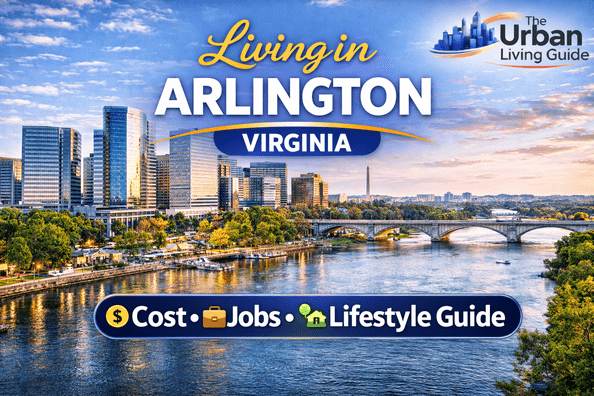
Living in Arlington, Virginia: A Dynamic Urban Core Balancing Federal Power, High-Tech Innovation, and Potomac River Views
Living in Arlington, Virginia offers an exceptionally vibrant urban experience characterized by cutting-edge economic growth, world-class public infrastructure, and immediate proximity to the nation’s capital. Situated directly across the Potomac River from Washington, D.C., Arlington functions as a premier economic, political, and technological engine within the United States. Accommodating roughly 240,000 residents within its compact county borders, the municipality stands out nationally for its highly educated workforce, affluent communities, and forward-thinking urban planning along iconic transit corridors.
Navigating municipal governance, local services, and county development initiatives is streamlined through the official Arlington County Government Portal.
If you are exploring the geographic layout of the Washington metropolitan region for the first time, the interactive map below highlights the county’s central positioning across the Potomac waterfront.
All quantitative metrics, economic data points, and community insights compiled within this living guide are synthesized from official municipal resources, regional economic boards, and verified long-term resident feedback.
What Makes Arlington So Popular & Unique
Over the past two decades, Arlington has evolved from a traditional federal commuter suburb into one of the most dynamic, pedestrian-oriented urban destinations in the country. Key factors driving this sustained popularity include:
- Unmatched Capital Proximity: Immediate neighbor to Washington, D.C., providing effortless access to federal institutions, national museums, and international diplomatic networks. Explore regional economic strategy via the Arlington Economic Development Portal.
- Transit-Oriented Development: Meticulously planned urban villages clustered tightly around the Orange and Silver Metro lines, fostering exceptional walkability and reduced car dependency.
- Robust Innovation Economy: A magnet for high-paying technology firms, global consulting headquarters, and major defense agencies that drive high average household incomes.
- Exceptional Public Services: Consistently ranked among the fittest and most digitally advanced counties in the nation, backed by rigorous municipal maintenance and green space preservation.
Arlington at a Glance: Key Living Metrics
| Evaluation Metric | Local Data Overview & Regional Reality |
|---|---|
| Population | Approx. 240,000 within county limits (Highly compact, dense urban footprint) |
| Median Home Price | Ranges from $650,000 to over $1,100,000 depending on the urban village |
| Average Monthly Rent | $2,200 to $3,900+ covering high-rise apartments and townhome rentals |
| Primary Economic Pillars | Defense contracting, federal administration, cloud computing, and management consulting |
| State Income Tax | Progressive state income tax structure ranging up to 5.75% across Virginia |
| Average Summer High | Routinely reaches 85°F to 95°F during humid July and August afternoons |
| Primary Transit Mode | World-class Washington Metro rail network, extensive bus lines, and bike grids |
Famous Personalities, Local Icons & Major Brands in Arlington
Arlington has long served as a critical operational center for global commerce, historic figures, and influential organizations. Notable local icons and entities include:
- Arlington National Cemetery: The nation’s most sacred military shrine, honoring hundreds of thousands of service members and historical figures on rolling hills overlooking the D.C. skyline. Discover regional discovery guides via the Stay Arlington Official Travel Portal.
- Sandra Bullock & Celebrity Residents: Acclaimed actors, prominent politicians, and journalists frequently maintain private residences within the county’s leafy residential neighborhoods.
- Pentagon Headquarters: The massive nerve center of the U.S. Department of Defense, anchoring a vast network of military personnel and defense contractors.
- Amazon HQ2: Sprawling corporate campus located in National Landing (Crystal City), driving massive high-tech employment expansion (Amazon in Arlington Economic Portal).
Job Market & Business Opportunities with Major Employers
The employment landscape in Arlington offers some of the highest salary ceilings and professional mobility rates in the United States. Key employment drivers include:
- Federal Defense & Military Agencies: The Pentagon and surrounding defense installations provide tens of thousands of civilian, contractor, and military positions.
- Amazon HQ2 & Tech Ecosystem: Sprawling corporate facilities in National Landing attracting software engineers, cloud architects, and digital innovation leaders.
- Booz Allen Hamilton & Consulting Giants: Elite management and technology consulting firms maintaining major corporate offices throughout the Rosslyn-Ballston corridor.
- Deloitte Consulting & Professional Services: Major commercial employers driving high-wage corporate strategy, financial auditing, and government advisory careers.
Housing & Real Estate Overview in Arlington
Navigating the real estate market in Arlington requires understanding its intense demand and high-density urban planning:
- High-Rise & Urban Living: Dominated by luxury glass-and-steel apartment towers and modern condominiums positioned directly above Metro stations in corridors like Clarendon and Rosslyn.
- Single-Family Pockets: Leafy residential neighborhoods further from the Metro lines feature historic craftsman homes, colonials, and mid-century builds with premium valuations. Track property assessments via the Arlington County Real Estate Portal.
- Rental Market Pricing: Average monthly rental overhead spans $1,900 to $2,400 for studio apartments, $2,200 to $2,900 for one-bedroom units, and $2,900 to $3,900+ for multi-bedroom properties.
- Market Competitiveness: Limited geographic land area combined with relentless inbound migration makes purchasing real estate highly competitive and fast-moving.
Best Neighborhoods in Arlington: Finding Your Ideal Community
| Neighborhood Name | Vibe & Lifestyle Character | Housing & Price Profile |
|---|---|---|
| Rosslyn | Modern high-rise business hub, dramatic D.C. skyline views, corporate offices, and direct Metro access. | Luxury high-rise apartments, glass condominiums, and premium valuations. |
| Clarendon | Vibrant urban village, bustling nightlife, trendy restaurants, boutique fitness, and walkable streets. | New construction apartments, urban townhomes, and upper-tier pricing. |
| Ballston | Fast-growing tech and innovation district, shopping mall redevelopment, research hubs, and dining. | Modern mixed-use high-rises, residential condos, and competitive pricing. |
| Crystal City | Major commercial district in National Landing, heavy tech presence, underground concourses, and parks. | Contemporary apartment complexes, high-density residential towers, and corporate housing. |
| Shirlington | Charming urban village feel, pedestrian-only strip, theaters, local pubs, and community green spaces. | Walkable townhomes, garden apartments, and family-friendly valuations. |
What It’s Really Like Living in Arlington (Daily Life & Vibe)
Daily existence in Arlington is defined by an energetic, highly active, and exceptionally fast-paced urban rhythm:
- Transit-First Mobility: Residents frequently commute via the Washington Metro rail network, walk to neighborhood grocery stores, or cycle along the Mount Vernon Trail. Explore transit connectivity via the Washington Metropolitan Area Transit Authority Portal.
- Active Outdoor Culture: Weekends are routinely spent running along the Potomac River waterfront, visiting Theodore Roosevelt Island, or walking through local parks.
- Social & Dining Scene: Evenings feature bustling restaurant patios in Clarendon, craft breweries in Ballston, and cultural events across nearby D.C.
- Social Atmosphere: Highly educated, ambitious, career-driven, and civic-minded, creating an environment where ambitious professionals thrive.
Cost of Living in Arlington: Monthly Expenses & Salary Needs
The cost of living in Arlington sits significantly higher than the national average, reflecting its affluent economy and prime real estate location:
- Rent / Housing: $2,200 to $3,900+ for standard high-rise apartments or modern townhomes.
- Utilities & Power: $160 to $250 covering electricity, water, and heating services.
- Groceries & Household: $450 to $700 depending on local market selections and specialty organic shops.
- Transportation & Fuel: $120 to $200 covering Metro transit passes, occasional rideshares, and vehicle maintenance. Review regional economic data via the Bureau of Labor Statistics Washington-Arlington MSA Portal.
- Required Income: Single individuals or households typically require an annual income between $100,000 and $150,000 to comfortably cover local living expenses without financial strain.
Transportation, Commute Dynamics & Transit Realities
Arlington boasts one of the most sophisticated public transportation systems in the United States:
- Washington Metro Network: The Orange, Blue, and Silver lines connect residents seamlessly across county urban villages directly into downtown Washington, D.C. (WMATA Official Portal).
- Pedestrian & Bike Grids: Extensive bike lanes, Capital Bikeshare stations, and walkable streetscapes make vehicle ownership entirely optional for many residents.
- Airport Connectivity: Unmatched convenience via Ronald Reagan Washington National Airport (DCA), located directly within county borders with immediate Metro station access.
Weather Patterns, Seasonal Realities & Climate Factors
The environmental heartbeat of Arlington is its classic humid subtropical climate:
- Warm Humid Summers: Summer daytime high temperatures routinely average 85°F to 95°F, accompanied by notable humidity that makes shaded parks and air conditioning essential.
- Gentle Winters: Winter seasons are relatively mild compared to northern regions, featuring intermittent light snowfall and comfortable daytime temperatures in the 40s and 50s.
- Spring & Autumn Splendor: Spring cherry blossoms and vibrant autumn foliage transform county green spaces into picturesque destinations. Track local forecasts via the National Weather Service Baltimore-Washington Portal.
Education, Schools & Major Universities
Educational infrastructure stands as a major draw for families and professionals pursuing advanced career credentials:
- Arlington Public Schools (APS): Widely recognized as one of the top-performing and best-funded public school districts in the Commonwealth of Virginia (Arlington Public Schools Official Portal).
- George Mason University (Mason Square): Major urban campus in the Virginia Square neighborhood hosting elite graduate and professional programs, including law and policy (George Mason University Mason Square Portal).
- Marymount University: Private comprehensive university offering career-focused undergraduate and graduate degree programs in northern Virginia (Marymount University Official Portal).
Medical Facilities, Hospitals & Healthcare Systems
Healthcare infrastructure in Arlington is advanced, highly specialized, and supported by elite regional medical networks:
- VHC Health (Virginia Hospital Center): A nationally recognized, 453-bed teaching hospital offering comprehensive emergency trauma care, advanced surgical suites, and specialized medical treatments (VHC Health Official Portal).
- MedStar Health Urgent Care: Extensive network of specialized outpatient clinics providing rapid diagnostic care and preventative health services across neighborhood corridors.
- Inova Health System Proximity: Immediate access to world-class specialty research hospitals and regional medical complexes throughout Northern Virginia.
Popular Hotels, Cafes, Dining & Culinary Scene
The culinary and hospitality landscape of Arlington reflects international diplomacy, urban sophistication, and bustling nightlife:
- Hyatt Centric Arlington: Modern high-end hotel situated in Rosslyn offering panoramic Potomac River views and sophisticated hospitality amenities (Hyatt Centric Arlington Portal).
- The Ritz-Carlton, Pentagon City: Luxury destination hotel connected to upscale shopping, offering world-class dining and polished accommodations (Ritz-Carlton Pentagon City Portal).
- Clarendon Dining Corridors: Bustling commercial strips featuring award-winning international bistros, artisanal coffee roasters, and lively evening gathering spots.
Sightseeing, Cultural Spots & Tourist Attractions
Cultural exploration and sightseeing in Arlington celebrate American history and monumental architecture:
- Arlington National Cemetery: Iconic historic landmark honoring fallen military heroes and housing the Tomb of the Unknown Soldier and the Kennedy gravesites (Arlington National Cemetery Official Portal).
- Theodore Roosevelt Island: Serene national memorial park situated in the Potomac River featuring wooded hiking trails and a grand monument.
- Pentagon Memorial: Moving outdoor memorial dedicated to the lives lost on September 11, 2001, located adjacent to the Department of Defense headquarters.
Honest Trade-offs: Pros and Cons of Living in Arlington
Evaluating the authentic trade-offs of Arlington helps prospective residents establish grounded expectations:
- Pros: Exceptional job market with high salaries, immediate proximity to Washington, D.C., world-class public transportation via Metro, highly walkable urban villages, and top-tier public schools.
- Cons: Very high housing costs and cost of living, rush-hour traffic congestion along major interstate corridors, expensive parking, and crowded urban environments in peak commercial cores.
Who Is Arlington Ideal For — And Who Should Avoid It?
Arlington is exceptionally well-suited for federal government employees, defense contractors, high-tech software engineers, management consultants, and career-driven urban professionals who value transit-oriented mobility and high earning potential. Conversely, individuals seeking low-density rural solitude, budget-conscious buyers looking for sprawling square footage at low price points, or those who detest urban noise will find the county environment challenging.
Real Experiences: Perspectives from Long-Term Residents (5 to 10+ Years)
“We moved to the Clarendon area nine years ago when my consulting firm transferred me from Chicago, and the lifestyle here is unbeatable. You can walk to the Metro, grab dinner at fantastic restaurants, and be in downtown D.C. in fifteen minutes without ever touching a car steering wheel. Rent and home prices are definitely eye-watering, but the career network and convenience make it worth every penny.”
[Source: r/arlingtonva Community Discussions — synthesized/paraphrased]
“The big reality check for newcomers is accepting that you are paying a massive premium for square footage. If you want a detached house with a big yard, you either look deep into Fairfax County or expect to empty your savings account. However, the public schools in APS are fantastic, the county parks are immaculately maintained, and the overall quality of civic infrastructure here is second to none.”
[Source: Local Neighborhood Survey & Resident Panels — synthesized/paraphrased]
Frequently Asked Questions About Living in Arlington, Virginia
Is Arlington expensive to live in compared to other U.S. cities?
Yes. Arlington maintains a significantly higher cost of living and housing market compared to the national average, driven by its prime location directly across the Potomac River from Washington, D.C., and high average resident incomes.
What level of annual salary do individuals need to live comfortably in Arlington?
Most single professionals and households require an annual income between $100,000 and $150,000 to comfortably cover high housing costs, utilities, transportation, and discretionary spending across the county without severe financial stress.
Is Arlington considered a safe place for families and residents?
Yes. Arlington is consistently recognized as one of the safest urban and suburban communities in the Washington metropolitan region, supported by professional local law enforcement and active community safety programs.
Can residents successfully live in Arlington without owning a car?
Yes. Many residents live entirely car-free by utilizing the Washington Metro rail network, extensive county bus lines, Capital Bikeshare stations, and highly walkable urban corridors centered around Clarendon and Ballston.
What are the best neighborhoods to consider when moving to Arlington?
Top neighborhoods include Rosslyn for high-rise corporate commuting, Clarendon for vibrant nightlife and walkability, Ballston for tech innovation, Crystal City for National Landing proximity, and Shirlington for charming village living.
🔗 Explore More Cities in Virginia
If you’re exploring more options beyond Arlington, The Urban Living Guide has covered several other popular cities in Virginia. You can also check:
- Living in Virginia Beach, Virginia
- Living in Richmond, Virginia
- Living in Norfolk, Virginia
- Living in Alexandria, Virginia
Planning your next chapter in Arlington? Take a look at:
- Cost of Living in Arlington: Pentagon
- Pros and Cons of Living in Arlington: Pentagon
- Best Neighborhoods in Arlington: Pentagon
For a deeper look at the city, read: Moving to Arlington: Pentagon
These guides offer a comprehensive view of life in different cities, covering key aspects like cost of living, housing, job opportunities, neighborhoods, commute, weather, education, popular spots, and major employers.
The Urban Living Guide brings all these insights together in one place, making it easier to compare cities and choose the one that best fits your lifestyle, priorities, and long-term goals.