

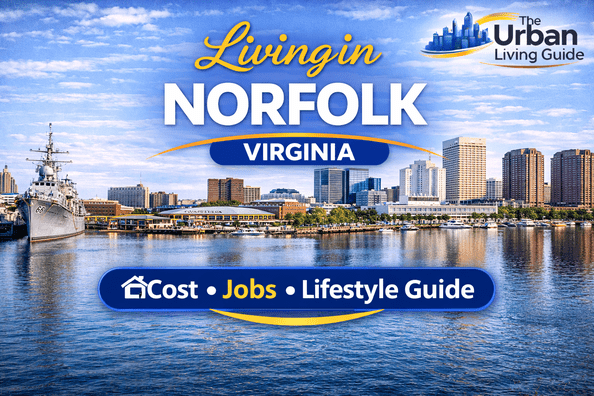
Living in Norfolk, Virginia: America’s Premier Naval Metropolis Balancing Maritime Might, Historic Neighborhoods, and Waterfront Vitality
Living in Norfolk, Virginia offers an immersive coastal experience defined by centuries of rich maritime heritage, world-class naval infrastructure, and an evolving urban arts culture. Situated strategically where the Chesapeake Bay meets the Elizabeth River, Norfolk serves as a crucial economic and cultural anchor of the sprawling Hampton Roads metropolitan region, which includes Virginia Beach, Chesapeake, and Newport News. Home to over 240,000 residents, the city is globally renowned as the headquarters of the Naval Station Norfolk, the largest naval base on earth, blending high-profile defense operations with a thriving downtown waterfront revitalization.
For official municipal data, public governance updates, and city service announcements, residents and researchers regularly consult the City of Norfolk Official Portal.
If you are exploring the layout of the Hampton Roads coastal region for the first time, the interactive map below outlines the city’s strategic positioning across the harbor and river networks.
All quantitative metrics, economic data points, and community insights compiled within this living guide are synthesized from official municipal resources, regional economic boards, and verified long-term resident feedback.
What Makes Norfolk So Unique & Popular
Over the past decade, Norfolk has transformed from a traditional military port town into a dynamic, culture-rich coastal destination. Key factors driving this sustained popularity include:
- Unmatched Naval Heritage: Direct proximity to global defense operations and maritime logistics networks that provide extraordinary regional economic stability. Explore regional tourism initiatives via the Visit Norfolk Tourism Board.
- Historic Urban Charm: Distinctive architectural enclaves like Ghent, featuring tree-lined streets, independent cafes, and preserved 19th-century residential structures.
- Waterfront Living & Recreation: Extensive harbor views, public beach access in Ocean View, and miles of scenic multi-use pathways along the water.
- Expanding Arts & Cultural Core: A burgeoning downtown scene highlighted by world-class museums, performing arts theaters, and craft beverage hubs.
Norfolk at a Glance: Key Living Metrics
| Evaluation Metric | Local Data Overview & Regional Reality |
|---|---|
| Population | Approx. 240,000 within city limits (Core hub of Hampton Roads) |
| Median Home Price | Ranges from $320,000 to $400,000 depending on the neighborhood pocket |
| Average Monthly Rent | $1,100 to $2,300 covering apartments, townhomes, and rental houses |
| Primary Economic Pillars | Military defense, maritime shipping, healthcare, logistics, and higher education |
| State Income Tax | Progressive state income tax structure ranging up to 5.75% across Virginia |
| Average Summer High | Routinely reaches 85°F to 95°F during humid July and August afternoons |
| Primary Transit Mode | Car-dependent urban grid supplemented by The Tide light rail and regional buses |
Famous Personalities, Local Icons & Major Brands in Norfolk
Norfolk has cultivated a remarkable legacy of legendary music producers, historical figures, and corporate industrial leaders. Notable local icons and entities include:
- Timbaland: Grammy-winning record producer and musical innovator who grew up shaping his iconic hip-hop and R&B beats in local studios. Discover regional heritage details via the Norfolk Heritage and Culture Archives.
- Missy Elliott: Internationally famous rapper, songwriter, and visionary producer whose formative artistic journey is deeply rooted in the Hampton Roads community.
- General Douglas MacArthur: Iconic military leader whose final resting place and historic archives are enshrined at the downtown MacArthur Memorial (MacArthur Memorial Official Site).
- Norfolk Southern Railway: Fortune 500 transportation enterprise that operated its foundational corporate headquarters downtown, anchoring national rail logistics.
Job Market & Business Opportunities with Major Employers
The employment landscape in Norfolk operates as a powerhouse of defense, maritime commerce, and public institutional stability. Key employment drivers include:
- Naval Station Norfolk: The largest naval base in the world, employing tens of thousands of active-duty military personnel, civilian contractors, and defense specialists (Naval Station Norfolk Portal).
- Sentara Healthcare: A massive regional medical network operating flagship hospital complexes and providing extensive clinical and administrative career paths (Sentara Healthcare Official Portal).
- Old Dominion University (ODU): A premier research institution driving higher education employment, technological innovation, and academic development (Old Dominion University Portal).
- Norfolk Southern & Maritime Logistics: Sprawling freight railway operations and port shipping facilities supporting extensive supply chain careers.
Housing & Real Estate Overview in Norfolk
Navigating the real estate market in Norfolk reveals a diverse residential landscape defined by historic character and waterfront access:
- Architectural Variety: Ranges from historic Victorian and Edwardian homes in Ghent to modern high-rise downtown waterfront apartments and coastal single-family houses in Ocean View. Track property valuations via the City Real Estate Assessor Portal.
- Financial Accessibility: Offers relatively moderate housing costs and rental pricing compared to Northern Virginia and major northeastern metropolitan markets.
- Rental Market Inventory: Average monthly rental overhead spans $1,100 to $1,400 for studio apartments, $1,300 to $1,700 for one-bedroom units, and $1,700 to $3,800+ for multi-bedroom properties and family homes.
- Flood Zone Awareness: Prospective buyers in low-lying coastal and riverfront zones must carefully evaluate flood insurance requirements and coastal elevation standards.
Best Neighborhoods in Norfolk: Finding Your Ideal Community
| Neighborhood Name | Vibe & Lifestyle Character | Housing & Price Profile |
|---|---|---|
| Ghent | Historic pedestrian-friendly enclave, tree-lined streets, local art galleries, and neighborhood cafes. | Historic row houses, vintage apartments, and upper-mid-tier valuations. |
| Downtown Norfolk | Urban core along the Elizabeth River, high-rise living, financial offices, dining, and nightlife. | Luxury waterfront apartments, urban lofts, and competitive pricing. |
| Ocean View | Coastal residential strip offering direct beach access, Chesapeake Bay views, and a relaxed vibe. | Beachfront houses, cottages, and accessible coastal pricing. |
| Larchmont | Established residential neighborhood adjacent to Old Dominion University, quiet and family-oriented. | Classic single-family homes, mature landscaping, and stable valuations. |
| East Beach | Modern planned waterfront community featuring traditional coastal architecture and neighborhood docks. | Contemporary coastal homes, luxury townhouses, and premium valuations. |
What It’s Really Like Living in Norfolk (Daily Life & Vibe)
Daily existence in Norfolk is defined by an energetic, maritime-infused rhythm that prioritizes outdoor wellness and urban community culture:
- Waterfront Activity: Residents spend weekends walking or cycling along the scenic Elizabeth River Trail, exploring coastal parks, or boating across the harbor. Explore trail maps via the Elizabeth River Trail Foundation Portal.
- Cultural Evenings: Evenings are routinely spent attending performances at local theaters, dining at seafood bistros along Granby Street, or visiting art exhibitions.
- Seasonal Energy: Summer brings vibrant outdoor festivals and military community celebrations, while autumn and spring offer crisp harbor breezes and pleasant park weather.
- Social Atmosphere: Diverse, progressive, welcoming, and deeply shaped by a blend of maritime camaraderie and academic intellectualism.
Cost of Living in Norfolk: Monthly Expenses & Salary Needs
The cost of living in Norfolk sits very close to the national average, making it an economically approachable option along the East Coast:
- Rent / Housing: $1,300 to $2,300 for standard apartments or suburban rental homes.
- Utilities & Power: $150 to $230 covering electricity, water, and municipal services.
- Groceries & Household: $380 to $620 depending on local market selections and shopping habits.
- Transportation & Fuel: $100 to $180 covering vehicle maintenance, insurance, and gas. Review regional economic indices via the Bureau of Labor Statistics Norfolk MSA Portal.
- Required Income: Single individuals or households typically require an annual income between $65,000 and $105,000 to comfortably cover local living expenses without financial stress.
Transportation, Commute Dynamics & Transit Realities
Norfolk is structured around an urban-suburban grid system supported by multi-modal transportation options:
- Primary Interstates: Major roadways include Interstate 264 and Interstate 64, connecting commuters across the Hampton Roads bridge-tunnel network.
- Public Transit: Operated by the Hampton Roads Transit system, featuring bus lines and The Tide light rail system linking medical and downtown districts (Hampton Roads Transit Official Portal).
- Airport Connectivity: Air travel is easily accessible via Norfolk International Airport (ORF), located just minutes from the city center.
Weather Patterns, Seasonal Realities & Climate Factors
The environmental heartbeat of Norfolk is its mild humid subtropical coastal climate:
- Warm Summers: Summer daytime high temperatures routinely average 85°F to 95°F, moderated by refreshing ocean breezes and Chesapeake Bay air flow.
- Mild Winters: Winter seasons are exceptionally gentle compared to northern inland states, featuring mild daytime temperatures and minimal snowfall.
- Coastal Weather Awareness: Residents must remain mindful of tropical storm systems and seasonal tidal flooding in low-lying areas. Track regional forecasts via the National Weather Service Wakefield Portal.
Education, Schools & Major Universities
Educational infrastructure stands as a major pillar of intellectual and professional development across the city:
- Old Dominion University (ODU): A prominent doctoral research university enrolling over 24,000 students and anchoring the Larchmont neighborhood (Old Dominion University Official Portal).
- Norfolk State University (NSU): A respected historic public university offering comprehensive undergraduate and graduate degree programs (Norfolk State University Official Portal).
- Tidewater Community College: Major regional institution providing vital technical training, vocational certificates, and associate degree pathways (Tidewater Community College Portal).
Medical Facilities, Hospitals & Healthcare Systems
Healthcare infrastructure in Norfolk is advanced, highly specialized, and supported by world-class medical networks:
- Sentara Norfolk General Hospital: A premier Level I trauma center and teaching hospital offering advanced emergency care, cardiovascular surgery, and specialized clinical treatments (Sentara Norfolk General Portal).
- Children’s Hospital of The King’s Daughters (CHKD): Virginia’s premier freestanding children’s hospital providing dedicated pediatric trauma and specialty care (CHKD Official Site).
- Sentara Leigh Hospital: Comprehensive medical facility offering advanced surgical suites, orthopedic care, and family medicine services across metropolitan corridors.
Popular Hotels, Cafes, Dining & Culinary Scene
The culinary and hospitality landscape of Norfolk reflects vibrant maritime tourism and historic charm:
- Hilton Norfolk The Main: Upscale downtown luxury hotel featuring sophisticated guest rooms, rooftop lounge dining, and major convention facilities (Hilton Norfolk The Main Portal).
- Norfolk Waterside Marriott: Premier waterfront hotel offering direct connectivity to shopping, dining, and Elizabeth River promenades (Norfolk Waterside Marriott Portal).
- Granby Street Cafes & Seafood Grills: Bustling urban dining corridors serving fresh Chesapeake seafood, local craft brews, and artisan coffee.
Sightseeing, Cultural Spots & Tourist Attractions
Cultural exploration and sightseeing in Norfolk celebrate maritime history and visual arts:
- Nauticus & Battleship Wisconsin: Sprawling interactive maritime science museum anchored by the historic Battleship Wisconsin docked on the downtown riverfront (Nauticus Maritime Museum Portal).
- Chrysler Museum of Art: World-class art institution featuring a vast collection of European and American masterpieces, plus a state-of-the-art glass studio (Chrysler Museum Official Portal).
- Norfolk Botanical Garden: Expansive 175-acre public garden showcasing stunning themed plant displays, walking trails, and boat tours (Norfolk Botanical Garden Portal).
Honest Trade-offs: Pros and Cons of Living in Norfolk
Evaluating the authentic trade-offs of Norfolk helps prospective residents establish grounded expectations:
- Pros: Strong military and defense-backed economy, beautiful waterfront lifestyle, growing arts and cultural scene, accessible housing compared to northern metros, and mild winters.
- Cons: Tropical storm and hurricane risks, localized tidal flooding in low-lying waterfront pockets, humid summer weather, and variable neighborhood safety indices.
Who Is Norfolk Ideal For (and Who Should Avoid It?)
Norfolk is exceptionally well-suited for active-duty military personnel, defense contractors, maritime logistics professionals, university students, and urban-minded individuals seeking a coastal lifestyle with strong economic stability. Conversely, individuals chasing ultra-low density rural solitude, those who detest humid summer climates, or people seeking zero coastal storm exposure will find the harbor environment challenging.
Real Experiences: Perspectives from Long-Term Residents (5 to 10+ Years)
“We transferred here with the Navy seven years ago and fell so much in love with the historic charm of Ghent that we decided to stay permanently after retirement. You can walk to amazing local coffee shops, bike down the Elizabeth River Trail, and enjoy a fantastic food scene without paying northern Virginia prices. The summer humidity is real, and you learn to keep an eye on tropical weather during autumn, but the community spirit here is second to none.”
[Source: r/norfolk Community Discussions — synthesized/paraphrased]
“The big reality check for newcomers is understanding coastal flooding. If you buy a home in low-lying areas near Ocean View or certain tidal pockets, heavy storm surges can test your patience with street parking. That being said, having Nauticus downtown, the Chrysler Museum, and a thriving arts community right on your doorstep makes Norfolk an incredible place to put down roots.”
[Source: Local Neighborhood Survey & Resident Panels — synthesized/paraphrased]
Frequently Asked Questions About Living in Norfolk, Virginia
Is Norfolk expensive to live in compared to other coastal U.S. cities?
Norfolk maintains a moderate cost of living that sits very close to the national average. While waterfront real estate commands premium pricing, overall living expenses remain significantly more affordable than major northern coastal hubs and Northern Virginia.
What level of annual salary do individuals need to live comfortably in Norfolk?
Most single professionals and households require an annual income between $65,000 and $105,000 to comfortably cover housing, utilities, vehicle maintenance, and discretionary spending across the municipality without financial strain.
Is Norfolk considered a good city for raising families and children?
Yes. Established residential communities like Larchmont and East Beach are exceptionally popular among families due to safe neighborhood layouts, community parks, family-oriented recreational facilities, and access to local public and private schools.
Can residents successfully live in Norfolk without owning a personal vehicle?
Living without a car is manageable if you live and work within central urban neighborhoods like Ghent or Downtown Norfolk served by The Tide light rail and HRT buses, but daily commuting and family errands generally require personal vehicle ownership.
How intense does summer weather get in Norfolk during peak months?
Summer temperatures routinely average 85°F to 95°F from June through September. Because the local climate features significant coastal humidity, proper hydration and functional residential air conditioning remain essential for daily summer comfort.
🔗 Explore More Cities in Virginia
If you’re exploring more options beyond Norfolk, The Urban Living Guide has covered several other popular cities in Virginia. You can also check:
- Living in Virginia Beach, Virginia
- Living in Richmond, Virginia
- Living in Arlington, Virginia
- Living in Alexandria, Virginia
Still researching Norfolk? These articles cover the essentials:
- Cost of Living in Norfolk, Virginia
- Pros and Cons of Living in Norfolk, Virginia
- Best Neighborhoods in Norfolk, Virginia
For a step-by-step relocation guide, see: Moving to Norfolk, Virginia
These guides offer a comprehensive view of life in different cities, covering key aspects like cost of living, housing, job opportunities, neighborhoods, commute, weather, education, popular spots, and major employers.
The Urban Living Guide brings all these insights together in one place, making it easier to compare cities and choose the one that best fits your lifestyle, priorities, and long-term goals.