

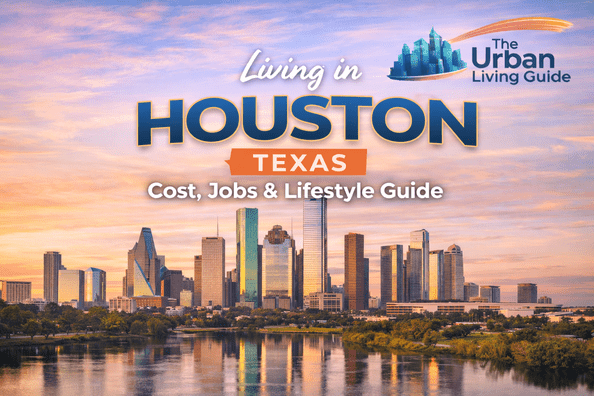
Living in Houston, Texas: What Life Is Like in America’s Energy Capital
Living in Houston, Texas offers a unique combination of economic opportunity, cultural diversity, and relatively affordable housing compared to other large U.S. metropolitan areas. As the largest city in Texas and the fourth-largest city in the United States, Houston spans over 600 square miles across Harris County, extending into parts of Fort Bend County and Montgomery County. Known globally for its dominant energy sector, world-renowned medical research institutions, and historic space exploration roots, Houston continues to attract thousands of professionals, families, and young graduates every single year.
However, relocating to Houston requires realistic expectations about local climate dynamics, sprawling urban infrastructure, and car dependency. While Texas boasts no state income tax, local property taxes and mandatory windstorm or flood insurance can alter long-term housing affordability calculations. Whether you are navigating traffic on I-10 or evaluating neighborhoods inside versus outside Loop 610, this comprehensive relocation guide details real estate costs, employment markets, neighborhood profiles, and practical daily living factors to help you determine if moving to Houston aligns with your lifestyle and financial goals.
If you are not familiar with the geographical layout of Greater Houston, reference the interactive map below to explore its expansive freeway loops and surrounding suburban communities.
The information in this guide is derived from municipal planning data, economic regional reports, and long-term resident insights compiled for potential home buyers and renters in 2026.
What Makes Houston So Unique & Popular
Houston has experienced steady population growth for decades, driven primarily by corporate expansions, international trade, and steady domestic migration from higher-cost coastal states like California and New York. Unlike cities constrained by geographic barriers like oceans or mountain ranges, Houston has expanded outward in concentric rings, creating a massive metropolitan region home to more than 7.3 million residents.
One of the most defining characteristics of Houston is its status as the largest U.S. city without formal municipal zoning laws. This produces a unique urban fabric where high-rise condominiums, independent dining establishments, retail centers, and residential historic homes frequently exist side-by-side along major corridors like Westheimer Road or Washington Avenue. Additionally, Houston is recognized as one of the most ethnically diverse major cities in America, with over 145 languages spoken across its neighborhoods, contributing to a vibrant global culture and world-class culinary landscape.
Key drivers behind relocating to Houston:
- Zero state income tax across all income brackets in Texas
- Robust employment opportunities in energy, healthcare, aerospace, and global trade
- Substantially lower cost per square foot for real estate compared to national tier-one metros
- Exceptional international dining and cultural diversity across all quadrants
- Extensive suburban expansion featuring top-tier master-planned developments
- Global connectivity through two major airport hubs
Houston at a Glance: Key Relocation Metrics
Understanding the baseline economic and demographic numbers provides crucial clarity before planning a relocation to Greater Houston. Below is a detailed snapshot of key metrics for 2026.
| Relocation Metric | Houston Local Benchmark | National / Regional Comparison |
|---|---|---|
| Total Population | 2.3+ Million (City) / 7.3+ Million (Metro) | 4th largest U.S. city; 5th largest metro area |
| Median Home Purchase Price | $325,000–$345,000 | Approximately 12% lower than national median |
| Average Monthly Rent (1-Bed) | $1,250–$1,550 | Competitive compared to Austin or Dallas |
| State Income Tax Rate | 0.00% | No individual state income tax in Texas |
| Average Property Tax Rate | 2.2%–2.8% (Varies by county/district) | Significantly higher than U.S. national average |
| Average Daily Commute Time | 29.5 Minutes | Varies widely depending on freeway route |
| Primary Economic Hubs | Energy Corridor, TMC, Downtown | Global leader in energy and life sciences |
While base living expenses remain manageable, prospective residents should factor local property tax rates and insurance premiums into their initial budgeting process.
Famous Personalities, Sports Teams & Major Brands in Houston
Houston maintains a powerful footprint in American pop culture, sports, and corporate commerce. The city has produced or served as home to influential figures including global icon Beyoncé Knowles-Carter, Olympic champion Simone Biles, musician Travis Scott, actor Jim Parsons, and legendary sports stars like Hakeem Olajuwon and Nolan Ryan.
Sports culture runs deep across the region, anchored by championship professional franchises. Local fans gather at Minute Maid Park to support the Houston Astros (MLB), head to NRG Stadium for the Houston Texans (NFL), fill Toyota Center for the Houston Rockets (NBA), and support the Houston Dynamo FC (MLS) at Shell Energy Stadium.
Major commercial brands born or headquartered in the region include energy giant ExxonMobil, global food distributor Sysco, retail giant Academy Sports + Outdoors, famous convenience store brand Bucee’s (headquartered nearby in Lake Jackson), and regional culinary staples like Whataburger and Shipley Do-Nuts.
Job Market & Business Opportunities with Major Employers
Long recognized as the “Energy Capital of the World,” Houston hosts thousands of energy-related firms ranging from exploration and production to renewable clean tech research. However, the modern Houston job market extends far beyond oil and natural gas, boasting major centers for medical research, international trade, manufacturing, and aerospace engineering.
The job market in Houston is anchored by key employment clusters including the Energy Corridor along I-10 West, the massive Texas Medical Center near Midtown, and the industrial shipping infrastructure surrounding the Port of Houston along the Houston Ship Channel.
Primary corporate employers and institutional anchors:
- ExxonMobil: Massive corporate campus operating in Spring, housing thousands of technical and corporate personnel.
- Phillips 66: Global energy manufacturing and logistics company headquartered in Westchase.
- Texas Medical Center: The largest medical complex on earth, employing over 106,000 individuals across research, education, and patient care.
- NASA Johnson Space Center: Focal point for American human spaceflight activities, anchoring a thriving aerospace cluster in Clear Lake.
- Sysco Corporation: Fortune 500 leader in food product distribution headquartered in Energy Corridor.
- Chevron and Shell USA: Major corporate operations maintaining thousands of downtown and regional administrative positions.
- Halliburton and Baker Hughes: Key oilfield services firms with corporate facilities across the metro area.
Salaries in executive, engineering, and medical management sectors regularly exceed national averages, providing high purchasing power when combined with state tax benefits.
Housing & Real Estate Overview in Houston
Housing affordability remains a primary motivation for individuals moving to Living in Houston, Texas. Compared to metros like San Francisco, New York, or Austin, buyers in Houston get significantly more square footage, larger lot sizes, and modern architectural features for their investment.
The rental market offers diverse residential formats ranging from mid-rise luxury apartments in Midtown to single-family rental homes in suburban master-planned developments across Katy or Cypress.
Typical rental rates in Houston for 2026:
- Studio Apartments: $1,000–$1,300 per month
- 1-Bedroom Apartments: $1,200–$1,700 per month
- 2-Bedroom Apartments: $1,600–$2,400 per month
- 3-Bedroom Single-Family Homes: $2,200–$3,200 per month
When purchasing real estate, buyers must evaluate local property taxes, municipal utility districts (MUD taxes), and flood zones. Because Houston is built across low-lying coastal plains with bayou systems like Buffalo Bayou and White Oak Bayou, reviewing FEMA flood elevation maps and securing flood insurance is a crucial home-buying step regardless of proximity to water.
Best Neighborhoods in Houston: Finding Your Ideal Community
Selecting the right location depends heavily on your daily commute, budget, and lifestyle preferences. Local real estate in Houston is fundamentally divided into two regions: “Inside the Loop” (referring to Interstate 610 which encircles the urban core) and “Outside the Loop” (covering expansive suburban developments and outer rings like Beltway 8 and Grand Parkway / SH 99).
- North Suburbs / Master-Planned
- Urban Core (Inside Loop 610)
- Central Luxury (Inside Loop 610)
- West Suburbs (I-10 Corridor)
- Southwest Suburbs (Fort Bend)
- Historic Core (Inside Loop 610)
| Neighborhood Name | Location Profile | Median Home Price | Target Resident Demographic |
|---|---|---|---|
| The Woodlands | $480,000–$750,000 | Families, corporate executives, nature lovers | |
| Midtown | $310,000–$420,000 | Young professionals, nightlife enthusiasts, commuters | |
| River Oaks | $1,800,000–$5,500,000+ | High-net-worth individuals, historic estates | |
| Katy | $340,000–$520,000 | Families seeking top-tier school districts | |
| Sugar Land | $380,000–$580,000 | Diverse families, suburban corporate workers | |
| Houston Heights | $620,000–$950,000 | Creatives, dining lovers, urban professionals |
Deep Dive into Top Neighborhood Characters:
The Woodlands: Located approximately 28 miles north of Downtown Houston, this premier master-planned community features heavily forested surroundings, miles of hike-and-bike trails, luxury shopping at The Woodlands Waterway, and corporate campuses including Occidental Petroleum.
Midtown & Montrose: Positioned adjacent to Downtown, these walkable, eclectic neighborhoods offer trendy coffee shops, art galleries, high-density residential towers, and active nightlife along Westheimer Road.
Katy & Sugar Land: Highly sought-after western and southwestern suburbs featuring top-ranked public schools, master-planned neighborhoods like Cinco Ranch and First Colony, and convenient access to the Energy Corridor via I-10 and Westpark Tollway.
What It’s Really Like Living in Houston (Daily Life & Vibe)
Living in Houston means embracing a high-energy, pragmatic, and unpretentious lifestyle. The city’s day-to-day rhythm revolves around work opportunities, incredible dining options, air-conditioned indoors during summer months, and vibrant weekend outdoor activities during mild winter seasons.
To experience visual perspectives on neighborhood vibes and daily routines when Living in Houston, Texas, view the local vlog footage below.
A major highlight of life in Houston is its nationally celebrated food culture. Due to decades of international immigration, the city offers unrivaled culinary depth. You can explore authentic Viet-Cajun crawfish in Asiatown along Bellaire Boulevard, world-class Tex-Mex fajitas at The Original Ninfa’s on Navigation, authentic West African jollof rice in Southwest Houston, and smoked brisket at regional BBQ destinations like Truth BBQ or Pinkerton’s Barbecue.
Cost of Living in Houston: Monthly Expenses & Salary Needs
Although housing costs in Houston remain attractive compared to other major coastal metropolitan areas, living expenses depend heavily on commute distance, home electricity consumption during hot summers, and transportation fees.
Estimated monthly cost of living breakdown for a single adult:
- Housing (1-Bed Lease): $1,250–$1,650
- Utilities (Electricity, Water, Trash): $180–$320 (Peaks during July–August air conditioning use)
- Groceries & Household Goods: $380–$550
- Transportation (Gas, Auto Insurance, Tolls): $250–$450 (High auto insurance rates due to weather risks)
- Healthcare & Personal Care: $150–$300
To live comfortably, cover healthcare needs, save for retirement, and enjoy local leisure while Living in Houston, Texas, an individual typically requires a gross annual income of $70,000–$95,000. Families purchasing single-family homes in top school districts generally need household incomes starting at $110,000–$150,000.
Transportation, Highway Bottlenecks & Airport Connectivity
Houston is a vast, automobile-centric metropolis. While the METRORail light rail system services key corridors connecting Downtown, the Museum District, and the Texas Medical Center, the vast majority of residents rely entirely on personal vehicles for daily commuting.
The city’s transit grid relies on major arterial freeways and toll road loops:
- Interstate 10 (Katy Freeway): Spans east-west, featuring up to 26 total lanes (including managed toll lanes) across western corridors.
- Interstate 45 (Gulf Freeway / North Freeway): Major north-south artery connecting The Woodlands to Downtown and Galveston.
- Loop 610: Inner loop encircling the historic urban core; subject to heavy rush hour congestion near the Galleria / Uptown district.
- Beltway 8 (Sam Houston Tollway): Secondary ring road facilitating outer suburban commutes.
- Grand Parkway (SH 99): The outermost 180-mile toll loop connecting regional outer suburbs.
For global travelers, Houston offers unmatched international connectivity through two major airport facilities: George Bush Intercontinental Airport (IAH) located to the north (major hub for United Airlines) and William P. Hobby Airport (HOU) located south of downtown (major operating base for Southwest Airlines).
Weather Patterns, Seasonal Realities & Climate Factors
Houston features a humid subtropical climate characterized by long, hot summers, pleasantly mild winters, and substantial annual rainfall. Understanding local weather patterns is essential for anyone moving to coastal Texas.
Seasonal breakdown and environmental realities:
- Summers (June–September): Extremely hot and humid. Afternoon high temperatures regularly exceed 95°F–100°F, with heat indices reaching 105°F–110°F. Air conditioning is an absolute essential.
- Winters (December–February): Mild and sunny. High temperatures average between 60°F–68°F, with infrequent overnight freezes.
- Tropical Weather & Hurricanes: Official hurricane season runs from June 1 to November 30. Houston is susceptible to tropical storms and severe rain events that cause flash flooding along regional bayou systems.
- Winter Freeze Risk: Occasional Arctic cold fronts (such as Winter Storm Uri) can drop temperatures below freezing, requiring winterization of exposed home pipes.
Education, Schools & Major Universities
Families relocating to Houston have access to expansive public school districts as well as nationally accredited private academies and research universities.
Major higher education institutions shaping regional innovation include:
- University of Houston: A premier public Tier-One research institution anchoring state engineering, law, and business programs.
- Rice University: Highly prestigious private university located near Hermann Park, nationally renowned for engineering, architecture, and scientific research.
- University of Texas Health Science Center at Houston (UTHealth): Leading medical education and scientific training hub within the Texas Medical Center.
Public school performance varies widely by district boundaries. Suburban districts like Katy ISD, Fort Bend ISD, Cypress-Fairbanks ISD, and Tomball ISD consistently rank among the top public educational systems in the region.
Medical Facilities, Hospitals & Healthcare Systems
Healthcare access in Houston is arguably the best in the nation. The regional medical ecosystem is anchored by the Texas Medical Center (TMC), a massive 2.1-square-mile medical district containing 50+ individual non-profit medical institutions, specialized hospitals, and medical schools.
Key healthcare systems operating across the metro include:
- MD Anderson Cancer Center: Consistently ranked as the world’s top institution for cancer treatment, research, and patient care.
- Houston Methodist Hospital: Ranked as the top hospital system in Texas, operating major medical campuses in downtown and suburban centers.
- Texas Children’s Hospital: One of the largest and highest-ranked pediatric hospitals globally.
- Memorial Hermann Health System: Extensive regional healthcare network providing emergency care and specialized clinics across all major suburbs.
Popular Hotels, Cafes, Dining & Culinary Scene
The hospitality and culinary industry in Houston reflects its international diversity and business commerce. Visitors and new residents enjoy luxury boutique hotels like The Post Oak Hotel at Upper Kirby, Hotel ZaZa in the Museum District, and The Houstonian Hotel, Club & Spa near Memorial Park.
Coffee lovers thrive in neighborhoods like Houston Heights and Montrose, home to independent roasters such as Boomtown Coffee, Greenway Coffee, and Catalina Coffee.
For dinner, food enthusiasts explore famous local destinations such as Hugo’s for authentic Oaxacan Mexican cuisine, Uchi for high-end Japanese sushi, B&B Butchers & Restaurant along Washington Avenue, or Crawfish & Noodles in Asiatown for legendary Viet-Cajun seafood boil dishes.
Sightseeing, Cultural Spots & Tourist Attractions
Residents in Houston enjoy a rich collection of cultural, recreational, and historical attractions scattered throughout the city.
Top regional destinations include:
- Space Center Houston: The official visitor center of NASA Johnson Space Center in Clear Lake, featuring historic spacecraft and space exploration exhibits.
- Museum District: A walkable cultural zone featuring 19 institutions, including the Museum of Fine Arts, Houston (MFAH) and the Houston Museum of Natural Science.
- Memorial Park & Eastern Glades: One of the largest urban parks in the country, spanning 1,500 acres with golf courses, running trails, and native botanical habitats.
- Buffalo Bayou Park: A 160-acre greenway featuring skyline views, kayaking, walking trails, and historic underground cistern tours.
Honest Trade-offs: Pros and Cons of Living in Houston
Evaluating a move requires weighing local financial advantages against lifestyle trade-offs.
Pros of Living in Houston:
- Strong Economic Opportunity: Diverse job sectors across energy, healthcare, aerospace, trade, and engineering.
- No State Income Tax: Higher net take-home pay compared to high-tax states.
- Housing Affordability: Substantially lower price per square foot for single-family homes and luxury rentals.
- World-Class Dining & Culture: Unmatched ethnic food scene, international art exhibits, and top-tier theater productions.
- Exceptional Medical Care: Home to the world’s leading specialized cancer centers and hospitals.
Cons of Living in Houston:
- Extreme Summer Heat & Humidity: Prolonged summer temperatures requiring constant air conditioning.
- Car Dependency & Traffic Congestion: Heavy freeway congestion during peak commuting hours on I-10, I-45, and Loop 610.
- Flood & Hurricane Risks: Susceptibility to severe tropical storms, requiring strategic neighborhood selection and flood insurance.
- High Property Tax Rates: Local property tax rates offset some of the state income tax savings.
- Urban Sprawl & Lack of Zoning: Lack of centralized design creates sprawling commercial developments mixed into residential zones.
Who Is Houston Ideal For (and Who Should Avoid It?)
Houston is ideal for:
- Engineers, medical professionals, research scientists, and corporate managers seeking strong career growth.
- Families seeking spacious single-family homes in master-planned communities with top-rated public schools.
- Food lovers and cultural enthusiasts who appreciate global dining, diversity, and museum arts.
Houston may not be ideal for:
- Individuals who rely exclusively on public transportation or prefer walkable, compact European-style cities.
- People with extreme sensitivity to hot weather, high humidity, or summer heatwaves.
- Individuals looking for immediate access to mountain landscapes or cold winter ski climates.
Real Experiences: Perspectives from Long-Term Residents (5 to 10+ Years)
Elena M. (7-Year Resident in Katy): “Moving here from Southern California allowed us to buy a 3,200-square-foot home with a pool in Katy ISD for our kids. The summer humidity takes some getting used to, but the economic opportunities in the Energy Corridor and the local community warmth make it 100% worth it.”
Marcus T. (12-Year Resident in Houston Heights): “Living Inside the Loop gives you a totally different perspective on Houston. I can bike down Buffalo Bayou, eat world-class meals in Montrose, and walk to local breweries. My biggest advice for newcomers: live close to where you work to avoid spending 90 minutes in traffic on Loop 610 every day.”
Frequently Asked Questions About Living in Houston, Texas
Is Houston expensive to live in?
Houston remains more affordable than most tier-one U.S. metros. While home prices and rents are reasonable, residents must budget for elevated local property tax rates, auto insurance, and summer utility bills.
What salary is needed to live comfortably in Houston?
A gross annual salary of $70,000–$95,000 allows a single individual to live comfortably, while families purchasing homes in top suburban school districts generally require household earnings starting at $110,000–$150,000.
Is a car necessary when living in Houston?
Yes, owning a reliable vehicle is practically mandatory in Houston. Aside from limited light rail access along central corridors, the city’s vast geographic footprint requires personal driving for daily commutes and errands.
How bad is traffic congestion in Houston?
Rush hour traffic along major freeways like I-10, I-45, and Loop 610 can significantly lengthen daily commutes. Residents are strongly advised to choose housing within a reasonable driving distance of their primary workplace.
What are the safest and most popular suburbs in Houston?
Top suburban communities include The Woodlands to the north, Katy to the west, Sugar Land to the southwest, and Clear Lake to the south near NASA Johnson Space Center.
How do residents handle the summer heat in Houston?
Locals adapt by utilizing central air conditioning, scheduling outdoor recreational activities during early mornings or late evenings, visiting indoor attractions, and utilizing swimming pools throughout the extended summer season.
🔗 Explore More Cities in Texas
If you’re exploring more options beyond Houston, The Urban Living Guide has covered several other popular cities in Texas. You can also check:
- Living in Dallas, Texas
- Living in Austin, Texas
- Living in San Antonio, Texas
- Living in Fort Worth, Texas
These guides give you a complete picture of what it’s like living across different cities, covering everything from cost of living, housing, and job opportunities to neighborhoods, commute, weather, education, popular places, and major employers.
The Urban Living Guide brings together these local insights in one place, helping you compare cities easily and make a confident, well-informed decision based on your lifestyle and goals.
Thinking about Houston? Here are a few must-read guides:
• Cost of Living in Houston, Texas
• Pros and Cons of Living in Houston, Texas
• Best Neighborhoods in Houston, Texas
And if you’re planning your move, don’t miss our complete guide: Moving to Houston, Texas