

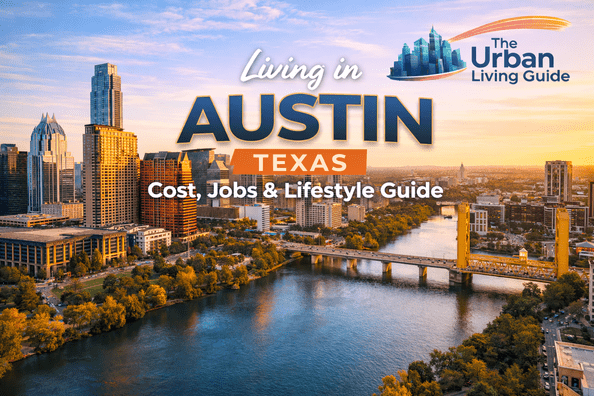
Living in Austin, Texas: What Life Is Like in America’s Silicon Hills
Living in Austin, Texas has captured national attention over the past decade as the city underwent a dramatic transformation from a laid-back state capital into one of America’s premier technology and entrepreneurial epicenters. As the capital of Texas and the county seat of Travis County, Austin anchors a rapidly expanding metropolitan region that spans into Williamson County and Hays County. Nestled along the Colorado River where the coastal plains meet the scenic Texas Hill Country, Austin draws tens of thousands of new residents annually including software engineers, corporate executives, venture capitalists, university students, and young families.
However, relocating to Austin requires realistic financial planning and lifestyle preparation. While housing purchase prices remain somewhat lower than in coastal tier-one hubs like San Francisco or San Jose, local real estate has appreciated substantially due to massive population inflows. While Texas imposes zero state personal income tax, local property tax rates in Travis County and rising monthly rents represent key budget considerations. Whether you are relocating for a tech position along the MoPac Expressway or evaluating suburban communities near Round Rock, this relocation guide examines real estate values, job growth, transportation networks, and daily living realities in Austin.
If you are researching the geographic layout of Central Texas, review the interactive map below to explore how Austin is structured along its primary river corridors and highway loops.
The financial figures, market trends, and neighborhood profiles in this guide are derived from municipal planning data, regional commerce reports, and long-term local resident expertise updated for 2026.
What Makes Austin So Unique & Popular
Austin maintains a singular place in American urban culture, balancing a long-standing creative identity with a hyper-modern corporate technology boom. Officially designated as the “Live Music Capital of the World,” the city boasts hundreds of venue stages concentrated along Sixth Street, Red River Cultural District, and South Congress Avenue. Annual world-class cultural events such as the South by Southwest (SXSW) festival and the Austin City Limits (ACL) Music Festival at Zilker Metropolitan Park bring global attention to the city every year.
Beyond its entertainment credentials, Austin is defined by its outdoor-centric lifestyle and natural spring-fed waterways. Residents routinely spend mornings jogging the 10-mile trail around Lady Bird Lake or swimming in the year-round 68-degree water at Barton Springs Pool. This seamless blend of high-paying tech careers, outdoor recreation, creative culinary arts, and progressive local culture continues to make Austin one of the most desirable relocation destinations in the United States.
Key factors driving relocation to Austin:
- Zero individual state income tax across Texas, maximizing net take-home salary
- Unrivaled tech job market earned through its status as “Silicon Hills”
- Thriving venture capital and startup ecosystem supported by UT Austin talent
- Vibrant live music scene, outdoor festivals, and world-class culinary venues
- Abundant urban green space, spring-fed pools, and Hill Country hiking trails
- Favorable state business regulations encouraging corporate headquarters relocations
Austin at a Glance: Key Relocation Metrics
Understanding baseline demographic and economic statistics provides necessary clarity before planning a relocation to Greater Austin for 2026.
| Relocation Metric | Austin Local Benchmark | National / Regional Comparison |
|---|---|---|
| Total Population | 975,000+ (City) / 2.4+ Million (Metro) | 10th largest city in U.S.; 2nd largest state capital |
| Median Home Purchase Price | $520,000–$560,000 | Higher than Texas state average; lower than CA coastal cities |
| Average Monthly Rent (1-Bed) | $1,500–$2,000 | Competitive among top national tech markets |
| State Income Tax Rate | 0.00% | No state personal income tax in Texas |
| Average Property Tax Rate | 1.8%–2.3% (Varies by district) | Higher than U.S. national benchmark |
| Average Daily Commute Time | 26.8 Minutes | Subject to heavy rush-hour bottlenecks on I-35 |
| Primary Economic Sectors | Technology, Higher Education, Healthcare, Government | Global leader in enterprise software, AI, and hardware |
While state tax savings are significant, prospective home buyers should carefully calculate Travis County property assessments and local tax rates into their overall monthly housing budgets.
Famous Personalities, Sports Teams & Major Brands in Austin
Austin has produced or adopted numerous influential cultural figures, entrepreneurs, and athletes. Oscar-winning actor Matthew McConaughey serves as the university “Minister of Culture” and a prominent local civic figure. Music legends like Willie Nelson helped establish the city’s cosmic country heritage, while figures such as Sandra Bullock, Richard Linklater, and tech billionaire Elon Musk call the area home.
Sports culture in Austin is dominated by the legendary Texas Longhorns of The University of Texas at Austin. Over 100,000 fans pack Darrell K Royal-Texas Memorial Stadium for home college football games on fall Saturdays. Professional sports arrived in 2021 with Austin FC, the city’s Major League Soccer franchise, which plays to sold-out crowds at Q2 Stadium in North Austin. Additionally, Circuit of the Americas (COTA) hosts the annual Formula 1 United States Grand Prix, drawing international racing fans.
Major international brands headquartered or founded in Austin include PC pioneer Dell Technologies (founded by Michael Dell in his UT dorm room), organic grocery giant Whole Foods Market, lifestyle brand YETI, jewelry designer Kendra Scott, world-famous liquor brand Tito’s Handmade Vodka, and restaurant chain Torchy’s Tacos.
Job Market & Business Opportunities with Major Employers
Earned through decades of hardware and software innovation, Austin’s nickname as “Silicon Hills” reflects its standing as a major global technology cluster. The local job market features a high concentration of engineering, artificial intelligence, semiconductor manufacturing, and corporate operations roles.
Major enterprise tech expansions have reshaped the regional economy. Tesla established its global headquarters and massive Gigafactory Texas facility in Del Valle near Austin-Bergstrom International Airport. Consumer giant Apple Inc. constructed a $1 billion corporate campus in North Austin near Parmer Lane, while software leader Oracle Corporation relocated its corporate headquarters to the South Shore of Lady Bird Lake.
Major corporate employers and health institutions:
- Tesla: Global manufacturing and engineering headquarters employing thousands at Gigafactory Texas.
- Apple Inc.: Major corporate engineering and operations campus in North Austin.
- Dell Technologies: Multinational tech anchor headquartered in neighboring Round Rock.
- Oracle Corporation: Enterprise software giant operating a major waterfront campus in South Austin.
- IBM Corporation: Historic research and software development presence in North Austin near The Domain.
- Samsung Electronics: Massive semiconductor manufacturing complex in North Austin alongside a new advanced facility in nearby Taylor.
- The University of Texas at Austin: Premier public research university employing over 24,000 faculty, staff, and researchers.
- Ascension Seton & St. David’s HealthCare: Comprehensive medical networks providing thousands of healthcare positions across Travis County.
Competitive salaries across engineering, product management, and corporate law sectors, paired with zero state income tax, provide high purchasing power for relocating skilled workers.
Housing & Real Estate Overview in Austin
The housing market in Austin expanded rapidly over the past decade as demand outpaced supply across central zip codes. While home prices stabilized following historic surges, purchasing central real estate remains a competitive investment.
The local rental market features high-density luxury high-rises in Downtown Austin, mid-rise garden apartments near The Domain, and single-family rental homes in northern and southern suburban developments.
Average monthly rent estimates for 2026:
- Studio Apartments: $1,300–$1,600 per month
- 1-Bedroom Apartments: $1,500–$2,000 per month
- 2-Bedroom Apartments: $1,900–$2,800 per month
- 3-Bedroom Single-Family Rental Homes: $2,500–$3,600 per month
When purchasing single-family real estate, prospective home buyers should pay attention to property tax rates across different municipal utility districts (MUDs) and school districts (such as Eanes ISD vs. Austin ISD). Additionally, central soil types vary from blackland clay to west side limestone, making professional foundation inspections a standard home buying step.
Best Neighborhoods in Austin: Finding Your Ideal Community
Selecting the right neighborhood in Austin depends on your daily workplace commute, budget constraints, and lifestyle priorities. The metropolitan area is geographically defined by Interstate 35 (running north-south), MoPac Expressway (Loop 1), and US Highway 183.
- Urban Core (Central)
- Tech executives, young professionals, urban buyers
- South Central Core
- Creatives, foodies, tech workers wanting walkability
- East Central Master-Planned
- Families, healthcare workers, eco-conscious buyers
- North Suburb (Williamson County)
- Corporate families, Dell employees, suburban buyers
- West Central Historic
- Established professionals, university faculty
- Northwest Suburbs
- Growing families seeking top public schools
| Neighborhood / Suburb | Location Profile | ||
|---|---|---|---|
| Downtown / Market District | $680,000–$1,200,000+ | ||
| South Congress (SoCo) / Bouldin | $720,000–$1,100,000 | ||
| Mueller | $610,000–$890,000 | ||
| Round Rock | $410,000–$620,000 | ||
| Tarrytown / Clarksville | $1,100,000–$2,500,000+ | ||
| Cedar Park / Leander | $430,000–$650,000 |
In-Depth Breakdown of Key Neighborhood Profiles:
South Congress (SoCo) & Bouldin Creek: Located directly south of Lady Bird Lake, these vibrant central neighborhoods feature historic bungalows, boutique shops, celebrated eateries, and walkable access to downtown tech offices.
Mueller: A sustainable master-planned community built on the site of Austin’s former municipal airport in East Central Austin. Mueller features energy-efficient homes, extensive park systems, weekly farmers markets, and proximity to Dell Children’s Medical Center.
Round Rock & Cedar Park: Premier northern suburban communities offering spacious single-family homes, lower property tax rates in Williamson County, shopping at Round Rock Premium Outlets, and top-rated public school systems in Round Rock ISD and Leander ISD.
The Domain: Often referred to as “Austin’s Second Downtown,” this high-density district in North Austin combines upscale retail shopping, corporate tech offices (including Amazon and Meta), high-rise apartment living, and nightlife along Rock Rose Avenue.
What It’s Really Like Living in Austin (Daily Life & Vibe)
Daily life in Austin revolves around outdoor activity, casual social gatherings, startup innovation, and local dining. The overall community culture is casual and active, with residents routinely trading corporate suits for athletic wear or casual apparel.
To gain authentic visual perspectives on neighborhood rhythms, commute routes, and local living conditions when Living in Austin, Texas, view the detailed vlog overview below.
Food culture is central to the local experience. Austin is nationally famous for its food truck parks, craft barbecue spots, and authentic Tex-Mex establishments. Popular local routines include lining up for world-famous brisket at Franklin Barbecue or Terry Black’s Barbecue, getting queso and margaritas on the patio at Matt’s El Rancho, grabbing breakfast tacos at Veracruz All Natural, and enjoying high-end Japanese dining at Uchi.
Cost of Living in Austin: Monthly Expenses & Salary Needs
While overall expenses in Austin are lower than in coastal tech epicenters like San Francisco or New York, the cost of living sits above the national average. Home buyers and renters must budget carefully for property taxes, transportation, and summer utility consumption.
Estimated monthly cost breakdown for a single adult in 2026:
- Housing (1-Bedroom Apartment Lease): $1,500–$2,000
- Utilities (Electricity, Water, Internet): $150–$250 (Peaks during summer cooling months)
- Groceries & Household Supplies: $350–$550
- Transportation (Gas, Auto Insurance, Tolls): $120–$250
- Healthcare & Personal Care: Moderate costs supported by regional medical networks
To live comfortably, save for retirement, and enjoy local recreation while Living in Austin, Texas, a single adult generally requires a gross annual income of $85,000–$110,000. Families purchasing single-family homes in desirable school districts typically require household earnings starting at $130,000–$170,000.
Transportation, Highway Bottlenecks & Airport Connectivity
Despite ongoing municipal transit investments, Austin remains primarily a car-dependent metropolitan area. While Capital Metro (CapMetro) operates regional bus lines and the MetroRail commuter rail connecting Leander to Downtown Austin, personal vehicles remain necessary for most residents.
Primary commuter freeways and regional highway corridors include:
- Interstate 35: Primary north-south highway bisecting the city center. Notorious for heavy rush-hour congestion, particularly near the downtown double-deck section.
- MoPac Expressway (Loop 1): Major western north-south arterial featuring express toll lanes connecting central neighborhoods to The Domain.
- US Highway 183 (Research Boulevard): Key northwest corridor serving tech campuses and outer suburbs like Cedar Park.
- State Highway 130 (SH 130): High-speed eastern toll bypass routing heavy traffic around central bottlenecks toward Tesla Gigafactory Texas.
Air travel is handled through Austin-Bergstrom International Airport (AUS), located just 8 miles southeast of downtown, offering non-stop flights to major domestic tech hubs and international business destinations.
Weather Patterns, Seasonal Realities & Climate Factors
Austin features a humid subtropical climate marked by long, hot summers, short, mild winters, and pleasant spring and fall seasons.
Seasonal characteristics and climate considerations:
- Summers (June–September): Extremely hot and sunny. Temperatures regularly exceed 95°F–100°F for extended stretches in July and August. Efficient central air conditioning is mandatory.
- Winters (December–February): Mild and pleasant. High temperatures average between 60°F–68°F. Occasional winter cold fronts can bring brief freezing temperatures.
- Cedar Fever Season: December through February brings intense airborne mountain cedar pollen, triggering severe seasonal allergies (“Cedar Fever”) for many residents.
- Flash Flooding Risks: Central Texas sits in a regional watershed zone known as “Flash Flood Alley,” where heavy spring or autumn rain events can cause sudden creek flooding.
Education, Schools & Major Universities
Higher education and public school performance serve as central economic and cultural anchors across Greater Austin.
Premier universities in the area include:
- The University of Texas at Austin (UT Austin): World-renowned flagship research university with over 52,000 students, excelling in computer science, business (McCombs), engineering (Cockrell), and law.
- St. Edward’s University: Highly regarded private Catholic university situated in South Austin.
- Austin Community College (ACC): Expansive community college system providing technical vocational training and workforce development programs.
Primary K-12 public education is divided among multiple independent school districts. Top-rated public school systems in the metro area include Eanes ISD (Westlake area), Round Rock ISD, Leander ISD, and select magnet programs within Austin ISD (such as the Liberal Arts and Science Academy – LASA).
Medical Facilities, Hospitals & Healthcare Systems
Healthcare access in Austin expanded rapidly alongside population growth, anchored by major regional health networks and academic research facilities.
Key healthcare providers include:
- Dell Seton Medical Center at The University of Texas: Downtown’s primary teaching hospital and Level 1 Trauma Center, operating in partnership with the Dell Medical School.
- St. David’s HealthCare: Extensive hospital system with major facilities including St. David’s Medical Center and specialized heart and spine institutes.
- Ascension Seton Medical Center: Premier healthcare network operating specialized medical centers across central and suburban Austin.
- Dell Children’s Medical Center: The region’s dedicated pediatric Level 1 Trauma Center located in the Mueller neighborhood.
Popular Hotels, Cafes, Dining & Culinary Scene
The hospitality and culinary landscape in Austin reflects its youthful energy, tech wealth, and creative heritage. Visitors and locals frequent luxury boutique hotels like Hotel Saint Cecilia in SoCo, The LINE Austin on Lady Bird Lake, and The Fairmont Austin downtown.
Coffee shops serve as secondary remote workspaces across central neighborhoods, featuring popular local roasters like Houndstooth Coffee, Jo’s Coffee, Fleet Coffee, and Merit Coffee.
The city’s dining scene ranges from iconic barbecue pits to innovative chef-driven restaurants. Acclaimed spots include Franklin Barbecue and La Barbecue for craft meats, Uchi for creative Japanese sushi, Suerte for heirloom masa Mexican dishes, and Matt’s El Rancho for classic Tex-Mex queso.
Sightseeing, Cultural Spots & Tourist Attractions
Austin offers an abundance of historical landmarks, public parks, and cultural attractions.
Top tourist spots and outdoor sights include:
- Texas State Capitol: Historic granite capitol building situated on 22 downtown acres, offering guided historical tours.
- Barton Springs Pool: Spring-fed pool located in Zilker Park maintaining a constant 68-degree water temperature year-round.
- Lady Bird Lake Hike-and-Bike Trail: Scenic 10-mile recreational trail surrounding the river, popular for running, cycling, and stand-up paddleboarding.
- Mount Bonnell: Historic lookout point offering sweeping views of the Colorado River and western Hill Country mansions.
- South Congress Avenue (SoCo): Iconic shopping and dining corridor famous for vintage clothing, boot shops, food trucks, and live street music.
Honest Trade-offs: Pros and Cons of Living in Austin
Evaluating trade-offs ensures that relocating to Austin aligns with your career expectations and personal lifestyle needs.
Pros of Living in Austin:
- Robust Tech Career Market: High concentration of corporate tech, startup, and AI employment opportunities.
- Zero State Personal Income Tax: Favorable state tax structure allows higher net income retention.
- Active Outdoor Lifestyle: Exceptional access to urban lakes, spring-fed swimming pools, greenbelts, and parks.
- Vibrant Culinary & Music Culture: World-famous Tex-Mex, craft barbecue, live venue music, and national cultural festivals.
- Highly Educated Population: Tech innovation and talent pipeline supported by UT Austin.
Cons of Living in Austin:
- Rising Cost of Housing: Real estate purchase prices and rental rates have increased significantly over historic norms.
- Intense Summer Heat: Prolonged summer weather with temperatures consistently exceeding 95°F–100°F.
- Highway Traffic Congestion: Significant rush-hour delays along major transit arteries like I-35 and MoPac.
- Limited Public Transportation: Heavy car dependency outside of central urban corridors.
- Seasonal Allergy Risks: Severe airborne pollen during winter months causes widespread “Cedar Fever.”
Who Is Austin Ideal For (and Who Should Avoid It?)
Austin is ideal for:
- Software engineers, technology managers, startup founders, and venture investors seeking career growth in “Silicon Hills.”
- Young professionals and outdoor enthusiasts who value live music, warm weather, social dining, and outdoor fitness.
- UT Austin alumni, remote workers, and relocating households seeking job opportunities in a state with no income tax.
Austin may not be ideal for:
- Individuals seeking low housing costs or quiet, non-expanding mid-sized markets.
- People who rely entirely on public transit and prefer dense, car-free urban environments.
- Individuals with severe sensitivity to hot summer heatwaves or extreme seasonal cedar allergies.
Real Experiences: Perspectives from Long-Term Residents (5 to 10+ Years)
Alex R. (8-Year Resident in Mueller): “Relocating here from California for a tech position in North Austin was a great move for our family. Living in Mueller gives our kids access to parks and farmers markets, and my take-home pay is significantly higher without state income tax. You just have to adapt to July and August heatwaves!”
Priya S. (12-Year Resident in South Congress): “Watching Austin evolve into Silicon Hills has been incredible, though traffic on I-35 requires planning. South Congress still retains its creative spirit, and nothing beats ending a work week with paddleboarding on Lady Bird Lake and grabbing tacos at Veracruz.”
Frequently Asked Questions About Living in Austin, Texas
Is Austin an expensive city to live in?
Austin is more affordable than coastal tech hubs like San Francisco, but its living costs sit above the U.S. national average. Housing costs and property taxes represent the largest monthly household expenses.
What salary do you need to live comfortably in Austin?
A single adult typically requires a gross annual salary of $85,000–$110,000 to live comfortably. Families purchasing single-family homes in top public school districts generally need combined household earnings starting at $130,000–$170,000.
Is Austin safe for families?
Yes, Austin is widely considered a safe major city. Suburban communities such as Round Rock, Cedar Park, Mueller, and Westlake rank among the safest residential areas in Central Texas.
Can you live in Austin without owning a car?
Living without a vehicle is possible in central walkable pockets like Downtown Austin or South Congress, but most residents require personal automobiles for daily errands and suburban commutes.
What are the top corporate tech employers in Austin?
Major employers include Tesla, Apple Inc., Dell Technologies, Oracle Corporation, IBM, Google, and Samsung Electronics.
How does Austin compare to Dallas and Houston?
Austin offers a stronger tech and startup culture, vibrant outdoor lifestyle, and hilly topography. Dallas offers a larger corporate finance presence, while Houston leads in energy and healthcare with slightly lower housing costs.
🔗 Explore More Cities in Texas
If you’re exploring more options beyond Austin, The Urban Living Guide has covered several other popular cities in Texas. You can also check:
- Living in Houston, Texas
- Living in Dallas, Texas
- Living in San Antonio, Texas
- Living in Fort Worth, Texas
These guides give you a complete picture of what it’s like living across different cities, covering everything from cost of living, housing, and job opportunities to neighborhoods, commute, weather, education, popular places, and major employers.
The Urban Living Guide brings together these local insights in one place, helping you compare cities easily and make a confident, well-informed decision based on your lifestyle and goals.
If you want to know more about living in Austin, explore these guides:
- Cost of Living in Austin, Texas
- Pros and Cons of Living in Austin, Texas
- Best Neighborhoods in Austin, Texas
For a complete overview, check our full guide: Moving to Austin, Texas