

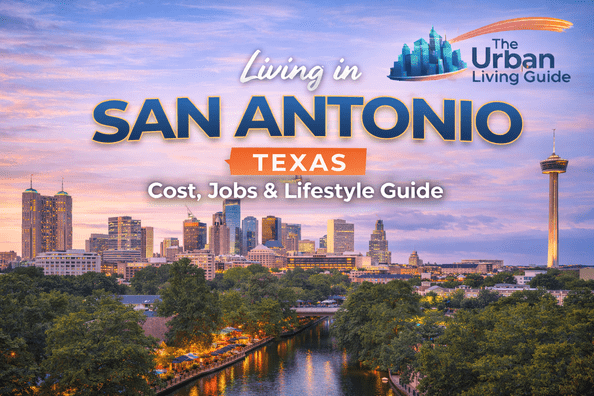
Living in San Antonio, Texas: What Life Is Like Beyond the Alamo
Living in San Antonio, Texas offers a distinctive blend of rich cultural heritage, deep historic roots, exceptional housing affordability, and steady economic resilience. As the second-largest city in Texas and the seventh-largest in the United States, San Antonio spans more than 500 square miles across Bexar County, extending into portions of Comal County and Guadalupe County. Widely recognized as “Military City USA” due to its massive defense footprint, San Antonio attracts thousands of military personnel, healthcare professionals, growing families, and retirees each year.
Unlike the fast-paced, high-cost tech environment of Austin or the high-density corporate hub of Dallas, San Antonio provides a more relaxed, family-centric metropolitan lifestyle. However, relocating to San Antonio requires realistic expectations regarding local climate conditions, wage scales across non-tech industries, and sprawling freeway infrastructure. While Texas levies no state income tax, local property taxes and auto insurance costs still factor into long-term financial calculations. Whether you are planning a job transfer to Joint Base San Antonio (JBSA) or searching for affordable suburban real estate along Loop 1604, this comprehensive relocation guide explores housing costs, employment sectors, top neighborhoods, and daily living realities in San Antonio.
If you are new to the south-central Texas area, examine the interactive map below to understand the geographical orientation of San Antonio and its major surrounding highways.
All economic figures, market estimates, and neighborhood insights in this guide are compiled from municipal reports, public housing data, and long-term local resident experience updated for 2026.
What Makes San Antonio So Unique & Popular
San Antonio stands apart from other major U.S. cities due to its vibrant confluence of Mexican-American traditions, historic Spanish colonial architecture, and deep military pride. Founded in 1718, the city’s identity is anchored by its five 18th-century Spanish frontier missions, including the world-famous The Alamo and the San Antonio Missions National Historical Park, which holds distinction as the only UNESCO World Heritage Site in Texas.
Beyond its rich historic foundations, San Antonio has maintained steady population growth due to its relative economic stability and accessible housing market. The city features expansive suburban developments, a renowned healthcare corridor at the South Texas Medical Center, and major military bases that insulate the local economy during national economic downturns. Residents also enjoy major cultural events like Fiesta San Antonio, a 10-day citywide celebration held every spring that highlights local food, music, and community traditions.
Primary reasons people relocate to San Antonio:
- Significantly lower home purchase prices and rent rates than Austin or Dallas
- Zero state individual income tax across Texas
- Robust military, government civil service, and healthcare employment bases
- Vibrant cultural arts scene and authentic Tex-Mex culinary traditions
- Expansive family-friendly suburban neighborhoods with well-rated school districts
- Immediate access to outdoor recreation across the surrounding Texas Hill Country
San Antonio at a Glance: Key Relocation Metrics
Reviewing key baseline metrics provides a clear picture of the economic and structural landscape in Greater San Antonio for 2026.
| Relocation Metric | San Antonio Local Benchmark | National / Regional Comparison |
|---|---|---|
| Total Population | 1.47+ Million (City) / 2.6+ Million (Metro) | 2nd largest city in Texas; 7th largest in U.S. |
| Median Home Purchase Price | $285,000–$310,000 | Approximately 22% lower than national average |
| Average Monthly Rent (1-Bed) | $1,100–$1,500 | Substantially more affordable than Austin |
| State Income Tax Rate | 0.00% | No state personal income tax in Texas |
| Average Property Tax Rate | 2.1%–2.6% (Varies by district) | Higher than U.S. national average |
| Average Daily Commute Time | 24.5 Minutes | Faster than national average for major metros |
| Primary Economic Sectors | Defense, Healthcare, Finance, Tourism | Home to nation’s largest joint military base |
Although baseline living expenses are manageable, prospective home buyers should factor Bexar County property taxes and home insurance into their overall monthly budget.
Famous Personalities, Sports Teams & Major Brands in San Antonio
San Antonio boasts a deep legacy in sports, entertainment, and corporate enterprise. The city’s sports pride centers entirely around the five-time NBA champion San Antonio Spurs, led historically by legends Tim Duncan, David Robinson, Manu Ginobili, and legendary head coach Gregg Popovich, alongside rising international superstar Victor Wembanyama. Fans pack the Frost Bank Center for home games throughout the basketball season.
Famous figures associated with San Antonio include country music legend George Strait, Hollywood icons Carol Burnett and Joan Crawford, and acclaimed filmmaker Robert Rodriguez. On the corporate side, San Antonio serves as the global headquarters for financial services powerhouse USAA, national energy refiner Valero Energy, major regional grocery chain H-E-B, and global midstream firm NuStar Energy. The city is also the historic birthplace of beloved regional fast-food institution Whataburger.
Job Market & Business Opportunities with Major Employers
The job market in San Antonio is renowned for its long-term stability and diversification across defense, healthcare, cybersecurity, financial services, and automotive manufacturing. Unlike volatile tech-dependent markets, San Antonio maintains steady employment levels even during broader economic contractions.
The regional economy is heavily anchored by Joint Base San Antonio (JBSA), which merges Fort Sam Houston, Lackland Air Force Base, Randolph Air Force Base, and Camp Bullis. As the largest single employer in the region, JBSA injects billions of dollars into the local economy and employs over 80,000 military and civilian personnel.
Major corporate employers and health institutions:
- Joint Base San Antonio (JBSA): Primary military defense hub comprising personnel across air force, army, and medical command sectors.
- USAA: Fortune 500 financial services and insurance corporate headquarters located off I-10 in Northwest San Antonio.
- University Health: Major public health system and teaching hospital affiliated with UT Health San Antonio.
- San Antonio Military Medical Center (BAMC): The Department of Defense’s largest medical facility and premier Level 1 Trauma Center located at Fort Sam Houston.
- H-E-B: Major regional supermarket retailer headquartered along the San Antonio River Walk in Downtown San Antonio.
- Valero Energy Corporation: Fortune 500 international fuel refiner and marketer headquartered in Stone Oak.
- Toyota Motor Manufacturing Texas: Massive assembly facility in South San Antonio producing Toyota Tundra trucks and Sequoia SUVs.
While average salaries in San Antonio may be slightly lower than in Austin or Dallas, the lower cost of real estate and zero state income tax help maintain strong individual purchasing power.
Housing & Real Estate Overview in San Antonio
Housing accessibility remains the single greatest financial advantage when Living in San Antonio, Texas. First-time home buyers and relocating families can purchase modern single-family homes with substantial square footage for prices far below national metropolitan averages.
The local rental market provides diverse housing choices, from historic apartment conversions in King William to modern luxury garden-style apartments along Loop 1604.
Average monthly rent estimates for 2026:
- Studio Apartments: $900–$1,200 per month
- 1-Bedroom Apartments: $1,100–$1,500 per month
- 2-Bedroom Apartments: $1,400–$2,000 per month
- 3-Bedroom Single-Family Homes: $1,900–$2,700 per month
When searching for single-family homes to buy, prospective buyers should pay close attention to property tax rates across different school districts (such as North East ISD vs. Northside ISD) and verify foundation integrity, as local limestone and clay soil conditions require proper home maintenance.
Best Neighborhoods in San Antonio: Finding Your Ideal Community
Selecting the right neighborhood in San Antonio depends on your workplace location, schooling priorities, and preferred daily lifestyle. The city is broadly organized by two major highway loops: Loop 410 (the inner loop) and Loop 1604 (the outer loop).
- Central / Historic (Inside Loop 410)
- Far North Suburb (Outside Loop 1604)
- Urban Core (Central)
- Northwest Outer Suburb
- Far Northwest Luxury Gated
- Historic South Central Core
| Neighborhood / Area | Location Profile | Median Home Price | Target Resident Demographic |
|---|---|---|---|
| Alamo Heights | $650,000–$950,000+ | Established professionals, affluent families | |
| Stone Oak | $420,000–$680,000 | Medical professionals, corporate families | |
| Downtown / River Walk / Pearl | $320,000–$550,000 | Young professionals, empty nesters, walkability seekers | |
| Hotels | $390,000–$620,000 | Families wanting hill country views, quiet suburban life | |
| The Dominion | $1,100,000–$3,500,000+ | Executives, professional athletes, luxury buyers | |
| King William / Southtown | $450,000–$780,000 | Artists, foodies, historic preservation lovers |
Detailed Overview of Top Neighborhood Choices:
Alamo Heights: Located just 5 miles north of downtown inside Loop 410, this independent municipality offers tree-lined streets, historic architecture, upscale local shopping along Broadway Street, and top-ranked public schools in Alamo Heights ISD.
Stone Oak: A premier master-planned community situated along US-281 north of Loop 1604. Stone Oak offers modern construction, gated communities, commercial shopping plazas, and direct access to major hospital centers like Methodist Hospital Stone Oak.
The Pearl & Southtown: For residents seeking walkable urban living, The Pearl District (a redeveloped historic brewery complex) and nearby Southtown / King William provide boutique coffee houses, craft breweries, art galleries, and acclaimed local restaurants along the Museum Reach section of the San Antonio River Walk.
Helotes & Far West Suburbs: Positioned along Bandera Road, Helotes blends small-town Texas Hill Country charm with modern suburban conveniences, offering top-tier schools in Northside ISD.
What It’s Really Like Living in San Antonio (Daily Life & Vibe)
Daily life in San Antonio is family-oriented, friendly, and deeply relaxed. The local culture emphasizes outdoor weekend gatherings, youth sports, family barbecues, and spending time along regional greenways like the Leon Creek Greenway and Salado Creek Greenway trails.
To gain genuine visual insights into daily neighborhood rhythms, commute patterns, and local living dynamics when Living in San Antonio, Texas, watch the detailed vlog overview below.
Food culture is central to everyday life in San Antonio. As a designated UNESCO Creative City of Gastronomy, the city offers world-famous Tex-Mex dining. Local routines frequently include picking up fresh breakfast tacos from local spots like Garcia’s Mexican Food or Mi Tierra Cafe & Bakery, enjoying slow-smoked brisket at 2M Smokehouse, or dining outdoors at The Pearl.
Cost of Living in San Antonio: Monthly Expenses & Salary Needs
While overall expenses in San Antonio remain well below national metropolitan benchmarks, living costs vary depending on commute length, summer home cooling needs, and home location.
Estimated monthly cost breakdown for a single adult in 2026:
- Rent (1-Bedroom Apartment): $1,100–$1,500
- Utilities (Electricity, Water, Trash): $150–$250 (Higher during summer months due to A/C usage)
- Groceries & Household Essentials: $300–$500
- Transportation (Gas, Auto Insurance, Tolls): $120–$250
- Healthcare & Personal Care: Moderate expenses supported by extensive medical networks
To live comfortably, cover savings, and enjoy regional recreation, a single individual typically requires a gross annual income of $65,000–$85,000. Dual-income households or families purchasing single-family homes in top-rated suburban school districts generally need combined annual earnings of $95,000–$125,000.
Transportation, Highway Bottlenecks & Airport Connectivity
San Antonio is fundamentally a car-dependent city. While the VIA Metropolitan Transit system operates bus routes throughout Bexar County, the majority of residents rely entirely on personal automobiles for daily travel.
The local transit infrastructure relies on major concentric freeway loops and arterial corridors:
- Loop 410 (Connally Loop): Inner freeway loop encircling central neighborhoods, San Antonio International Airport, and major shopping hubs.
- Loop 1604 (Charles W. Anderson Loop): Outer freeway loop connecting major suburban communities like Stone Oak, Helotes, and Alamo Ranch. Major ongoing expansion projects aim to add lanes to reduce congestion.
- Interstate 10: Major northwest-to-southeast freeway connecting Downtown San Antonio to Boerne, USAA, and The Rim / La Cantera.
- Interstate 35: Primary northeast-to-southwest corridor connecting San Antonio directly to New Braunfels, San Marcos, and Austin. Heavy commuter traffic occurs daily along this regional corridor.
- US Highway 281 (McAllister Freeway): Key north-south route connecting downtown directly to northern suburban developments.
For commercial aviation, the city is served by San Antonio International Airport (SAT), located centrally off Loop 410, offering direct flights to major U.S. domestic hubs and Mexican business destinations.
Weather Patterns, Seasonal Realities & Climate Factors
San Antonio experiences a hot semi-arid to humid subtropical climate featuring long, hot summers and pleasant, mild winters.
Seasonal realities and climate considerations:
- Summers (June–September): Very hot and sunny. Daytime high temperatures regularly exceed 95°F–100°F for extended stretches. High-efficiency air conditioning is mandatory.
- Winters (December–February): Mild and pleasant. Afternoon high temperatures typically range between 60°F–68°F, with occasional brief freezes. Snowfall is extremely rare.
- Spring & Fall (March–May & October–November): Warm, pleasant weather featuring outdoor festivals like Fiesta San Antonio. Spring weather occasionally brings heavy thunderstorms and localized flash flooding in low-lying creek beds.
Education, Schools & Major Universities
Higher education institutions in San Antonio contribute heavily to local research, healthcare education, and regional workforce development.
Key major universities include:
- University of Texas at San Antonio (UTSA): A rapidly growing Tier-One public research university with over 34,000 students, known for top cybersecurity, business, and engineering programs.
- Trinity University: Highly selective, prestigious private liberal arts university located near Alamo Heights.
- UT Health San Antonio: World-class health science center training doctors, dentists, nurses, and medical researchers.
- St. Mary’s University: Historic Catholic institution renowned for its law school and undergraduate business programs.
Primary K-12 public education is divided across multiple independent school districts. Suburban districts such as Alamo Heights ISD, North East ISD (NEISD), Northside ISD (NISD), and Comal ISD consistently receive high ratings for academic and athletic programs.
Medical Facilities, Hospitals & Healthcare Systems
Healthcare is one of San Antonio’s primary economic and employment pillars. The region boasts world-class medical facilities centered around the South Texas Medical Center (STMC), a 900-acre complex in Northwest San Antonio housing dozens of hospitals, clinics, and research institutes.
Notable healthcare institutions include:
- San Antonio Military Medical Center (BAMC): World-renowned military medical center specializing in burn care, surgical trauma, and combat casualty care.
- University Health System: Premier public healthcare network operating University Hospital, a top-ranked regional Level 1 Trauma Center.
- Methodist Healthcare System: The largest healthcare provider in South Texas, operating major hospitals in Stone Oak, Medical Center, and surrounding suburbs.
- Baptist Health System: Comprehensive hospital network offering specialized emergency and cardiac centers across Bexar County.
Popular Hotels, Cafes, Dining & Culinary Scene
The hospitality and culinary landscape in San Antonio blends historic charm with innovative modern dining. Visitors and locals frequent boutique hotels such as Hotel Emma at The Pearl, historic downtown hotel The St. Anthony, and luxury spa destination Mokara Hotel & Spa along the San Antonio River Walk.
Coffee culture thrives across central neighborhoods, featuring popular local roasters like Local Coffee Founders at The Pearl, Rosella Coffee Co., and Estate Coffee Company in East San Antonio.
For dining, locals celebrate legendary Tex-Mex destinations alongside award-winning culinary hubs. Outstanding dining options include Cured for artisan charcuterie, Best Quality Daughter for modern Asian-American dining, Mi Tierra Cafe & Bakery for 24-hour historic Mexican fare, and 2M Smokehouse for acclaimed craft barbecue.
Sightseeing, Cultural Spots & Tourist Attractions
San Antonio offers an exceptional array of family attractions, historic landmarks, and public greenways.
Must-visit regional sights and cultural spots include:
- The Alamo & San Antonio Missions: Historic Spanish colonial missions connected by the Mission Reach hiking and biking trail system.
- San Antonio River Walk (Paseo del Rio): World-famous pedestrian walkway lined with restaurants, shops, and historic bridges beneath cypress trees.
- The Pearl District: Dynamic historic brewery campus featuring artisan food halls, farmer’s markets, chef-driven restaurants, and riverside green spaces.
- Six Flags Fiesta Texas & SeaWorld San Antonio: Major national theme parks offering world-class roller coasters and family entertainment.
- McNay Art Museum & San Antonio Museum of Art (SAMA): Celebrated art institutions featuring classic, modern, and Latin American collections.
Honest Trade-offs: Pros and Cons of Living in San Antonio
Consider these balanced advantages and daily challenges before moving to San Antonio.
Pros of Living in San Antonio:
- Exceptional Real Estate Affordability: Home purchase prices and rent rates remain well below national metropolitan benchmarks.
- Zero State Income Tax: No individual state income tax in Texas allows higher net take-home earnings.
- Stable Job Market: Heavy military, healthcare, financial, and government presence protects against major economic volatility.
- Rich Cultural Heritage & Cuisine: Authentic historic landmarks, vibrant annual festivals, and world-class Tex-Mex dining.
- Family-Friendly Atmosphere: Safe suburban neighborhoods, excellent school districts, and community-oriented lifestyles.
Cons of Living in San Antonio:
- Intense Summer Heat: Extended summer weather with temperatures frequently exceeding 95°F–100°F.
- High Car Dependency: Sprawling metro layout mandates personal vehicle ownership for daily commuting.
- Moderate Salary Caps: Average wages in certain sectors remain lower than tech-heavy hubs like Austin.
- Limited Public Transit Options: Public transportation is restricted primarily to local bus routes.
- Suburban Traffic Bottlenecks: Highway expansions on Loop 1604 and I-35 can cause daily peak commuter delays.
Who Is San Antonio Ideal For (and Who Should Avoid It?)
San Antonio is ideal for:
- Military households and civil service workers transferring to Joint Base San Antonio (JBSA).
- Healthcare workers, nurses, and medical researchers seeking employment at South Texas Medical Center or BAMC.
- First-time home buyers and growing families seeking affordable single-family houses with top public schools.
- Retirees looking for low living costs, warm winters, and top-tier medical facilities.
San Antonio may not be ideal for:
- Tech professionals seeking a dense startup ecosystem or high tech equity compensation (who may prefer Austin).
- Individuals looking for a compact, walkable European-style city with extensive passenger rail transit.
- People who dislike long, hot summer months.
Real Experiences: Perspectives from Long-Term Residents (5 to 10+ Years)
Rachel K. (8-Year Resident in Stone Oak): “We relocated here from California when my spouse was stationed at Fort Sam Houston. Buying a four-bedroom home in Stone Oak with great public schools for under $450k was impossible anywhere else. The local community here is incredibly welcoming, and we decided to stay permanently after leaving active duty.”
Javier M. (14-Year Resident in Southtown): “San Antonio has expanded fast, but it still maintains its authentic soul. Living in Southtown means walking to the River Walk, grabbing dinner at The Pearl, and celebrating Fiesta every spring. Just make sure you get a home with great air conditioning and plan your drive around Loop 1604 construction!”
Frequently Asked Questions About Living in San Antonio, Texas
Is San Antonio an expensive city to live in?
No, San Antonio is considered one of the most affordable large cities in Texas. Housing costs remain substantially lower than in Austin or Dallas, though buyers should factor property tax rates into their monthly budget.
What salary do you need to live comfortably in San Antonio?
A single adult typically needs a gross annual salary between $65,000–$85,000 to live comfortably. Families purchasing single-family homes in top suburban school districts generally require household incomes starting at $95,000–$125,000.
Is San Antonio safe for families?
Yes, San Antonio offers many safe, family-friendly suburban areas. Neighborhoods such as Alamo Heights, Stone Oak, Helotes, and The Dominion rank among the safest communities in the region.
Can you live in San Antonio without owning a car?
Living without a personal vehicle is challenging. While central zones like Downtown and The Pearl offer walkable pockets, most residents rely on cars due to the city’s geographic sprawl.
What are the main military bases in San Antonio?
Military operations are unified under Joint Base San Antonio (JBSA), which includes Fort Sam Houston, Lackland Air Force Base, Randolph Air Force Base, and Camp Bullis.
Is San Antonio better to live in than Austin?
San Antonio offers lower housing costs, less traffic congestion, and a relaxed family environment. Austin offers higher average salaries, a larger technology startup ecosystem, and vibrant nightlife options.
🔗 Explore More Cities in Texas
If you’re exploring more options beyond San Antonio, The Urban Living Guide has covered several other popular cities in Texas. You can also check:
These guides give you a complete picture of what it’s like living across different cities, covering everything from cost of living, housing, and job opportunities to neighborhoods, commute, weather, education, popular places, and major employers.
The Urban Living Guide brings together these local insights in one place, helping you compare cities easily and make a confident, well-informed decision based on your lifestyle and goals.
Want to learn more about San Antonio? Check out these helpful guides:
Ready to make your decision? Explore our complete guide here: Moving to San Antonio, Texas