

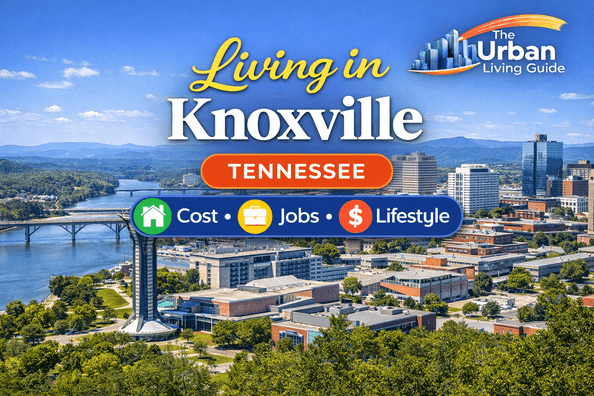
Living in Knoxville, Tennessee in 2026: The Complete Local Guide to Great Smoky Mountain Proximity, University of Tennessee Energy, and East Tennessee Living
Stretching gracefully along the banks of the Tennessee River in the foothills of the Appalachian Mountains, living in Knoxville, Tennessee offers an extraordinary blend of vibrant college-town energy, rich Appalachian heritage, and unbeatable gateway access to the Great Smoky Mountains. As the cultural and economic capital of East Tennessee with approximately 190,000 residents, Knoxville serves as a dynamic regional hub for education, scientific research, and outdoor recreation.
Anchored by the massive presence of the University of Tennessee, the city pulses with passionate Vol football traditions, world-class research initiatives, and an aggressive downtown revitalization marked by the historic Market Square and the Old City. Whether you are hiking weekend trails through America’s most visited national park or enjoying local craft brews downtown, Knoxville provides an active, warm, and highly scenic standard of living. Municipal services, public safety programs, and city planning initiatives are centrally managed through the official City of Knoxville Government Portal.
If you haven’t come across this city before, the map below gives you a quick view of its location within East Tennessee.
All quantitative metrics, economic data points, and community insights compiled within this living guide are synthesized from official municipal records, regional economic boards, and verified long-term resident feedback.
What Makes Knoxville So Popular & Unique
Over recent years, Knoxville has emerged as one of the most desirable inland relocation destinations in the American Southeast. Key factors driving its sustained appeal include:
- Unmatched Mountain Gateway: Immediate proximity to the Great Smoky Mountains National Park, offering world-class hiking, camping, and stunning natural vistas. Explore regional tourism initiatives via the Visit Knoxville Tourism Portal.
- Vibrant University Influence: Home to the massive flagship University of Tennessee, injecting youthful energy, cultural diversity, and roaring SEC sports traditions into the city.
- Exceptional Economic Value: Favorable home purchase prices and rental rates compared to major coastal metros and neighboring high-cost southern hubs.
- Thriving Research & Energy Sector: Proximity to groundbreaking federal scientific research facilities and federal river management agencies.
Knoxville at A Glance: Key Living Metrics
| Evaluation Metric | Local Data Overview & Regional Reality |
|---|---|
| Population | Approx. 190,000 within city limits (Growing regional East Tennessee hub) |
| Median Monthly Rent | Ranges from $1,100 to $2,500+ depending on unit size and neighborhood pocket |
| Average Annual Salary | Typically spans $60,000 to $105,000 across research, healthcare, and education |
| Primary Economic Pillars | Higher education, scientific research, energy development, healthcare, and tourism |
| State Income Tax | Zero state personal income tax across Tennessee |
| Average Summer High | Routinely reaches 85°F to 92°F during warm July and August afternoons |
| Primary Transit Mode | Knoxville Area Transit (KAT) buses, greenway bike trails, and personal vehicles |
Famous Personalities, Local Icons & Major Brands in Knoxville
Knoxville has a proud history of cultivating legendary sports icons, world-famous film directors, and massive federal research institutions:
- Peyton Manning: The legendary NFL Hall of Fame quarterback and Super Bowl champion who cemented his legacy leading the Tennessee Volunteers football team (University of Tennessee Athletics Portal).
- Quentin Tarantino: The visionary, Academy Award-winning film director and screenwriter born in Knoxville, known for cinematic masterpieces like Pulp Fiction.
- Kenny Chesney: The multi-platinum country music superstar and entertainer who grew up in the surrounding East Tennessee region.
- Oak Ridge National Laboratory (ORNL): Located just west of the city, ORNL stands as one of the premier multi-program science and technology laboratories in the United States (Oak Ridge National Laboratory Official Portal).
- Tennessee Valley Authority (TVA): The federally owned corporation headquartered in Knoxville providing flood control, electricity generation, and economic development across the Tennessee Valley (TVA Official Portal).
Job Market & Business Opportunities with Major Employers
The employment landscape in Knoxville offers exceptional career stability, growing professional opportunities, and strong knowledge-based employment:
- Scientific Research and Energy: Thousands of high-tech engineering, physics, and computing careers tied to Oak Ridge National Laboratory and TVA.
- Higher Education and Academic Administration: The University of Tennessee driving extensive faculty, research, and administrative employment.
- Healthcare Systems: Comprehensive regional hospital networks delivering advanced clinical, nursing, and medical specialty careers.
- Corporate Headquarters & Logistics: Major nationwide corporate offices including Pilot Company managing transportation and retail operations.
Housing & Real Estate Overview in Knoxville
Navigating the real estate market in Knoxville requires understanding neighborhood diversity, rising in-migration demand, and affordability advantages:
- Diverse Architectural Stock: Features historic grand estates in Sequoyah Hills, brick Victorians in the Old City, and modern suburban developments in West Knoxville. Track property assessments via the Knox County Property Assessor Portal.
- Affordability Relative to National Averages: While in-migration has driven price appreciation, home purchase prices remain significantly more accessible than in coastal markets or Nashville.
- Rental Market Inventory: Average monthly rent spans $950 to $1,200 for studio units, $1,100 to $1,500 for one-bedroom apartments, $1,500 to $2,000 for two-bedroom properties, and $2,200 to $3,400+ for single-family home rentals.
- Suburban Growth: Surrounding areas provide master-planned communities and family-oriented neighborhoods with strong school options.
Best Neighborhoods in Knoxville: Finding Your Ideal Community
| Neighborhood Name | Vibe & Lifestyle Character | Housing & Price Profile |
|---|---|---|
| Downtown Knoxville | Bustling urban core anchored by Market Square, offering walkable apartments, dining, and theaters. | Modern urban lofts, high-rise apartments, and competitive rental pricing. |
| Old City | Historic warehouse district known for craft breweries, live music venues, art spaces, and nightlife. | Converted industrial lofts, brick apartments, and vibrant urban values. |
| Sequoyah Hills | Prestigious, affluent residential neighborhood featuring sweeping Tennessee River views and tree-lined streets. | Grand historic estates, custom architectural homes, and upscale valuations. |
| Bearden | Popular established residential area offering boutique shopping, diverse dining, and neighborhood convenience. | Traditional single-family houses, brick homes, and stable residential pricing. |
| West Knoxville | Fast-growing suburban corridor featuring modern housing developments, shopping malls, and top schools. | Contemporary houses, townhomes, and family-oriented market pricing. |
Watch a recent video by a popular vlogger to understand daily life and vibes in Knoxville.
What It’s Really Like Living in Knoxville (Daily Life & Vibe)
Daily life in Knoxville is defined by an energetic outdoor-oriented rhythm paired with warm Southern hospitality and collegiate spirit:
- Active Mountain & River Routines: Residents spend weekends hiking the Smoky Mountains, kayaking the Tennessee River, or mountain biking urban wilderness trails. Explore park guidelines via the Tennessee State Parks Portal.
- Market Square and Downtown Culture: Evenings feature outdoor dining in Market Square, catching live indie music, or attending seasonal festivals.
- Volunteers Game Day Energy: Experiencing the electric atmosphere of autumn Saturdays as orange-clad fans pack Neyland Stadium.
- Social Atmosphere: Welcoming, nature-focused, intellectually curious, and deeply connected to East Tennessee heritage.
Cost of Living in Knoxville: Monthly Expenses & Salary Needs
The cost of living in Knoxville sits comfortably below the national average, offering exceptional financial breathing room for working households:
- Housing Overhead: $1,300 to $1,900 covering standard apartment rentals across popular urban wards. Review regional economic trends via the Bureau of Labor Statistics Southeast Information Office.
- Utilities & Power: $150 to $240 monthly for electricity, heating, water, and municipal services.
- Groceries & Household Goods: $330 to $470 depending on family size and shopping choices between local markets and supermarkets.
- Transportation Expenses: $120 to $210 covering public bus passes, fuel, and vehicle maintenance.
- Required Household Income: Single professionals or working households typically require an annual income between $60,000 and $80,000 to comfortably cover local living expenses and long-term savings goals.
Transportation, Commute Dynamics & Transit Realities
Knoxville provides reliable regional transportation networks designed to connect residents across East Tennessee:
- KAT Bus System: Comprehensive public transit network operated by Knoxville Area Transit, offering fixed bus routes across campus and downtown (Knoxville Area Transit Official Portal).
- Highway Connectivity: Excellent freeway access via Interstate 40, Interstate 75, and Interstate 275, ensuring smooth regional travel.
- Greenway and Bike Networks: Expanding multi-use paths and bike lanes connecting residential neighborhoods to commercial districts.
- Aviation Convenience: Proximity to McGhee Tyson Airport (TYS), offering convenient domestic flight connections to major U.S. hubs.
Weather Patterns, Seasonal Realities & Climate Factors
The environmental rhythm of Knoxville follows a classic Southern humid subtropical climate pattern featuring four distinct seasons:
- Warm, Humid Summers: Summer daytime high temperatures routinely average 85°F to 92°F, creating ideal conditions for lake recreation and evening patio dining.
- Mild Winters: Winter seasons are generally mild with occasional cold snaps and rare snowfall, making winter driving and outdoor access straightforward. Track active forecasts via the National Weather Service Morristown-Knoxville Portal.
-
Splendid Transition Seasons: Spring and autumn deliver breathtaking weather, highlighted by spectacular mountain foliage changes across the Smokies.
Education, Schools & Major Universities
Educational institutions serve as premier anchors for intellectual vitality, research innovation, and workforce development:
- University of Tennessee Knoxville: A world-class public research university driving academic prestige, cultural events, and Division I athletics (University of Tennessee Official Portal).
- Pellissippi State Community College: Providing accessible associate degrees, technical certifications, and continuing education pathways.
- Knox County Schools: Operating numerous highly rated elementary, middle, and high school facilities focused on student enrichment.
Medical Facilities, Hospitals & Healthcare Systems
Healthcare infrastructure in Knoxville is advanced, highly specialized, and anchored by premier regional medical networks:
- Covenant Health: A massive regional health system operating flagship medical centers, trauma care units, and specialized outpatient clinics across East Tennessee (Covenant Health Official Portal).
- University of Tennessee Medical Center: A premier academic medical center and level-one trauma facility delivering advanced clinical care and medical training.
- East Tennessee Children’s Hospital: Nationally recognized pediatric healthcare institution providing specialized medical care for families across the region.
Popular Hotels, Cafes, Dining & Culinary Scene
The hospitality and culinary identity of Knoxville reflects historic Southern charm, collegiate energy, and urban culinary excellence:
- The Tennessean Hotel: Luxurious boutique hotel offering refined elegance, sophisticated guest rooms, and prime downtown walkability (The Tennessean Hotel Portal).
- Graduate Knoxville: Collegiate-inspired boutique hotel celebrating university heritage with whimsical Vol-themed interior design.
- Market Square Dining Hubs: Bustling historic pedestrian square lined with independent coffee shops, farm-to-table bistros, and local craft breweries.
Sightseeing, Cultural Spots & Tourist Attractions
Landmark cultural institutions and natural destinations significantly enhance the quality of life for local residents:
- World’s Fair Park: Historic downtown park featuring the iconic Sunsphere observation tower and sprawling festival lawns commemorating the 1982 World’s Fair.
- Knoxville Museum of Art (KMA): Outstanding cultural institution showcasing regional and international visual arts, including stunning East Tennessee glasswork (Knoxville Museum of Art Portal).
- Tennessee Theatre: Beautifully restored 1928 grand movie palace hosting Broadway shows, film screenings, and musical concerts.
Regional Trade-offs: Pros and Cons of Living in Knoxville
Pros of Living in Knoxville
- Affordable Housing Market: Favorable home purchase prices and rental rates compared to national medians and major metro hubs.
- Smoky Mountains Proximity: Immediate gateway access to world-class hiking, camping, and nature in the Great Smoky Mountains.
- University Energy & Culture: Access to SEC sports, academic lectures, and vibrant college-town amenities.
- Strong Job Stability: Expanding employment opportunities in federal research, healthcare, and education.
- Beautiful Natural Setting: Gorgeous riverfront areas, rolling hills, and four distinct seasons.
Cons of Living in Knoxville
- Hot and Humid Summers: Extended periods of summer heat and high humidity requiring air conditioning.
- Game Day Traffic Gridlock: Heavy vehicular congestion and parking shortages during University of Tennessee football Saturdays.
- Limited Rail Transit: Public transportation relies primarily on bus networks, making personal vehicle ownership standard.
- Rising Housing Demand: Rapid population growth creating competitive bidding environments in desirable neighborhoods.
- Pollen and Seasonal Allergies: Heavy springtime tree pollen counts affecting allergy sufferers across the valley.
Who Is Knoxville Ideal For — And Who Should Avoid It?
Who Knoxville Is Ideal For
- Outdoor and Mountain Enthusiasts: Residents who prioritize weekend hiking, trail running, camping, and national park exploration.
- Budget-Conscious Homebuyers: Individuals and families seeking affordable housing, low cost of living, and comfortable suburban-style living.
- Researchers and Academics: Scientists, professors, and students connected to Oak Ridge National Laboratory and the University of Tennessee.
- Active Families: Households looking for safe residential blocks, good schools, and community-oriented atmospheres.
Who Should Avoid Knoxville
- Mega-City Nightlife Seekers: Residents looking for massive 24-hour metropolitan downtown environments with non-stop ultra-urban action.
- High Humidity Haters: People who despise intense summer heat, high humidity, and long cooling seasons.
- Car-Free Urbanites: Individuals who refuse to own a personal automobile and rely entirely on heavy rail rapid transit systems.
- Allergy-Sensitive Individuals: People severely impacted by heavy seasonal tree and mountain pollen counts.
Real Experiences: Perspectives from Long-Term Residents (5 to 10+ Years)
“Moving to Sequoyah Hills ten years ago for a research position at Oak Ridge was the best lifestyle move I’ve ever made. Being able to finish work and be hiking in the Great Smoky Mountains within forty minutes is an absolute luxury. Housing is much more affordable than what we left behind in the Northeast, the people are genuinely warm, and downtown Market Square has exploded with amazing restaurants.”
[Source: r/knoxville Community Discussions — u/SmokyMountainLocal, resident of 11 years]
“The big reality check for newcomers is learning to plan around University of Tennessee football game days, because traffic gets intense around campus. Summer humidity can also sneak up on you. However, the trade-off is completely worth it. The cost of living is reasonable, the river views are gorgeous, and you get a vibrant city with unmatched national park access right in your backyard.”
[Source: Local Resident Panels & Community Forums — Brenda K., Bearden homeowner of 14 years]
Frequently Asked Questions About Living in Knoxville, Tennessee
Is Knoxville expensive to live in compared to other U.S. cities?
No. Knoxville maintains a moderate and accessible cost of living, offering median housing costs and everyday expenses below the national average.
What level of annual salary do individuals need to live comfortably in Knoxville?
Most single professionals and working households find that an annual income between $60,000 and $80,000 provides a comfortable lifestyle covering rent or mortgage payments, utilities, transportation, and discretionary spending.
Can residents successfully live in Knoxville without owning a personal vehicle?
While KAT bus lines serve urban corridors and campus areas effectively, most residents rely on personal automobiles due to the spread-out layout of the greater metropolitan region and outdoor recreation access.
What are the best residential neighborhoods to consider in Knoxville?
Top neighborhoods include Downtown for urban walkability, Old City for historic charm, Sequoyah Hills for upscale riverfront living, Bearden for shopping convenience, and West Knoxville for suburban family life.
How does commuting work for professionals working across Knoxville?
Commuters primarily utilize Interstate 40, Interstate 75, and local arterial roads, enjoying manageable average commute times of around 22 minutes during standard hours.
What are the primary natural and cultural highlights of Knoxville?
Residents enjoy exploring the Great Smoky Mountains National Park, shopping and dining in Market Square, touring World’s Fair Park, and attending Tennessee Volunteers sporting events.
🔗 Explore More Cities in Tennessee
Looking beyond Knoxville? The Urban Living Guide has also covered multiple popular cities across Tennessee that you can explore further:
Before moving to Knoxville, make sure you check:
- Cost of Living in Knoxville, TN
- Pros and Cons of Living in Knoxville, TN
- Best Neighborhoods in Knoxville, TN
For everything you need in one place, read our complete guide: Moving to Knoxville, TN
These city guides provide detailed insights into everyday living, including housing costs, employment opportunities, neighborhoods, commute options, climate, education, local attractions, and key industries shaping each city.
By bringing all these insights together, The Urban Living Guide helps you compare different cities side by side and choose the one that aligns best with your lifestyle, priorities, and long-term goals.