

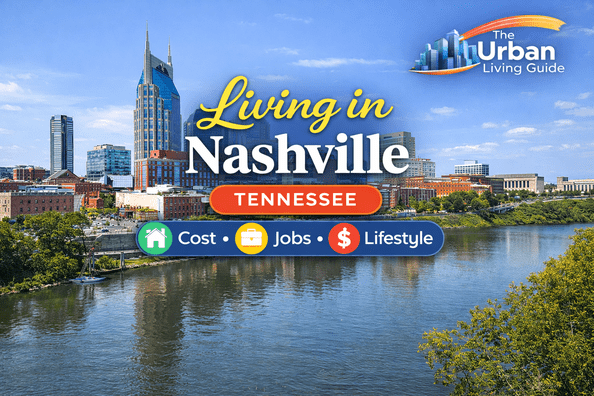
Living in Nashville, Tennessee in 2026: The Complete Local Guide to Music City Culture, Healthcare Innovation, and Southern Urban Growth
Stretching along the winding banks of the Cumberland River in the heart of Middle Tennessee, living in Nashville, Tennessee offers an exhilarating fusion of legendary music heritage, booming corporate enterprise, and warm Southern hospitality. As the official state capital and one of the fastest-growing metropolitan areas in the United States, Nashville accommodates a city population of approximately 700,000 residents while anchoring a thriving regional footprint exceeding two million people.
Globally celebrated as “Music City,” Nashville effortlessly balances its historic country music roots—typified by the historic Ryman Auditorium and the Grand Ole Opry—with a modern, high-powered economy driven by healthcare management, technology innovation, and tourism. Whether you are exploring the trendy boutiques of 12 South, dining in The Gulch, or commuting along I-65, living here provides an energetic, career-focused standard of living paired with distinct cultural charm.
Municipal governance, public safety initiatives, and community development resources are centrally administered through the official Metropolitan Government of Nashville and Davidson County Portal.
If you’re not familiar with this part of the state, the map below will help you understand the city’s exact location and surrounding transportation corridors.
All quantitative metrics, economic data points, and community insights compiled within this living guide are synthesized from official municipal records, regional economic boards, and verified long-term resident feedback.
What Makes Nashville So Popular & Unique
Over the past two decades, Nashville has transformed into one of the most sought-after relocation destinations in the nation. Key factors driving its sustained popularity include:
- Unrivaled Music and Entertainment Culture: Home to hundreds of recording studios, legendary live music venues, and a vibrant nightlife scene centered around Broadway. Explore regional tourism initiatives via the Official Nashville Convention & Visitors Corp Portal.
- Favorable Tax Environment: The absence of a state personal income tax across Tennessee, providing a powerful financial incentive for working professionals and retirees. Explore state tax structures via the State of Tennessee Official Portal.
- Booming Economic Engine: A diversified corporate landscape anchored by healthcare management, automotive manufacturing, technology, and corporate headquarters.
- Rapid Urban Development: Billions of dollars in private and public investment reshaping neighborhoods with modern residential high-rises, dining hubs, and greenways.
Nashville at a Glance: Key Living Metrics
| Evaluation Metric | Local Data Overview & Regional Reality |
|---|---|
| Population | Approx. 700,000 within city limits (Greater metro area exceeds 2 million) |
| Median Monthly Rent | Ranges from $1,300 to $3,000+ depending on apartment size and neighborhood pocket |
| Average Annual Salary | Typically spans $65,000 to $120,000 across healthcare, tech, and entertainment sectors |
| Primary Economic Pillars | Healthcare management, music and entertainment, tourism, technology, and finance |
| State Income Tax | Zero state personal income tax across Tennessee |
| Average Summer High | Routinely reaches 85°F to 95°F during hot, humid July and August afternoons |
| Primary Transit Mode | WeGo Public Transit bus system, rideshare services, and personal vehicle transit |
Famous Personalities, Local Icons & Major Brands in Nashville
Nashville has a proud history of nurturing global pop superstars, legendary country icons, and massive corporate enterprises:
- Taylor Swift: The global pop icon and billionaire superstar who moved to Nashville as a teenager to launch her legendary career in country music.
- Dolly Parton: The legendary country music singer, songwriter, and celebrated philanthropist who maintains deep artistic ties to the city.
- Kings of Leon: The Grammy-winning rock band formed in Nashville that achieved international acclaim with their distinct southern alternative rock sound.
- Grand Ole Opry: The iconic American radio broadcast and stage show that made country music famous worldwide (Grand Ole Opry Official Portal).
- HCA Healthcare: A massive Fortune 500 healthcare management juggernaut anchoring the city’s robust medical economy (HCA Healthcare Corporate Portal).
Job Market & Business Opportunities with Major Employers
The employment landscape in Nashville offers exceptional professional vitality, competitive salaries, and robust career mobility across expanding industries:
- Healthcare Administration: Widely recognized as the healthcare capital of the United States, housing hundreds of hospital management and health tech companies.
- Music and Entertainment: A thriving creative sector encompassing record labels, booking agencies, production studios, and live touring enterprises.
- Technology and Corporate Operations: Major regional technology hubs, Amazon operations centers, and corporate expansions driving software and engineering careers.
- Automotive and Manufacturing: Proximity to massive automotive operations including Nissan North America and regional manufacturing suppliers.
Housing & Real Estate Overview in Nashville
Navigating the real estate market in Nashville requires understanding rapid population growth, neighborhood variations, and housing demand:
- Diverse Architectural Stock: Features luxury high-rise condos in downtown, historic craftsman homes in East Nashville, and grand estates in Belle Meade. Track property assessments via the Metro Nashville Assessor Portal.
- Market Valuations: Sustained migration into Middle Tennessee has driven home prices and rental rates upward, rewarding long-term property investors.
- Rental Market Inventory: Average monthly rent spans $1,300 to $1,700 for studio units, $1,600 to $2,200 for one-bedroom apartments, $2,200 to $3,000 for two-bedroom properties, and $3,200 to $4,800+ for single-family home rentals.
- Suburban Growth: Surrounding counties offer alternative housing developments for families seeking extra square footage and quieter residential settings.
Best Neighborhoods in Nashville: Finding Your Ideal Community
| Neighborhood Name | Vibe & Lifestyle Character | Housing & Price Profile |
|---|---|---|
| Downtown Nashville | Bustling entertainment core centered around Broadway, featuring music venues, restaurants, and luxury high-rises. | Modern luxury apartments, condos, and premium urban valuations. |
| The Gulch | Trendy, upscale urban neighborhood known for chic residential living, high-end shopping, and vibrant nightlife. | Contemporary high-rises, loft apartments, and top-tier pricing. |
| East Nashville | Artsy, bohemian enclave popular with creatives, featuring independent cafes, art galleries, and historic homes. | Historic craftsman homes, renovated bungalows, and competitive market pricing. |
| Green Hills | Affluent residential district anchored by premier shopping centers and established suburban-style streets. | Spacious single-family homes, luxury townhouses, and upscale valuations. |
| 12 South | Stylish, highly walkable district known for boutique fashion stores, craft coffee shops, and historic homes. | Restored historic houses, modern builds, and high buyer demand. |
What It’s Really Like Living in Nashville (Daily Life & Vibe)
Watch a recent video by a popular vlogger to understand daily life and vibes in Nashville.
Daily life in Nashville is defined by an energetic, music-infused rhythm paired with warm community traditions:
- Active Weekend Routines: Residents spend weekends exploring Centennial Park, dining at acclaimed hot chicken restaurants, or attending live music performances across neighborhood venues. Explore park guidelines via the Metro Nashville Parks and Recreation Portal.
- Music and Arts Exploration: Evenings feature spontaneous songwriter rounds in local listening rooms, rooftop bars, and vibrant neighborhood arts festivals.
- Professional Sports Enthusiasm: Cheering for the Tennessee Titans (NFL), Nashville Predators (NHL), and Nashville SC (MLS) during roaring game days.
- Social Atmosphere: Ambitious, creative, welcoming, and deeply tied to entertainment and corporate innovation.
Cost of Living in Nashville: Monthly Expenses & Salary Needs
The cost of living in Nashville sits moderately above the national average, reflecting its rapid economic expansion and population growth:
- Housing Overhead: $1,700 to $3,000+ covering standard apartment and home rentals across popular urban wards. Review regional economic data via the Bureau of Labor Statistics Southeast Information Office.
- Utilities & Power: $160 to $260 monthly for electricity, heating, water, and municipal services.
- Groceries & Household Goods: $350 to $520 depending on family size and shopping choices between local markets and regional supermarkets.
- Transportation Expenses: $150 to $260 covering public bus passes, fuel, and vehicle maintenance.
- Required Household Income: Single professionals typically require an annual salary between $70,000 and $90,000, while households generally need $120,000+ to comfortably cover local living expenses and savings goals.
Transportation, Commute Dynamics & Transit Realities
Nashville functions primarily as a car-dependent metropolitan area supported by expanding regional transportation networks:
- WeGo Public Transit: Comprehensive public bus network operated by WeGo Public Transit, offering fixed routes across the urban core and regional commuter links (WeGo Public Transit Official Portal).
- Highway Connectivity: Excellent freeway access via Interstate 65, Interstate 40, and Interstate 24, though peak rush hours experience notable commuter congestion.
- Commute Times: Average daily commutes hover around 26 minutes, though peak traffic across major bridges can extend travel durations.
- Aviation Gateway: Immediate proximity to Nashville International Airport (BNA), offering extensive domestic and international flight connections.
Weather Patterns, Seasonal Realities & Climate Factors
The environmental rhythm of Nashville follows a classic Southern humid subtropical climate pattern:
- Hot, Humid Summers: Summer daytime high temperatures routinely average 85°F to 95°F with notable humidity, making air conditioning and neighborhood parks essential.
- Mild Winters: Winter seasons are relatively short and mild, featuring occasional cold snaps and rare snowfall events that make winter travel manageable. Track active forecasts via the National Weather Service Nashville Portal.
-
Splendid Transition Seasons: Spring and autumn deliver breathtaking weather, highlighted by vibrant foliage changes across Middle Tennessee parks.
Education, Schools & Major Universities
Educational institutions serve as premier anchors for academic excellence, scientific research, and intellectual prestige:
- Vanderbilt University: A globally renowned private research university offering elite undergraduate and graduate education in the heart of the city (Vanderbilt University Official Portal).
- Belmont University: Respected private Christian university famous for its premier music business, nursing, and liberal arts programs (Belmont University Official Portal).
- Tennessee State University: A prominent historically black university (HBCU) driving academic research and community leadership.
- Metro Nashville Public Schools: Operating numerous elementary, middle, and high school facilities across Davidson County.
Medical Facilities, Hospitals & Healthcare Systems
Healthcare infrastructure in Nashville is advanced, highly specialized, and anchored by world-class medical networks:
- Vanderbilt University Medical Center: A massive premier academic medical center and level-one trauma facility delivering groundbreaking clinical research and specialized care (Vanderbilt Health Portal).
- TriStar Health & Ascension Saint Thomas: Major regional hospital networks operating comprehensive acute care facilities, emergency rooms, and specialty clinics.
- Specialized Pediatric Care: Vanderbilt Monroe Carell Jr. Children’s Hospital providing elite pediatric medicine for families across the region.
Popular Hotels, Cafes, Dining & Culinary Scene
The hospitality and culinary identity of Nashville reflects historic Southern elegance, luxury tourism, and world-famous culinary innovation:
- The Hermitage Hotel: Legendary historic luxury hotel operating since 1910, celebrated for its breathtaking Beaux-Arts architecture and refined Southern hospitality (The Hermitage Hotel Portal).
- JW Marriott Nashville & The Westin: Sophisticated contemporary hotels offering luxury accommodations, rooftop lounges, and skyline views downtown.
- Culinary Hotspots: Acclaimed establishments serving authentic Nashville hot chicken, upscale farm-to-table cuisine, and artisan bakeries.
Sightseeing, Cultural Spots & Tourist Attractions
Landmark cultural institutions and historic destinations significantly enhance the quality of life for local residents:
- Country Music Hall of Fame and Museum: World-class cultural institution preserving the history, recordings, and memorabilia of country music legends (Country Music Hall of Fame Portal).
- Ryman Auditorium: The historic “Mother Church of Country Music,” hosting legendary live music performances in an intimate acoustic setting (Ryman Auditorium Official Portal).
- Centennial Park & Parthenon: Sprawling urban park featuring a full-scale replica of the original Parthenon in Athens, Greece.
Regional Trade-offs: Pros and Cons of Living in Nashville
Pros of Living in Nashville
- Booming Job Market: Exceptional career opportunities in healthcare management, technology, music, and corporate services.
- No State Income Tax: Favorable personal tax structures keeping more money in working professionals’ pockets.
- Vibrant Entertainment Culture: World-class live music, dining scenes, and professional sports franchises.
- Dynamic Urban Growth: Exciting neighborhood revitalization, new housing developments, and thriving startup ecosystems.
- Southern Hospitality: A welcoming, community-oriented atmosphere with great weather and green spaces.
Cons of Living in Nashville
- Rising Housing Costs: Steep home purchase prices and rental rates driven by intense population growth.
- Commuter Traffic Congestion: Heavy vehicular traffic during peak morning and evening hours along major interstate corridors.
- Hot and Humid Summers: Extended periods of high summer temperatures and humidity requiring constant air conditioning.
- Limited Rail Transit: Public transportation relies primarily on bus networks rather than heavy rail rapid transit.
- Tourism Crowds: Busy weekend tourist crowds and bachelor parties crowding downtown Broadway entertainment districts.
Who Is Nashville Ideal For — And Who Should Avoid It?
Who Nashville Is Ideal For
- Healthcare and Corporate Professionals: Workers pursuing stable management careers in Nashville’s massive medical and business sectors.
- Musicians and Creatives: Artists and entertainment professionals drawn to Music City’s recording studios and live performance venues.
- Young Professionals: Adults seeking a vibrant social scene, craft breweries, live music, and career mobility.
- Active Families: Households wanting suburban community green spaces, excellent parks, and university-town amenities.
Who Should Avoid Nashville
- Budget-Conscious Renters: Individuals seeking low-cost housing or bargain real estate markets on modest financial budgets.
- Car-Free Urbanites: People who refuse to own a personal automobile and require extensive 24-hour subway transit systems.
- High Humidity Haters: Residents who despise intense summer heat, humidity, and long cooling seasons.
- Quiet Rural Seekers: Homebuyers looking for isolated countryside living, zero traffic noise, and wide-open rural spaces.
Real Experiences: Perspectives from Long-Term Residents (5 to 10+ Years)
“Moving to East Nashville eight years ago was the best career and lifestyle move I could have made. The creative energy here is amazing, the food scene is world-class, and the healthcare job market gave me incredible stability. Housing costs have definitely climbed as more people discover the city, but the neighborhood warmth, local music, and community spirit make it entirely worth it.”
[Source: r/nashville Community Discussions — Marcus V., resident of 9 years]
“The big reality check for newcomers is that traffic on the interstates during rush hour has gotten heavy with the rapid population boom, and downtown on weekends is packed with tourists. However, once you learn the back roads and explore residential pockets like Green Hills or 12 South, you realize Nashville has an incredible heart, fantastic weather, and immense economic opportunity.”
[Source: Local Resident Panels & Community Forums — Sarah T., resident of 12 years]
Frequently Asked Questions About Living in Nashville, Tennessee
Is Nashville expensive to live in compared to other U.S. cities?
Nashville maintains a cost of living moderately above the national average, driven primarily by strong housing demand and rapid urban expansion.
What level of annual salary do individuals need to live comfortably in Nashville?
Most single professionals require an annual salary of $70,000 to $90,000, while families typically need $120,000+ to comfortably cover housing, utilities, transportation, and discretionary spending.
Can residents successfully live in Nashville without owning a personal vehicle?
While WeGo public bus routes serve central corridors, most residents rely on personal automobiles due to the spread-out geographic layout of the metropolitan area.
What are the best residential neighborhoods to consider in Nashville?
Top neighborhoods include Downtown for entertainment walkability, The Gulch for luxury condos, East Nashville for bohemian arts, Green Hills for shopping, and 12 South for trendy boutique living.
How does commuting work for professionals working across Nashville?
Commuters primarily utilize major interstate highways like I-65, I-40, and I-24, experiencing average commute times of around 26 minutes during standard hours.
What are the primary natural and cultural highlights of Nashville?
Residents enjoy touring the Country Music Hall of Fame, attending shows at the Ryman Auditorium, relaxing in Centennial Park, and exploring Middle Tennessee greenways.
🔗 Explore More Cities in Tennessee
Looking beyond Nashville? The Urban Living Guide has also covered multiple popular cities across Tennessee that you can explore further:
Before moving to Nashville, make sure you check:
- Cost of Living in Nashville, TN
- Pros and Cons of Living in Nashville, TN
- Best Neighborhoods in Nashville, TN
For everything you need in one place, read our complete guide: Moving to Nashville, TN
These city guides provide detailed insights into everyday living, including housing costs, employment opportunities, neighborhoods, commute options, climate, education, local attractions, and key industries shaping each city.
By bringing all these insights together, The Urban Living Guide helps you compare different cities side by side and choose the one that aligns best with your lifestyle, priorities, and long-term goals.