

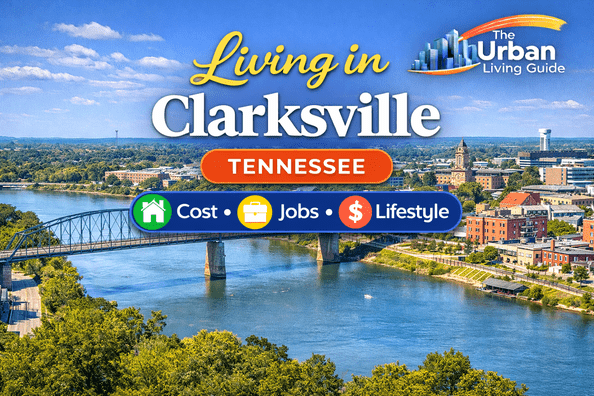
Living in Clarksville, Tennessee in 2026: The Complete Local Guide to Fort Campbell Heritage, Cumberland River Living, and Fast-Growing Affordability
Stretching gracefully along the banks of the Cumberland River and the Red River in northern Montgomery County, living in Clarksville, Tennessee offers an exceptional blend of military-family camaraderie, explosive economic growth, and unmatched housing affordability. Located just 45 miles northwest of Nashville right along the Kentucky border, Clarksville accommodates a rapidly expanding population of approximately 193,000 residents, cementing its status as one of the fastest-growing cities in the United States.
Proudly anchored by the immense presence of Fort Campbell—one of the largest U.S. Army installations in the nation—the city successfully pairs its patriotic roots with a surging industrial boom featuring advanced manufacturing leaders like LG Electronics, Hankook Tire, and Trane Technologies. Whether you are exploring the historic downtown square near the Customs House Museum, catching a basketball game at the F&M Bank Arena, or hiking through Dunbar Cave State Park, Clarksville delivers an active, family-oriented standard of living. Municipal governance, public safety programs, and city development initiatives are centrally administered through the official City of Clarksville Government Portal under the leadership of Mayor Joe Pitts.
If you’re unfamiliar with the region, the map below helps you visualize the city’s location and surrounding transportation corridors.
All quantitative metrics, economic data points, and community insights compiled within this living guide are synthesized from official municipal records, regional economic boards, and verified long-term resident feedback.
What Makes Clarksville So Popular & Unique
Over the past decade, Clarksville has emerged as a premier relocation magnet for military veterans, remote workers, and families seeking financial breathing room without sacrificing economic opportunity. Key factors driving its sustained appeal include:
- Exceptional Economic Value: Offering some of the most accessible home purchase prices and rental rates in the Middle Tennessee corridor. Explore regional growth initiatives via the Clarksville Industrial Development Board Portal.
- Strong Military Community: Immediate proximity to Fort Campbell, fostering a disciplined, patriotic, and tight-knit population.
- Proximity to Nashville: Convenient access to Nashville’s booming $12+ billion tech and entertainment job market while maintaining a relaxed, small-town pace.
- Abundant Recreation and Greenways: Extensive parks, riverfront riverwalks, and underground cave preserves that encourage active outdoor living.
Clarksville at a Glance: Key Living Metrics
| Evaluation Metric | Local Data Overview & Regional Reality |
|---|---|
| Population | Approx. 193,000 within city limits (One of the fastest-growing cities in Tennessee) |
| Median Monthly Rent | Ranges from $850 to $2,000+ depending on unit size and neighborhood pocket |
| Average Annual Salary | Typically spans $55,000 to $95,000 across defense, manufacturing, and logistics |
| Primary Economic Pillars | U.S. military defense, advanced manufacturing, logistics, healthcare, and education |
| State Income Tax | Zero state personal income tax across Tennessee |
| Average Summer High | Routinely reaches 85°F to 92°F during warm July and August afternoons |
| Primary Transit Mode | Clarksville Transit System (CTS) buses, regional highways, and personal vehicle transit |
Famous Personalities, Local Icons & Major Brands in Clarksville
Clarksville has a proud history of nurturing legendary musical innovators, Olympic gold medalists, and world-class manufacturing enterprises:
- Jimi Hendrix: The legendary rock guitar icon who famously served in the 101st Airborne Division and was stationed at Fort Campbell early in his career.
- Wilma Rudolph: The legendary Olympic gold medalist sprinter who overcame polio as a child to become a global sports icon, proudly hailing from the Clarksville region. Explore her legacy via the National Women’s History Museum Portal.
- Chris Carmack: The acclaimed actor and musician known for hit television roles who maintains strong ties to the Middle Tennessee community.
- Austin Peay State University: The prominent public university driving higher education, cultural events, and NCAA Division I athletics in downtown Clarksville (Austin Peay State University Official Portal).
- Trane Technologies: Maintaining a massive advanced manufacturing and global technology footprint as one of Clarksville’s largest private employers (Trane Technologies Official Portal).
Job Market & Business Opportunities with Major Employers
The employment landscape in Clarksville offers exceptional stability, competitive wages, and steady career mobility across expanding sectors:
- Defense and Military Support: Tens of thousands of civilian contracting, logistics, and technical support positions tied directly to Fort Campbell operations.
- Advanced Manufacturing: Major global manufacturers including LG Electronics, Hankook Tire, and Trane maintaining massive production complexes.
- Healthcare and Medical Services: Regional hospital networks and specialized clinics providing robust nursing and clinical career paths.
- Public Education and Services: Montgomery County School System and municipal agencies supporting thousands of local educators and public servants.
Housing & Real Estate Overview in Clarksville
Navigating the real estate market in Clarksville requires understanding its rapid suburban expansion, high demand, and affordability advantages:
- Diverse Architectural Stock: Features historic 19th-century homes in Downtown Clarksville, master-planned developments in the Sango Area, and military-family housing near Woodlawn. Track property assessments via the Montgomery County Assessor of Property Portal.
- Affordability Relative to Nashville: Real estate purchase prices and rental overhead remain noticeably lower than in nearby Nashville, attracting first-time homebuyers and military families.
- Rental Market Inventory: Average monthly rent spans $850 to $1,100 for studio units, $1,000 to $1,350 for one-bedroom apartments, $1,350 to $1,800 for two-bedroom properties, and $2,000 to $3,000+ for single-family home rentals.
- Market Competitiveness: Rapid population growth keeps inventory moving briskly across popular transit-adjacent subdivisions.
Best Neighborhoods in Clarksville: Finding Your Ideal Community
| Neighborhood Name | Vibe & Lifestyle Character | Housing & Price Profile |
|---|---|---|
| Downtown Clarksville | Historic urban core featuring restored brick storefronts, riverfront parks, galleries, and the Roxy Theatre. | Historic homes, urban apartments, and competitive rental valuations. |
| Sango Area | Highly desirable, affluent suburban community known for quiet residential streets and exceptional family living. | Spacious single-family homes, newer constructions, and upscale pricing. |
| St. Bethlehem | Bustling commercial and residential corridor offering extensive shopping centers and modern housing developments. | Suburban houses, townhomes, and family-oriented market pricing. |
| Woodlawn Area | Peaceful rural-suburban enclave located immediately adjacent to Fort Campbell, heavily populated by military households. | Detached houses, acreage properties, and military-friendly pricing. |
| Rossview | Established residential ward renowned for top-rated public schools, community parks, and convenient highway access. | Contemporary houses, multi-level homes, and stable family valuations. |
Watch a recent video by a popular vlogger to understand daily life and vibes in Clarksville.
What It’s Really Like Living in Clarksville (Daily Life & Vibe)
Daily existence in Clarksville is defined by a friendly, patriotic, and family-oriented rhythm that bridges small-town warmth with dynamic urban growth:
- Active Riverfront Recreation: Residents spend weekends walking along the McGregor Park Riverwalk, boating on the Cumberland River, or exploring Dunbar Cave State Park. Explore park guidelines via the Tennessee State Parks Portal.
- Downtown Dining and Arts: Evenings feature local dining along Public Square, catching live performances at the historic Roxy Theatre, or visiting the Customs House Museum.
- Community Engagement: Participating in vibrant seasonal festivals, farmers markets, and community events that celebrate local heritage.
- Social Atmosphere: Welcoming, diverse, resilient, and deeply supportive of military veterans and growing households.
Cost of Living in Clarksville: Monthly Expenses & Salary Needs
The cost of living in Clarksville sits noticeably below the national average, providing outstanding financial relief for working families:
- Housing Overhead: $1,200 to $1,700 covering typical apartment and home rentals across popular residential wards. Review regional economic data via the Bureau of Labor Statistics Southeast Information Office.
- Utilities & Power: $150 to $230 monthly for electricity, heating, water, and municipal waste services.
- Groceries & Household Goods: $320 to $450 depending on household size and shopping choices between local markets and major supermarkets.
- Transportation Expenses: $120 to $210 covering public bus passes, fuel, and vehicle maintenance.
- Required Household Income: Single professionals or working households typically require an annual income between $55,000 and $75,000 to comfortably cover local living expenses and long-term savings goals.
Transportation, Commute Dynamics & Transit Realities
Clarksville provides reliable regional transportation infrastructure connecting commuters across Montgomery County and down into Nashville:
- CTS Bus System: Public transit network operated by the Clarksville Transit System, offering fixed routes across municipal wards and commercial corridors (Clarksville Transit System Portal).
- Highway Connectivity: Excellent freeway access via Interstate 24 and U.S. Route 41A, linking commuters seamlessly toward Nashville or Kentucky.
- Commute Times: Average daily commutes range between 23 and 26 minutes within the city, though Nashville commuters experience longer highway travel times.
- Aviation Convenience: Immediate proximity to Nashville International Airport (BNA) for comprehensive domestic and international flight access.
Weather Patterns, Seasonal Realities & Climate Factors
The environmental rhythm of Clarksville follows a classic Southern humid subtropical climate pattern:
- Warm, Humid Summers: Summer daytime high temperatures routinely average 85°F to 92°F with high humidity, making air conditioning and shaded river parks essential.
- Mild Winters: Winter seasons are short and mild with occasional cold days and rare snowfall events, making winter driving and year-round outdoor access uncomplicated. Track active forecasts via the National Weather Service Nashville-Clarksville Portal.
-
Splendid Transition Seasons: Spring and autumn deliver vibrant foliage changes, crisp air, and ideal weather for outdoor recreation.
Education, Schools & Major Universities
Educational infrastructure serves as a premier anchor for academic excellence, professional training, and workforce development:
- Austin Peay State University (APSU): A prominent public university offering comprehensive undergraduate and graduate degree programs in downtown Clarksville (Austin Peay State University Official Portal).
- Clarksville-Montgomery County School System: Operating numerous highly rated elementary, middle, and high school facilities focused on student achievement.
- Higher Education Pathways: Proximity to specialized technical institutes and continuing education programs supporting military veterans and civilian workers.
Medical Facilities, Hospitals & Healthcare Systems
Healthcare infrastructure in Clarksville is advanced, highly accessible, and anchored by premier regional medical networks:
- Tennova Healthcare – Clarksville: A major 270+ bed acute care regional hospital offering advanced emergency trauma care, surgical suites, and specialized medicine (Tennova Healthcare Clarksville Portal).
- Vanderbilt Health Proximity: Immediate regional access to world-class academic medical centers and specialized hospitals just 45 miles south in Nashville.
- Specialized Outpatient Centers: Extensive network of urgent care clinics and family medicine practices serving every suburban quadrant.
Popular Hotels, Cafes, Dining & Culinary Scene
The hospitality and culinary identity of Clarksville reflects historic downtown revitalization, military heritage, and Southern comfort:
- DoubleTree by Hilton Clarksville: Sophisticated contemporary hotel offering upscale accommodations, on-site dining, and convenient highway access (DoubleTree Clarksville Portal).
- Courtyard by Marriott & Hilton Garden Inn: Premier business and family-friendly hotels catering to travelers, contractors, and visitors.
- Vibrant Downtown Cafes: Bustling historic blocks featuring independent coffee shops, craft breweries, and diverse culinary establishments.
Sightseeing, Cultural Spots & Tourist Attractions
Landmark cultural institutions and natural destinations significantly enhance the daily quality of life for local residents:
- Dunbar Cave State Park: Magnificent 110-acre state park featuring historic limestone caves, walking trails, and ancient Native American Mississippian cave art (Dunbar Cave State Park Portal).
- Customs House Museum & Cultural Center: The second-largest general museum in Tennessee, showcasing regional history, art, and children’s exploration galleries (Customs House Museum Portal).
- McGregor Park Riverwalk: Scenic multi-use trail and boat ramp along the Cumberland River offering seasonal riverboat views and relaxing recreation.
Regional Trade-offs: Pros and Cons of Living in Clarksville
Pros of Living in Clarksville
- Exceptional housing affordability providing great value and homeownership potential compared to major metro markets.
- Strong economic stability driven by Fort Campbell military operations and advanced manufacturing investments.
- Convenient geographic positioning near Nashville allowing access to big-city amenities without high city rents.
- Family-friendly suburban neighborhoods featuring great schools, parks, and safe community blocks.
- Rich historical roots, cultural landmarks, and beautiful natural green spaces.
Cons of Living in Clarksville
- Hot and humid summer weather requiring constant cooling and indoor climate adjustments.
- Limited public transit coverage outside specific municipal bus routes.
- Traffic congestion during peak commuting hours along major connecting corridors toward Nashville.
- Rapid population growth creating competitive suburban housing inventory demands.
- Smaller private-sector entertainment and nightlife scene compared to major metropolitan centers.
Who Is Clarksville Ideal For — And Who Should Avoid It?
Who Clarksville Is Ideal For
- Military Families and Veterans: Service members stationed at Fort Campbell seeking strong military community support and veteran housing stability.
- First-Time Homebuyers: Individuals and young couples looking to escape high rents and achieve affordable homeownership in Tennessee.
- Nashville Commuters Seeking Value: Workers employed in Nashville who desire lower living costs while retaining metropolitan access.
- Families Seeking Safe Suburbs: Households prioritizing good schools, community parks, and family-oriented neighborhoods.
Who Should Avoid Clarksville
- Mega-City Nightlife Seekers: Residents looking for non-stop 24-hour metropolitan downtown action, clubs, and dense urban nightlife.
- Warm-Weather Detractors: People who despise intense summer heat, high humidity, and long cooling seasons.
- Car-Free Commuters: Individuals who refuse to own a personal automobile and rely entirely on heavy rail rapid transit systems.
- Corporate Finance Professionals: Workers seeking massive concentrations of Wall Street financial headquarters and deep corporate banking towers.
Real Experiences: Perspectives from Long-Term Residents (5 to 10+ Years)
“Moving our family to Sango eight years ago after my husband’s assignment at Fort Campbell was the best choice we’ve made. The schools are fantastic, the neighborhood is peaceful, and we bought a brand-new home for half of what it would cost closer to Nashville. Clarksville has grown so much with new restaurants and parks, but it still maintains that friendly, welcoming community feel.”
[Source: r/clarksvilletn Community Discussions — u/ArmyWifeSango901, resident of 9 years]
“The big reality check for newcomers is that traffic on Interstate 24 during morning rush hour can test your patience if you’re commuting toward Nashville, and summer humidity gets thick. However, the trade-off is completely worth it. Housing is still relatively affordable, the local government is investing heavily in infrastructure, and you have gorgeous river parks right in town.”
[Source: Local Resident Panels & Community Forums — Marcus L., Downtown homeowner of 11 years]
Frequently Asked Questions About Living in Clarksville, Tennessee
Is Clarksville expensive to live in compared to other U.S. cities?
No. Clarksville maintains a moderate and accessible cost of living, offering median housing costs and everyday expenses below national averages.
What level of annual salary do individuals need to live comfortably in Clarksville?
Most single professionals and working households find that an annual income between $55,000 and $75,000 provides a comfortable lifestyle covering rent or mortgage payments, utilities, transportation, and discretionary spending.
Can residents successfully live in Clarksville without owning a personal vehicle?
While CTS bus lines serve core corridors, most residents rely on personal automobiles due to the spread-out suburban layout of Montgomery County.
What are the best residential neighborhoods to consider in Clarksville?
Top neighborhoods include Sango for family suburban living, Rossview for great schools, St. Bethlehem for retail convenience, Downtown for historic charm, and Woodlawn for military proximity.
How does commuting work for professionals working across Clarksville and Nashville?
Commuters primarily utilize Interstate 24 to travel between Clarksville and Nashville, experiencing average local commute times of around 23 to 26 minutes.
What are the primary natural and cultural highlights of Clarksville?
Residents enjoy exploring Dunbar Cave State Park, walking the McGregor Park Riverwalk, visiting the Customs House Museum, and boating on the Cumberland River.
🔗 Explore More Cities in Tennessee
Looking beyond Clarksville? The Urban Living Guide has also covered multiple popular cities across Tennessee that you can explore further:
Before moving to Clarksville, make sure you check:
- Cost of Living in Clarksville, TN
- Pros and Cons of Living in Clarksville, TN
- Best Neighborhoods in Clarksville, TN
For everything you need in one place, read our complete guide: Moving to Clarksville, TN
These city guides provide detailed insights into everyday living, including housing costs, employment opportunities, neighborhoods, commute options, climate, education, local attractions, and key industries shaping each city.
By bringing all these insights together, The Urban Living Guide helps you compare different cities side by side and choose the one that aligns best with your lifestyle, priorities, and long-term goals.