

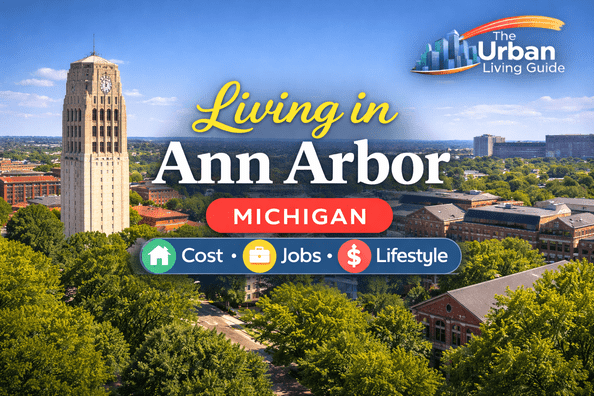
Living in Ann Arbor, Michigan in 2026: The Complete Local Guide to University Culture, Innovation Hubs, and College Town Energy
Situated along the scenic banks of the Huron River in Washtenaw County, living in Ann Arbor, Michigan offers an intellectually vibrant and culturally progressive urban experience. Located roughly 45 miles west of Detroit, this thriving Midwestern community of approximately 125,000 residents successfully balances the high-energy atmosphere of a world-class research university with the charm of safe, tree-lined residential neighborhoods.
At the center of it all is the University of Michigan, an institution that shapes everything from local economic innovation and healthcare excellence to downtown arts and Big Ten sports culture. Whether you are browsing the historic stalls at the Kerrytown Farmers Market or commuting along major technology corridors, Ann Arbor provides a uniquely sophisticated standard of living that continually ranks among the best in the nation.
Municipal governance, public services, and community programs are centrally administered through the official City of Ann Arbor Government Portal.
Not sure where the city is? Check the map below to quickly understand its geographic position within southeastern Michigan.
All quantitative metrics, economic data points, and community insights compiled within this living guide are synthesized from official municipal records, regional economic boards, and verified long-term resident feedback.
What Makes Ann Arbor So Popular & Unique
Over the decades, Ann Arbor has earned its reputation as one of the most desirable and intellectually stimulating cities in the Midwest. Key factors driving its sustained popularity include:
- Prestigious Academic Anchor: Home to the renowned University of Michigan, attracting global scholars, researchers, and students. Explore academic and institutional resources via the University of Michigan Official Portal.
- Innovation and Tech Economy: A thriving job market powered by healthcare breakthroughs, software engineering, artificial intelligence startups, and green energy initiatives.
- Exceptional Public Education: Highly ranked public school districts and safe residential communities that draw families from across the country.
- Natural Beauty and Green Spaces: Extensive park systems, scenic river trails, and mature tree-canopied neighborhoods that encourage active outdoor living.
Ann Arbor at a Glance: Key Living Metrics
| Evaluation Metric | Local Data Overview & Regional Reality |
|---|---|
| Population | Approx. 125,000 within municipal city limits (Dynamic college-town density) |
| Median Monthly Rent | Ranges from $1,600 to $2,400+ depending on proximity to campus and building vintage |
| Average Annual Salary | Typically spans $65,000 to $125,000 across education, research, healthcare, and tech sectors |
| Primary Economic Pillars | Higher education, medical research, technology, automotive R&D, and biotechnology |
| State Income Tax | Flat state income tax structure set at 4.25% across Michigan |
| Average Summer High | Routinely reaches 75°F to 85°F during pleasant July and August afternoons |
| Primary Transit Mode | TheRide public bus network, extensive bike-friendly infrastructure, and walkable downtown grids |
Famous Personalities, Local Icons & Major Brands in Ann Arbor
Ann Arbor has a storied tradition of nurturing legendary sports figures, award-winning actors, and global corporate giants:
- Tom Brady: The legendary NFL quarterback and seven-time Super Bowl champion honed his leadership and athletic skills playing football at the University of Michigan.
- James Earl Jones: The iconic stage and screen actor renowned for his commanding voice roles and legendary performances studied at the university.
- Madonna: The global pop icon and entertainer spent formative years living in the city and briefly attended the University of Michigan before launching her career.
- Michigan Medicine: A world-class academic medical center and healthcare network driving cutting-edge medical research and clinical care (Michigan Medicine Official Portal).
- Google Ann Arbor: Maintaining a massive engineering and corporate office presence that anchors the city’s robust technology sector (Google Careers Portal).
- Toyota Research Institute: Advanced automotive research facility focusing on artificial intelligence and autonomous mobility innovation.
Job Market & Business Opportunities with Major Employers
The employment landscape in Ann Arbor offers exceptional professional stability, high average salaries, and robust career mobility across knowledge-based industries:
- Higher Education & Academic Research: The University of Michigan stands as the region’s largest employer, supporting thousands of faculty, administrative, and research positions.
- Healthcare and Medical Innovation: Michigan Medicine and affiliated regional clinics providing advanced clinical careers, nursing, and biomedical research roles.
- Technology and Software Development: A thriving ecosystem of tech firms, digital agencies, and engineering centers capitalizing on local academic talent.
- Automotive R&D and Engineering: Specialized corporate research centers driving the future of vehicle technology and sustainable transport.
Housing & Real Estate Overview in Ann Arbor
Navigating the real estate market in Ann Arbor requires understanding high demand, historic zoning protections, and distinct neighborhood pricing:
- Architectural Diversity: Features historic Victorian homes in Old West Side, charming character properties in Burns Park, and modern student high-rises near downtown. Track property assessments via the City Assessing Department Portal.
- Market Valuations: Intense demand driven by university enrollment and high-tech job growth keeps real estate valuations well above state averages, ensuring strong asset appreciation.
- Rental Market Inventory: Average monthly rent spans $1,200 to $1,600 for studio apartments, $1,400 to $1,900 for one-bedroom units, $1,900 to $2,600 for two-bedroom properties, and $2,800 to $4,200+ for single-family rental homes.
- Suburban Alternatives: Neighboring townships like Pittsfield provide slightly more flexible pricing and newer housing developments for families.
Best Neighborhoods in Ann Arbor: Finding Your Ideal Community
| Neighborhood Name | Vibe & Lifestyle Character | Housing & Price Profile |
|---|---|---|
| Downtown Ann Arbor | Bustling commercial core filled with bookstores, indie cafes, diverse dining, and cultural venues. | Modern high-rise condos, historic loft apartments, and premium valuations. |
| Kerrytown | Historic district famous for the landmark farmers market, boutique shops, and artisanal bakeries. | Restored historic homes, loft apartments, and competitive pricing. |
| Burns Park | Premier family-oriented residential neighborhood featuring quiet tree-lined streets and community parks. | Spacious single-family homes, period architecture, and upscale valuations. |
| Old West Side | Charming historic neighborhood boasting preserved 19th-century houses and tight-knit community spirit. | Historic Victorian homes, classic colonials, and stable residential pricing. |
| Water Hill | Artsy, eclectic enclave known for community music festivals, grassroots events, and creative energy. | Bungalows, artist cottages, and active market demand. |
| Pittsfield Township | Family-friendly suburban area offering newer housing developments, open green spaces, and community parks. | Single-family houses, townhomes, and moderate market pricing. |
What It’s Really Like Living in Ann Arbor (Daily Life & Vibe)
Watch a recent video by a popular vlogger to understand daily life and vibes in Ann Arbor.
Daily existence in Ann Arbor is defined by a brilliant intellectual energy, cultural sophistication, and an active outdoor lifestyle:
- Active Riverfront & Park Living: Residents spend weekends walking or kayaking along the Huron River, exploring Nichols Arboretum, or cycling local paved trail networks. Explore park guidelines via the Ann Arbor Parks & Recreation Portal.
- Culinary and Coffee Culture: Evenings feature award-winning farm-to-table dining, cozy indie coffee roasters, and bustling international eateries downtown.
- World-Class Festivals: Annual celebrations like the world-famous Ann Arbor Art Fair bring artists and visitors from across the globe into the city center.
- Social Atmosphere: Intellectual, welcoming, progressive, and deeply appreciative of the arts, literature, and community engagement.
Cost of Living in Ann Arbor: Monthly Expenses & Salary Needs
The cost of living in Ann Arbor sits noticeably above the Michigan state average, reflecting its thriving economy, elite educational infrastructure, and desirable lifestyle:
- Housing Overhead: $1,600 to $2,400+ covering standard apartment rentals across central neighborhoods. Review regional economic data via the Bureau of Labor Statistics Midwest Information Office.
- Utilities & Power: $150 to $250 monthly for electricity, heating, water, and waste management services.
- Groceries & Household Goods: $350 to $500 depending on shopping preferences between organic local markets and major supermarkets.
- Transportation Expenses: $120 to $200 covering public transit passes, rideshares, and bicycle maintenance.
- Required Household Income: Single professionals or households typically require an annual income between $70,000 and $90,000 to comfortably cover local living expenses and savings without financial strain.
Transportation, Commute Dynamics & Transit Realities
Ann Arbor provides exceptional public transportation and pedestrian-friendly infrastructure that reduces car dependency:
- TheRide Bus System: Comprehensive local bus network operated by the Ann Arbor Area Transportation Authority, offering reliable transit across campus and commercial districts (TheRide Official Portal).
- Bike-Friendly Design: Extensive dedicated bike lanes, greenways, and walking paths connecting residential wards directly to downtown.
- Highway Connectivity: Rapid access to major regional arteries including Interstate 94 and U.S. Route 23, connecting commuters to Detroit and Toledo.
- Airport Convenience: Immediate proximity to Detroit Metropolitan Airport (DTW), accessible within 25 to 35 minutes via highway.
Weather Patterns, Seasonal Realities & Climate Factors
The environmental rhythm of Ann Arbor follows a classic Midwestern humid continental climate:
- Warm Summers: Summer daytime high temperatures routinely average 75°F to 85°F, accompanied by comfortable humidity ideal for outdoor campus activities and park gatherings.
- Cold Winters: Winter seasons bring freezing temperatures, crisp air, and moderate snowfall, transforming local arboretums and parks into serene winter wonderlands. Track active forecasts via the National Weather Service Detroit-Ann Arbor Portal.
-
Splendid Transition Seasons: Spring and autumn deliver breathtaking weather, highlighted by vibrant foliage changes across historic tree-lined residential streets.
Education, Schools & Major Universities
Educational excellence stands as the foundational cornerstone of community identity and regional development across the city:
- University of Michigan: A globally revered public research university driving academic prestige, cultural events, and economic innovation (University of Michigan Official Portal).
- Ann Arbor Public Schools: A top-ranked public school district operating exceptional elementary, middle, and high school facilities recognized for academic rigor.
- Washtenaw Community College: Offering vital vocational training, associate degrees, and accessible higher education pathways (Washtenaw Community College Portal).
- Concordia University Ann Arbor: Private liberal arts institution providing specialized undergraduate degree programs.
Medical Facilities, Hospitals & Healthcare Systems
Healthcare infrastructure in Ann Arbor is world-class, highly specialized, and anchored by elite academic medicine:
- Michigan Medicine: A premier academic medical center and hospital complex offering advanced trauma care, specialized surgical suites, and groundbreaking medical research (Michigan Medicine Portal).
- St. Joseph Mercy Hospital: A major 500+ bed acute care regional hospital delivering comprehensive emergency services, oncology care, and specialized family medicine.
- Outpatient Health Networks: Numerous neighborhood clinics providing routine preventative care, pediatric services, and holistic wellness practices.
Popular Hotels, Cafes, Dining & Culinary Scene
The hospitality and culinary identity of Ann Arbor reflects sophisticated college-town energy, historic elegance, and global dining:
- Graduate Ann Arbor Hotel: Acclaimed boutique hotel celebrating university heritage with whimsical collegiate-inspired interior design and prime downtown walkability (Graduate Ann Arbor Hotel Portal).
- Bell Tower Hotel: Elegant historic hotel situated directly adjacent to campus, offering refined accommodations and classic hospitality.
- Downtown Culinary Corridors: Bustling historic avenues lined with independent cafes, farm-to-table bistros, craft cocktail lounges, and international bakeries.
Sightseeing, Cultural Spots & Tourist Attractions
Cultural institutions and landmark natural destinations significantly enhance the daily quality of life for local residents:
- Michigan Stadium (“The Big House”): The legendary collegiate football stadium holding over 100,000 roaring fans, serving as the ultimate icon of Saturday game days.
- Nichols Arboretum: Sprawling 123-acre natural sanctuary featuring rolling hills, native woodland trails, and historic peony collections maintained by the university (Nichols Arboretum Portal).
- Matthaei Botanical Gardens: Expansive botanical displays, tropical conservatories, and outdoor research gardens offering tranquil year-round exploration.
Regional Trade-offs: Pros and Cons of Living in Ann Arbor
Pros of Living in Ann Arbor
- Intellectually Stimulating Environment: Access to world-class university lectures, cultural exhibits, and a highly educated community.
- Strong Job Market: Abundant professional opportunities in research, technology, healthcare, and higher education.
- Top-Tier Public Schools: Excellent K-12 educational systems making the city exceptionally family-friendly.
- Walkable and Bike-Friendly: Outstanding pedestrian infrastructure and public transit options across core neighborhoods.
- Safe Neighborhoods: Consistently recognized as one of the safest and most liveable urban areas in the Midwest.
Cons of Living in Ann Arbor
- High Housing Costs: Steep home purchase prices and rental rates driven by intense demand and university proximity.
- Competitive Real Estate Market: Rapid turnover and bidding competition for desirable residential properties.
- Game Day Traffic Congestion: Heavy vehicular gridlock and parking shortages during University of Michigan football weekends.
- Cold Winter Weather: Freezing temperatures and seasonal snowfall requiring proper winter property maintenance.
- High Cost of Living: Elevated everyday expenses compared to smaller surrounding Michigan towns.
Who Is Ann Arbor Ideal For — And Who Should Avoid It?
Who Ann Arbor Is Ideal For
- Academics and Researchers: University professors, scientists, and students seeking proximity to elite higher education institutions.
- Tech and Healthcare Professionals: Career-driven individuals pursuing stable employment in advanced medical systems and software innovation.
- Education-Focused Families: Parents prioritizing top-tier public school districts, safe neighborhoods, and park-rich suburban communities.
- Cultural Enthusiasts: Residents who value art fairs, live theater, independent bookstores, and progressive community values.
Who Should Avoid Ann Arbor
- Budget-Conscious Renters: Individuals seeking low-cost housing or bargain real estate markets on modest financial budgets.
- Warm-Weather Seekers: People who despise freezing winter temperatures, snowstorms, and extended seasonal cloud cover.
- Mega-City Nightlife Seekers: Residents looking for massive 24-hour metropolitan downtown environments with non-stop ultra-urban action.
- Game Day Gridlock Haters: Drivers who detest autumn traffic congestion, packed parking lots, and bustling stadium crowds.
Real Experiences: Perspectives from Long-Term Residents (5 to 10+ Years)
“Living in Burns Park for nearly nine years has shown me why Ann Arbor is so special. You can walk to local coffee shops, send your kids to incredible public schools, and immerse yourself in university culture whenever you want. Housing prices are definitely high and football Saturdays require some traffic planning, but the intellectual energy and community warmth are impossible to find anywhere else in Michigan.”
[Source: r/annarbor Community Discussions — synthesized/paraphrased]
“The big reality check for newcomers is learning to navigate the competitive housing market and managing your budget, because living here isn’t cheap. However, the trade-off is completely worth it. The parks along the Huron River are gorgeous, the job market in tech and healthcare is rock solid, and the city has a vibrant, creative spirit that keeps you endlessly engaged.”
[Source: Local Resident Panels & Community Forums — synthesized/paraphrased]
Frequently Asked Questions About Living in Ann Arbor, Michigan
Is Ann Arbor expensive to live in compared to other Michigan cities?
Yes. Ann Arbor maintains a higher cost of living and housing market compared to the state average, driven by high demand from university affiliates, tech professionals, and families seeking top schools.
What level of annual salary do individuals need to live comfortably in Ann Arbor?
Most single professionals and households require an annual income between $70,000 and $90,000 to comfortably cover housing costs, utilities, transportation, and discretionary spending across the city.
Can residents successfully live in Ann Arbor without owning a personal vehicle?
Yes. Many residents—especially students and downtown professionals—live car-free or car-lite by utilizing TheRide bus system, extensive bike paths, and highly walkable urban corridors.
What are the best residential neighborhoods to consider in Ann Arbor?
Top neighborhoods include Downtown for urban walkability, Kerrytown for historic charm, Burns Park for top-tier family living, Old West Side for historic architecture, and Pittsfield Township for suburban convenience.
How does commuting work for professionals working in and around Ann Arbor?
Commuters primarily utilize Interstate 94 and U.S. Route 23 to navigate the region, enjoying manageable average commute times of around 18 to 22 minutes during standard hours.
What are the primary natural and cultural highlights of Ann Arbor?
Residents enjoy outdoor recreation at Nichols Arboretum and Matthaei Botanical Gardens, football Saturdays at Michigan Stadium, and seasonal community events throughout downtown.
🔗 Explore More Cities in Michigan
If you’re considering options beyond Ann Arbor, The Urban Living Guide has also explored several other well-known cities across Michigan. You may also want to check:
- Living in Detroit, Michigan
- Living in Grand Rapids, Michigan
- Living in Lansing, Michigan
- Living in Flint, Michigan
Looking for more information about Ann Arbor? These guides may help:
- Cost of Living in Ann Arbor, Michigan
- Pros and Cons of Living in Ann Arbor, Michigan
- Best Neighborhoods in Ann Arbor, Michigan
For everything in one place, visit: Moving to Ann Arbor, Michigan
Each of these guides highlights what daily life looks like in different cities, including insights on cost of living, housing trends, job opportunities, local neighborhoods, commute patterns, weather conditions, education options, popular areas, and major employers.
With The Urban Living Guide, all this information is organized in one place so you can easily compare cities and decide which one suits your lifestyle, budget, and future plans.