

Living in Baltimore, Maryland in 2026: The Complete Local Guide to Inner Harbor Waterfront Life, Johns Hopkins Innovation, and Charm City Culture
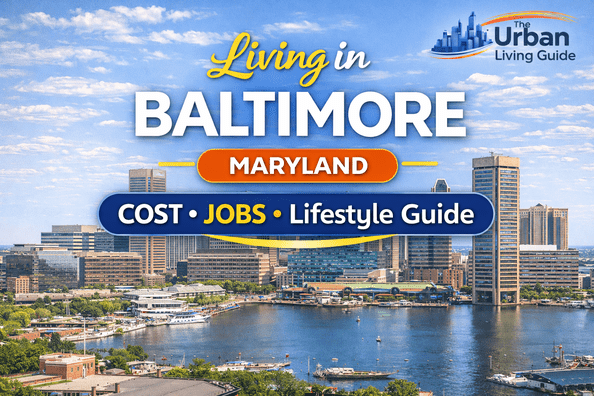
Perched gracefully along the tidal waters of the Patapsco River and the expansive Chesapeake Bay, living in Baltimore, Maryland offers a dynamic mix of maritime heritage, world-class medical research, and vibrant East Coast urban culture. As the largest independent city in Maryland with a population of approximately 580,000 residents, Baltimore occupies a crucial economic and transportation corridor strategically positioned between Washington D.C. and Philadelphia.
Affectionately nicknamed “Charm City,” Baltimore is celebrated for its historic brick row houses, scenic harborside promenades, and legendary seafood culture featuring Maryland blue crabs. Whether you are strolling past the tall ships at the historic Inner Harbor waterfront district, studying groundbreaking medicine at Johns Hopkins, or catching an Orioles game at Oriole Park at Camden Yards, living here delivers a high-energy, historically rich standard of living. Municipal governance, public safety initiatives, and community programs are centrally administered through the official City of Baltimore Government Portal.
If you’re not familiar with this part of the state, the map below will help you understand the city’s exact location and surrounding coastal corridors.
All quantitative metrics, economic data points, and community insights compiled within this living guide are synthesized from official municipal records, regional economic boards, and verified long-term resident feedback.
What Makes Baltimore So Popular & Unique
Over recent decades, Baltimore has evolved into a premier East Coast destination where historic colonial charm meets cutting-edge biotechnology. Key factors driving its sustained popularity include:
- Iconic Waterfront Living: A picturesque harborside landscape anchored by the Inner Harbor, Fells Point, and Canton. Explore regional tourism initiatives via the Visit Baltimore Official Tourism Portal.
- World-Class Medical Innovation: Home to globally revered institutions like Johns Hopkins University and Hospital, driving advanced scientific research and healthcare careers.
- Exceptional Geographic Connectivity: Effortless access to Washington D.C., Philadelphia, and New York via major interstate highways and MARC commuter rail lines.
- Rich Cultural and Artistic Identity: Distinctive neighborhoods, historic monuments like Fort McHenry, and vibrant creative districts supporting artists and musicians.
Baltimore at a Glance: Key Living Metrics
| Evaluation Metric | Local Data Overview & Regional Reality |
|---|---|
| Population | Approx. 580,000 within city limits (Greater metropolitan area exceeds 2.8 million) |
| Median Monthly Rent | Ranges from $1,200 to $2,500+ depending on unit size and waterfront proximity |
| Average Annual Salary | Typically spans $65,000 to $120,000 across healthcare, education, and defense |
| Primary Economic Pillars | Healthcare delivery, medical research, higher education, port logistics, and defense contracting |
| State Income Tax | Progressive state income tax structure ranging up to 5.75% across Maryland (plus local income taxes) |
| Average Summer High | Routinely reaches 85°F to 90°F during warm, humid July and August afternoons |
| Primary Transit Mode | Baltimore Metro SubwayLink, Light RailLink, MARC commuter rail, and personal vehicles |
Famous Personalities, Local Icons & Major Brands in Baltimore
Baltimore has a proud history of nurturing legendary Olympic athletes, influential filmmakers, and global corporate enterprises:
- Michael Phelps: The legendary Olympic swimming icon and most decorated Olympian in history, who honed his historic athletic career training in Maryland pools (Team USA Michael Phelps Profile).
- Tupac Shakur: The iconic, revolutionary hip-hop artist and poet who spent formative creative years attending the Baltimore School for the Arts.
- John Waters: The celebrated, wildly influential filmmaker and cultural provocateur famous for cinematic classics like Hairspray, proudly rooted in Baltimore.
- Under Armour Headquarters: A massive athletic apparel and footwear juggernaut maintaining its sprawling global headquarters along the Baltimore waterfront (Under Armour Corporate Portal).
- T. Rowe Price: A premier global investment management firm anchoring downtown financial services and corporate leadership (T. Rowe Price Official Portal).
Job Market & Business Opportunities with Major Employers
The employment landscape in Baltimore offers exceptional professional stability, high average salaries, and robust career mobility across knowledge-based sectors:
- Healthcare and Biomedical Research: Tens of thousands of specialized nursing, physician, research scientist, and administrative careers tied to Johns Hopkins and University of Maryland medical systems.
- Higher Education and Academic Administration: Elite universities providing extensive faculty, research, and institutional management positions.
- Government and Defense Contracting: Proximity to federal agencies and defense contractors supporting cybersecurity, engineering, and logistics.
- Port Logistics and International Shipping: Operations centered around the bustling Port of Baltimore, driving maritime trade and supply chain careers.
Housing & Real Estate Overview in Baltimore
Navigating the real estate market in Baltimore requires understanding its historic row house architecture, distinct neighborhood boundaries, and waterfront pricing:
- Diverse Architectural Stock: Features iconic brick row houses with marble steps, historic Federal-style townhomes in Fells Point, and modern luxury high-rise condos around the Inner Harbor. Track property assessments via the Maryland Department of Assessments and Taxation Portal.
- Affordability Relative to D.C.: Home purchase prices and rental overhead remain significantly more accessible than in nearby Washington D.C., attracting regional commuters.
- Rental Market Inventory: Average monthly rent spans $1,200 to $1,600 for studio units, $1,400 to $1,900 for one-bedroom apartments, $1,800 to $2,500 for two-bedroom properties, and $2,800 to $4,200+ for single-family home rentals.
- Market Competitiveness: Waterfront neighborhoods and historic districts experience steady housing demand, rewarding property investors.
Best Neighborhoods in Baltimore: Finding Your Ideal Community
| Neighborhood Name | Vibe & Lifestyle Character | Housing & Price Profile |
|---|---|---|
| Federal Hill | Vibrant historic neighborhood overlooking the harbor, renowned for lively pubs, rooftop dining, and scenic parks. | Historic brick row houses, modern townhomes, and upscale market values. |
| Fells Point | Picturesque historic maritime district featuring 18th-century cobblestone streets, pubs, and boutique hotels. | Historic townhomes, waterfront condos, and premium valuations. |
| Canton | Modern waterfront community popular with young professionals, offering bustling squares, parks, and seafood bistros. | Renovated row houses, modern builds, and competitive residential pricing. |
| Mount Vernon | Cultural and architectural heart of the city, famous for classical mansions, museums, theaters, and monuments. | Historic brownstones, grand apartments, and urban valuations. |
| Hampden | Eclectic arts enclave celebrated for quirky boutiques, independent restaurants, and vibrant community festivals. | Colorful row houses, cottage homes, and creative community pricing. |
Watch a recent video by a popular vlogger to understand daily life and vibes in Baltimore.
What It’s Really Like Living in Baltimore (Daily Life & Vibe)
Daily life in Baltimore is defined by a gritty, soulful, and deeply creative rhythm that seamlessly merges maritime history with urban energy:
- Active Harbor & Promenade Routines: Residents spend weekends walking or jogging along the 7-mile Inner Harbor promenade, visiting the National Aquarium, or relaxing in Patterson Park. Explore park guidelines via the Baltimore City Recreation and Parks Portal.
- Seafood and Culinary Exploration: Evenings feature world-class dining centered around Maryland blue crabs, crab cakes, and fresh Chesapeake Bay oysters at historic neighborhood taverns.
- Arts and Neighborhood Culture: Participating in local gallery openings, exploring the Baltimore Museum of Art, or attending neighborhood street festivals like HonFest in Hampden.
- Social Atmosphere: Passionate, unpretentious, community-driven, and intensely proud of its local sports and musical heritage.
Cost of Living in Baltimore: Monthly Expenses & Salary Needs
The cost of living in Baltimore sits moderately above the national average, yet remains remarkably more affordable than neighboring East Coast metropolitan centers:
- Housing Overhead: $1,600 to $2,500+ covering standard apartment and row house rentals across popular districts. Review regional economic data via the Bureau of Labor Statistics Mid-Atlantic Information Office.
- Utilities & Power: $150 to $250 monthly for electricity, heating, water, and municipal waste services, with higher cooling demands in summer.
- Groceries & Household Goods: $350 to $500 depending on household size and shopping choices between local markets and supermarkets.
- Transportation Expenses: $120 to $200 covering public transit passes, fuel, and vehicle maintenance.
- Required Household Income: Single professionals or working households typically require an annual income between $70,000 and $90,000 to comfortably cover local living expenses and savings goals.
Transportation, Commute Dynamics & Transit Realities
Baltimore provides comprehensive regional transportation infrastructure connecting commuters across Maryland and into Washington D.C.:
- MARC Commuter Rail: Reliable commuter train service connecting Baltimore’s Penn Station directly to Washington D.C.’s Union Station (MARC Train Official Portal).
- SubwayLink & Light RailLink: Rapid transit rail systems operated by the Maryland Transit Administration, serving urban corridors and suburban loops (Maryland Transit Administration Portal).
- Highway Connectivity: Excellent freeway access via Interstate 95 and Interstate 83, linking commuters along the East Coast.
- Commute Times: Average daily commutes hover around a manageable 27 minutes during standard rush hours.
- Aviation Access: Immediate proximity to Baltimore/Washington International Thurgood Marshall Airport (BWI) for global travel (BWI Airport Official Portal).
Weather Patterns, Seasonal Realities & Climate Factors
The environmental rhythm of Baltimore follows a classic Mid-Atlantic humid subtropical climate pattern featuring four distinct seasons:
- Warm, Humid Summers: Summer daytime high temperatures routinely average 85°F to 90°F with high humidity, making harborside breezes and air conditioning essential.
- Mild Winters: Winter seasons are generally mild to cool with occasional snowfall events, making winter commuting relatively straightforward. Track active forecasts via the National Weather Service Baltimore-Washington Portal.
-
Splendid Transition Seasons: Spring and autumn deliver vibrant foliage changes, crisp air, and stunning seasonal transitions across Chesapeake Bay parks.
Education, Schools & Major Universities
Educational infrastructure stands as a premier anchor for academic excellence, scientific research, and global intellectual capital:
- Johns Hopkins University: A globally revered private research university leading the world in scientific discovery, medical innovation, and higher education prestige (Johns Hopkins University Official Portal).
- University of Maryland, Baltimore (UMB): A prominent public health-science university operating elite professional schools in law, medicine, and nursing (University of Maryland Baltimore Portal).
- Loyola University Maryland: Respected private Jesuit university providing exceptional undergraduate and graduate degree programs.
- Baltimore City Public Schools: Operating numerous neighborhood schools, specialized arts academies, and magnet programs.
Medical Facilities, Hospitals & Healthcare Systems
Healthcare infrastructure in Baltimore is among the finest on Earth, serving as a global benchmark for modern medicine:
- Johns Hopkins Hospital: Consistently ranked among the absolute best hospitals in the United States, offering groundbreaking medical treatments, trauma care, and specialist research (Johns Hopkins Medicine Portal).
- University of Maryland Medical Center (UMMC): A premier 800+ bed academic hospital housing world-class shock trauma centers and specialized surgical institutes.
- MedStar Health & Mercy Medical Center: Major regional hospital networks providing comprehensive community health services across all city wards.
Popular Hotels, Cafes, Dining & Culinary Scene
The hospitality and culinary identity of Baltimore reflects historic luxury, maritime elegance, and world-famous seafood:
- Four Seasons Hotel Baltimore: Sophisticated luxury waterfront hotel situated in Harbor East, offering refined accommodations, rooftop pool lounging, and stunning harbor views (Four Seasons Baltimore Portal).
- Sagamore Pendry Baltimore: Iconic historic boutique hotel housed within a 1914 recreation pier in Fells Point, delivering maritime elegance and world-class dining (Sagamore Pendry Baltimore Portal).
- Seafood and Crab Shacks: Legendary neighborhood markets serving authentic Maryland blue crabs, crab cakes, and coastal delicacies.
Sightseeing, Cultural Spots & Tourist Attractions
Landmark cultural institutions and historic destinations significantly enhance the daily quality of life for local residents:
- National Aquarium: World-famous aquatic facility housing thousands of species in stunning multi-story glass exhibits along the Inner Harbor (National Aquarium Official Portal).
- Fort McHenry National Monument: Historic 19th-century star-shaped coastal fort whose defense during the War of 1812 inspired Francis Scott Key to write the U.S. national anthem.
- Camden Yards Baseball Stadium: Architectural masterpiece that revolutionized modern baseball park design, serving as the beloved home of the Baltimore Orioles.
Regional Trade-offs: Pros and Cons of Living in Baltimore
Pros of Living in Baltimore
- World-class healthcare and medical research employment anchored by Johns Hopkins.
- Beautiful waterfront living around the historic Inner Harbor, Fells Point, and Canton.
- Significantly more affordable housing purchase prices and rental rates compared to Washington D.C. and New York.
- Rich cultural history, museums, vibrant arts scenes, and famous seafood cuisine.
- Excellent regional transit connectivity via MARC commuter rail and major interstates.
Cons of Living in Baltimore
- Socioeconomic challenges resulting in higher crime rates in certain urban neighborhoods requiring vigilance.
- Hot and humid summer weather requiring constant climate control.
- Traffic congestion during peak commuting hours along major arterial links.
- Aging municipal infrastructure undergoing gradual urban revitalization.
- State and local tax structures reaching progressive brackets across Maryland.
Who Is Baltimore Ideal For — And Who Should Avoid It?
Who Baltimore Is Ideal For
- Healthcare and Biotech Professionals: Doctors, nurses, researchers, and biotech workers seeking careers at Johns Hopkins.
- Washington D.C. Commuters Seeking Value: Professionals working in the capital who want significantly more affordable housing while retaining MARC rail access.
- Waterfront and History Lovers: Residents who prioritize historic brick row houses, maritime heritage, and coastal harbor views.
- Arts and Culture Enthusiasts: People drawn to vibrant creative scenes, independent galleries, and historic neighborhoods.
Who Should Avoid Baltimore
- Crime-Averse Urbanites: Individuals uncomfortable with urban crime rates or neighborhoods undergoing socioeconomic transition.
- Warm-Weather Detractors: People who despise intense summer heat, high humidity, and long cooling seasons.
- Car-Centric Suburbanites: Residents who dislike urban parking density, narrow streets, and city driving conditions.
- Ultra-Low Budget Renters: People seeking extremely depressed rural living costs within major East Coast metropolitan corridors.
Real Experiences: Perspectives from Long-Term Residents (5 to 10+ Years)
“Buying a historic row house in Federal Hill ten years ago for a medical position at Johns Hopkins was the best decision I’ve ever made. The neighborhood pride here is incredible, you can walk right out your door to the harbor promenade, and the food and music scene is genuinely soulful. Housing is much more affordable than what friends pay in D.C., and Baltimore has an authentic character that corporate cities just don’t have.”
[Source: r/baltimore Community Discussions — u/CharmCityMD901, Federal Hill resident of 11 years]
“The big reality check for newcomers is that crime varies drastically block by block, so you really need to do your neighborhood research before moving. However, the trade-off is completely worth it. Fells Point and Canton are stunning waterfront communities, taking the MARC train to D.C. is easy, and the community spirit, local seafood, and historic architecture make Baltimore a truly rewarding place to call home.”
[Source: Local Resident Panels & Community Forums — David M., Fells Point homeowner of 9 years]
Frequently Asked Questions About Living in Baltimore, Maryland
Is Baltimore expensive to live in compared to other U.S. cities?
Baltimore maintains a moderate cost of living that sits slightly above the national average, though it offers substantially more affordable housing than nearby Washington D.C. or Philadelphia.
What level of annual salary do individuals need to live comfortably in Baltimore?
Most single professionals and working households find that an annual income between $70,000 and $90,000 provides a comfortable lifestyle covering rent or mortgage payments, utilities, transportation, and discretionary spending.
Can residents successfully live in Baltimore without owning a personal vehicle?
Yes. Many residents utilize the Metro SubwayLink, Light RailLink, water taxis, and highly walkable historic neighborhoods for daily commuting and errands.
What are the best residential neighborhoods to consider in Baltimore?
Top neighborhoods include Federal Hill for harbor views and nightlife, Fells Point for historic cobblestone charm, Canton for modern waterfront living, and Mount Vernon for cultural arts.
How does commuting work for professionals working across Baltimore and D.C.?
Commuters primarily utilize the MARC commuter rail train from Penn Station to Washington D.C., experiencing average travel times of around 45 to 50 minutes, alongside local average commutes of 27 minutes.
What are the primary natural and cultural highlights of Baltimore?
Residents enjoy visiting the National Aquarium, walking the Inner Harbor promenade, touring Fort McHenry, catching Orioles games at Camden Yards, and eating Maryland blue crabs.
🔗 Explore More Cities in Maryland
Looking beyond Baltimore? The Urban Living Guide has also covered multiple popular cities across Maryland that you can explore further:
- Living in Annapolis, Maryland
- Living in Frederick, Maryland
- Living in Rockville, Maryland
- Living in Gaithersburg, Maryland
If you want to know more about living in Baltimore, explore these guides:
- Cost of Living in Baltimore, Maryland
- Pros and Cons of Living in Baltimore, Maryland
- Best Neighborhoods in Baltimore, Maryland
For a complete overview, check our full guide: Moving to Baltimore, Maryland
These city guides provide detailed insights into everyday living, including housing costs, employment opportunities, neighborhoods, commute options, climate, education, local attractions, and key industries shaping each city.
By bringing all these insights together, The Urban Living Guide helps you compare different cities side by side and choose the one that aligns best with your lifestyle, priorities, and long-term goals.