

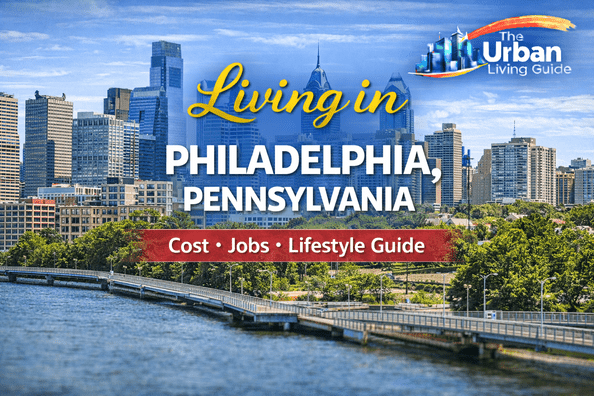
From Cheesesteaks to Historic Streets: What Living in Philadelphia Really Costs in 2026
Stretching across southeastern Pennsylvania along the banks of the Delaware River, Living in Philadelphia, Pennsylvania places you right at the birthplace of American democracy. As the largest city in the Commonwealth and one of the most historically significant metropolitan areas on the East Coast, Philadelphia supports a core population of roughly 1.6 million residents. Famously nicknamed “The City of Brotherly Love”, the city pairs its revolutionary heritage—including the historic signing of the Declaration of Independence and the U.S. Constitution—with a modern, diverse urban economy.
Relocating to the City of Brotherly Love opens doors to world-class academic and medical institutions, a booming life-sciences sector, and a legendary culinary identity that reaches far beyond the iconic Philly Cheesesteak. While the city provides big-city amenities and a robust public transit grid, prospective residents must navigate urban density, variable neighborhood safety, and local wage taxes. Whether you are stepping into a corporate finance career, studying at a prestigious university, or seeking a historic brownstone in Rittenhouse Square, Philadelphia delivers a gritty, authentic, and culturally rich northeastern lifestyle.
What Makes Philadelphia So Popular & Unique
Philadelphia commands deep national and international fascination because it seamlessly fuses revolutionary American history with a vibrant, modern arts and food culture. Centered around iconic national shrines like Independence Hall and the Liberty Bell, the city functions as a living museum while maintaining an energetic, unpretentious attitude. For newcomers looking to access municipal services, utility information, or local neighborhood permits, the official City of Philadelphia portal serves as an essential digital gateway.
- Deep Historical Significance: Home to America’s most sacred revolutionary landmarks, including Independence Hall and historic cobblestone alleys.
- World-Class Higher Education: A powerhouse academic hub anchored by ivy-league and research giants like the University of Pennsylvania, Drexel University, and Temple University.
- Legendary Culinary & Arts Scene: Boasting the sprawling Reading Terminal Market, world-class art museums, and an evolving global restaurant culture.
- Exceptional Walkability: A grid-based downtown core designed for pedestrians, supported by the comprehensive SEPTA transit network.
Philadelphia at a Glance: Key Relocation Metrics
Reviewing these baseline statistics helps establish realistic expectations for your transition to Philadelphia County. These figures reflect current mid-Atlantic market conditions and regional economic benchmarks.
| Metric | Philadelphia City Data | Metropolitan Context |
|---|---|---|
| City Population | ~1.6 Million Residents | Largest city in Pennsylvania; major East Coast urban core |
| Average 1BR Rent | $1,700 – $2,300 | Significantly more affordable than New York City or Washington D.C. |
| Median Home Price | $260,000 – $340,000 | Varies sharply between Center City condos and row house neighborhoods |
| Average Commute | 25 – 40 Minutes | Heavily dependent on SEPTA rail lines and I-76 traffic flow |
| Top Industries | Healthcare, Biotech, Higher Ed, Finance | Telecommunications, corporate services, and hospitality |
If you’re not familiar with the area, take a look at the map below to understand where the city is located.
Famous Personalities, Entertainers & Major Brands in Philadelphia
Philadelphia’s cultural footprint has shaped American entertainment, sports, and business for centuries. The metropolis serves as a breeding ground for legendary talent and commands immense corporate influence across worldwide markets.
- Iconic Entertainers: The city is deeply associated with famous personalities such as comedian and actor Kevin Hart, global superstar Will Smith, and basketball legend Kobe Bryant, who was raised in the region.
- Professional Sports: Sports run through the absolute core of local civic identity, supported by famously intense fanbases cheering for the Philadelphia Eagles (NFL), Philadelphia Phillies (MLB), Philadelphia 76ers (NBA), and Philadelphia Flyers (NHL).
- Global Headquarters: The local economy acts as the command center for major corporations and national enterprises like Comcast Corporation, Aramark, Independence Blue Cross, Urban Outfitters, and a major regional presence for Vanguard.
Job Market & Business Opportunities with Major Employers
Philadelphia features one of the most diversified and resilient job markets in the mid-Atlantic, acting as a premier center for biotechnology, healthcare administration, higher education, and financial services. Whether you are conducting clinical research at a world-class hospital network or advancing a career in corporate finance, the scale of professional opportunity is immense.
Major corporate and institutional employers anchoring the regional economy include Comcast Corporation, Jefferson Health, Independence Blue Cross, Aramark, and the major universities. Official economic reference data from the Pennsylvania Department of Labor & Industry highlights that while average salaries typically range between $70,000 and $120,000 annually, workers must also factor in the city’s unique local wage tax.
- Entry-level salaries: Typically range between $45,000 – $60,000 across administrative, hospitality, and junior healthcare roles.
- Mid-career professionals: Generally span $70,000 – $110,000 with specialized experience in tech, finance, or education.
- Senior executive and specialized medical roles: Frequently scale to $130,000+, providing strong urban purchasing power.
Housing & Real Estate Overview in Philadelphia
Housing is a major factor when evaluating Philadelphia, offering a distinct advantage over northern neighbors like New York City and Boston. In 2026, median home prices across the city generally range between $260,000 and $340,000, though prime properties in Center City or Rittenhouse Square scale much higher. Securing a historic row house or modern loft requires navigating classic urban block dynamics and neighborhood zoning.
The rental market commands reasonable figures compared to other coastal hubs, leading many professionals to explore diverse neighborhoods. Current average monthly rent projections are:
- Studio Apartment: $1,300 – $1,700
- 1 Bedroom Apartment: $1,700 – $2,300
- 2 Bedroom Apartment: $2,400 – $3,100
- Family Home Rentals: $3,200 – $4,500+
Securing long-term housing requires realistic budgeting for local property taxes and city wage deductions, making Philadelphia a favorable option for buyers seeking space relative to cost.
Best Neighborhoods in Philadelphia: Finding Your Ideal Community
Choosing the right neighborhood in Philadelphia defines your daily commute, social life, and overall lifestyle. Each district offers an entirely distinct architectural and cultural landscape. Neighborhood insights are based on local housing trends, safety reports, and resident surveys. The table below outlines the most prominent residential zones.
| Neighborhood / Category | Location, Pricing & Community Overview |
|---|---|
| Center City (Downtown Core) | The bustling downtown core featuring high-rise luxury apartments, historic office conversions, fine dining, and immediate walking proximity to major business districts. |
| Rittenhouse Square (Upscale & Scenic) | One of the city’s most prestigious areas, known for luxury high-rises, gorgeous park spaces, upscale boutiques, and a vibrant sidewalk dining culture. |
| University City (Academic & Research) | Home to the University of Pennsylvania and Drexel University, offering high-tech research hubs, student housing, and vibrant urban parks. |
| Fishtown (Trendy & Creative) | One of Philadelphia’s trendiest neighborhoods, known for indie art galleries, craft cocktail bars, music venues, and converted industrial spaces favored by young professionals. |
| Chestnut Hill (Historic Suburban Feel) | Offers a quieter, affluent suburban atmosphere with historic stone architecture, tree-lined streets, and a charming local boutique shopping avenue. |
What It’s Really Like Living in Philadelphia, Pennsylvania (Daily Life & Vibe)
Daily life in Philadelphia is famously gritty, authentic, fast-paced, and community-driven. Residents thrive in a historic environment where weekend routines involve grabbing morning coffee at the Reading Terminal Market, biking along the Schuylkill River Trail, or exploring world-class art collections at the Philadelphia Museum of Art. The city maintains a fiercely loyal, unpretentious neighborhood culture that rewards active community participation.
However, sustaining this lifestyle requires urban adaptability. Navigating busy SEPTA transit lines, managing street parking challenges, and adjusting to older housing infrastructure are part of everyday life. Despite these urban hurdles, the unmatched historical charm, vibrant food scene, and relative affordability keep millions proud to call the City of Brotherly Love home.
Step into the rhythm of southeastern Pennsylvania and explore everyday sights through the lens of local creators:
Cost of Living in Philadelphia: Monthly Expenses & Salary Needs
Philadelphia offers a moderate, manageable cost of living compared to major coastal megalopolises like New York City or Washington D.C. Cost estimates are derived from official statistics and city-level cost databases. To maintain a secure, comfortable standard of living, cover housing expenses, and enjoy the city’s incredible food culture, an individual professional should target a salary of $75,000+, while households generally require $120,000+.
- Average Rent: $1,700 – $3,100 depending on apartment size and neighborhood choice.
- Monthly Utilities: $150 – $250 (Covering electricity, heating, and gas).
- Groceries & Household Goods: $400 – $650 per month based on shopping habits.
- Transportation: $100 – $220 for a monthly SEPTA transit pass or parking upkeep.
- Local Wage Tax: Residents must account for Philadelphia’s unique city wage tax, which impacts net take-home pay.
Transportation, Commute Dynamics & Transit Realities
Public transportation forms a vital backbone for navigating Philadelphia and the surrounding Delaware Valley. Key transit elements include:
- SEPTA Transit Network: An expansive system combining subways, city buses, trolleys, and regional rail lines connecting Center City to outer wards.
- Amtrak & Intercity Rail: World-class passenger rail connections via 30th Street Station linking directly to New York, Washington D.C., and Boston.
- Airport Connectivity: Philadelphia International Airport (PHL) provides exceptional domestic and international flight access just minutes from downtown.
- Commute Times: Average daily commute times hover between 25 and 40 minutes, though bridge and expressway congestion can cause heavy delays.
- Walkability & Parking: While Center City is exceptionally walkable, vehicle owners face tight street parking and notable parking garage fees.
Weather Patterns, Seasonal Realities & Climate Factors
The city experiences a classic northeastern humid continental climate, featuring four distinct, pronounced seasons:
- Spring: Mild temperatures and blooming cherry blossoms in Fairmount Park, making it one of the most pleasant times of year.
- Summer: Warm and humid, with daytime temperatures routinely reaching 80°F to 90°F, prompting trips to nearby shore points.
- Autumn: Crisp air and gorgeous fall foliage transforming historic neighborhoods and parkways into vibrant red and gold landscapes.
- Winter: Cold with freezing temperatures and occasional snowstorms that bring classic seasonal charm and urban transit adjustments.
- Climate Reference: Official meteorological tracking and climate data are provided by the National Weather Service Mid-Atlantic region.
Education, Schools & Major Universities
Education serves as a massive intellectual, medical, and economic engine for the entire region. Philadelphia hosts globally prestigious higher education institutions, including the University of Pennsylvania, Drexel University, Temple University, and Thomas Jefferson University. For families navigating K-12 schooling, neighborhood options vary widely, with charter schools, private academies, and select public catchment zones drawing strong local interest.
Medical Facilities, Hospitals & Healthcare Systems
Access to elite, cutting-edge healthcare is one of Philadelphia’s most celebrated community strengths. The metropolis is home to world-class medical centers and research hospitals, including Penn Medicine, Jefferson Health, Temple University Hospital, and the Children’s Hospital of Philadelphia (CHOP). These premier hospital networks anchor an extensive neighborhood health system providing exceptional care across every medical specialty.
Popular Hotels, Cafes, Dining & Culinary Scene
Philadelphia’s hospitality and culinary landscape is legendary, blending historic colonial inns with world-class modern gastronomy.
- Popular Hotels: Out-of-town guests and luxury travelers frequently book stays at timeless landmarks like The Ritz-Carlton Philadelphia, Loews Philadelphia Hotel, or the stylish Kimpton Hotel Monaco.
- Cafes & Social Hubs: Artisan coffee roasters and historic bakeries thrive throughout Rittenhouse Square, Washington Square West, and Fishtown, acting as vibrant remote-work spots.
- Restaurants: From the bustling food stalls of the Reading Terminal Market and classic roast pork sandwiches to acclaimed avant-garde tasting menus, Philadelphia’s food scene is diverse and world-renowned.
Sightseeing, Cultural Spots & Tourist Attractions
Residents live surrounded by some of the most famous historical monuments and cultural institutions in American history.
- Independence Hall & Liberty Bell: Universal symbols of American freedom and constitutional government located in the heart of Old City.
- Philadelphia Museum of Art: A grand neoclassical landmark featuring world-class art collections and the famous “Rocky Steps” overlooking the Benjamin Franklin Parkway.
- Reading Terminal Market: A historic, vibrant indoor farmers market operating since 1893 offering endless regional delicacies.
- Eastern State Penitentiary: A fascinating architectural landmark and historic former prison offering immersive tours in Fairmount.
Regional Trade-offs: Pros and Cons of Living in Philadelphia
Every major metropolis requires compromise. Here is the unvarnished reality for anyone planning a move to the City of Brotherly Love in 2026:
Pros:
- Rich historical heritage and world-class cultural institutions.
- A strong, diversified job market anchored by healthcare, biotech, and higher education.
- Vibrant food, arts, and culinary culture that rivals much larger metros.
- Relatively affordable housing costs compared to New York City and Washington D.C.
- Excellent walkability and comprehensive public transportation options.
Cons:
- Urban traffic congestion and heavy expressway bottlenecks during peak hours.
- Cold winter weather with freezing temperatures and seasonal snow.
- Local city wage taxes that impact net take-home pay for workers.
- Variable safety conditions and urban development across different neighborhoods.
- Street parking challenges and tight parking garage fees in Center City.
Who Is Philadelphia Ideal For (and Who Should Avoid It?)
Ideal For: History enthusiasts, healthcare professionals, university students, foodies seeking culinary diversity, and urbanites wanting East Coast energy without New York rent prices.
Who Should Avoid It: Individuals seeking quiet suburban space, drivers who refuse to use public transit, budget-conscious buyers looking for zero city wage taxes, and those who easily burn out in busy urban environments.
Real Experiences: Perspectives from Long-Term Residents (5 to 10+ Years)
Data gives you the metrics, but daily life gives you the truth. Here is what veteran locals have to say about navigating Philadelphia:
“Living in Philly gives you all the character, food, and history of New York or DC, but your rent doesn’t break the bank. Sure, the city wage tax takes a bite out of your paycheck, and parking in South Philly is an extreme sport, but walking down a tree-lined historic street on a crisp autumn evening is unbeatable.”
[Source: r/philadelphia Community Discussions]
“The food scene here is honestly world-class—you can get a phenomenal meal in Fishtown or Center City for half what it costs in Manhattan. Commuting on SEPTA can test your patience when delays happen, but if you embrace the city’s gritty, passionate energy, Philadelphia becomes a place you never want to leave.”
[Source: Local Neighborhood Survey Threads]
Frequently Asked Questions About Living in Philadelphia, Pennsylvania
Is Philadelphia, Pennsylvania expensive to live in?
Philadelphia is generally more affordable than many major East Coast cities like New York City and Boston, though housing costs and local taxes require careful budgeting.
What salary do you need to live comfortably in Philadelphia?
Many residents find that an annual salary between $80,000 and $120,000 provides a comfortable lifestyle, depending heavily on neighborhood choice and housing style.
Is Philadelphia safe for residents and families?
Safety conditions vary significantly by neighborhood district; established residential areas like Rittenhouse Square, Chestnut Hill, and Society Hill are viewed as very secure.
How do Philadelphia city wage taxes work?
Individuals who live or work within Philadelphia limits are subject to a local city wage tax, which is automatically deducted from paychecks and requires careful tax planning.
What are the best neighborhoods for families in Philadelphia?
Chestnut Hill, Rittenhouse Square, and parts of University City and Fairmount are widely praised for their family-friendly community parks, schools, and safety.
Can you live in Philadelphia without a car?
Yes, absolutely. Center City and surrounding neighborhoods are extremely walkable and well-serviced by the SEPTA subway, trolley, and bus networks.
🔗 Explore More Cities in Pennsylvania
If you’re exploring more options beyond Philadelphia, The Urban Living Guide has covered several other popular cities in Pennsylvania. You can also check:
- Living in Pittsburgh, Pennsylvania
- Living in Allentown, Pennsylvania
- Living in Erie, Pennsylvania
- Living in Reading, Pennsylvania
Want to learn more about Philadelphia? Check out these helpful guides:
- Cost of Living in Philadelphia, Pennsylvania
- Pros and Cons of Living in Philadelphia, Pennsylvania
- Best Neighborhoods in Philadelphia, Pennsylvania
Ready to make your decision? Explore our complete guide here: Moving to Philadelphia, Pennsylvania
These guides give you a complete picture of what it’s like living across different cities, covering everything from cost of living, housing, and job opportunities to neighborhoods, commute, weather, education, popular places, and major employers.
The Urban Living Guide brings together these local insights in one place, helping you compare cities easily and make a confident, well-informed decision based on your lifestyle and goals.