

From Historic Railroad Roots to Modern Logistics Hub: What Living in Reading Actually Feels Like in 2026
Positioned in southeastern Pennsylvania along the winding banks of the Schuylkill River, roughly 60 miles northwest of Philadelphia, Living in Reading, Pennsylvania offers an intriguing mix of industrial manufacturing heritage, stunning surrounding countryside, and unmatched real estate affordability. As the county seat of Berks County, Reading supports a core population of roughly 95,000 residents, anchoring an industrious regional economy steeped in transportation and manufacturing history.
Relocating to the historic home of the legendary Reading Railroad—famously immortalized on the classic Monopoly board—places you in a scenic valley framed by Mount Penn and surrounding rolling hills. Propelled by growing logistics centers and major regional employers like Penske Truck Leasing and Carpenter Technology Corporation, the city provides stable careers while maintaining a relaxed pace of life. However, thriving here requires navigating older urban infrastructure and adapting to classic northeastern seasonal weather. Whether you are seeking a peaceful suburban lifestyle in Wyomissing or a vibrant dining scene in West Reading, Reading delivers an authentic and accessible Pennsylvania lifestyle.
What Makes Reading So Popular & Unique
Reading commands regional attention because it successfully pairs a storied industrial past with modern logistical expansion and exceptional housing affordability. Centered around iconic architectural treasures like the historic mountaintop Pagoda landmark and the bustling commercial corridors of West Reading, the city functions as a welcoming residential anchor for Berks County. For newcomers looking to access municipal services, utility maps, or community event schedules, the official City of Reading portal serves as an essential digital gateway.
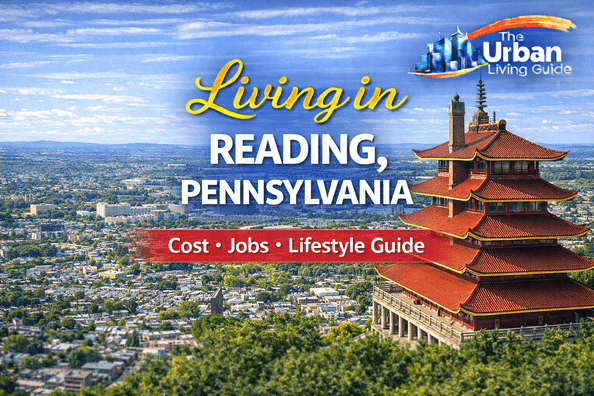
- The Historic Pagoda: A unique, picturesque 1908 Japanese-style pagoda sitting atop Mount Penn, offering sweeping panoramic views of the entire Schuylkill Valley.
- Exceptional Housing Affordability: Median home prices and rental rates remain remarkably accessible, allowing first-time buyers to achieve homeownership with ease.
- Railroad & Industrial Legacy: Celebrated worldwide as the historic home of the Reading Railroad, shaping American industrial and transportation history.
- Thriving Logistics Nexus: Positioned conveniently near major highway corridors, making it a primary hub for distribution and supply chain commerce.
Reading at a Glance: Key Relocation Metrics
Reviewing these baseline statistics helps establish realistic expectations for your transition to Berks County. These figures reflect current southeastern Pennsylvania market conditions and regional economic benchmarks.
| Metric | Reading City Data | Metropolitan Context |
|---|---|---|
| City Population | ~95,000 Residents | County seat of Berks County; major regional commercial hub |
| Median Home Price | $180,000 – $250,000 | Significantly below Philadelphia and New York City real estate medians |
| Average 1BR Rent | $950 – $1,300 | Extremely manageable rental entry points across urban and suburban areas |
| Average Commute | 20 – 30 Minutes | Minimal traffic congestion compared to major east coast hubs |
| Top Industries | Logistics, Distribution, Healthcare, Manufacturing | Retail commerce, corporate fleet management, and higher ed |
If you haven’t explored this area before, the map below will give you a better sense of its location.
Famous Personalities, Pop Icons & Major Brands in Reading
Reading’s cultural footprint has produced global pop music royalty, celebrated professional athletes, and massive international transport and retail enterprises.
- Global Superstars: The city is proudly celebrated worldwide as the hometown of international pop music icon Taylor Swift, alongside former NFL quarterback Kerry Collins.
- Sports & Entertainment: Sports run through the local community, supported by enthusiastic fanbases cheering for the Reading Fightin Phils (Double-A minor league affiliate of the Philadelphia Phillies).
- Corporate Footprint: The regional economy acts as the command center for world-class enterprises like Penske Truck Leasing, Boscov’s Department Stores, and Carpenter Technology Corporation.
Job Market & Business Opportunities with Major Employers
Reading’s job market is anchored by an explosive logistics and distribution sector, advanced specialty metal manufacturing, and robust healthcare networks. Whether you are managing global truck fleets or providing patient care, the local employment base offers steady, reliable career pathways within striking distance of Philadelphia.
Key employers driving local prosperity include Penske Truck Leasing, Boscov’s Department Stores, Tower Health, and Carpenter Technology Corporation. Official economic reference data from the Pennsylvania Department of Labor & Industry highlights that average salaries typically range between $55,000 and $90,000 annually, providing solid middle-class purchasing power relative to regional housing costs.
- Entry-level salaries: Typically range between $40,000 – $55,000 across logistics, retail warehousing, and administrative support.
- Mid-career professionals: Generally span $60,000 – $90,000 for experienced supply chain managers, nurses, and metallurgists.
- Specialized engineering or corporate roles: Frequently scale to $100,000+, supporting comfortable homeownership across Berks County.
Housing & Real Estate Overview in Reading
Housing affordability stands as one of Reading’s most powerful competitive assets for relocating families and professionals. In 2026, median home prices range between $180,000 and $250,000, allowing buyers to acquire charming historic row houses, suburban single-family homes, or spacious properties for a fraction of what they cost in Philadelphia or New York City.
The rental market remains accessible, offering diverse options across urban cores and peaceful suburban fringes. Current average monthly rent projections are:
- Studio Apartment: $750 – $950
- 1 Bedroom Apartment: $950 – $1,300
- 2 Bedroom Apartment: $1,300 – $1,800
- Family Home Rentals: $1,900 – $2,700+
Achieving homeownership in Reading is entirely realistic for middle-income earners, making it a premier destination for individuals looking to escape high downstate rents.
Best Neighborhoods in Reading: Finding Your Ideal Community
Choosing the right neighborhood in Reading defines your daily commute, social life, and architectural surroundings. Each district offers an entirely unique character. Neighborhood insights are based on local housing trends, safety reports, and resident surveys. The table below outlines the most prominent residential zones.
| Neighborhood / Category | Location, Pricing & Community Overview |
|---|---|
| Wyomissing (Prestigious & Stable) | One of the most desirable areas near Reading. Known for its exceptional residential communities, beautiful tree-lined streets, and top-tier public school performance. |
| West Reading (Vibrant & Walkable) | A bustling, highly walkable district along Penn Avenue featuring eclectic boutiques, award-winning restaurants, local pubs, and active community events. |
| Mount Penn (Scenic Overlook) | Offers breathtaking scenic views overlooking the city valley, quiet residential streets, and historic homes situated right near the famous Pagoda landmark. |
| Downtown Reading (Urban Core) | Features historic Victorian architecture, ongoing urban redevelopment projects, local theaters, and walking access to restaurants and cultural spots. |
| Kenhorst (Suburban Family Hub) | A quiet suburban borough offering family-friendly single-family housing options, community parks, and a welcoming neighborhood atmosphere. |
What It’s Really Like Living in Reading, Pennsylvania (Daily Life & Vibe)
Daily life in Reading moves at a comfortable, family-oriented pace that balances industrial heritage with scenic countryside calm. Residents enjoy a relaxed routine filled with weekend hikes along the Schuylkill River Trail, visiting the mountaintop Pagoda, and dining out along the vibrant commercial strip in West Reading. The city’s compact geographic scale eliminates the grueling gridlock found in larger metros, giving people their evenings back.
Spring and autumn bring gorgeous outdoor weather, featuring brilliant fall foliage across Berks County hillsides and visits to local country markets. When winter arrives, locals embrace the snowy climate with winter sports and cozy neighborhood gatherings. The combination of economic growth, affordability, and friendly community spirit creates an exceptionally balanced lifestyle.
Step into the rhythm of southeastern Pennsylvania and explore everyday sights through the lens of local creators:
Cost of Living in Reading: Monthly Expenses & Salary Needs
Reading offers a highly favorable cost of living that sits comfortably below the national average. Cost estimates are derived from official statistics and city-level cost databases. To maintain a secure, comfortable standard of living and achieve homeownership, an individual professional should target a salary of $60,000+, while households generally require $90,000+.
- Average Rent: $950 to $1,800 depending on apartment size and neighborhood choice.
- Monthly Utilities: $120 – $200 (Covering electricity, water, and heating).
- Groceries & Household Goods: $320 – $520 per month based on household needs.
- Transportation: $80 – $150 for public transit passes or vehicle upkeep.
- Healthcare Costs: Aligned with regional benchmarks, supported by massive health networks like Tower Health.
Transportation, Commute Dynamics & Transit Realities
Getting around Reading and connecting to the wider Berks County region is supported by a multi-modal transportation network:
- BARTA Public Bus System: Berks Area Reading Transportation Authority (BARTA) providing extensive public bus routes across Reading and suburban commercial corridors.
- Major Highways: Excellent driving connectivity via U.S. Route 422, Route 222, and close proximity to the Pennsylvania Turnpike connecting directly to Philadelphia.
- Short Commutes: The average daily commute time is an exceptionally manageable 20 to 30 minutes each way.
- Car Preference: While public transit serves urban corridors well, many residents prefer personal vehicles to navigate suburban shopping and regional highway travel.
Weather Patterns, Seasonal Realities & Climate Factors
Reading experiences distinct four-season weather influenced heavily by its southeastern Pennsylvania valley geography:
- Spring: Mild and blossoming, offering wonderful conditions for exploring local parks and outdoor trails.
- Summer: Warm and humid with daytime temperatures averaging around 80°F to 90°F.
- Autumn: Crisp, cool weather accompanied by breathtaking fall foliage across Berks County hills.
- Winter: Cold with freezing temperatures and seasonal snowstorms, requiring proper winter gear and snow tires.
- Climate Reference: Official meteorological tracking and climate data are provided by the National Weather Service Mid-Atlantic region.
Education, Schools & Major Universities
Higher education serves as a major intellectual and cultural asset for the entire region. Reading is home to prestigious higher education institutions such as Alvernia University, Penn State Berks, and Reading Area Community College. For families navigating K-12 schooling, neighborhood options vary, with suburban districts like Wyomissing offering exceptional public school performance.
Medical Facilities, Hospitals & Healthcare Systems
Access to advanced, cutting-edge healthcare is one of Reading’s strongest community assets. The city is home to world-class medical institutions, anchored by Tower Health (Reading Hospital), providing comprehensive emergency care, specialized surgical units, and wellness clinics locally across Berks County.
Popular Hotels, Cafes, Dining & Culinary Scene
Reading’s hospitality and culinary scene has expanded dramatically, blending historic industrial brick architecture with innovative dining.
- Popular Hotels: Visitors and executive travelers frequently book stays at standout local luxury properties like the DoubleTree by Hilton Reading, Courtyard by Marriott Reading, or Fairfield Inn & Suites Reading.
- Cafes & Social Hubs: Independent coffee roasters and artisan bakeries thrive throughout West Reading and downtown blocks, acting as vibrant spots for remote work and casual meetups.
- Restaurants: From upscale dining along Penn Avenue in West Reading to global bistros and historic taverns, Reading’s food scene is diverse and thriving.
Sightseeing, Cultural Spots & Tourist Attractions
Residents live surrounded by remarkable cultural museums, scenic waterways, and historic American landmarks.
- Reading Pagoda: The iconic 1908 mountaintop structure offering legendary panoramic views of the city and Schuylkill Valley.
- Reading Public Museum: A magnificent multidisciplinary museum featuring art, science, and a planetarium in West Reading.
- Santander Arena: A premier downtown entertainment venue hosting major concert tours, family shows, and professional sporting events.
- Blue Marsh Lake: A sprawling 6,150-acre federal recreation area offering boating, swimming beaches, and miles of hiking trails just north of the city.
Regional Trade-offs: Pros and Cons of Living in Reading
Every major city requires compromise. Here is the unvarnished reality for anyone planning a move to the Nickel City in 2026:
Pros:
- Exceptionally affordable housing and rental markets compared to Philadelphia and New York City.
- Rich historical heritage, including the iconic Pagoda and railroad roots.
- Scenic parks, Blue Marsh Lake, and surrounding Berks County countryside.
- Convenient highway access to Philadelphia and major northeast corridors.
- Strong community atmosphere and family-friendly suburban enclaves.
Cons:
- Cold, snowy winters requiring seasonal home and vehicle maintenance.
- A smaller overall job market and salary ceiling compared to major Pennsylvania hubs.
- Limited public transit options compared to larger cities, creating car dependency in suburbs.
- Certain urban pockets are still undergoing economic redevelopment.
- A more modest late-night nightlife and entertainment infrastructure.
Who Is Reading Ideal For (and Who Should Avoid It?)
Ideal For: First-time homebuyers seeking market entry, logistics and manufacturing professionals, families wanting suburban comfort within reach of Philadelphia, and commuters looking for affordable Pennsylvania living.
Who Should Avoid It: Individuals who despise cold snowy winters, corporate professionals requiring ultra-high coastal finance salaries, and those craving massive mega-city nightlife.
Real Experiences: Perspectives from Long-Term Residents (5 to 10+ Years)
Data gives you the metrics, but daily life gives you the truth. Here is what veteran locals have to say about navigating Reading:
“Moving from Philly to West Reading cut our housing costs in half and gave us a lifestyle that feels safe and walkable. Penn Avenue has incredible restaurants and coffee shops, and being fifteen minutes from Blue Marsh Lake in the summer is amazing. It’s a hidden gem if you want affordability near the big cities.”
[Source: r/readingpa Community Discussions]
“The logistics and manufacturing job market here is very solid. Route 422 during rush hour can bottleneck, but your dollar stretches so much further for housing here than anywhere closer to Philadelphia. Plus, hiking up near the Pagoda on a clear weekend never gets old.”
[Source: Local Neighborhood Survey Threads]
Frequently Asked Questions About Living in Reading, Pennsylvania
Is Reading, Pennsylvania expensive to live in?
No, Reading is generally considered an affordable city, offering median home prices between $180,000 and $250,000.
What salary do you need to live comfortably in Reading?
An annual salary between $60,000 and $90,000 is generally sufficient for individuals or families to live comfortably, depending heavily on housing choices and lifestyle.
Is Reading safe to live in?
Safety varies by neighborhood; established residential communities like Wyomissing, West Reading, and Mount Penn are widely considered very secure and family-friendly.
Can you live in Reading without a car?
While the BARTA bus system serves urban corridors, many residents prefer owning a vehicle to navigate suburban shopping and regional highway travel effectively.
What are the best neighborhoods for families in Reading?
Wyomissing and Kenhorst are among the most popular residential areas praised for their excellent local public schools, family parks, and community safety.
How close is Reading to Philadelphia?
Reading is located roughly 60 miles northwest of Philadelphia, making it easily accessible via major highways like U.S. Route 422 and the Pennsylvania Turnpike.
🔗 Explore More Cities in Pennsylvania
If you’re exploring more options beyond Reading , The Urban Living Guide has covered several other popular cities in Pennsylvania. You can also check:
Want to learn more about Reading? Check out these helpful guides:
- Cost of Living in Reading, Pennsylvania
- Pros and Cons of Living in Reading, Pennsylvania
- Best Neighborhoods in Reading, Pennsylvania
Ready to make your decision? Explore our complete guide here: Moving to Reading, Pennsylvania
These guides give you a complete picture of what it’s like living across different cities, covering everything from cost of living, housing, and job opportunities to neighborhoods, commute, weather, education, popular places, and major employers.
The Urban Living Guide brings together these local insights in one place, helping you compare cities easily and make a confident, well-informed decision based on your lifestyle and goals.