

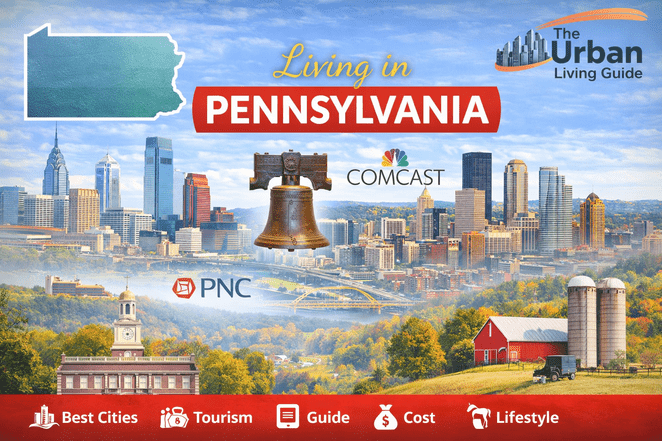
Living in Pennsylvania: Keystone State History, Allegheny Mountains, and Rust Belt Renaissance Realities in 2026
Making your home in Pennsylvania in 2026 means stepping into a historic mid-Atlantic landscape spanning over 46,055 square miles, bordered by the rolling hills of the Pocono Mountains, the industrial river valleys of the west, and the Delaware River basin to the east. As a long-term local resident will tell you, the Keystone State is a remarkable blend of foundational American heritage and steady, working-class resilience.
From the cobblestone alleys of Independence National Historical Park in Philadelphia and the biotech corridors of Pittsburgh to the rich agricultural traditions of Lancaster County and the scenic gorges of the Endless Mountains, everyday life here is characterized by deep historical roots, a population of approximately 13 million residents, and a balanced regional identity. For official administrative guidelines, state tax forms, and civic updates, residents frequently consult the Official State of Pennsylvania Portal.
| Quick Facts Snapshot: Pennsylvania (2026) | |
|---|---|
| Time Zone | Eastern Time Zone (ET / UTC-5, Daylight Saving UTC-4) |
| State Population | Approx. 13 Million (Fifth-most populous state in the U.S.) |
| State Income Tax | Flat 3.07% personal income tax rate assessed on taxable earned income |
| Median Home Price | $250,000 – $360,000 (Varies noticeably between suburban Philadelphia and rural central PA) |
| Average Rent Range | $1,100 – $2,100+ per month (Dependent on downtown metro vs. regional town location) |
| Sales Tax Baseline | 6.0% state base, with local municipal additions (such as Philadelphia’s 8% or Allegheny County’s 7%) pushing totals higher |
What It Is Really Like to Live Here (The Macro Reality & Cultural Identity)
Living across the Keystone State requires appreciating a lifestyle anchored by steady Midwestern work ethics, rich colonial history, and reliable community networks. Locals quickly learn that everyday routines revolve around seasonal climate shifts, historic local sports rivalries, and a pragmatic approach to cost-of-living management.
- Cultural Vibe: A distinct mix of gritty industrial heritage, colonial preservation, passionate sports culture, and tranquil agricultural traditions found across rural counties.
- Pace of Life: Varies significantly from the fast-paced, historic urban environment of Philadelphia to the revitalized tech-and-medicine rhythm of Pittsburgh and the peaceful pace of central farming towns.
- The Resident Trade-Off: Long-term locals accept humid summers and gray winter snows in exchange for remarkably affordable housing values, stable career markets, and a lower cost of living compared to neighboring New York or New Jersey.
Regional Diversity, Geography & Economic Zones
Because the Appalachian Mountain chain cuts diagonally across Pennsylvania, its geography encompasses starkly contrasting regional zones that dictate completely separate daily living experiences.
Eastern Corridors, Metro Hubs & Suburban Enclaves
- Greater Philadelphia & The Delaware Valley: Anchored by Philadelphia and surrounding counties like Montgomery County and Bucks County, serving as the commercial and historical core of the state.
- The Lehigh Valley: Centered around Allentown, representing a booming logistics and manufacturing corridor experiencing rapid suburban expansion.
- The Capital Region: Centered around Harrisburg, featuring state government administration, riverfront parks, and transportation junctions.
Western Valleys, Mountain Ridges & Agricultural Plains
- Western Pennsylvania & Pittsburgh: Anchored by Allegheny County, characterized by steep river valleys, steel-town heritage transformed into robotics and healthcare, and rugged terrain.
- Central Agricultural Plains: Rolling farmland in Lancaster County and surrounding valleys, maintaining deep-rooted Amish communities and dairy agriculture.
Infrastructure, Power Grids, Water Systems & Transport Networks
Sustaining 13 million residents requires extensive civil infrastructure, heavy logistics corridors, and complex water resource management across major river basins.
Water Resources, Rivers, Canals & Watersheds
- Major River Basins: The Susquehanna River and Delaware River drain vast portions of the state, supplying municipal utilities and supporting commercial barge traffic.
- Watershed Protection: Managed extensively to balance industrial discharge, recreational boating, and ecological preservation. Learn more via the Pennsylvania Department of Environmental Protection.
Power Generation & Energy Leadership
- Diverse Grid Mix: Electricity is supplied through major providers like PECO and PPL Electric Utilities, utilizing nuclear power generation, natural gas from the Marcellus Shale, and coal reserves.
- Grid Management: The PJM Interconnection grid operator, headquartered in the state, manages electricity transmission across multiple mid-Atlantic states.
Statewide Transit, Rail, Air & Port Connectivity
- Global Aviation Hubs: International travel is anchored by major facilities including Philadelphia International Airport (PHL) and Pittsburgh International Airport (PIT).
- Interstate Arteries: Heavy commercial transport flows along legendary multi-lane highways including the Pennsylvania Turnpike (I-76), I-80, and I-95.
- Rail Networks: Extensive Amtrak and regional commuter rail lines connect Pennsylvania cities directly to New York City and Washington, D.C.
Statewide Economy, Job Markets & Major Industries
Pennsylvania maintains a deeply diversified economy that transitioned successfully from heavy manufacturing into modern healthcare, education, and financial services.
- GDP Powerhouse: Generating substantial economic output that places Pennsylvania among the top state economies in the United States.
- Dominant Sectors: Healthcare administration, higher education, advanced manufacturing, logistics, biotechnology, and corporate financial services.
- Corporate Footprint: Headquarters and major operational bases for industry leaders such as Comcast, The Hershey Company, PNC Financial Services, UPMC, and Aramark. Track state economic development via the Pennsylvania Department of Community and Economic Development.
Salary Realities Across Economic Corridors
- Metropolitan Earning Potential: Corporate finance, healthcare research, and tech engineering roles in Philadelphia and Pittsburgh command professional salaries well above state medians, frequently exceeding $85,000 to $130,000 for experienced specialists.
- Regional Wage Variance: Central and northern regional counties align closer to traditional manufacturing and agricultural pay scales, offset by exceptionally affordable local housing costs.
Cost of Living Realities & Housing Market Variance
Pennsylvania is widely celebrated for offering a moderate, budget-friendly cost of living that makes homeownership attainable compared to coastal neighbors.
- Housing Market Index: While historic suburban Philadelphia and trendy Pittsburgh neighborhoods see competitive pricing, vast swaths of central and western Pennsylvania offer highly accessible real estate options.
- Utility Expenses: Four distinct seasons result in predictable winter heating demands and summer air-conditioning usage, keeping utility bills close to national averages.
- Tax Efficiency: A flat state income tax rate combined with lower median home prices provides significant financial relief for middle-income households.
| Expense Category | Cost Range / Index Reality |
|---|---|
| Housing (Suburban Metros vs. Central PA) | $350,000 – $550,000+ in Philadelphia suburbs; $170,000 – $260,000 in central regional towns |
| Utilities & Electricity | Hovering close to national medians, managed through diverse local utility providers |
| Transportation & Transit | Moderate fuel pricing, with turntoll fees on major turnpikes and SEPTA transit costs in the east |
| Groceries & Goods | Aligning closely with national benchmarks, supported by regional grocery leaders like Giant and Wegmans |
State Tax Climate, Business Environment & Government Policies
Pennsylvania operates under a balanced fiscal structure featuring a uniform flat income tax and moderate regulatory compliance frameworks.
- Flat Income Tax Structure: Enforces a flat personal income tax rate of 3.07%, keeping state income withholding transparent and predictable for workers. Review tax guidelines via the Pennsylvania Department of Revenue.
- Local Property Tax Variances: Property taxes are levied by counties, municipalities, and school districts, meaning effective tax rates can vary significantly depending on local school district funding needs.
- Business Climate: Ongoing legislative efforts to reduce corporate net income tax rates aim to make the state even more competitive for business expansion.
Legal & Lifestyle Governance Quirks
- State-Controlled Liquor System: Pennsylvania maintains state-regulated wine and spirits distribution through Fine Wine & Good Spirits stores, though private grocery stores now sell beer and wine under specific licensing.
- Sunshine Laws: Robust state open records statutes ensuring transparency across municipal governments and public school boards.
- Vehicle Registration Rules: Mandatory legal timelines requiring new residents to obtain a Pennsylvania driver’s license and register motor vehicles within 20 days of moving.
Climate, Weather Extremes & Natural Geography
Pennsylvania experiences a classic four-season humid continental climate with distinct seasonal transitions and scenic weather displays.
- Seasonal Variations: Winters are cold and snowy, especially in lake-effect zones near Erie and mountainous elevations, while summers are warm and humid across all regions.
- Environmental Realities: Residents maintain preparedness for occasional winter nor’easters, spring river flooding in low-lying valleys, and summer heavy thunderstorm systems.
- Natural Landmarks: From the historic battlefields of Gettysburg National Military Park to the deep gorges of the Pocono Mountains, outdoor recreation is woven into daily life.
Insurance Cost Realities (Winter & Storm Risks)
- Winter Weather Exposure: Homeowners insurance policies account for risks associated with heavy snow loads, ice dam formation, and frozen pipe damage during winter freeze events.
- Floodplain Endorsements: Properties located near the Susquehanna, Delaware, or Allegheny river basins often require supplemental flood insurance coverage.
- Mine Subsidence Insurance: Due to Pennsylvania’s extensive historical coal mining underground networks, specialized mine subsidence insurance is available for properties in affected counties.
Education Systems & Major Healthcare Networks
Access to world-class elite universities and pioneering medical centers serves as a cornerstone of Pennsylvania’s institutional strength.
- Higher Education Framework: Home to prestigious global institutions including the University of Pennsylvania, Carnegie Mellon University, and Penn State University.
- Advanced Healthcare: Elite medical networks like the University of Pennsylvania Health System (Penn Medicine) and UPMC provide cutting-edge clinical treatment. Review health standards via the Pennsylvania Department of Health.
- Public Education Variance: Public school district quality varies by municipality, with high-performing suburban districts in counties like Montgomery County earning stellar academic reputations.
Culture, Outdoor Recreation & Lifestyle Shifts
Daily life in Pennsylvania blends revolutionary historical significance with a grounded, community-focused outdoor lifestyle.
- Outdoor Living: Hiking the Appalachian Trail, camping through state parks, and boating across Raystown Lake form regular weekend routines.
- Culinary Heritage: Famed for legendary cheesesteaks in Philadelphia, soft pretzels, Amish farm-to-table traditions, and regional snack food manufacturing.
- Arts & Entertainment: A vibrant cultural scene anchored by world-class museums, symphony orchestras, and legendary professional sports franchises. Explore statewide tourism via Visit PA.
Relocation & State Residency Essentials
Establishing official legal residency in Pennsylvania involves straightforward administrative steps that secure your state-level civic rights and tax compliance.
- Driver’s License Transfer: New residents must visit a PennDOT Driver License Center to surrender out-of-state credentials and obtain a Pennsylvania driver’s license within 20 days.
- Vehicle Titling: Motor vehicles must be inspected for safety and emissions and titled locally within 20 days of establishing residency.
- Tax Registration: Establishing primary domicile requires filing resident state income tax returns subject to the uniform 3.07% flat tax rate.
Major Counties and Rural Living Realities in Pennsylvania
Beyond the major urban centers of Philadelphia and Pittsburgh, Pennsylvania’s diverse county administrative units and agricultural heartlands maintain distinct community structures.
- Philadelphia County: The most populous county in the state, serving as the cultural, historical, and economic anchor of eastern Pennsylvania.
- Allegheny County: Centered around Pittsburgh, representing the economic and technological powerhouse of western Pennsylvania.
- Montgomery County: A prosperous suburban county northwest of Philadelphia known for high-ranking schools, commercial corridors, and residential growth.
- Rural and Agricultural Living: Central and northern rural counties provide a peaceful, highly affordable lifestyle centered around family farming, forestry, and historic small towns.
Major Regional Hubs and Cities to Explore
Major Urban Hubs and Economic Centers at a Glance
| City / Hub | Primary Economic Driver | Vibe & Lifestyle Profile |
|---|---|---|
| Philadelphia | Healthcare, Education, Finance, History | Historic urban core, world-class dining, diverse neighborhoods, transit-heavy |
| Pittsburgh | Robotics, Healthcare, Technology | Revitalized steel city, stunning bridges, hilly terrain, neighborhood culture |
| Allentown | Logistics, Manufacturing, Retail | Developing Lehigh Valley hub, growing residential base, affordable housing |
| Erie | Lakefront Commerce, Tourism | Scenic Lake Erie shorelines, relaxed pace of life, cost-effective living |
| Reading | Manufacturing, Logistics, Heritage | Historic Berks County center, affordable real estate, close metro access |
Detailed Breakdown of Key Regional Hubs and Cities
Philadelphia — The Revolutionary Historic Metropolis
Stretching westward from the Delaware River, Philadelphia serves as the historic and cultural heart of the mid-Atlantic. Life here revolves around world-renowned medical and academic institutions, legendary neighborhood food traditions, and navigating a dense urban grid.
Pittsburgh — The Steel City Tech and Medical Transformation
Nestled where three rivers meet amid dramatic topography and historic steel bridges, Pittsburgh has evolved into a premier robotics and healthcare hub. Residents enjoy vibrant neighborhood districts, active park systems, and an inviting cultural community.
Allentown — The Thriving Lehigh Valley Commerce Center
Positioned in eastern Pennsylvania, Allentown anchors a booming logistics and manufacturing region. It provides growing employment opportunities, beautiful park systems, and highly accessible suburban-urban housing markets.
Erie — The Scenic Great Lakes Port City
Located on the shores of Lake Erie, Erie offers waterfront park recreation, snowy winter landscapes, and a relaxed, cost-effective small-city environment close to Presque Isle State Park.
Reading — The Berks County Historic Valley Hub
Surrounded by scenic ridges in the Berks County valley, Reading combines manufacturing roots with affordable suburban housing, historic Pagoda landmarks, and easy access to major eastern job corridors.
Pros and Cons of Making Pennsylvania Your Home
| Advantages (Pros) | Systemic Drawbacks (Cons) |
|---|---|
| Highly affordable cost of living and accessible housing markets | Cold, demanding winter weather and seasonal snowfall |
| World-class higher education institutions and advanced medical networks | Varying local property tax rates across school districts |
| Rich historical significance and abundant outdoor state parks | Slower job growth outside major technological and medical hubs |
| Prime mid-Atlantic location with easy access to NYC and D.C. | Aging infrastructure and road repair projects in select urban corridors |
Frequently Asked Questions About Living in Pennsylvania
Is Pennsylvania a good state to live in?
Yes, especially for families and professionals seeking affordable housing, stable career opportunities, and rich historical culture, provided you budget for winter weather.
What is the actual cost of living in Pennsylvania?
It sits comfortably below the national average and significantly lower than nearby northeastern states, particularly regarding real estate and housing.
Which region or city is best to settle down in?
It depends entirely on your lifestyle goals: Philadelphia for urban culture and healthcare careers, Pittsburgh for tech innovation and affordability, and central towns for rural tranquility.
Does Pennsylvania enforce high taxes?
The state maintains a low flat income tax rate of 3.07%, though local property taxes can run high depending on municipal school district funding requirements.
How safe is everyday life across the state?
Safety varies by municipality; suburban developments and smaller towns offer exceptional security, while specific urban neighborhoods require standard metropolitan awareness.
What industries dominate Pennsylvania’s job market?
Healthcare administration, education, advanced manufacturing, financial services, and logistics drive ongoing statewide employment.
What is the weather like across the state?
Pennsylvania experiences four distinct seasons, featuring cold, snowy winters and warm, humid summers across all regional sectors.
How do residency rules impact my vehicle and license?
New residents must transfer out-of-state driver’s licenses and register their motor vehicles within 20 days of establishing primary residence.
What should I know about Pennsylvania liquor laws?
Wine and spirits are primarily sold through state-run Fine Wine & Good Spirits shops, while beer is widely available through distributors and grocery stores.
Explore Detailed City Guides Across Pennsylvania
We have compiled comprehensive resources and detailed guides to help you understand what daily living feels like across different urban hubs and regional centers throughout the state.
- Living in Philadelphia, Pennsylvania
- Living in Pittsburgh, Pennsylvania
- Living in Allentown, Pennsylvania
- Living in Erie, Pennsylvania
At The Urban Living Guide (TULG), our mission is to deliver research-backed, data-driven insights, lifestyle breakdowns, and practical guidance to help you navigate modern urban living decisions with complete clarity.