

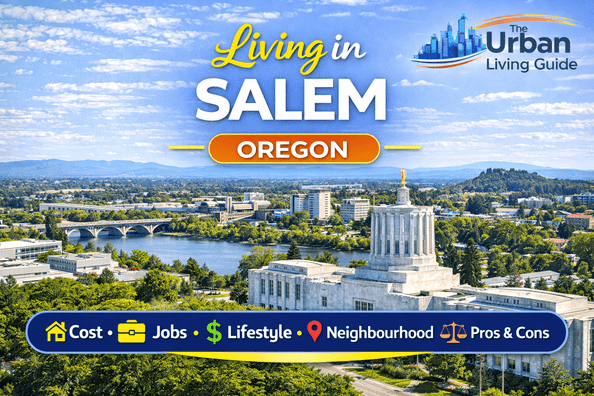
Living in Salem, Oregon in 2026: The Complete Local Guide to State Capitol Heritage, Willamette Valley Wine Country, and Cherry City Living
Stretching across the fertile heart of the picturesque Willamette Valley along the tranquil banks of the Willamette River, living in Salem, Oregon offers an inviting balance of historic charm, agricultural heritage, and steady public-sector opportunity. As the official capital city of Oregon with a population of approximately 180,000 residents, Salem anchors a thriving regional hub surrounded by sprawling vineyards, historic orchards, and the dramatic backdrop of the Cascade Mountain foothills.
Affectionately nicknamed the “Cherry City” in honor of its rich agricultural history and flourishing orchards, Salem provides a peaceful, community-focused lifestyle that stands as a more affordable alternative to nearby Portland. Whether you are admiring the magnificent art deco architecture of the Oregon State Capitol building, exploring the shaded wetlands of Minto-Brown Island Park, or sampling world-class pinot noir at a nearby Willamette Valley winery, living here delivers a well-rounded and deeply authentic Pacific Northwest standard of living. Municipal governance, public safety initiatives, and community resources are centrally administered through the official City of Salem Government Portal.
Not sure where the city is? Check the map below to quickly understand its geographic position in the center of the Willamette Valley.
All quantitative metrics, economic data points, and community insights compiled within this living guide are synthesized from official municipal records, regional economic boards, and verified long-term resident feedback.
What Makes Salem So Popular & Unique
Over recent years, Salem has emerged as one of the most sought-after inland relocation destinations in Oregon. Key factors driving its sustained appeal include:
- State Capitol Stability: Serving as the political seat of Oregon, providing exceptional career stability and employment opportunities in public administration and government services. Explore regional tourism initiatives via the Travel Oregon Official Tourism Portal.
- World-Class Wine Country Proximity: Situated directly within the renowned Willamette Valley wine region, famous globally for exceptional cool-climate pinot noir and picturesque vineyards.
- Exceptional Economic Value: Providing a noticeably lower cost of living and more affordable housing market compared to nearby Portland and major coastal hubs.
- Abundant Riverfront Recreation: Extensive parks, multi-use trails, and water access along the Willamette River and Minto-Brown Island Park.
Salem at a Glance: Key Living Metrics
| Evaluation Metric | Local Data Overview & Regional Reality |
|---|---|
| Population | Approx. 180,000 within municipal city limits (State capital and regional hub) |
| Median Monthly Rent | Ranges from $1,000 to $2,300+ depending on unit size and neighborhood ward |
| Average Annual Salary | Typically spans $60,000 to $95,000 across government, healthcare, and education |
| Primary Economic Pillars | State government administration, healthcare delivery, agriculture, food processing, and higher education |
| State Income Tax | Progressive state income tax structure ranging up to 9.9% across Oregon (no state sales tax) |
| Average Summer High | Routinely reaches 75°F to 85°F during warm, sun-drenched July and August afternoons |
| Primary Transit Mode | Cherriots public bus system, regional commuter corridors, and personal vehicles |
Famous Personalities, Local Icons & Major Brands in Salem
Salem has a proud history of nurturing influential literary authors, groundbreaking athletes, and vital state institutions:
- Ken Kesey: The legendary, counter-culture American author of One Flew Over the Cuckoo’s Nest and Sometimes a Great Notion, who spent formative years writing and living in the Willamette Valley. Explore literary history via the Oregon Blue Book Official Portal.
- Beverly Cleary: The beloved, world-famous children’s author who created iconic characters like Ramona Quimby and Henry Huggins, maintaining deep formative ties to Oregon.
- Matt Lindland: The decorated Olympic silver medalist wrestler and professional MMA fighter who honed his athletic dominance in the region.
- State of Oregon Government Offices: The political and legislative heart of the state, employing tens of thousands of public servants in downtown Salem (State of Oregon Official Portal).
- Salem Health Hospital: A massive regional medical center driving advanced healthcare delivery and medical employment across Marion and Polk counties (Salem Health Official Portal).
Job Market & Business Opportunities with Major Employers
The employment landscape in Salem offers exceptional career stability, public sector security, and steady professional growth:
- Government and Public Administration: As the state capital, Salem provides thousands of stable administrative, policy, and legal careers within state agencies and legislative offices.
- Healthcare Systems: Comprehensive regional medical centers delivering robust nursing, clinical, and specialized healthcare employment pathways.
- Agriculture and Food Processing: Rich agricultural roots supporting food production, packaging, and commercial distribution enterprises.
- Higher Education: Esteemed private universities and community colleges supporting teaching, research, and administrative careers.
Housing & Real Estate Overview in Salem
Navigating the real estate market in Salem requires understanding neighborhood variations, historic preservation, and affordability advantages:
- Diverse Architectural Stock: Features spacious suburban homes in South Salem, scenic hillside properties in West Salem, and historic character houses in Englewood. Track property assessments via the Marion County Assessor Portal.
- Affordability Relative to Portland: Real estate purchase prices and rental rates remain noticeably more accessible than in Portland, attracting families and first-time homebuyers.
- Rental Market Inventory: Average monthly rent spans $1,000 to $1,300 for studio units, $1,300 to $1,700 for one-bedroom apartments, $1,700 to $2,300 for two-bedroom properties, and $2,600 to $3,900+ for single-family home rentals.
- Market Demand: Steady interest from state employees and retirees keeps residential inventory moving efficiently across popular suburban wards.
Best Neighborhoods in Salem: Finding Your Ideal Community
| Neighborhood Name | Vibe & Lifestyle Character | Housing & Price Profile |
|---|---|---|
| South Salem | Highly desirable, family-oriented residential area renowned for excellent public schools and peaceful suburban streets. | Spacious single-family houses, multi-level homes, and stable family pricing. |
| West Salem | Scenic community situated directly across the Willamette River, offering panoramic hillside views and quiet residential blocks. | Contemporary houses, split-levels, and picturesque valley valuations. |
| Downtown Salem | Historic commercial core featuring government buildings, museums, independent restaurants, and cultural venues. | Urban apartments, historic lofts, and competitive rental pricing. |
| Englewood | Historic neighborhood preserving charming older architecture, mature shade trees, and a strong sense of community. | Historic character homes, craftsman houses, and accessible valuations. |
| Keizer Area | Nearby suburban community located just north, known for community parks, local events, and affordable housing options. | Traditional suburban homes, townhouses, and family-friendly pricing. |
Watch a recent video by a popular vlogger to understand daily life and vibes in Salem.
What It’s Really Like Living in Salem (Daily Life & Vibe)
Daily life in Salem is characterized by a peaceful, community-oriented, and recreation-focused rhythm:
- Active River & Park Routines: Residents spend weekends exploring the 900-plus acres of Minto-Brown Island Park, walking along Riverfront City Park, or cycling the Willamette Valley scenic bikeways. Explore park guidelines via the City of Salem Parks and Recreation Portal.
- Wine Country & Farmers Markets: Evenings and weekends feature visits to local estate vineyards, the historic Salem Saturday Market, and farm-to-table dining downtown.
- Cultural and Seasonal Festivals: Participating in vibrant community celebrations like the annual Oregon State Fair and riverfront summer concerts.
- Social Atmosphere: Welcoming, family-friendly, politically engaged, and deeply appreciative of agricultural traditions and natural beauty.
Cost of Living in Salem: Monthly Expenses & Salary Needs
The cost of living in Salem sits moderately below the national average and significantly below neighboring Portland, offering great financial relief:
- Housing Overhead: $1,500 to $2,000 covering typical apartment and home rentals across popular residential wards. Review regional economic data via the Bureau of Labor Statistics Western Information Office.
- Utilities & Power: $140 to $220 monthly for electricity, heating, water, and municipal waste services, with moderate winter heating needs.
- Groceries & Household Goods: $320 to $480 depending on household size and shopping choices between local farm stands and supermarkets.
- Transportation Expenses: $100 to $180 covering Cherriots bus passes, fuel, and vehicle maintenance.
- Required Household Income: Single professionals or working households typically require an annual income between $65,000 and $85,000 to comfortably cover local living expenses and savings goals.
Transportation, Commute Dynamics & Transit Realities
Salem provides efficient regional transportation infrastructure designed to connect residents across the Willamette Valley:
- Cherriots Public Transit: Comprehensive public bus network operated by the Salem-Area Mass Transit District, offering fixed routes across urban wards (Cherriots Official Transit Portal).
- Highway Connectivity: Excellent freeway access via Interstate 5 and Oregon Route 99E, ensuring smooth travel toward Portland or Eugene.
- Commute Times: Average daily commutes are refreshingly brief, hovering around a manageable 23 minutes during standard hours.
- Aviation Convenience: Proximity to Portland International Airport (PDX), located about an hour north for major domestic and international flights.
Weather Patterns, Seasonal Realities & Climate Factors
The environmental rhythm of Salem follows a classic Pacific Northwest oceanic climate featuring warm summers and mild, rainy winters:
- Warm, Sunny Summers: Summer daytime high temperatures routinely average 75°F to 85°F with low humidity, providing magnificent weather for vineyard tours and park picnics.
- Cool, Rainy Winters: Winter seasons bring cool temperatures and steady rainfall, keeping the surrounding Willamette Valley rolling hills lush and green. Track active forecasts via the National Weather Service Portland-Salem Portal.
-
Splendid Transition Seasons: Spring and autumn deliver vibrant foliage changes, crisp morning air, and ideal weather for harvest season in the wine country.
Education, Schools & Major Universities
Educational infrastructure stands as a premier anchor for academic excellence, professional training, and community development:
- Willamette University: A prestigious private liberal arts university located directly across from the State Capitol, offering elite undergraduate and graduate programs (Willamette University Official Portal).
- Corban University: Respected private Christian university providing specialized professional degrees and liberal arts education (Corban University Official Portal).
- Chemeketa Community College: Providing accessible associate degrees, technical certifications, and continuing education pathways for regional workforce development.
- Salem-Keizer School District: Operating numerous neighborhood K-12 public schools focused on student success and family engagement.
Medical Facilities, Hospitals & Healthcare Systems
Healthcare infrastructure in Salem is advanced, highly specialized, and anchored by premier regional medical networks:
- Salem Health Hospital: A massive premier 600+ bed acute care regional hospital offering advanced emergency trauma care, surgical suites, and specialized medicine (Salem Health Official Portal).
- Specialized Outpatient Networks: Comprehensive urgent care clinics, pediatric practices, and specialist medical offices serving every suburban quadrant.
- Regional Medical Access: Immediate regional proximity to world-class academic medical centers and specialized hospitals just an hour north in Portland.
Popular Hotels, Cafes, Dining & Culinary Scene
The hospitality and culinary identity of Salem reflects historic hotel elegance, Willamette Valley wine culture, and farm-to-table excellence:
- Grand Hotel in Salem: Sophisticated contemporary hotel offering upscale accommodations, direct skybridge access to the convention center, and central downtown walkability (Grand Hotel in Salem Portal).
- Holman Riverfront Park Hotel: Elegant boutique hotel delivering scenic Willamette River views, modern amenities, and refined Pacific Northwest hospitality (Holman Riverfront Park Hotel Portal).
- Farm-to-Table & Wine Bars: Acclaimed downtown eateries showcasing locally sourced Willamette Valley produce, artisan coffee houses, and estate wine tasting rooms.
Sightseeing, Cultural Spots & Tourist Attractions
Landmark cultural institutions and natural wonders significantly enhance the daily quality of life for local residents:
- Oregon State Capitol & Capitol Mall: Magnificent historic legislative complex featuring the iconic Oregon Pioneer statue atop its gleaming gold-leaf dome and expansive public gardens.
- Minto-Brown Island Park: Sprawling 900-acre riverfront park offering miles of paved and unpaved trails for hiking, cycling, dog walking, and wildlife viewing.
- Willamette Heritage Center: Historic 5-acre museum campus preserving 19th-century woolen mill buildings, historic homes, and regional pioneer history (Willamette Heritage Center Portal).
Regional Trade-offs: Pros and Cons of Living in Salem
Pros of Living in Salem
- Significantly more affordable housing purchase prices and rental rates compared to Portland.
- Peaceful, family-oriented suburban lifestyle surrounded by stunning natural beauty and wine country.
- Stable government employment opportunities anchored by the State Capitol administration.
- Abundant green spaces, riverfront parks, and outdoor recreation areas like Minto-Brown Island Park.
- Convenient geographic positioning along Interstate 5 with easy access to Portland and the Oregon Coast.
Cons of Living in Salem
- Smaller private-sector corporate job market compared to major metropolitan centers.
- Overcast skies and steady winter rainfall lasting through several months.
- Limited late-night metropolitan nightlife and entertainment options.
- State income tax structure reaching progressive brackets across Oregon.
- Traffic congestion during peak commuting hours along major connecting corridors.
Who Is Salem Ideal For — And Who Should Avoid It?
Who Salem Is Ideal For
- State Government and Public Servants: Workers pursuing stable careers in state administration, public policy, and civil service.
- Families Seeking Affordable Suburbs: Households wanting safe neighborhoods, great public schools, and a lower cost of living than Portland.
- Wine Country and Nature Enthusiasts: Residents who prioritize estate vineyards, scenic valley views, and weekend park explorations.
- Retirees Seeking Peace: Individuals looking for a quiet, manageable city with excellent healthcare facilities and community warmth.
Who Should Avoid Salem
- Mega-City Nightlife Seekers: Residents looking for non-stop 24-hour metropolitan club scenes, dense urban high-rises, and massive entertainment districts.
- Sun-Seeking Enthusiasts: Individuals who require bright sunshine year-round and struggle with extended winter rainy seasons.
- Private Sector Tech Workers: Professionals seeking massive concentrations of Silicon Valley-style technology startups and venture capital firms.
- Car-Free Urbanites: People who require extensive heavy rail rapid transit systems for daily neighborhood errands.
Real Experiences: Perspectives from Long-Term Residents (5 to 10+ Years)
“Moving to South Salem eight years ago after taking a state administration job was the best decision for our family. We were able to buy a wonderful home with a spacious yard for a fraction of what it would cost in Portland. The schools are fantastic, Minto-Brown Island Park is our weekend sanctuary for walking the dogs, and the community has this wonderful, grounded feel. It’s peaceful, safe, and beautifully green.”
[Source: r/SALEM Community Discussions — u/WillametteAdmin901, South Salem resident of 8 years]
“The big reality check for newcomers is that winter brings the classic Oregon gray skies and rain, and nightlife downtown winds down early. However, the trade-off is completely worth it. Housing is reasonable, traffic is mild compared to major metros, and you’re surrounded by amazing Willamette Valley wineries and mountain foothills. It’s a wonderful, stress-free place to call home.”
[Source: Local Resident Panels & Community Forums — Thomas K., West Salem homeowner of 11 years]
Frequently Asked Questions About Living in Salem, Oregon
Is Salem, Oregon expensive to live in?
No. Salem maintains a moderate cost of living and is generally more affordable than larger Oregon cities like Portland.
What level of annual salary do individuals need to live comfortably in Salem?
Most single professionals and working households find that an annual income between $65,000 and $85,000 provides a comfortable lifestyle covering rent or mortgage payments, utilities, transportation, and discretionary spending.
Can residents successfully live in Salem without owning a personal vehicle?
While Cherriots bus routes serve central urban corridors, most residents prefer owning a personal vehicle due to the suburban layout of outer residential wards.
What are the best residential neighborhoods to consider in Salem?
Top neighborhoods include South Salem for family suburban living, West Salem for scenic hillside views, Englewood for historic charm, and Downtown for urban convenience.
How does commuting work for professionals working across Salem?
Commuters primarily utilize Interstate 5 and local arterial roads, enjoying swift average commute times of around 23 minutes during standard hours.
What are the primary natural and cultural highlights of Salem?
Residents enjoy touring the Oregon State Capitol, walking through Minto-Brown Island Park, exploring Willamette Valley wineries, and visiting the Riverfront City Park.
🔗 Explore More Cities in Oregon
If you’re exploring more options beyond Salem, The Urban Living Guide has covered several other popular cities in Oregon. You can also check:
- Living in Portland, Oregon
- Living in Eugene, Oregon
- Living in Gresham, Oregon
- Living in Hillsboro, Oregon
New to Salem? These resources can help you get started:
- Cost of Living in Salem, Oregon
- Pros and Cons of Living in Salem, Oregon
- Best Neighborhoods in Salem, Oregon
For a complete moving guide, read: Moving to Salem, Oregon
These guides give you a complete picture of what it’s like living across different cities, covering everything from cost of living, housing, and job opportunities to neighborhoods, commute, weather, education, popular places, and major employers.
The Urban Living Guide brings together these local insights in one place, helping you compare cities easily and make a confident, well-informed decision based on your lifestyle and goals.