

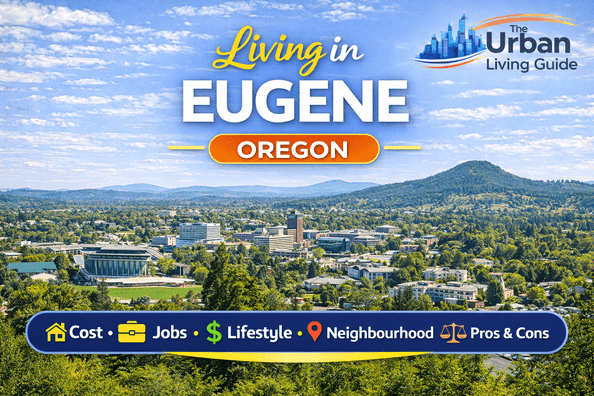
Living in Eugene, Oregon in 2026: The Complete Local Guide to TrackTown USA Athletics, Willamette Valley Nature, and University of Oregon Culture
Stretching across the fertile southern end of the Willamette Valley along the banks of the winding Willamette River, living in Eugene, Oregon offers an extraordinary blend of relaxed Pacific Northwest outdoor recreation, legendary athletic tradition, and vibrant academic energy. As the second-largest city in Oregon with a population of approximately 175,000 residents, Eugene commands a picturesque natural basin nestled squarely between the towering Cascade Mountains and the stunning Oregon Coast range.
Universally celebrated across the globe as “TrackTown USA,” Eugene boasts an unmatched track and field heritage tied directly to the prestigious University of Oregon, where legendary runners train at the historic Hayward Field. Whether you are cycling along the Ruth Bascom Riverbank Path System, exploring the bohemian boutiques of the Whiteaker District, or hiking up Skinner Butte Park for panoramic valley views, living here delivers a deeply green, health-conscious, and culturally rich standard of living. Municipal governance, public safety programs, and community initiatives are centrally administered through the official City of Eugene Government Portal under the leadership of Mayor Lucy Vinis.
If you’re new to this region, the map below will help you get a clear idea of the city’s location and surroundings within the Willamette Valley.
All quantitative metrics, economic data points, and community insights compiled within this living guide are synthesized from official municipal records, regional economic boards, and verified long-term resident feedback.
What Makes Eugene So Popular & Unique
Over recent decades, Eugene has established itself as one of the most desirable, eco-friendly, and recreation-oriented mid-sized cities in the United States. Key factors driving its sustained popularity include:
- Legendary Athletic and College Culture: World-famous identity as “TrackTown USA,” anchored by the University of Oregon and iconic sporting venues like Hayward Field. Explore regional tourism initiatives via the Eugene Cascades & Coast Tourism Portal.
- Unrivaled Proximity to Wilderness: Immediate access to the Cascade Mountains, Willamette Valley wineries, rushing rivers, and pristine Pacific coastal beaches.
- Eco-Friendly and Bike-Centric Design: An exceptional network of dedicated bike paths, pedestrian bridges, and community recycling initiatives.
- Thriving Arts and Farmers Market Scene: A creative community celebrated for independent art galleries, live music, and the historic Saturday Market.
Eugene at a Glance: Key Living Metrics
| Evaluation Metric | Local Data Overview & Regional Reality |
|---|---|
| Population | Approx. 175,000 within municipal city limits (Second-largest city in Oregon) |
| Median Monthly Rent | Ranges from $1,100 to $2,400+ depending on unit size and campus proximity |
| Average Annual Salary | Typically spans $60,000 to $100,000 across education, healthcare, and local tech |
| Primary Economic Pillars | Higher education, healthcare delivery, technology startups, specialty manufacturing, and forestry |
| State Income Tax | Progressive state income tax structure ranging up to 9.9% across Oregon (no state sales tax) |
| Average Summer High | Routinely reaches 75°F to 85°F during warm, pleasant July and August afternoons |
| Primary Transit Mode | Lane Transit District (LTD) bus system, extensive bike greenways, and personal vehicles |
Famous Personalities, Local Icons & Major Brands in Eugene
Eugene has a proud history of nurturing Olympic track legends, co-founding global sportswear empires, and influential American authors:
- Steve Prefontaine: The legendary, fiercely competitive long-distance runner and University of Oregon athlete whose rebellious spirit and athletic brilliance immortalized Eugene as TrackTown USA.
- Phil Knight: The visionary billionaire co-founder of Nike, who developed his revolutionary athletic footwear concepts while running track as a University of Oregon student (Nike Corporate Portal).
- Ken Kesey: The influential American author of One Flew Over the Cuckoo’s Nest, who lived, wrote, and shaped the counter-culture arts movement in the Eugene area.
- University of Oregon Ducks: The powerhouse NCAA Division I athletic programs bringing electrifying Pac-12 sports culture and national championship prestige to Hayward Field (Oregon Ducks Athletics Portal).
- PeaceHealth Medical Center: A major regional healthcare network operating state-of-the-art acute care facilities and driving advanced medical employment across Lane County (PeaceHealth Medical Center Portal).
Job Market & Business Opportunities with Major Employers
The employment landscape in Eugene offers stable professional opportunities, academic career paths, and a growing innovation economy:
- Higher Education and Research: The University of Oregon serving as the region’s largest employer, supporting thousands of faculty, research, and administrative roles.
- Healthcare Systems: Comprehensive regional hospital networks delivering advanced clinical, nursing, and specialized medical career pathways.
- Technology and Green Innovation: Emerging software firms, clean-tech startups, and specialized electric vehicle manufacturers contributing to local economic diversification.
- Tourism and Outdoor Recreation: A thriving visitor economy supported by outdoor outfitters, hospitality businesses, and recreational manufacturing.
Housing & Real Estate Overview in Eugene
Navigating the real estate market in Eugene requires understanding student housing demand, geographic river boundaries, and neighborhood variations:
- Diverse Architectural Stock: Features historic character homes in South Eugene, eclectic craftsman properties in the Friendly Area, and modern developments across Santa Clara. Track property assessments via the Lane County Assessment and Taxation Portal.
- Affordability Relative to Portland: Real estate purchase prices and rental rates generally remain more accessible than in northern metropolitan hubs like Portland.
- Rental Market Inventory: Average monthly rent spans $1,100 to $1,400 for studio units, $1,300 to $1,700 for one-bedroom apartments, $1,700 to $2,400 for two-bedroom properties, and $2,700 to $4,200+ for single-family home rentals.
- Market Competitiveness: University enrollment cycles keep rental inventory moving dynamically across campus-adjacent wards.
Best Neighborhoods in Eugene: Finding Your Ideal Community
| Neighborhood Name | Vibe & Lifestyle Character | Housing & Price Profile |
|---|---|---|
| South Eugene | Prestigious hillside residential community known for exceptional public schools, mature trees, and scenic views. | Custom single-family homes, classic period properties, and upscale valuations. |
| Friendly Area | Quiet, highly walkable residential neighborhood featuring community parks, local co-ops, and strong family involvement. | Craftsman homes, bungalows, and stable residential pricing. |
| Downtown Eugene | Bustling urban core offering local markets, independent coffee houses, theaters, and cultural venues. | Modern urban apartments, historic lofts, and competitive rental pricing. |
| Whiteaker District | Eclectic, arts-driven neighborhood celebrated for colorful murals, craft breweries, and bohemian culture. | Renovated homes, multi-family units, and creative community pricing. |
| River Road | Scenic suburban corridor situated near the Willamette River, offering peaceful outdoor access and neighborhood parks. | Traditional single-family houses, split-levels, and family-friendly valuations. |
Watch a recent video by a popular vlogger to understand daily life and vibes in Eugene.
What It’s Really Like Living in Eugene (Daily Life & Vibe)
Daily life in Eugene is defined by an active, health-conscious, and environmentally focused rhythm deeply intertwined with nature:
- Active River & Trail Routines: Residents spend weekends biking along the 14-mile Ruth Bascom Riverbank Path System, hiking Skinner Butte Park, or visiting Mount Pisgah Arboretum. Explore park guidelines via the City of Eugene Parks and Open Space Portal.
- Market and Culinary Culture: Mornings begin at the historic Saturday Market, followed by visits to farm-to-table restaurants, artisan coffee roasters, and local craft breweries.
- Collegiate Sports Enthusiasm: Experiencing the electric energy of autumn Saturdays as passionate fans pack Autzen Stadium for Oregon Ducks football.
- Social Atmosphere: Progressive, laid-back, community-oriented, and fiercely devoted to environmental sustainability and outdoor sports.
Cost of Living in Eugene: Monthly Expenses & Salary Needs
The cost of living in Eugene sits moderately above the national average, yet remains noticeably more affordable than in Portland or major West Coast metropolises:
- Housing Overhead: $1,500 to $2,100+ covering standard apartment and single-family home rentals across popular neighborhoods. Review regional economic data via the Bureau of Labor Statistics Western Information Office.
- Utilities & Power: $140 to $220 monthly for electricity, heating, water, and municipal services, with moderate winter heating needs.
- Groceries & Household Goods: $320 to $480 depending on family size and shopping choices between organic markets and supermarkets.
- Transportation Expenses: $100 to $180 covering LTD bus passes, fuel, and vehicle maintenance.
- Required Household Income: Single professionals or working households typically require an annual income between $70,000 and $90,000 to comfortably cover local living expenses and savings goals.
Transportation, Commute Dynamics & Transit Realities
Eugene provides efficient regional transportation infrastructure designed to support both cyclists and motorists:
- Lane Transit District (LTD): Comprehensive public bus network offering fixed routes and EmX Bus Rapid Transit lines across the city (Lane Transit District Official Portal).
- Extensive Bike Networks: World-class bike lanes and multi-use paths connecting residential neighborhoods directly to the university campus and downtown.
- Highway Connectivity: Excellent freeway access via Interstate 5 and U.S. Route 105, ensuring smooth regional travel.
- Commute Times: Average daily commutes are refreshingly brief, typically hovering around a manageable 22 minutes.
- Aviation Access: Proximity to Eugene Airport (EUG) for convenient regional flight connections (Eugene Airport Official Portal).
Weather Patterns, Seasonal Realities & Climate Factors
The environmental rhythm of Eugene follows a classic Pacific Northwest oceanic climate featuring warm summers and cool, rainy winters:
-
- Warm, Pleasant Summers: Summer daytime high temperatures routinely average 75°F to 85°F with low humidity, providing magnificent weather for river recreation and outdoor festivals.
- Cool, Rainy Winters: Winter seasons bring consistent overcast skies and gentle rainfall, keeping the surrounding Willamette Valley intensely green and lush. Track active forecasts via the National Weather Service Portland-Eugene Portal.
Education, Schools & Major Universities
Educational infrastructure stands as the foundational crown jewel of civic identity, academic prestige, and regional innovation:
- University of Oregon: A world-class public research university driving academic excellence, cultural events, and Division I athletic prestige (University of Oregon Official Portal).
- Lane Community College: Providing accessible associate degrees, technical certifications, and workforce development training (Lane Community College Official Portal).
- Eugene 4J Public Schools: Operating numerous neighborhood K-12 public schools focused on academic achievement, arts education, and student support.
Medical Facilities, Hospitals & Healthcare Systems
Healthcare infrastructure in Eugene is advanced, highly accessible, and anchored by premier regional medical networks:
- PeaceHealth Sacred Heart Medical Center (Riverbend): A massive state-of-the-art medical complex and level-two trauma center delivering advanced acute care, surgical suites, and specialized medicine (PeaceHealth Medical Center Portal).
- Oregon Medical Group: Sprawling network of outpatient clinics, family medicine practices, and specialized physicians serving the Willamette Valley.
- Specialized Outpatient Centers: Extensive community health clinics ensuring comprehensive medical access across every neighborhood ward.
Popular Hotels, Cafes, Dining & Culinary Scene
The hospitality and culinary identity of Eugene reflects boutique collegiate elegance, farm-to-table mastery, and craft beverage culture:
- Graduate Eugene Hotel: Striking collegiate-themed boutique hotel celebrating University of Oregon heritage, offering sophisticated guest rooms and prime downtown walkability (Graduate Eugene Portal).
- Inn at the 5th: Luxury boutique hotel delivering refined Pacific Northwest elegance, spa services, and fine dining right in the historic 5th Street Public Market.
- Farm-to-Table & Craft Brews: Acclaimed neighborhood eateries serving organic Willamette Valley produce, artisan coffee roasts, and local craft microbrews.
Sightseeing, Cultural Spots & Tourist Attractions
Landmark cultural institutions and natural wonders significantly enhance the daily quality of life for local residents:
- Hayward Field: Legendary historic track and field stadium hosting elite national and international competitions, serving as the crown jewel of TrackTown USA (Hayward Field Official Portal).
- Mount Pisgah Arboretum: Sprawling 236-acre living museum featuring miles of hiking trails, wildflower meadows, and educational riverfront forests along the Coast Fork Willamette River (Mount Pisgah Arboretum Portal).
- Saturday Market Eugene: The nation’s oldest continuously operating weekly open-air crafts market, showcasing local artisans, live music, and organic food vendors.
Regional Trade-offs: Pros and Cons of Living in Eugene
Pros of Living in Eugene
- Breathtaking natural surroundings offering immediate access to rivers, forests, and mountain hiking trails.
- Vibrant university culture, NCAA athletics, and world-class track and field heritage.
- Relaxed, eco-friendly lifestyle supported by extensive bike greenways and public transit.
- More affordable housing purchase prices and rental rates compared to Portland.
- Thriving farm-to-table food scene, local coffee roasting, and craft brewing culture.
Cons of Living in Eugene
- Overcast skies and steady winter rainfall lasting through several months.
- Smaller private-sector corporate job market compared to major metropolitan centers.
- Housing demand fluctuations driven by university student enrollment cycles.
- State income tax structure reaching progressive brackets across Oregon.
- Traffic congestion near the university campus during major athletic events.
Who Is Eugene Ideal For — And Who Should Avoid It?
Who Eugene Ideal For
- Outdoor and Track Enthusiasts: Residents who prioritize daily running, cycling, hiking, and attending elite track and field events.
- University Students and Academics: Scholars, professors, and students connected to the University of Oregon and Lane Community College.
- Remote Professionals Seeking Nature: Individuals who want a peaceful, eco-friendly Pacific Northwest lifestyle with a lower cost of living than Portland.
- Families and Retirees: Households wanting safe neighborhoods, great public schools, and a strong community atmosphere.
Who Should Avoid Eugene
- Sun-Seeking Enthusiasts: Individuals who require bright sunshine year-round and struggle with extended winter rainy seasons.
- Mega-City Nightlife Seekers: Residents looking for non-stop 24-hour metropolitan club districts and dense urban high-rise living.
- Corporate Finance Professionals: Workers seeking massive concentrations of Wall Street financial headquarters and deep corporate banking towers.
- Those Intolerant of Seasonal Traffic: Drivers who dislike localized congestion around campus during football and track season.
Real Experiences: Perspectives from Long-Term Residents (5 to 10+ Years)
“Moving to the Friendly Area ten years ago after finishing my degree at UO was the best lifestyle decision I’ve ever made. Being able to bike everywhere, grab fresh produce at the Saturday Market, and be hiking up Spencer Butte within twenty minutes is unbeatable. Winters are definitely gray and wet, but the spring blooms, summer warmth, and incredible community spirit make living in Eugene feel like home.”
[Source: r/eugene Community Discussions — u/WillametteValleyRunner, resident of 11 years]
“The big reality check for newcomers is learning to embrace the winter rains and the student rental cycles. However, the trade-off is completely worth it. Housing is more affordable than Portland, the schools in South Eugene are fantastic, and the natural beauty of the Willamette Valley is right outside your door. It’s a wonderful, progressive city with a big heart.”
[Source: Local Resident Panels & Community Forums — David W., South Eugene homeowner of 12 years]
Frequently Asked Questions About Living in Eugene, Oregon
Is Eugene, Oregon expensive to live in compared to other U.S. cities?
Eugene maintains a moderate cost of living that sits slightly above the national average, though it offers more affordable housing options than nearby Portland.
What level of annual salary do individuals need to live comfortably in Eugene?
Most single professionals and working households find that an annual income between $70,000 and $90,000 provides a comfortable lifestyle covering rent or mortgage payments, utilities, transportation, and discretionary spending.
Can residents successfully live in Eugene without owning a personal vehicle?
Yes. Many residents living in central districts, South Eugene, or near campus successfully utilize Lane Transit District buses and extensive bike greenways for daily commuting.
What are the best residential neighborhoods to consider in Eugene?
Top neighborhoods include South Eugene for historic homes and schools, Friendly Area for walkable community life, Whiteaker for arts and breweries, and Downtown for urban convenience.
How does commuting work for professionals working across Eugene?
Commuters primarily utilize Interstate 5, U.S. Route 105, and local arterial roads, enjoying swift average commute times of around 22 minutes during standard hours.
What are the primary natural and cultural highlights of Eugene?
Residents enjoy visiting Hayward Field, biking the Ruth Bascom Riverbank Path, hiking Mount Pisgah, browsing the Saturday Market, and exploring the Willamette Valley.
🔗 Explore More Cities in Oregon
If you’re exploring more options beyond Eugene, The Urban Living Guide has covered several other popular cities in Oregon. You can also check:
- Living in Portland, Oregon
- Living in Salem, Oregon
- Living in Gresham, Oregon
- Living in Hillsboro, Oregon
Want a better understanding of what life is like in Eugene? Explore:
- Cost of Living in Eugene, Oregon
- Pros and Cons of Living in Eugene, Oregon
- Best Neighborhoods in Eugene, Oregon
When you’re ready, see our full guide: Moving to Eugene, Oregon
These guides give you a complete picture of what it’s like living across different cities, covering everything from cost of living, housing, and job opportunities to neighborhoods, commute, weather, education, popular places, and major employers.
The Urban Living Guide brings together these local insights in one place, helping you compare cities easily and make a confident, well-informed decision based on your lifestyle and goals.