

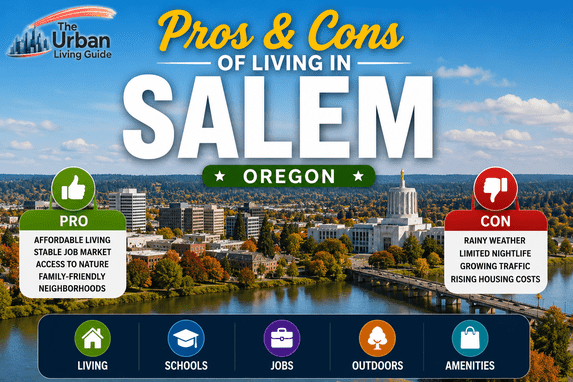
Pros and Cons of Living in Salem Near Oregon’s Government and Wine Country Region
If you’re thinking about relocating to Oregon, understanding the pros and cons of living in Salem can help you decide whether this affordable and slower-paced capital city fits your lifestyle.
Located in the center of the Willamette Valley, Salem is known for its government jobs, nearby wine country, family-friendly neighborhoods, and more relaxed atmosphere compared to larger West Coast cities. The city attracts families, retirees, state employees, and people looking for a quieter lifestyle with access to nature and urban amenities.
At the same time, residents also deal with rainy weather, limited nightlife, growing traffic, and rising housing prices in some neighborhoods.
Watch local Salem neighborhood tours and relocation videos to better understand the real pros and cons of living in Salem before moving.
Whether you’re relocating for affordability, government work, retirement, or family living, this guide covers the real pros and cons of living in Salem.
Pros of Living in Salem
Affordable Living Compared to Larger Oregon Cities
One of the biggest advantages in the pros and cons of living in Salem is its relatively affordable cost of living compared to cities like Portland.
While housing prices have increased in recent years, many residents still find better value in Salem for both renting and homeownership.
The city offers:
-
- Lower housing costs than Portland
- Larger residential properties
- Family-friendly suburbs
- More affordable rentals
- Lower daily living expenses in some areas
For families and retirees, this affordability remains one of the city’s biggest strengths.
Stable Government and Healthcare Jobs
As the capital city of Oregon, Salem benefits from a stable economy supported by government employment.
State agencies, public services, healthcare systems, and schools provide consistent job opportunities across the city.
Major industries in Salem include:
-
- Government
- Healthcare
- Education
- Agriculture
- Retail
Many residents appreciate the long-term job stability connected to state employment.
Relaxed Lifestyle and Smaller-City Feel
Another positive in the pros and cons of living in Salem is the city’s calmer and slower pace of life.
Compared to larger metro areas on the West Coast, Salem feels less crowded and easier to navigate.
Residents often enjoy:
-
- Shorter commutes
- Less traffic than Portland
- Quieter neighborhoods
- More relaxed daily living
- Stronger community feel
People looking to escape fast-paced urban environments often enjoy the city’s balance between convenience and comfort.
Access to Nature and Oregon Wine Country
Outdoor recreation is another major benefit of living in Salem.
The city sits close to forests, rivers, hiking trails, and Oregon’s famous wine country region.
Popular outdoor attractions include:
-
- Minto-Brown Island Park
- Silver Falls State Park
- Willamette River
- Bush’s Pasture Park
Residents also enjoy easy access to nearby vineyards and scenic countryside throughout the Willamette Valley.
Family-Friendly Neighborhoods
Many people choose Salem because of its family-oriented environment.
The city includes suburban-style neighborhoods with parks, schools, and community amenities that appeal to long-term residents.
Popular family-friendly areas include:
-
- South Salem
- West Salem
- Sunnyslope
- Faye Wright
Families often appreciate the quieter atmosphere and more spacious residential areas.
Central Location Within Oregon
Another advantage in the pros and cons of living in Salem is the city’s location.
Residents can travel relatively easily to:
-
- Portland
- The Oregon Coast
- Mountain recreation areas
- Wine country destinations
- Other cities in the Willamette Valley
This central positioning makes weekend travel and road trips convenient.
Cons of Living in Salem
Rainy and Gray Weather
One of the biggest downsides in the pros and cons of living in Salem is the weather.
Like much of western Oregon, the city experiences long rainy seasons and cloudy skies for much of the year.
Common weather-related challenges include:
-
- Frequent rain
- Gray winter skies
- Wet roads
- Seasonal mood changes
- Limited sunshine during colder months
People moving from sunnier states may need time to adjust.
Limited Nightlife and Entertainment
Although Salem has restaurants, breweries, and local events, the entertainment scene is smaller than nearby Portland.
Residents looking for:
-
- Major concerts
- Large nightlife districts
- Luxury shopping
- Bigger entertainment venues
may feel somewhat limited living in the city.
Younger professionals sometimes travel to Portland for expanded entertainment options.
Growing Traffic and Population
Traffic congestion has become more noticeable as Salem continues to grow.
Major roads and commuter routes can become crowded during peak hours, especially near bridges and downtown corridors.
Common traffic concerns include:
-
- Rush-hour congestion
- Bridge bottlenecks
- Construction delays
- Increased commute times
While traffic is still lighter than larger cities, growth has created more pressure on infrastructure.
Rising Housing Prices
Although still more affordable than some Oregon cities, housing prices in Salem have increased steadily.
Demand from families and remote workers has pushed home values upward in several neighborhoods.
Housing challenges include:
-
- Competitive housing market
- Higher mortgage costs
- Increasing rent prices
- Limited inventory in desirable areas
This has made affordability more difficult for some first-time buyers.
Smaller Job Market for Specialized Careers
While government and healthcare jobs remain strong, some specialized industries are limited in Salem.
Professionals in technology, finance, or large corporate sectors may find fewer opportunities compared to bigger metro areas.
Some residents commute to Portland or work remotely for better career options.
Homelessness and Public Safety Concerns in Some Areas
Like many West Coast cities, Salem has experienced visible homelessness and public safety concerns in certain areas.
Residents sometimes report issues related to:
-
- Encampments
- Property crime
- Drug-related activity
- Downtown safety concerns
However, many suburban neighborhoods remain quiet and family-oriented.
Final Thoughts on the Pros and Cons of Living in Salem
Understanding the pros and cons of living in Salem is important before making a relocation decision.
The city stands out for its affordability, government employment opportunities, family-friendly neighborhoods, and access to Oregon’s natural beauty. At the same time, residents should prepare for rainy weather, increasing housing costs, and a smaller entertainment scene compared to larger cities.
For families, retirees, and professionals seeking a more relaxed lifestyle in the Willamette Valley, Salem continues to be one of the most practical and appealing places to live in Oregon.
FAQs
Is Salem cheaper than Portland?
Yes, Salem is generally more affordable than Portland, especially when it comes to housing and everyday living costs. Many families move to Salem for better value and quieter neighborhoods.
Does Salem get a lot of rain?
Yes, Salem experiences frequent rain and cloudy weather during much of the year, especially from fall through spring. Summers are usually much drier and more comfortable.
Is Salem a good place for families?
Many families choose Salem because of its suburban neighborhoods, parks, schools, and slower-paced lifestyle. Areas like South Salem are especially popular among long-term residents.
What is Salem known for?
Salem is known as the capital city of Oregon, and it’s also recognized for nearby wine country, government jobs, and access to outdoor recreation in the Willamette Valley.
Do you need a car in Salem?
Most residents rely on personal vehicles for commuting and daily errands. Public transportation exists, but driving is still the most common way to get around the city.