

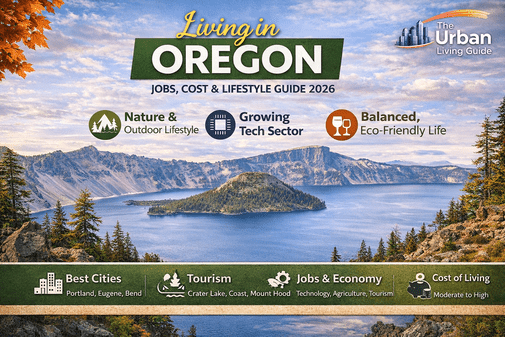
Living in Oregon: The Pacific Northwest’s Innovation & Outdoor Frontier in 2026
Stepping into Oregon in 2026 is about reconciling the untamed, rugged beauty of the Pacific Northwest with a rapidly maturing economy that has long moved past its timber-reliant history. Spanning over 98,000 square miles, the state serves as a massive laboratory for sustainability, high-tech engineering, and outdoor-centric living.
As a long-term local resident will tell you, the Oregon reality is defined by a deep-seated appreciation for “The Great Outdoors” that isn’t just a hobby—it’s a fundamental lifestyle mandate. From the “Silicon Forest” tech campuses of the Portland Metro and Hillsboro to the high-desert landscapes of Bend and the rugged maritime culture of the Pacific Coast, life here is characterized by a unique, progressive cultural vibe, a stable job market anchored by sustainable energy and design, and a geographic variety that few other states can claim.
Whether you are navigating the intricate transit grid of the Willamette Valley or settling into the quieter mountain towns of the Cascades, the state offers a depth of living that rewards those who value environmental stewardship and professional innovation. For official administrative guidelines, state tax information, and civic resources, residents frequently consult the Official State of Oregon Portal.
| Quick Facts Snapshot: Oregon (2026) | |
|---|---|
| Time Zone | Pacific Time (PT / UTC-8, Daylight Saving UTC-7) |
| State Population | Approx. 4.2 Million (Concentrated heavily in the Willamette Valley) |
| State Income Tax | Graduated brackets ranging from 4.75% up to 8.75% |
| Median Home Price | $450,000 – $650,000+ (High variance between urban Portland/Bend and rural zones) |
| Average Rent Range | $1,400 – $2,600+ per month (Dependent on proximity to transit and metro hubs) |
| Sales Tax Baseline | 0% (No state-level sales tax, a massive draw for residents) |
Living in Oregon: Macro Reality, Eco-Consciousness & Pacific Vibe
Living in the Beaver State requires mastering a lifestyle where aggressive environmental conservation, artistic freedom, and high-tech corporate ambition converge. Locals quickly understand that day-to-day existence depends entirely on your ability to embrace the “four-season” reality: the rainy, mist-covered winters of the west versus the high-desert sunshine of the east.
Unlike states with singular cultural identities, Oregon is a study in contrasts—the progressive, bicycle-centric streets of Portland stand in stark relief to the rugged, ranching-heritage towns of Harney County. Long-term residents accept a higher individual income tax in exchange for the absence of sales tax, a high standard of public service, and access to some of the world’s most protected natural landscapes. Gain deeper insights into regional heritage at the Travel Oregon tourism board.
- Cultural Vibe: An energetic, community-driven atmosphere powered by a world-class food-truck scene, independent craft breweries, and a deep-rooted commitment to environmental preservation.
- Pace of Life: Distinctly balanced—ranging from the high-tech, fast-paced rhythm of the Silicon Forest to the slow-paced, recreational-focused life of mountain towns.
- The Resident Trade-Off: You move here for the accessibility of the Cascade Mountains and the Pacific Coast, and you stay for the local culture that prioritizes work-life balance over corporate grind.
Regional Diversity, Geography & Economic Zones in Oregon
Oregon’s geography is bifurcated by the Cascade Mountain Range, creating two distinct climate zones and economic frameworks that dominate how residents work and play.
Coastal Corridors, Metro Hubs & Suburban Enclaves
- The Willamette Valley: The economic heart of the state, home to Portland, Salem, and Eugene. This valley is the primary driver of manufacturing, higher education, and the thriving wine industry.
- The Pacific Coast: A dramatic stretch of cliffs, dunes, and historic fishing ports like Newport and Astoria, serving as a primary tourism and maritime commerce zone.
Mountain, Inland & High Desert Belts
- Central Oregon (Bend): A high-desert plateau that has become a premier destination for tech-remote workers, outdoor athletes, and luxury tourism.
- Eastern Oregon (The High Desert): Vast, wide-open agricultural lands and ranching communities, defined by massive geological formations, cattle ranching, and low population density.
Infrastructure, Power Grids, Water Systems & Transport Networks in Oregon
Sustaining Oregon’s growth demands massive investments in renewable energy, regional water rights management, and an integrated public transit network in urban zones.
Water Resources & River Basins
- The Columbia River System: A vital artery for hydroelectric power generation, agricultural irrigation, and international shipping. Learn more via the Oregon Department of Environmental Quality.
Power Generation & Energy Frameworks
- Energy Mix: Supplied primarily by Portland General Electric (PGE) and Pacific Power, the grid is heavily reliant on a massive portfolio of hydroelectric dams and an accelerating transition to solar and wind energy production.
Statewide Transit, Rail, Air & Port Connectivity
- Global Aviation: International travel is anchored by Portland International Airport (PDX), consistently ranked as one of the best domestic hubs.
- Transit & Freight: TriMet (Portland) and Lane Transit District (LTD) (Eugene) provide extensive bus and light rail coverage, while the Port of Portland handles crucial regional maritime freight.
Living in Oregon: Job Markets & Economic Strength
Oregon’s economy has evolved from a resource-extraction model into a diversified powerhouse for high-tech, athletic apparel, and clean-energy innovation.
- Economic Momentum: Generating steady GDP growth fueled by tech-hardware fabrication, sustainable agriculture, and outdoor lifestyle retail branding.
- Dominant Sectors: Athletic apparel innovation, high-tech/semiconductor manufacturing, sustainable viticulture, and forestry management.
- Corporate Footprint: Global operations for giants like Nike, Intel, Columbia Sportswear, and Tektronix. Track economic initiatives through the Business Oregon development agency.
Salary Realities Across Economic Corridors
- Tech & Innovation Hubs: Roles in design, engineering, and software management in the Portland/Hillsboro metro command salaries often exceeding $95,000 to $150,000+ annually.
- Regional Wage Variance: Service and agriculture roles in the eastern and coastal regions align with regional cost-of-living metrics, providing excellent localized purchasing power.
Cost of Living Realities & Housing Market Variance
Oregon represents a “premium” lifestyle zone. While not as high-cost as the San Francisco Bay Area, the state’s popularity has created competitive housing markets.
| Expense Category | Cost Range / Index Reality |
|---|---|
| Housing (Metro vs. Rural) | $1,600–$2,800+ monthly in Portland; $1,000–$1,600 in Southern/Eastern hubs |
| Utilities | Moderate; high hydro-capacity keeps electricity costs stable vs. coastal norms |
| Transportation | TriMet and bus passes available; high focus on well-maintained vehicle ownership |
| Everyday Goods | Balanced across state; sales tax exemption drives consumer savings |
State Tax Climate, Business Environment & Government Policies in Oregon
Oregon offers a unique tax trade-off: higher income taxes but zero sales tax, making large purchases significantly cheaper. Review compliance instructions via the Oregon Department of Revenue.
- Fiscal Model: A progressive income tax system supports extensive state-funded outdoor recreation infrastructure and public schools.
- Zoning & Land Use: Oregon is famous for its strict “Urban Growth Boundaries,” designed to prevent suburban sprawl and protect farmland, which significantly influences real estate pricing.
Climate, Weather Extremes & Natural Geography
Oregon enjoys a diverse micro-climate system that varies drastically from the wet, temperate coast to the semi-arid, high-desert east.
- Seasonal Transitions: Winters are mild and rainy in the west, while inland high-desert areas experience clearer, colder winters and warmer summers.
- Natural Hazards: Wildfire prevention is a major focus; homeowners in forested areas must maintain defensible space and adhere to stringent fire-smart construction codes.
Education Systems & Major Healthcare Networks in Oregon
Access to world-class academic institutions and clinical care anchors Oregon’s reputation. Explore public health data at Oregon Health Authority.
- Higher Education: Home to research leaders like the University of Oregon and Oregon State University.
- Clinical Care: Elite systems like OHSU Health (Oregon Health & Science University) provide groundbreaking treatment and medical innovation.
Culture, Outdoor Recreation & Lifestyle Shifts
Daily life in Oregon centers around the outdoors. Whether hiking the Coast Trail or visiting craft breweries in Portland, residents prioritize an active, nature-first lifestyle. Explore tourism via Oregon State Parks.
Relocation & State Residency Essentials
- DMV Compliance: New residents must transfer out-of-state licenses and register vehicles through the Oregon DMV.
- Voter Registration: Online registration via the Secretary of State portal is standard.
Top Cities in Oregon: Urban Hubs & Regional Centers
Major Urban Hubs at a Glance
| City / Hub | Primary Driver | Vibe & Lifestyle |
|---|---|---|
| Portland | Tech, Creative | Progressive, walkable, artsy |
| Eugene | Higher Education | Relaxed, collegiate, outdoor |
| Bend | Tourism, Tech | Active, mountain-resort, chic |
| Salem | Government | Stable, community-focused |
| Hillsboro | Tech Manufacturing | Professional, growing, suburban |
Detailed Breakdown of Key Regional Hubs
Portland — The Creative Innovation Engine
Portland offers a blend of high-tech career potential and a distinct, bicycle-friendly urban culture. It’s ideal for those seeking strong arts, local dining, and an eco-forward lifestyle.
Eugene — The Academic and Outdoor Soul
Eugene serves as a relaxed, collegiate hub. With close ties to the University of Oregon, it offers a vibrant arts scene and easy access to the mountain trails.
Bend — The High-Desert Recreational Haven
Bend has transformed from a sleepy town into a chic mountain resort hub, attracting remote workers and outdoor enthusiasts with its year-round access to skiing, hiking, and craft brewing.
Salem — The Stable State Capital
Salem provides a quieter, administrative-focused alternative to the larger metros, offering balanced living costs and deep roots in the Willamette Valley.
Hillsboro — The High-Tech Industrial Hub
As the anchor of the “Silicon Forest,” Hillsboro is home to critical high-tech manufacturing, offering a high-earning suburban environment for the professional class.
Pros and Cons of Living in Oregon
| Advantages (Pros) | Systemic Drawbacks (Cons) |
|---|---|
| Zero state sales tax saves money on large purchases | Relatively high individual state income tax |
| World-class access to Pacific Coast and Cascades | Competitive real estate markets in prime metros |
| Progressive, eco-conscious culture | High annual precipitation in the western corridor |
| Growing tech and renewable energy job market | Traffic and urban transit limitations |
| Diverse four-season natural beauty | Increased wildfire risks in forested mountain zones |
Frequently Asked Questions About Living in Oregon
Is Oregon a good state to live in?
Yes, it is highly sought after for those prioritizing environmental quality, work-life balance, and professional opportunities in tech and renewable energy sectors.
What is the actual cost of living in Oregon?
It is moderate-to-high, primarily due to rising housing demand in Portland and Bend, though the lack of state sales tax helps balance monthly expenditures for residents.
Which region or city is best to settle down in?
It depends on your goals: Portland for urban professional life, Eugene for academic community, and Bend for those centered around year-round outdoor recreation.
Does Oregon have high taxes?
Oregon relies on income tax rather than sales tax. While individual income taxes are on the higher end of the spectrum, the absence of a sales tax makes everyday shopping and large purchases more affordable.
How safe is everyday life across the state?
Safety is exceptionally high in the state’s many scenic towns and master-planned suburbs; major urban centers like Portland experience standard metropolitan safety trends.
What industries dominate Oregon’s job market?
Technology (Silicon Forest), athletic apparel branding, renewable energy, sustainable agriculture, and forestry are the primary economic drivers.
What is the weather like?
Oregon’s weather is highly localized: the coast and valley are wet and temperate, while the eastern side of the Cascades is arid, sunny, and experiences more temperature variance.
Explore Detailed City Guides Across Oregon
At The Urban Living Guide (TULG), our core mission is to provide deeply researched regional insights and city-level navigation tools to help you evaluate your relocation options with total confidence. To discover what daily life, housing patterns, and local economies look like across our featured municipal centers throughout the Pacific Northwest, explore our comprehensive resident hub guides below:
- Living in Portland, Oregon
- Living in Eugene, Oregon
- Living in Salem, Oregon
- Living in Bend, Oregon
- Living in Hillsboro, Oregon
Whether you are comparing career prospects in the Silicon Forest or evaluating lifestyle shifts in the rugged Cascades, our editorial team remains dedicated to delivering research-backed, data-driven frameworks to support your relocation and residency decisions with complete clarity.