

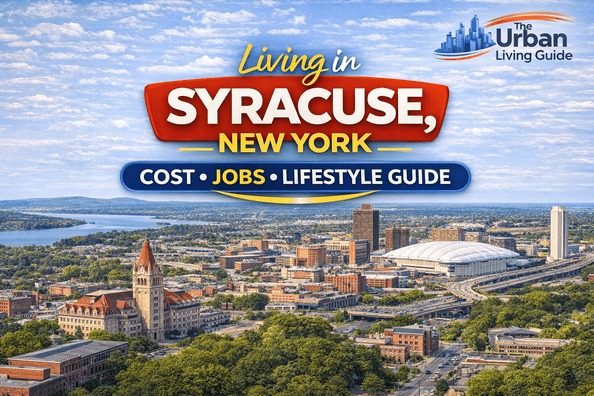
From University Hill to Heavy Snowfalls: What Living in Syracuse, New York Is Really Like in 2026
Positioned near the southern shore of Onondaga Lake in the heart of central New York, Living in Syracuse, New York offers an appealing combination of university-driven culture, exceptional real estate affordability, and a relaxed regional lifestyle. As the economic and educational anchor of Onondaga County, Syracuse supports a city population of roughly 150,000 residents, while the sprawling metropolitan area exceeds 650,000 people. Dominated culturally and economically by the presence of Syracuse University, the city pulses with academic energy, spirited NCAA athletic traditions, and a growing medical research sector.
Relocating to the Salt City provides a welcome financial reprieve for families and professionals seeking affordable homeownership without sacrificing cultural amenities. Propelled by world-class institutions like SUNY Upstate Medical University and major employers such as Lockheed Martin, the local economy supports stable careers while maintaining a relaxed pace. However, thriving here requires preparing for legendary winter weather, as Syracuse routinely ranks among the snowiest cities in America due to intense lake-effect patterns. Whether you want a historic home in Strathmore or a modern loft downtown, Syracuse delivers an authentic, community-oriented northeastern lifestyle.
What Makes Syracuse So Popular & Unique
Syracuse commands regional and national recognition because it successfully pairs a powerhouse research university with genuine, uncompromised Midwestern-style affordability in the Northeast. Centered around iconic landmarks like the JMA Wireless Dome and the vibrant commercial spaces of Armory Square, the city functions as a cultural magnet for all of central New York. For newcomers looking to access municipal services, public utility maps, or community programs, the official City of Syracuse portal serves as an essential digital gateway.
- University Culture & Athletics: Home to the prestigious Syracuse University, driving cutting-edge research, arts, and legendary Orange basketball traditions.
- Outstanding Real Estate Value: Offers some of the most accessible median home prices and rental rates in New York State.
- Central Geographic Location: Positioned at the crossroads of major highways, providing effortless weekend access to the Finger Lakes region, the Adirondack Mountains, and Lake Ontario.
- Short, Manageable Commutes: Bypasses the crippling gridlock of major downstate metros, keeping average travel times around 20 minutes.
Syracuse at a Glance: Key Relocation Metrics
Reviewing these baseline statistics can help set realistic expectations for your transition to Onondaga County. These figures reflect current central New York market conditions and regional economic benchmarks.
| Metric | Syracuse City Data | Metropolitan Context |
|---|---|---|
| City Population | ~150,000 Residents | Exceeds 650,000 across the greater metro area |
| Median Home Price | $220,000 – $300,000 | Significantly below national and coastal averages |
| Average 1BR Rent | $1,050 – $1,350 | Extremely manageable rental entry points citywide |
| Average Commute | 20 Minutes | Minimal traffic congestion compared to major east coast hubs |
| Top Industries | Healthcare, Higher Ed, Tech, Aerospace | Advanced manufacturing, logistics, and public administration |
If you haven’t explored this area before, the map below will give you a better sense of its location.
Famous Personalities, Sports Legends & Major Brands in Syracuse
Syracuse’s cultural footprint is deeply shaped by its legendary university programs, world-class sports broadcasting roots, and prominent defense and utility corporations.
- Notable Personalities: The city is closely associated with Hollywood actor Tom Cruise (who attended school in the region), NBA basketball legend and Syracuse University hero Carmelo Anthony, and legendary television personality Dick Clark.
- Sports Loyalties: Sports run through the absolute soul of the city, supported by massive community devotion to the Syracuse Orange (NCAA) basketball and football programs, alongside the Syracuse Mets (MiLB) minor league baseball team.
- Corporate Footprint: The regional economy benefits from massive manufacturing and utility operations anchored by Lockheed Martin, National Grid, and Carrier Global (historically founded right in Syracuse).
Job Market & Business Opportunities with Major Employers
Syracuse’s job market is exceptionally stable, anchored by world-class medical centers, higher education, and advanced defense technology manufacturing. Whether you are conducting medical research, engineering aerospace components, or managing educational programs, the local employment base offers secure, long-term career pathways.
Key employers driving local prosperity include Syracuse University, SUNY Upstate Medical University, St. Joseph’s Health Hospital, and Lockheed Martin. Official economic reference data from the New York State Department of Labor highlights that while salary ceilings are more conservative than downstate, your overall real purchasing power is heavily magnified by low housing costs.
- Entry-level roles: Typically range between $45,000 – $60,000 across administrative, healthcare support, and entry technical positions.
- Mid-career professionals: Generally span $65,000 – $90,000 for experienced nurses, engineers, and educators.
- Specialized medical and engineering roles: Frequently scale to $100,000+, supporting comfortable upper-middle-class living.
Housing & Real Estate Overview in Syracuse
Housing affordability is universally recognized as Syracuse’s greatest strategic asset. In 2026, median home prices range comfortably between $220,000 and $300,000, allowing buyers to purchase gorgeous historic homes, craftsman bungalows, or suburban properties for a fraction of what they cost in major coastal cities.
The rental market remains accessible, offering diverse options across urban neighborhoods and family-oriented suburbs. Current average monthly rent projections are:
- Studio Apartment: $850 – $1,100
- 1 Bedroom Apartment: $1,050 – $1,350
- 2 Bedroom Apartment: $1,350 – $1,800
- Family Home Rentals: $2,000 – $2,900
Achieving homeownership in Syracuse is entirely realistic for middle-income earners, making it a premier destination for individuals looking to build long-term real estate equity.
Best Neighborhoods in Syracuse: Finding Your Ideal Community
Choosing the right neighborhood in Syracuse defines your daily commute, social life, and architectural surroundings. Each district offers an entirely unique character. Neighborhood insights are based on local housing trends, safety reports, and resident surveys. The table below outlines the most prominent residential zones.
| Neighborhood / Category | Location, Pricing & Community Overview |
|---|---|
| University Hill (Academic Hub) | Positioned right next to Syracuse University and major medical centers. Features student housing, faculty apartments, and high energy during the academic year. |
| Downtown Syracuse (Urban Core) | Features modern loft apartments, historic brick architecture, and immediate walking access to Armory Square restaurants, theaters, and nightlife. |
| Eastwood (Family-Friendly) | A tight-knit, highly stable residential neighborhood known for its independent business strip on James Street, local parks, and traditional single-family homes. |
| Strathmore (Historic & Scenic) | An architecturally stunning historic district featuring grand Tudors, colonials, quiet tree-lined streets, and a strong, active neighborhood association. |
| Liverpool (Suburban Enclave) | A popular suburban community situated right along Onondaga Lake offering great schools, family parks, and a peaceful residential atmosphere. |
What It’s Really Like Living in Syracuse (Daily Life & Vibe)
Daily life in Syracuse moves at a relaxed, community-oriented pace that balances small-town warmth with university-town intellectual energy. Residents enjoy a comfortable routine filled with visits to Onondaga Lake Park, cheering on the Orange at the JMA Wireless Dome, and dining out in the historic Armory Square district. The city’s compact geographic scale eliminates the punishing gridlock found in larger metros, giving people their evenings back.
Summer and autumn bring an explosion of outdoor life, featuring neighborhood art festivals, outdoor concerts, and weekend trips to the nearby Finger Lakes region for wine tasting and gorge hiking. When winter arrives, locals embrace the heavy snowfall with winter sports, cozy neighborhood pubs, and legendary winter traditions. The combination of affordability, intellectual stimulation, and natural beauty creates an exceptionally balanced lifestyle.
Step into the rhythm of central New York and explore everyday sights through the lens of local creators:
Cost of Living in Syracuse: Monthly Expenses & Salary Needs
Syracuse offers a highly favorable cost of living that sits comfortably below the national average. Cost estimates are derived from official statistics and city-level cost databases. To maintain a secure, comfortable standard of living and achieve homeownership, an individual professional should target a salary of $60,000+, while households generally require $85,000+.
- Average Rent: ~$1,200 average across typical 1BR apartments.
- Monthly Utilities: $150 – $220 (Covering electricity, heating, and water).
- Groceries & Household Goods: Slightly below the national average.
- Transportation: Moderate monthly expenses for local transit or vehicle operation.
- Healthcare Costs: Aligned with national benchmarks, backed by world-class local health systems.
Transportation, Commute Dynamics & Transit Realities
Getting around Syracuse is refreshingly simple and efficient. Key transportation elements include:
- Centro Bus Network: Operated by the Central New York Regional Transportation Authority, offering extensive bus routes across Syracuse and suburban corridors.
- Regional Highways & Amtrak: Excellent driving connectivity via Interstate 81 and Interstate 90, alongside convenient Amtrak rail services.
- Short Commutes: The average daily commute time is an exceptionally manageable 20 minutes each way.
- Car Preference: While public transit serves urban corridors well, many residents prefer personal vehicles to navigate suburban shopping and heavy winter weather.
Weather Patterns, Seasonal Realities & Climate Factors
Syracuse experiences distinct four-season weather influenced heavily by its northern geography:
- Spring: Mild and rainy, bringing blossoming flowers to local parks and green foliage back to central New York.
- Summer: Warm, pleasant, and sunny, offering ideal conditions for enjoying Onondaga Lake Park and outdoor dining.
- Autumn: Crisp, cool weather accompanied by breathtaking foliage across regional state forests.
- Winter: Cold with heavy seasonal snowfall driven by regional lake-effect snow patterns, often exceeding 100 inches annually, requiring robust winter tires and snow removal preparation.
- Climate Reference: Official meteorological tracking and forecasts are provided by the National Weather Service Central New York region.
Education, Schools & Major Universities
Education serves as a massive economic and intellectual pillar for the entire region. Syracuse hosts prestigious higher education institutions such as Syracuse University, SUNY Upstate Medical University, and Le Moyne College. For families navigating K-12 schooling, neighborhood choices vary, with suburban communities like Liverpool and residential pockets like Eastwood offering strong educational options.
Medical Facilities, Hospitals & Healthcare Systems
Access to advanced, cutting-edge healthcare is one of Syracuse’s strongest community assets. The city is home to world-class medical institutions, including SUNY Upstate Medical University and St. Joseph’s Health Hospital. These premier hospital systems provide exceptional specialized care, trauma emergency services, and comprehensive medical research facilities locally.
Popular Hotels, Cafes, Dining & Culinary Scene
Syracuse’s hospitality and culinary scene has expanded dramatically, blending historic brick architecture with innovative dining.
- Popular Hotels: Visitors and executive travelers frequently book stays at standout local properties like the Marriott Syracuse Downtown, Embassy Suites Syracuse, or The Collegian Hotel.
- Cafes & Social Hubs: Independent coffee roasters and artisan bakeries thrive in Armory Square, Downtown Syracuse, and University Hill, acting as vibrant remote-work hubs.
- Restaurants: From historic downtown steakhouses and global bistros to vibrant university-town cafes, Syracuse offers a diverse and welcoming culinary identity.
Sightseeing, Cultural Spots & Tourist Attractions
Residents live surrounded by remarkable cultural museums, scenic waterways, and historic American landmarks.
- Destiny USA Mall: A massive regional shopping, dining, and entertainment destination featuring unique indoor attractions.
- Rosamond Gifford Zoo: A premier zoological facility featuring exotic wildlife and educational exhibits in Burnet Park.
- Onondaga Lake Park: Offering miles of scenic shoreline trails, picnic areas, and recreational boating right outside the city.
- Erie Canal Museum: Celebrating the historic engineering marvel that shaped the economic growth of New York State.
Realities: Pros and Cons of Living in Syracuse
Every city requires compromise. Here is the unvarnished reality for anyone planning a move to Onondaga County in 2026:
Pros:
- Exceptionally affordable housing and rental markets compared to major U.S. metros.
- World-class higher education institutions and a vibrant university culture.
- A thriving healthcare sector offering stable, high-paying career opportunities.
- Short, stress-free daily commutes with minimal traffic congestion.
- Effortless access to the Finger Lakes wine region and outdoor recreation.
Cons:
- Heavy winter snowfall totals requiring dedicated snow management and cold-weather gear.
- A smaller overall job market and salary ceiling compared to coastal hubs.
- A more modest late-night nightlife and entertainment infrastructure outside the student calendar.
- Aging municipal infrastructure in certain older urban pockets.
- Upstate New York property tax burdens that require careful budgeting.
Who Is Syracuse Ideal For (and Who Should Avoid It?)
Ideal For: First-time homebuyers seeking market entry, healthcare professionals, academic researchers, families wanting safe suburban schools, and university students or staff.
Who Should Avoid It: Individuals who despise heavy snow and severe winter weather, corporate professionals requiring ultra-high finance salaries, and those craving massive coastal mega-city nightlife.
Real Experiences: Perspectives from Long-Term Residents (5 to 10+ Years)
Data gives you the metrics, but daily life gives you the truth. Here is what veteran locals have to say about navigating Syracuse:
“The lake-effect snow is no joke—when a storm hits off Lake Ontario, you learn real quick how to shovel. But buying a spacious historic home in Strathmore for less than three hundred grand gave us financial freedom we never would have had downstate. Plus, game days at the Dome are electric.”
[Source: r/syracuse Community Discussions]
“If you work in healthcare or education, the employment stability here is rock solid. My commute across town takes fifteen minutes, and being forty minutes from the Finger Lakes wine trail on summer weekends is an absolute game-changer.”
[Source: Local Neighborhood Survey Threads]
Frequently Asked Questions About Living in Syracuse, New York
Is Syracuse, New York expensive to live in?
No, Syracuse is considered one of the most affordable metropolitan areas in the northeastern United States, offering median home prices between $220,000 and $300,000.
What salary do you need to live comfortably in Syracuse?
A single adult typically requires around $60,000 annually to live comfortably, while families generally need $85,000+ depending on housing choices and lifestyle.
How heavy is the snowfall and lake-effect snow in Syracuse?
Syracuse is famous for heavy lake-effect snow, frequently receiving over 100 inches of snow annually, though the city is exceptionally well-equipped with rapid snowplow operations.
Can you live in Syracuse without a car?
While the Centro bus system serves urban neighborhoods well, most residents prefer owning a vehicle to navigate suburban errands and heavy winter weather effectively.
What are the best neighborhoods for families in Syracuse?
Liverpool and Eastwood offer great suburban-style living, local parks, and family-friendly community environments, while Strathmore features historic charm.
How close is Syracuse to the Finger Lakes region?
The northern tip of the Finger Lakes region is located just a 30-to-45-minute drive south of Syracuse, providing instant access to wineries and scenic gorge hiking.
🔗 Explore More Cities in New York
If you’re exploring more options beyond Syracuse, The Urban Living Guide has covered several other popular cities in New York. You can also check:
- Living in New York City, New York
- Living in Buffalo, New York
- Living in Rochester, New York
- Living in Albany, New York
Want to learn more about Syracuse? Check out these helpful guides:
- Cost of Living in Syracuse, New York
- Pros and Cons of Living in Syracuse, New York
- Best Neighborhoods in Syracuse, New York
Ready to make your decision? Explore our complete guide here: Moving to Syracuse, New York
These guides give you a complete picture of what it’s like living across different cities, covering everything from cost of living, housing, and job opportunities to neighborhoods, commute, weather, education, popular places, and major employers.
The Urban Living Guide brings together these local insights in one place, helping you compare cities easily and make a confident, well-informed decision based on your lifestyle and goals.