

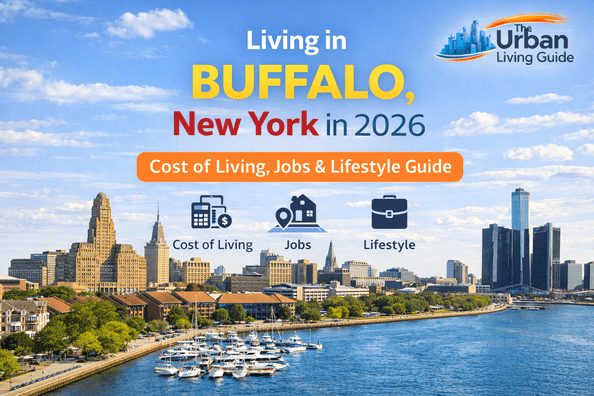
From Waterfront Redevelopment to Legendary Winters: What Life in Buffalo, New York Really Costs in 2026
Positioned dramatically along the eastern shore of Lake Erie and just minutes from the international border, Living in Buffalo, New York offers an enticing combination of stunning 19th-century architecture, incredible real estate affordability, and an emerging medical and technological economy. As the second-largest city in New York State, Buffalo supports a thriving population of roughly 275,000 residents, while the broader Buffalo-Niagara Falls metropolitan area exceeds 1.1 million people.
Relocating to this western New York hub provides a breath of fresh air for professionals and families fleeing the punishing housing costs of coastal metros. While winters bring legendary lake-effect snowfall, the city rewards residents with a revitalized waterfront at Canalside, world-class cultural institutions like the Albright-Knox Art Gallery (AKG Art Museum), and a fiercely loyal community spirit. Whether you are looking for a walkable urban lifestyle in Elmwood Village or an affordable family home in North Buffalo, this historic city delivers an authentic, community-focused northeastern lifestyle.
What Makes Buffalo So Popular & Unique
Buffalo commands national attention because it successfully reinvents its industrial manufacturing roots into a vibrant hub of arts, medical research, and urban green spaces. Located right next to the world-famous Niagara Falls, the city acts as a major cultural gateway while maintaining a distinct, welcoming neighborhood character. For newcomers looking to access municipal services, public transit maps, or community programs, the official City of Buffalo portal serves as an essential digital resource.
- Unmatched Real Estate Value: Offers some of the lowest home purchase prices in New York State, allowing first-time buyers to achieve homeownership without crippling debt.
- The Revitalized Waterfront: A transformed industrial harbor featuring the bustling Canalside district, naval park attractions, and year-round outdoor recreation along Lake Erie.
- Architectural Masterpieces: Home to extraordinary historic structures designed by legendary architects like Frank Lloyd Wright and Louis Sullivan.
- Passionate Sports Culture: Home to some of the most dedicated sports fan bases in the United States, anchored by the Buffalo Bills and Buffalo Sabres.
Buffalo at a Glance: Key Relocation Metrics
Reviewing these baseline statistics can help you set realistic expectations for your transition to Erie County. These figures reflect current western New York market conditions and economic benchmarks.
| Metric | Buffalo City Data | Metropolitan Context |
|---|---|---|
| City Population | ~275,000 Residents | Exceeds 1.1 Million across the Buffalo-Niagara region |
| Median Home Price | $220,000 – $300,000 | Significantly below New York State and national averages |
| Average 1BR Rent | $1,050 – $1,350 | Extremely manageable rental entry points citywide |
| Average Commute | 20 – 25 Minutes | Light traffic congestion compared to major east coast metros |
| Top Industries | Healthcare, Higher Ed, Finance | Advanced manufacturing, logistics, and biotech research |
If you’re new to this region, the map below will help you get a clear idea of the city’s location.
Famous Personalities, Sports Teams & Major Brands in Buffalo
Buffalo’s cultural identity is deeply rooted in passionate sports loyalties, musical innovation, and enduring regional corporate brands that have left a permanent mark on American culture.
- Cultural Icons: The city has produced or nurtured legendary creative figures, including funk musician Rick James, singer-songwriter Ani DiFranco, actor Chad Michael Murray, and renowned journalist Tim Russert.
- Professional Sports: Sports run through the absolute soul of the city, supported by an intensely passionate fanbase cheering for the Buffalo Bills (NFL) and the Buffalo Sabres (NHL).
- Major Corporate Brands: The local economy is anchored by enduring enterprises such as M&T Bank, Rich Products Corporation, Delaware North, and the iconic New Era Cap Company.
Job Market & Business Opportunities with Major Employers
Buffalo’s economy has successfully transitioned away from heavy manufacturing dominance into a diversified employment market driven by advanced healthcare systems, higher education, financial services, and biotechnology. Whether you are conducting clinical research at the Buffalo Niagara Medical Campus or managing financial operations downtown, the city offers stable, growing career pathways.
Key employers driving local prosperity include Kaleida Health, M&T Bank Corporation, the University at Buffalo (SUNY), and Roswell Park Comprehensive Cancer Center. Official economic reference data from the New York State Department of Labor shows that while salaries are more conservative than in New York City, your overall purchasing power stretches significantly further due to low housing overhead.
- Entry-level roles: Typically range between $45,000 – $60,000 across administrative, retail, and support sectors.
- Mid-career professionals: Generally span $65,000 – $90,000 for experienced teachers, finance analysts, and engineers.
- Healthcare and specialized roles: Frequently scale to $100,000+, supporting a very comfortable middle-class standard of living.
Housing & Real Estate Overview in Buffalo
Housing is unquestionably Buffalo’s greatest strategic advantage when compared to downstate New York or New England metros. In 2026, median home prices range comfortably between $220,000 and $300,000, allowing buyers to purchase gorgeous historic colonials, Victorian homes, or modern townhouses for a fraction of what they cost in major coastal cities.
The rental market remains accessible, offering great options across trendy and residential districts. Current average monthly rent projections are:
- Studio Apartment: $850 – $1,100
- 1 Bedroom Apartment: $1,050 – $1,350
- 2 Bedroom Apartment: $1,350 – $1,750
- Family Home Rentals: $1,900 – $2,800
Securing real estate here is exceptionally realistic for middle-income earners, making Buffalo one of the premier northeast destinations for first-time home buyers.
Best Neighborhoods in Buffalo: Finding Your Ideal Community
Choosing the right neighborhood in Buffalo defines your lifestyle, daily walkability, and architectural aesthetic. Neighborhood insights are based on local housing trends, safety reports, and resident surveys. The table below outlines the most prominent residential zones.
| Neighborhood / Category | Location, Pricing & Community Overview |
|---|---|
| Elmwood Village (Arts & Walkable) | A vibrant, highly walkable cultural district featuring historic painted ladies, boutique shops, independent cafes, and immediate access to Delaware Park. Highly sought after by young professionals. |
| North Buffalo (Family-Friendly) | A beloved residential community known for double-houses, tree-lined streets, local family bakeries, and energetic commercial strips along Hertel Avenue. |
| Allentown (Historic & Creative) | A bohemian historic district featuring 19th-century architecture, independent art galleries, live music venues, and an eclectic culinary scene adjacent to downtown. |
| Hertel Avenue District (Dining) | A bustling community corridor offering incredible Italian eateries, craft breweries, specialty shops, and a lively neighborhood street life. |
| Downtown Buffalo (Urban Core) | Features a growing inventory of luxury loft conversions, business centers, and immediate walking access to the Canalside waterfront and theater district. |
What It’s Really Like Living in Buffalo (Daily Life & Vibe)
Daily life in Buffalo feels refreshingly grounded, community-oriented, and unpretentious. Residents enjoy walkable neighborhood strips, friendly local corner bars, and extensive park systems designed by renowned landscape architect Frederick Law Olmsted. The pace is significantly more relaxed than downstate New York, allowing people to actually enjoy their evenings and weekends without enduring exhausting gridlock.
Summer brings an explosion of outdoor life, highlighted by food festivals, Shakespeare in Delaware Park, and boating on Lake Erie. When winter arrives, locals lean into the snow rather than hiding indoors, embracing winter sports, cozy neighborhood pubs, and legendary football tailgates. The city’s unique mix of gritty industrial heritage, architectural beauty, and warm hospitality creates an exceptionally welcoming home.
Watch a recent video by a popular vlogger to understand daily life and vibes in Buffalo:
Cost of Living in Buffalo: Monthly Expenses & Salary Needs
Buffalo boasts one of the most favorable cost-of-living indexes in the Northeast, offering tremendous financial breathing room. Cost estimates are derived from official statistics and city-level cost databases. To maintain a comfortable lifestyle and achieve homeownership, an individual professional should target a salary of $60,000+, while households generally require $85,000+.
- Average Rent: ~$1,200 average across 1-to-2 bedroom apartments.
- Monthly Utilities: $140 – $220 (Covering electricity, heating, and water).
- Groceries & Household Goods: Slightly below the national average.
- Transportation: Moderate monthly expenses, whether driving or utilizing public transit.
- Healthcare Costs: Aligned closely with national averages, supported by massive local hospital networks.
Transportation, Commute Dynamics & Transit Realities
Getting around Buffalo is remarkably straightforward compared to major urban cores. Key transportation highlights include:
- The Metro Rail: A convenient light rail system offering free underground transit through the heart of downtown and the medical campus.
- Extensive Bus Network: Comprehensive NFTA-Metro bus routes connecting residential neighborhoods to commercial hubs.
- Manageable Commutes: Average daily commutes range from a swift 20 to 25 minutes each way.
- Car Dependency in Winter: While public transit works well for downtown workers, personal vehicle ownership remains highly popular for suburban commuting and heavy winter weather navigation.
Weather Patterns, Seasonal Realities & Climate Factors
Buffalo’s climate is defined by classic four-season changes and famous regional weather phenomena:
- Spring: Mild and refreshing temperatures that melt away winter snow and bring the Olmsted park system back to vibrant green life.
- Summer: Warm, pleasant, and sunny, providing ideal weather for lakefront activities, patio dining, and outdoor festivals.
- Autumn: Crisp, cool air accompanied by spectacular foliage across western New York state parks.
- Winter: Cold with significant snowfall totals driven by lake-effect snow off Lake Erie, requiring reliable winter tires and snow removal preparation.
Education, Schools & Major Universities
Higher education and academic research serve as powerful anchors for Buffalo’s intellectual and economic engine. The city hosts prominent institutions such as the University at Buffalo (SUNY), Buffalo State University, and Canisius College. For families navigating K-12 schooling, neighborhood choices vary, with North Buffalo and suburban districts offering strong public and private educational options.
Medical Facilities, Hospitals & Healthcare Systems
Healthcare is one of Buffalo’s most robust employment sectors, ensuring residents have extraordinary medical access locally. The city is home to nationally recognized medical institutions, including Roswell Park Comprehensive Cancer Center, Kaleida Health networks, and the ECMC (Erie County Medical Center), providing cutting-edge specialized treatments across every major medical discipline.
Popular Hotels, Cafes, Dining & Culinary Scene
Buffalo’s hospitality and culinary landscape has undergone a massive renaissance, blending historic architecture with world-class dining.
- Popular Hotels: Visitors and executive travelers frequently book stays at stunning historic and design-forward properties like the Curtiss Hotel, Hotel Lafayette, or The Westin Buffalo.
- Cafes & Social Hubs: Artisan coffee houses thrive along Elmwood Village and Hertel Avenue, serving as vibrant morning gathering spots for local writers and professionals.
- Restaurants: Beyond inventing world-famous Buffalo wings at spots like the Anchor Bar and Duffs, the city features an award-winning farm-to-table dining and craft brewery scene.
Sightseeing, Cultural Spots & Tourist Attractions
Residents live within arm’s reach of breathtaking natural wonders and historic American landmarks.
- Niagara Falls State Park: Located just a short drive north, offering world-famous natural waterfalls and scenic gorge trails.
- Buffalo & Erie County Naval & Military Park: Explore historic naval vessels docked along the downtown waterfront.
- Canalside Waterfront District: A bustling outdoor public space hosting summer concerts, ice skating, and maritime history.
- Frank Lloyd Wright Architecture: Tour world-famous local residential masterpieces like the Darwin D. Martin House.
Financial Realities: Pros and Cons of Living in Buffalo
Every city requires compromise. Here is the unvarnished reality for anyone planning a move to western New York in 2026:
Pros:
- Exceptionally affordable housing and rental markets compared to major U.S. metros.
- A fiercely loyal community culture and passionate sports environment.
- Magnificent historic architecture and Olmsted-designed park systems.
- Growing career opportunities in healthcare, tech startups, and higher education.
- Close proximity to Niagara Falls and extensive outdoor natural recreation.
Cons:
- Cold winters featuring heavy lake-effect snowfall requiring serious snow management.
- A smaller overall job market and lower salary ceilings compared to downstate NY.
- A more modest late-night entertainment and nightlife infrastructure.
- Aging municipal infrastructure in certain older pockets of the city.
- State tax burdens that impact overall household budgeting.
Who Is Buffalo Ideal For (and Who Should Avoid It?)
Ideal For: First-time home buyers seeking affordability, healthcare professionals, higher-education researchers, families wanting community stability, and sports enthusiasts looking for authentic regional culture.
Who Should Avoid It: Individuals who despise cold weather and heavy snow accumulation, corporate climbers seeking ultra-high finance salaries, and those requiring intense coastal mega-city nightlife.
Real Experiences: Perspectives from Long-Term Residents (5 to 10+ Years)
Data gives you the metrics, but daily life gives you the truth. Here is what veteran locals have to say about navigating Buffalo:
“People outside of western New York freak out about the snow, but the city handles plowing like a military operation once you get used to it. Buying a gorgeous four-bedroom historic home in North Buffalo for what a tiny studio costs in Manhattan is a cheat code for life.”
[Source: r/buffalo Community Discussions]
“The energy during a Bills game day in the autumn is something you can’t fake—it’s pure magic. Elmwood Village has amazing coffee shops and local art, and you can drive across town in twenty minutes. If you embrace the winter, Buffalo gives you an incredible quality of life for very little money.”
[Source: Local Neighborhood Survey Threads]
Frequently Asked Questions About Living in Buffalo, New York
Is Buffalo, New York expensive to live in?
No, Buffalo is widely recognized as one of the most affordable cities in New York State, offering median home prices between $220,000 and $300,000.
What salary do you need to live comfortably in Buffalo?
An annual salary of roughly $60,000 is typically sufficient for a single adult to live comfortably, while families generally require $85,000+ depending on housing choices.
How severe are the winters and lake-effect snow in Buffalo?
Winters are cold and snowy, with lake-effect snowstorms occasionally dropping high snowfall totals, though the city is exceptionally well-equipped for rapid snow removal.
Can you live in Buffalo without a car?
While central neighborhoods like Elmwood Village and Downtown feature good transit access via the Metro Rail and buses, owning a car makes winter travel much easier.
What are the best family-friendly neighborhoods in Buffalo?
North Buffalo and Elmwood Village are among the most popular neighborhoods praised for their walkability, local parks, community safety, and excellent schools.
How close is Buffalo to Niagara Falls?
Niagara Falls State Park is located just a 20-to-25-minute drive north of downtown Buffalo via the Robert Moses State Parkway or I-190.
🔗 Explore More Cities in New York
If you’re exploring more options beyond Buffalo , The Urban Living Guide has covered several other popular cities in Illinois. You can also check:
- Living in New York City, New York
- Living in Rochester, New York
- Living in Albany, New York
- Living in Syracuse, New York
If you want to know more about living in Buffalo, explore these guides:
- Cost of Living in Buffalo, New York
- Pros and Cons of Living in Buffalo, New York
- Best Neighborhoods in Buffalo, New York
For a complete overview, check our full guide: Moving to Buffalo, New York
These guides give you a complete picture of what it’s like living across different cities, covering everything from cost of living, housing, and job opportunities to neighborhoods, commute, weather, education, popular places, and major employers.
The Urban Living Guide brings together these local insights in one place, helping you compare cities easily and make a confident, well-informed decision based on your lifestyle and goals.