

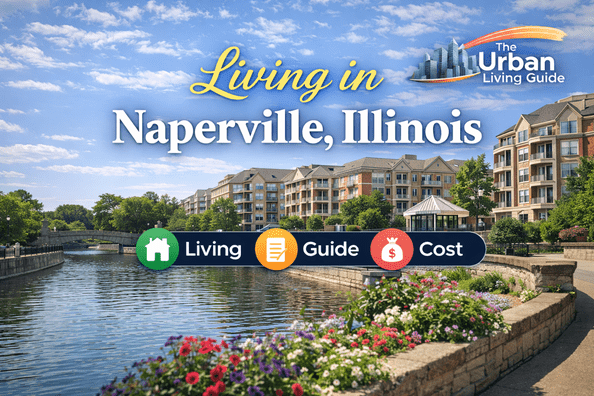
Living in Naperville, Illinois: Why Families Flock to This Elite Chicago Suburb
Positioned approximately 30 miles due west of downtown Chicago along the bustling Interstate 88 technology corridor, Living in Naperville, Illinois provides an exceptional blend of upscale suburban polish, rigorous municipal planning, and elite educational infrastructure. Spanning across DuPage and Will counties, this dynamic city of roughly 150,000 residents has evolved far beyond its 19th-century prairie roots established by Joseph Naper. Today, it stands as a nationally celebrated benchmark for suburban excellence, combining the safety and community pride of a small town with the economic vitality and sophisticated amenities of a major urban satellite.
Relocating to Naperville means entering a structured, high-achieving environment where long-term property value stability, world-class public parks, and top-ranked public school districts take precedence. While many local professionals commute daily into downtown Chicago via the Metra BNSF rail line for careers in corporate finance, management consulting, and tech, a robust local economy thrives right within city limits along the DuPage River. However, prospective movers must account for a demanding financial reality, including elevated real estate prices and some of the highest property tax rates in the state. Whether you are an executive, medical specialist, or parent seeking the absolute gold standard of Midwestern public education, Naperville offers an unmatched residential foundation.
What Makes Naperville So Popular & Unique
Naperville earns its perennial spot atop national best-places-to-live rankings by maintaining an uncompromising standard of public services, safety, and community aesthetics. At the heart of the city lies its historic downtown district, anchored by the award-winning Naperville Riverwalk, independent boutiques, and diverse dining establishments that generate a vibrant local culture. For newcomers looking to navigate city permits, library resources, and community event schedules, the official City of Naperville portal functions as an indispensable digital hub.
- The Naperville Riverwalk: A breathtaking 6-mile brick pathway winding along the DuPage River, featuring historic covered bridges, fountains, and public art installations.
- Elite Public School Systems: Home to two powerhouse public school districts—District 203 and District 204—consistently ranked among the best in Illinois.
- Exceptional Municipal Services: Operated by its own independent municipal utility department, ensuring highly reliable power and community infrastructure management.
- Direct Commuter Access: Seamless rail and highway connectivity linking suburban residents directly to Chicago’s commercial core for work and leisure.
Naperville at a Glance: Key Relocation Metrics
Reviewing these baseline statistics can help you set realistic expectations for your transition to this premier DuPage County hub. These figures reflect current northern Illinois suburban market conditions and local economic benchmarks.
| Metric | Naperville City Data | Regional Context |
|---|---|---|
| City Population | ~150,000 Residents | Western Chicagoland suburban corridor |
| Median Home Price | $500,000 – $650,000 | Significantly above Illinois state averages |
| Average 1BR Rent | $1,700 – $2,200 | Competitive rental market near downtown |
| Average Commute | 45 – 60 Minutes (to Chicago) | Shorter for local healthcare or corporate jobs |
| Top Industries | Professional Services, Healthcare, Education | Corporate Commuting and Tech Consulting |
If you haven’t come across this city before, the map below gives you a quick view of its location.
Famous Personalities, Sports Teams & Major Brands in Naperville
Naperville’s cultural footprint is characterized by high achievement, athletic excellence, and deep corporate connectivity to the broader Chicago metropolis. While it functions primarily as an elite residential haven rather than a heavy industrial center, it has birthed notable figures and houses thriving local enterprises that contribute to its affluent reputation.
- Notable Personalities: The city is widely recognized as the hometown of former Super Bowl-winning NFL quarterback Nick Foles, alongside acclaimed authors, Olympic athletes, and prominent corporate business leaders.
- Sports Loyalties: While Naperville maintains its own vibrant youth sports and recreational leagues, professional sports fandom aligns entirely with Chicago franchises, including passionate support for the Chicago Bears, Chicago Bulls, and Chicago Cubs.
- Corporate Proximity: Residents benefit from close proximity to major Chicago-area corporate headquarters such as McDonald’s (with historical DuPage County roots), Boeing, and United Airlines, with thousands of corporate executives and senior managers calling Naperville home.
Job Market & Business Opportunities with Major Employers
While a massive portion of Naperville’s workforce consists of corporate commuters traveling into downtown Chicago, the local economy itself is robust and diverse. The employment landscape is heavily supported by professional and technical services, advanced healthcare administration, higher education, and thriving local retail centers along Route 59 and Ogden Avenue.
Key employers driving local stability include Edward Hospital (Northwestern Medicine), the local award-winning school districts, and numerous regional business offices scattered along the Interstate 88 tech corridor. Official economic reference data from the Illinois Department of Commerce & Economic Opportunity highlights that professional earnings here track well above state medians, reflecting the highly educated demographic.
- Entry-level salaries: Typically range between $55,000 – $70,000 for administrative, retail support, and entry-level medical roles.
- Mid-level professional roles: Generally span $85,000 – $120,000 for healthcare staff, software engineers, and corporate analysts.
- Senior executive or medical roles: Frequently command $130,000+, supporting the city’s high median household income.
Housing & Real Estate Overview in Naperville
Housing is universally the largest monthly expense for anyone living here, directly reflecting the city’s elite reputation and school district demand. In 2026, median home prices range between $500,000 and $650,000, while sprawling luxury estates in exclusive golf-course communities routinely exceed $1 million.
The rental market is equally premium-priced, offering everything from modern luxury apartments near the Metra station to single-family rental homes. Current average monthly rent projections are:
- Studio Apartment: $1,400 – $1,800
- 1 Bedroom Apartment: $1,700 – $2,200
- 2 Bedroom Apartment: $2,200 – $3,000
- Family Home Rentals: $3,200 – $4,800+
Securing property here requires a robust upfront housing budget, and homeowners must carefully account for Illinois’s elevated property tax rates, which fund the city’s top-tier schools and municipal services.
Best Neighborhoods in Naperville: Finding Your Ideal Community
Choosing the right neighborhood in Naperville directly influences school district zoning, daily commute logistics, and long-term asset appreciation. Neighborhood insights are based on local housing trends, safety reports, and resident surveys. The table below outlines the most sought-after residential areas.
| Neighborhood / Category | Location, Pricing & Community Overview |
|---|---|
| White Eagle (Luxury) | An elite, premier golf-course community featuring upscale custom homes, gated sections, private club amenities, and a deeply secure neighborhood atmosphere. Ideal for high-income executives. |
| Ashwood Park (Luxury) | A sprawling modern development known for large, contemporary single-family homes, resort-style community clubhouses, swimming pools, and active family programming. |
| Tall Grass (Family-Focused) | Extremely popular among families due to exceptional neighborhood park access, community pools, tennis courts, and seamless walkability to top-rated local schools. |
| Cress Creek (Established) | An established residential neighborhood featuring mature trees, custom architecture, strong property resale values, and close proximity to the DuPage River recreation trails. |
| Downtown Naperville | Offers immediate walkability to the Riverwalk, boutique shopping, and fine dining. Features upscale townhomes and luxury apartments ideal for professionals seeking urban-suburban fusion. |
What It’s Really Like Living in Naperville (Daily Life & Vibe)
Life in Naperville feels remarkably structured, clean, and family-centric. Daily schedules typically revolve around school drop-offs, morning train commutes into Chicago, and afternoon youth sports practices at local parks. The environment is meticulously maintained, featuring pristine public spaces, manicured lawns, and low crime rates that foster an undeniable sense of security.
Weekends are energetic yet wholesome, with residents flocking to the Riverwalk for morning jogs, browsing the Naperville Farmers Market, or dining out at downtown’s acclaimed restaurants. While it lacks the gritty, fast-paced nightlife of downtown Chicago, Naperville provides a polished, high-achieving community atmosphere that appeals deeply to career-driven families and executives.
Watch a recent video by a popular vlogger to understand daily life and vibes in Naperville:
Cost of Living in Naperville: Monthly Expenses & Salary Needs
Naperville ranks as one of the most financially demanding suburbs in Illinois, driven primarily by housing costs and property tax obligations. Cost estimates are derived from official statistics and city-level cost databases. To maintain a comfortable upper-middle-class lifestyle, save for the future, and manage local expenses, a single professional should target a salary of $95,000+, while households with children generally require $150,000+.
- Average Rent (1BR): ~$2,000 for modern apartments or units near transit.
- Monthly Utilities: $150–$220 (Covering electricity, heating, and water).
- Groceries & Household Goods: $400–$500 per month for an individual.
- Transportation: $200–$350 accounting for Metra rail passes, parking, and vehicle upkeep.
- Property Taxes: Notably higher than the national average, reflecting heavy investment in local public infrastructure and schools.
Transportation, Highway Bottlenecks & Airport Connectivity
Transportation in Naperville caters heavily to commuters. The city is connected to downtown Chicago via the reliable Metra commuter rail (BNSF Line), with the average train commute taking roughly 45 to 60 minutes into Union Station. Car ownership is virtually universal for running local errands across the sprawling suburban grid.
For drivers, highway connectivity is anchored by Interstate 88 and close proximity to Interstate 355. However, rush-hour bottlenecks can cause frustrating delays along major commercial arterials like Route 59 and Ogden Avenue. For air travel, residents enjoy convenient access to both O’Hare and Midway international airports via highway driving or airport shuttle services.
Weather Patterns, Seasonal Realities & Climate Factors
The city experiences a humid continental climate, characterized by classic northern Illinois weather patterns. Winters bring cold temperatures, freezing winds, and seasonal snowfall, requiring proper home winterization and winter driving skills. Warm, humid summers provide ideal conditions for enjoying outdoor parks, community pools, and Suuwe Riverwalk. Climate reference and tracking are regularly provided by the National Weather Service Northern Illinois region.
Education, Schools & Major Universities
Education is the crown jewel of Naperville and the primary catalyst for its housing demand. The city is served by two premier public school districts, supported by local higher education institutions:
- Naperville Community Unit School District 203: Nationally celebrated for exceptional academic scores, advanced STEM curricula, and high graduation rates across its high schools like Naperville Central.
- Indian Prairie School District 204: Serving portions of Naperville and Aurora, renowned for state-of-the-art facilities and outstanding standardized test performance.
- North Central College: A private liberal arts college located right downtown, infusing the area with collegiate arts, theatre productions, and campus green space.
- Proximity to Regional Universities: Easy commuting access to major research institutions throughout the Chicago metropolitan area including the University of Chicago and Northwestern University.
Medical Facilities, Hospitals & Healthcare Systems
Residents have access to top-tier medical care locally without needing to drive into Chicago. The local healthcare infrastructure is anchored by prominent medical centers and specialized networks:
- Edward Hospital (Northwestern Medicine): A massive, award-winning acute care facility located on S. Washington Street, offering comprehensive emergency services, advanced cardiac care, neurosciences, and pediatric units.
- Endeavor Health Immediate Cares: Sprawling outpatient facilities and urgent care centers strategically placed across the city for rapid non-emergency treatment.
- DuPage Medical Group / Duly Health and Care: Extensive multi-specialty physician networks headquartered in the western suburbs providing primary and specialized outpatient care.
Popular Hotels, Cafes, Dining & Culinary Scene
Naperville’s culinary and hospitality scene is sophisticated, diverse, and vibrant, rivaling many urban centers.
- Popular Hotels: Business travelers and visiting families frequently book upscale stays at downtown boutique properties like Hotel Arista (Illinois’s first LEED-certified luxury hotel located at CityGate Centre), the Chicago Marriott Naperville, or Hotel Indigo Naperville Riverwalk.
- Cafes: Independent artisan coffee houses like Sparrow Coffee, local roasters, and bakery cafes thrive near the Riverwalk and downtown shopping blocks, serving as popular weekend meeting spots.
- Restaurants: Downtown Naperville features an incredible array of fine dining, steakhouses, and international bistros, including local culinary icons like Meson Sabika (housed in a historic 1847 mansion), Sullivan’s Steakhouse, and SixtyFour – A Wine Bar.
Sightseeing, Cultural Spots & Tourist Attractions
Residents enjoy rich cultural and recreational attractions right within city limits.
- Naperville Riverwalk: Miles of scenic brick pathways, outdoor sculptures, and fountains winding along the DuPage River.
- Naper Settlement: A 13-acre outdoor history museum featuring preserved 19th-century buildings depicting regional pioneer life.
- Centennial Beach: A unique historic stone quarry converted into a massive outdoor community swimming and recreation beach.
- Knoch Knolls Nature Center: Offering scenic hiking trails, kayaking, and interactive environmental education exhibits.
Hostels & Budget Stay Options
Traditional youth hostels do not exist within Naperville due to its affluent, master-planned suburban design. Budget-conscious visitors, contractors, or prospective residents scouting neighborhoods typically rely on specific alternative lodging options:
- Extended-Stay Suites: Properties like the Residence Inn by Marriott Naperville or TownePlace Suites offering kitchenettes for longer visits.
- Business Motels along I-88: Reliable regional lodging options located near the major highway interchanges for budget-flexible travelers.
- Short-Term Corporate Apartments: Furnished rental apartments positioned near commercial corridors for relocating professionals.
Honest Trade-offs: Pros and Cons of Living in Naperville
Every city requires compromise. Here is the unvarnished reality for anyone planning a move to this premier suburb in 2026:
Pros:
- Nationally ranked public school districts providing elite educational advantages.
- Exceptional community safety and low crime rates.
- High property value stability and strong long-term real estate demand.
- A thriving, walkable downtown anchored by the famous Riverwalk.
- Direct commuter rail access to downtown Chicago via Metra.
Cons:
- Significantly higher housing costs and home purchase prices.
- Heavy property tax burdens supporting local public infrastructure.
- A quieter, more modest nightlife scene compared to urban Chicago.
- Cold, snowy winters requiring cold-weather gear and snow management.
- Commuter and highway traffic bottlenecks along Route 59 during peak rush hours.
Who Is Naperville Ideal For (and Who Should Avoid It?)
Naperville offers premium suburban stability. Ideal For:
- Families prioritizing elite public education and community safety.
- Corporate executives and tech professionals commuting into Chicago.
- Medical professionals working at Edward Hospital or regional clinics.
- Retirees seeking walkable downtown amenities and high-end healthcare.
Who Should Avoid It:
- Young singles seeking an intense urban nightlife and arts scene.
- Budget-conscious buyers looking for low housing costs or low property taxes.
- Individuals who despise cold winter climates and snow management.
Real Experiences: Perspectives from Long-Term Residents (5 to 10+ Years)
Data gives you the metrics, but daily life gives you the truth. Here is what veteran locals have to say about living in Naperville:
“You pay a heavy price in property taxes here, but seeing the quality of the schools and how safe my kids feel walking to the park makes it completely worth it. Route 59 traffic during evening rush hour is an absolute headache, but downtown on a summer Saturday night by the Riverwalk is unbeatable.”
[Source: r/naperville Community Discussions]
“We moved out from the city when our oldest reached school age, and the transition was seamless because of the Metra access. It’s definitely an affluent, structured suburb, but the community pride and the library system are world-class. Just be prepared for sticker shock when you look at home insurance and taxes.”
[Source: Local Neighborhood Survey Threads]
Frequently Asked Questions About Living in Naperville, Illinois
How does downtown parking work for visitors and residents?
Downtown Naperville offers multiple free parking decks, timed street parking, and designated lots, making it easy to access the Riverwalk and restaurants without high fees.
Are Naperville utilities managed by the city or a private company?
The City of Naperville operates its own municipal electric and water utilities, which generally results in high reliability and responsive local power outage management.
How does commuter parking work at the Naperville Metra stations?
Commuter parking at the Naperville and Route 59 Metra stations requires daily fee payment or permits, with parking spaces often booked in advance by regular commuters.
How do school district boundaries split across Naperville?
Naperville is split primarily between School District 203 (central/north) and District 204 (south/east), so checking exact property addresses before buying is crucial.
What is the best way to travel from Naperville to O’Hare Airport?
Drivers typically take I-355 north to I-294 or I-90, while corporate travelers often utilize private airport shuttle services or rideshares due to highway tolls.
🔗 Explore More Cities in Illinois
If you’re exploring more options beyond Naperville, The Urban Living Guide has covered several other popular cities in Illinois. You can also check:
- Living in Chicago, Illinois
- Living in Springfield, Illinois
- Living in Aurora, Illinois
- Living in Rockford, Illinois
Before moving to Naperville, make sure you check:
- Cost of Living in Naperville, Illinois
- Pros and Cons of Living in Naperville, Illinois
- Best Neighborhoods in Naperville, Illinois
For everything you need in one place, read our complete guide: Moving to Naperville, Illinois
These guides give you a complete picture of what it’s like living across different cities, covering everything from cost of living, housing, and job opportunities to neighborhoods, commute, weather, education, popular places, and major employers.
The Urban Living Guide brings together these local insights in one place, helping you compare cities easily and make a confident, well-informed decision based on your lifestyle and goals.