

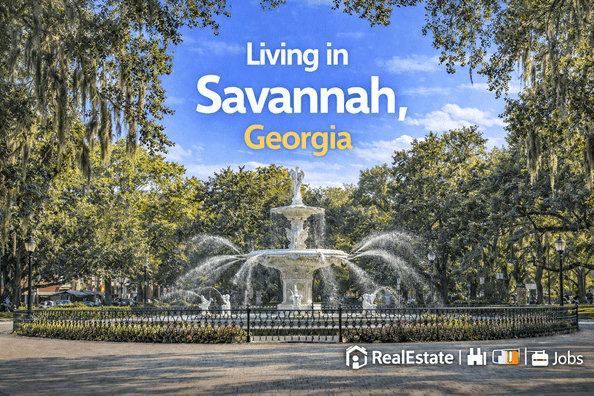
Living in Savannah, Georgia: Slower Southern Living Meets Coastal Charm
Living in Savannah, Georgia offers a distinctive, visually stunning blend of historic preservation, coastal scenery, and a booming logistics-driven economy. Located directly along Georgia’s Atlantic coast near the South Carolina border, the city itself is home to a population of roughly 150,000 residents, while the broader metropolitan area serves as a major cultural and economic hub for the Southeastern coast. What was once viewed primarily as a sleepy, picturesque tourist destination has rapidly evolved into an economic powerhouse, driven by one of the busiest shipping ports in the United States.
Often referred to affectionately as the Hostess City of the South, Savannah is nationally celebrated for its meticulously preserved historic squares, massive live oak trees draped in Spanish moss, and sweeping waterfront views along the Savannah River. Relocating to this region means embracing a deeply artistic culture, a slower daily pace, and relatively moderate housing costs compared to massive coastal metros like Miami or Washington D.C. However, thriving here requires adjusting to the realities of coastal humidity, intense seasonal tourism crowds, and the annual hurricane season.
What Makes Savannah So Unique & Popular
Savannah stands out nationally because it perfectly balances the architectural beauty of a bygone era with the modern energy of a massive college town and international port. The city is defined by its 22 historic park squares, originally laid out by James Oglethorpe, which provide shaded green spaces throughout the downtown grid. Beyond the aesthetics, the community is anchored by the massive creative influence of local art institutions, unparalleled access to the Atlantic Ocean via nearby Tybee Island, and a deeply ingrained hospitality culture. For a comprehensive look at local events, many newcomers reference the official Visit Savannah tourism guide.
- The Historic District: One of the largest National Historic Landmark Districts in the United States, famous for its cobblestone streets and antebellum architecture.
- Coastal Lifestyle: Immediate proximity to the beaches of Tybee Island and winding coastal waterways perfect for boating and fishing.
- Artistic Influence: A vibrant, youthful energy fueled by one of the top art and design universities in the world.
- St. Patrick’s Day: The city hosts one of the largest and most famous St. Patrick’s Day parades and celebrations in the entire country.
Savannah at a Glance: Key Relocation Metrics
Reviewing these baseline statistics can help you set realistic expectations for your transition to the Georgia coast. These figures represent the current realities of the local market.
| Metric | Savannah City Data | Metro Area Context |
|---|---|---|
| City Population | ~150,000 Residents | Over 400,000 in the greater metro area |
| Median Home Price | $320,000 – $380,000 | Highly inflated within the historic downtown core |
| Average 1BR Rent | ~$1,500 | More affordable in suburbs like Pooler |
| Average Commute | 20 – 25 Minutes | Heavy congestion on I-16 during shift changes |
| Top Industries | Tourism, Logistics, Aerospace | Port Operations, Healthcare, and Education |
Famous Personalities, Sports Teams & Major Brands in Savannah
The cultural and economic footprint of this coastal city extends far beyond its size. It has birthed legendary literary figures, serves as a backdrop for countless Hollywood films, and is home to some of the most unique minor-league sports phenomena in the nation. The corporate landscape is heavily dominated by aerospace engineering and global maritime logistics.
- Cultural Icons: The city is the birthplace of legendary Southern Gothic writer Flannery O’Connor and iconic American songwriter Johnny Mercer.
- Sports Phenomenon: The city is home to the wildly popular Savannah Bananas, an exhibition baseball team known globally for their highly entertaining “Banana Ball” format.
- Major Brands: Corporate operations are anchored by the massive footprint of Gulfstream Aerospace, heavy equipment manufacturer JCB, and the sprawling facilities of the Georgia Ports Authority.
Job Market & Business Opportunities with Major Employers
While often stereotyped purely as a vacation destination, the local job market is a powerhouse of industrial, logistical, and aerospace activity. The Georgia Ports Authority operates the Port of Savannah, which is the single largest and fastest-growing container terminal in North America. This drives a massive logistics, trucking, and warehousing sector.
Additionally, Gulfstream Aerospace serves as the region’s largest private employer, designing and manufacturing luxury business jets. The healthcare and education sectors provide immense stability, while a booming local film industry—drawn by the city’s historic aesthetics and state tax incentives—is creating new opportunities for creatives and production crews.
- Entry-level salaries: Generally range from $40,000 – $55,000 for hospitality and administration.
- Mid-level professional roles: Typically span $60,000 – $85,000 in logistics and healthcare.
- Aerospace & Engineering roles: Frequently start at $80,000+, offering some of the most lucrative career paths in the region.
Housing & Real Estate Overview in Savannah
Housing remains a primary consideration, and the market here is heavily segmented. While overall housing is moderately priced compared to major national coastal cities, the Historic District and waterfront properties command extreme premiums. In 2026, median home prices across the broader city range between $320,000 and $380,000, though downtown properties easily exceed the million-dollar mark.
The rental market is highly competitive, driven by a constant influx of university students, young professionals, and seasonal tourism workers. Furthermore, the proliferation of short-term vacation rentals (like Airbnb) has impacted local inventory in core neighborhoods. Current average monthly rent projections are:
- Studio Apartment: $1,100 – $1,400
- 1 Bedroom Apartment: $1,300 – $1,700
- 2 Bedroom Apartment: $1,700 – $2,300
- Family Home Rentals: $2,300 – $3,500+
Best Neighborhoods in Savannah: Finding Your Ideal Community
Because the city blends intense tourist zones with quiet coastal suburbs, neighborhood choice dictates everything from your daily grocery run to your flood insurance premiums. The table below outlines the most popular residential zones.
| Neighborhood / Suburb | Location, Pricing & Community Overview |
|---|---|
| The Historic District | The iconic, highly walkable epicenter of the city. Features stunning 18th-century architecture, immediate access to fine dining, and beautiful public squares. Extremely high rent and intense tourist foot traffic. |
| Ardsley Park | A highly sought-after, family-friendly historic neighborhood featuring massive oak-lined streets, craftsman bungalows, and a quiet residential feel just minutes from downtown. Premium home prices. |
| Midtown | Offers a fantastic balance of affordability, retail convenience, and residential stability. Popular among young professionals and young families looking for space without moving to the deep suburbs. |
| Isle of Hope | A breathtaking waterfront community offering a true coastal feel, historic bluff estates, and quiet suburban comfort. Ideal for established professionals and retirees seeking a boating lifestyle. |
| Pooler (Nearby Suburb) | A rapidly growing municipality just west of the city. Highly popular for its brand-new construction, massive retail centers, and immediate proximity to the airport and Gulfstream Aerospace headquarters. |
What It’s Really Like Living in Savannah (Daily Life & Vibe)
Daily life here feels noticeably slower, more deliberate, and incredibly scenic compared to massive hubs like Atlanta. Locals embrace the “Lowcountry” lifestyle, which heavily involves outdoor patios, weekend boating, and evening strolls under the Spanish moss. The city is highly walkable within the downtown grid, allowing residents to easily navigate between independent coffee shops, art galleries, and waterfront bars.
While the aesthetic is traditionally Southern, the massive influx of art students and global tourists injects a progressive, highly creative, and culturally vibrant energy into the local community. However, residents must navigate the reality of living in a tourist hub—meaning avoiding River Street on busy weekends and accepting that certain downtown areas will be heavily congested during peak travel seasons.
Cost of Living in Savannah: Monthly Expenses & Salary Needs
The overall cost of living tracks closely to the national average, making it a highly attractive option for coastal living without the extreme price tags of the Northeast or West Coast. To live comfortably, enjoy the local culinary scene, and save, a single professional should target a salary of $60,000+, while households generally need $95,000+.
- Average Rent (1BR): ~$1,500 (Expect significant variations between downtown and suburbs).
- Monthly Utilities (Electricity, Water, Internet): $150 – $250 (Driven entirely by massive air conditioning demands during the long summer).
- Groceries & Dining: Hovers near the national average, though dining at premium seafood restaurants in the historic district can be expensive.
- Transportation: Moderate, though auto insurance can be slightly higher due to coastal weather risks.
- Childcare Costs: Averages between $900 – $1,300 per month per child.
Transportation, Highway Bottlenecks & Airport Connectivity
While the historic downtown is famously walkable and bike-friendly, the broader metropolitan area is deeply car-dependent. Local public transit is provided by Chatham Area Transit (CAT), which operates bus routes, but geographic coverage is limited for broader suburban commuting.
Traffic patterns are heavily influenced by the port and industrial sectors. The I-16 and I-95 interchange is a notorious bottleneck, particularly during shift changes at major manufacturing plants. Additionally, the Harry S. Truman Parkway serves as a vital artery connecting the downtown area to the southern suburbs, but can back up quickly during accidents.
For regional and national travel, the Savannah/Hilton Head International Airport (SAV) is highly rated, offering incredibly easy security experiences and direct flights to dozens of major U.S. hubs.
Weather Patterns, Seasonal Realities & Climate Factors
The city operates on a deeply humid subtropical climate, which defines much of the local lifestyle.
- Summers: Long, intensely hot, and exceptionally humid. From June through September, the air can feel oppressive, and afternoon thunderstorms are a daily occurrence.
- Winters: Short, mild, and highly pleasant. Temperatures rarely drop below freezing, making it a haven for snowbirds.
- Hurricane Season: Running from June to November, this is a serious reality of coastal living. Residents must be prepared for potential tropical storms, heavy flooding in low-lying areas, and mandatory evacuation protocols.
- Local Wildlife: Spring and summer bring the notorious “sand gnats” (no-see-ums), which are a frustrating reality of spending time outdoors near the marshlands.
Education, Schools & Major Universities
The city’s identity is deeply intertwined with higher education. It is globally recognized as the home of the Savannah College of Art and Design (SCAD), which has restored dozens of historic buildings and continually infuses the city with youthful, creative talent. The region is also served by Savannah State University (the oldest HBCU in Georgia) and the Armstrong campus of Georgia Southern University.
For K-12 families, the public school system is managed by the Savannah-Chatham County Public School System. Quality and funding vary significantly by neighborhood, prompting many families to seek out specific charter schools, private institutions, or relocate to highly rated suburban districts like Pooler.
Medical Facilities, Hospitals & Healthcare Systems
The healthcare infrastructure here is robust, serving as a medical hub for coastal Georgia and southern South Carolina. Memorial Health University Medical Center is a massive facility offering a Level 1 trauma center and a dedicated children’s hospital. Additionally, the St. Joseph’s/Candler health system provides extensive specialized care, oncology centers, and comprehensive community hospitals throughout the region.
Popular Hotels, Cafes, Dining & Culinary Scene
The hospitality scene is world-class, designed to cater to millions of discerning tourists while keeping locals incredibly well-fed with Southern comfort and fresh coastal catches.
- Luxury Stays: The historic Marshall House offers legendary charm, while the spectacular JW Marriott Savannah Plant Riverside District has transformed the west end of the riverfront with upscale luxury and vibrant nightlife.
- Cafes & Social Hubs: Coffee culture is thriving. Locals frequent independent spots around Forsyth Park and the bustling courtyards of the City Market.
- Dining Culture: From historic, family-style Southern dining to cutting-edge farm-to-table and marsh-to-table seafood restaurants, the culinary landscape is exceptionally rich.
Sightseeing, Cultural Spots & Tourist Attractions
Residents have access to world-renowned attractions right in their backyard.
- Iconic Landmarks: The massive fountain at Forsyth Park is the city’s most photographed landmark, while the hauntingly beautiful Bonaventure Cemetery offers stunning gothic statuary along the river.
- Waterfront Activity: River Street features miles of converted cotton warehouses that now house pubs, sweet shops, and galleries overlooking massive cargo ships navigating the river.
- Beach Access: Tybee Island, located just 20 minutes east of downtown, provides residents with instant access to Atlantic beaches, historic lighthouses, and relaxed coastal dive bars.
Honest Trade-offs: Pros and Cons of Living in Savannah
Moving to the coast comes with specific lifestyle adjustments. Here is the unvarnished reality for anyone planning a relocation in 2026:
Pros:
- Unmatched historic beauty, architecture, and live oak-lined streets.
- Immediate access to coastal waterways and the beaches of Tybee Island.
- A massive, stable job market driven by the port, logistics, and aerospace.
- A highly walkable and visually stunning downtown historic district.
- A vibrant, deeply ingrained arts and cultural scene fueled by SCAD.
Cons:
- Oppressive, heavy summer humidity and the relentless presence of sand gnats.
- The annual threat of hurricane season and associated coastal flooding risks.
- Massive tourist crowds that congest downtown parking and restaurants during peak seasons.
- Lower average corporate salaries compared to major hubs like Atlanta or Charlotte.
- Highly limited regional public transportation for suburban commuters.
Who Is Savannah Ideal For (and Who Should Avoid It?)
Ideal For: Creative professionals, artists, maritime and logistics workers, retirees seeking mild winters, and anyone who prioritizes a slower, highly aesthetic coastal lifestyle over the relentless grind of a massive corporate metropolis.
Who Should Avoid It: High-paced corporate climbers looking for massive Fortune 500 tech hubs, individuals who despise extreme heat and humidity, and those who require comprehensive, city-wide rail transit systems for their daily commute.
Real Experiences: Perspectives from Long-Term Residents (5 to 10+ Years)
Data gives you the metrics, but daily life gives you the reality. Here is what veteran locals have to say about navigating the Hostess City:
“The historic district is gorgeous, but the reality is that most locals are moving out to Pooler or Richmond Hill for better housing prices and yard space. The trade-off is the brutal daily bottleneck on I-16 where it meets I-95. If you work at Gulfstream, Pooler is perfect, but commuting downtown takes patience during tourist season.”
[Source: r/savannah Community Discussions]
“People move here for the romance of the Spanish moss and the coastal breeze, but no one warns you about the summer sand gnats or the reality of hurricane season evacuations. Still, having Tybee Island just twenty minutes away and being able to grab coffee near Forsyth Park on a Sunday morning makes all the humidity totally worth it.”
[Source: Local Neighborhood Subreddit Threads]
Frequently Asked Questions About Living in Savannah, Georgia
Is Savannah, Georgia expensive?
The cost of living tracks near the national average, making it generally more affordable than massive coastal hubs. While downtown real estate is highly expensive, outer suburbs and everyday utilities remain quite manageable.
What salary do you need to live comfortably in Savannah?
A single professional typically needs around $60,000 annually to cover rent and lifestyle expenses comfortably, while families generally require household incomes of $95,000+.
Is Savannah a safe place to live?
Safety varies heavily by neighborhood. Areas like Ardsley Park and Isle of Hope are highly secure. The Historic District has a massive police presence due to tourism, but typical urban awareness is required.
Is Savannah family-friendly?
Yes. The city offers incredible coastal access, large parks, and outdoor recreation. Families tend to gravitate toward the suburbs of Pooler or Isle of Hope for quieter streets and highly rated schools.
What is the biggest expense in Savannah?
Housing is universally the largest monthly expense. Rent and property taxes within the Historic District are premium, while auto insurance rates can also be elevated due to coastal weather risks.
Can you live in Savannah without a car?
It is possible if you live, work, and socialize exclusively within the downtown Historic District grid. However, living anywhere else in the metropolitan area absolutely requires a personal vehicle.
Is Savannah better than Atlanta?
It depends on your lifestyle. Savannah offers incredible coastal charm, a slower pace, and immediate beach access. Atlanta provides vastly superior corporate job diversity, major league sports, and a fast-paced urban environment.
🔗 Explore More Cities in Georgia
If you’re exploring more options beyond Savannah , The Urban Living Guide has covered several other popular cities in Georgia. You can also check:
- Living in Atlanta, Georgia
- Living in Alpharetta, Georgia
- Living in Macon Georgia,Georgia
- Living in Augusta, Georgia
If you want to know more about living in Savannah, explore these guides:
- Cost of Living in Savannah, Georgia
- Pros and Cons of Living in Savannah, Georgia
- Best Neighborhoods in Savannah, Georgia
For a complete overview, check our full guide: Moving to Savannah, Georgia
These guides give you a complete picture of what it’s like living across different cities, covering everything from cost of living, housing, and job opportunities to neighborhoods, commute, weather, education, popular places, and major employers.
The Urban Living Guide brings together these local insights in one place, helping you compare cities easily and make a confident, well-informed decision based on your lifestyle and goals.