

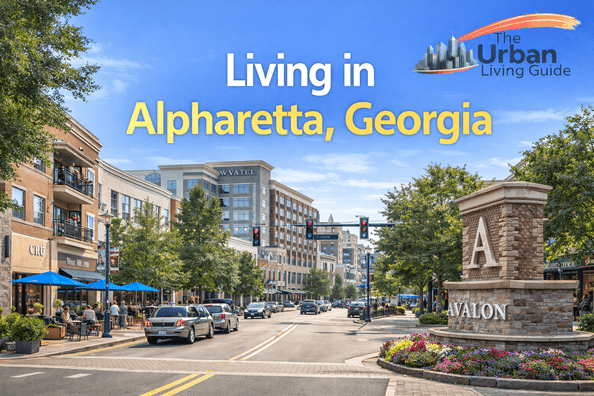
Living in Alpharetta, Georgia: Southern Comfort Meets Silicon Valley Energy
Living in Alpharetta, Georgia offers a highly sought-after suburban lifestyle paired with exceptional career opportunities and some of the highest-quality schools in the state. Located approximately 25 miles north of downtown Atlanta, Alpharetta is a crown jewel of the Atlanta metropolitan area, boasting a population of around 70,000 residents. Despite its relatively smaller size compared to the urban core, it is widely considered one of the most affluent, well-planned, and fastest-growing suburbs in the entire Southeast.
The city’s economy is a powerhouse heavily driven by technology, finance, healthcare, and massive corporate offices. Frequently referred to as the anchor of Georgia’s Technology Corridor, the area hosts hundreds of tech companies that have established global headquarters or massive regional hubs here. Families, executives, and remote workers frequently relocate to Alpharetta for its impeccable safety ratings, top-tier public schools, and beautifully master-planned communities.
What Makes Alpharetta So Unique & Popular
Alpharetta perfectly bridges the gap between a high-powered business district and a deeply relaxed, family-oriented Southern suburb. It consistently ranks as one of Georgia’s best places to live because it provides a self-sustaining ecosystem where residents can work, dine, and play without ever needing to commute into Atlanta. To learn more about local events, many newcomers check the official Awesome Alpharetta tourism portal.
- The Avalon: A massive, luxury mixed-use development that serves as the social and retail heart of the city.
- The Tech Corridor: A massive concentration of enterprise software, fintech, and cybersecurity firms.
- Top-Tier Education: Access to some of the highest-rated public schools in the Fulton County district.
- Green Infrastructure: Over 750 acres of parkland and the sprawling multi-use trails of the Big Creek Greenway.
Alpharetta at a Glance: Key Relocation Metrics
Reviewing these baseline statistics can help you set realistic expectations for your transition to this affluent North Fulton suburb.
| Metric | Alpharetta City Data | Metro Area Context |
|---|---|---|
| City Population | ~70,000 Residents | Part of the 6 Million+ Atlanta Metro |
| Median Home Price | $600,000 – $750,000 | Significantly higher than state averages |
| Average 1BR Rent | $1,700 – $2,100 | Premium pricing near The Avalon |
| Average Commute | 30 – 40 Minutes | Heavy traffic on GA-400 towards Atlanta |
| Top Industries | Fintech, Software, Healthcare | Corporate HQs and Professional Services |
If you are exploring this city for the first time, use the map below to get a sense of where it sits in relation to Atlanta.
Famous Personalities, Sports Teams & Major Brands in Alpharetta
While the broader sports culture leans heavily on Atlanta’s major league teams (like the Braves and Falcons), Alpharetta itself is renowned as an incubator for corporate giants and affluent professionals. The area is heavily populated by professional athletes, prominent tech founders, and executives who prefer the sprawling estates of North Fulton over downtown penthouses.
- Major Brands & Employers: The city’s corporate backbone includes massive operations for Fiserv, ADP, LexisNexis Risk Solutions, and Verizon.
- Sports Connectivity: Local sports culture revolves around elite youth athletics, premier equestrian centers in neighboring Milton, and world-class golf country clubs like the Golf Club of Georgia.
- Cultural Figures: The area is frequently home to local media personalities, former NFL players, and rising tech entrepreneurs.
Job Market & Business Opportunities with Major Employers
Alpharetta is an undisputed employment juggernaut within the Atlanta metro. If you are a professional in the tech or finance sector, relocating here puts you in one of the most lucrative job markets in the South. Over 700 technology companies call this city home.
Beyond tech, the area thrives on financial services, healthcare administration, and professional consulting. Many residents enjoy the rare privilege of a “reverse commute” (living in Atlanta and driving north) or completely eliminating their commute by living and working within the Windward Business Center corridor.
- Entry-level salaries: Generally range between $55,000 – $70,000.
- Mid-level professional roles: Typically sit between $80,000 – $120,000.
- Senior tech & finance roles: Frequently command $140,000+, with substantial bonuses and equity options.
Housing & Real Estate Overview in Alpharetta
Housing is the primary expense here and directly reflects the city’s upscale, highly desirable reputation. Because of the incredible demand for the local public school district, real estate inventory moves quickly. As of 2026, median home prices range closely from $600,000 to $750,000, with luxury estates in gated communities frequently exceeding $1.5 million.
The rental market is equally competitive, particularly for modern apartments situated within walkable mixed-use retail zones. Current average monthly rent projections are:
- Studio Apartment: $1,400 – $1,700
- 1 Bedroom Apartment: $1,700 – $2,100
- 2 Bedroom Apartment: $2,200 – $2,800
- Family Home Rentals: $3,000 – $4,500+
Best Neighborhoods in Alpharetta: Finding Your Ideal Community
Neighborhood selection in this city plays a major role in pricing, lifestyle, and school zoning. The table below outlines the most popular residential zones.
| Neighborhood / Suburb | Location, Pricing & Community Overview |
|---|---|
| Windward | A massive, highly prestigious master-planned community built around a private 200-acre lake. Features upscale homes, elite golf access, and some of the highest-rated schools. Median home prices often sit around $800,000+. |
| Avalon District | The ultimate walkable mixed-use area. Ideal for young professionals or empty nesters seeking luxury apartments or townhomes directly above high-end retail, fine dining, and movie theaters. Expect premium rental rates. |
| Downtown Alpharetta | A beautifully revitalized historic core packed with boutique shops, breweries, and outdoor dining. Offers a mix of historic homes and brand-new luxury townhomes. Highly social and pedestrian-friendly. |
| Crabapple | Sits on the western edge of the city, sharing borders with Milton. Known for a charming, slightly more rural suburban feel with excellent newer developments and top-rated public schools. |
| Milton (Adjacent City) | While technically its own municipality bordering Alpharetta, Milton is deeply intertwined with the area. Known for massive equestrian estates, larger lot sizes, and a quieter, highly affluent atmosphere. |
What It’s Really Like Living in Alpharetta (Daily Life & Vibe)
Daily life here is highly structured, secure, and suburban. Families often prioritize local school activities, youth sports leagues, and weekend community events. The city feels impeccably maintained; the landscaping is lush, the public spaces are meticulously clean, and community engagement is exceptionally high.
When the workday ends, social life revolves heavily around dining and outdoor recreation. The Big Creek Greenway provides miles of paved trails through the woods for cycling and running, while the patios of Downtown Alpharetta and Avalon fill up with professionals enjoying craft cocktails and live music.
Watch a recent video by a popular vlogger to understand daily life and vibes in Alpharetta:
Cost of Living in Alpharetta: Monthly Expenses & Salary Needs
Because of its elite status, the cost of living here is noticeably above the Georgia state average and ranks among the highest in the Atlanta metropolitan suburbs. To comfortably afford housing, enjoy the upscale dining scene, and save for the future, an individual should target a salary of $85,000+, while families typically require household incomes of $140,000+.
- Average Rent (1BR): ~$1,900 average for newer builds.
- Monthly Utilities: $150–$250 (Driven heavily by air conditioning during the summer).
- Groceries & Dining: Slightly above the state average, especially given the concentration of premium grocery stores like Whole Foods and upscale dining options.
- Transportation: High, due to complete car dependency, auto insurance, and daily commuting fuel.
- Childcare Costs: Averages between $1,200 – $1,800 per month for quality preschools.
Transportation, Highway Bottlenecks & Airport Connectivity
You absolutely need a car to live here. Public transit is highly limited; while the regional MARTA system operates bus routes in the area, there is no direct train service extending this far north.
The primary artery connecting the city to the rest of the metro is GA-400. During peak commuting hours, this highway is notorious for heavy bottlenecks, particularly near the Windward Parkway and Haynes Bridge Road exits. The average commute into central Atlanta is roughly 30 to 40 minutes, but can easily exceed an hour in heavy traffic.
For air travel, residents must drive south to Hartsfield-Jackson Atlanta International Airport, which is about a 45-minute to 1-hour drive depending on the time of day, offering unmatched global flight connectivity.
Weather Patterns, Seasonal Realities & Climate Factors
The city experiences a classic humid subtropical climate, identical to the rest of the Atlanta region.
- Summers: Hot and intensely humid, with temperatures consistently in the 90s from June through September, accompanied by frequent afternoon thunderstorms.
- Winters: Mild and relatively short. Snow is incredibly rare, though occasional freezing rain can occur.
- Spring: Visually stunning with blooming dogwoods, but heavily plagued by intense yellow pine pollen that challenges anyone with allergies.
Education, Schools & Major Universities
The local public school system is the number one reason families move to the area. Managed by Fulton County Schools, institutions like Alpharetta High School and Chattahoochee High School consistently rank among the top public schools in the state for academics and college readiness.
For higher education, the city hosts the Georgia State University Alpharetta Campus, and is just a short drive from world-renowned institutions like Georgia Institute of Technology (Georgia Tech) and Emory University in Atlanta.
Medical Facilities, Hospitals & Healthcare Systems
Healthcare access in this suburb is exceptional. Residents are served locally by the highly rated Wellstar North Fulton Hospital, a major facility offering comprehensive emergency care, maternity services, and specialized surgeries. Furthermore, nearby Emory Johns Creek Hospital provides access to one of the most prestigious medical networks in the country.
Popular Hotels, Cafes, Dining & Culinary Scene
The dining and hospitality scene perfectly blends high-end suburban luxury with vibrant, chef-driven concepts.
- Popular Hotels: Corporate travelers and staycationers frequently book rooms at The Hotel at Avalon, the Atlanta Marriott Alpharetta, or the Embassy Suites.
- Cafes & Social Hubs: Independent coffee shops thrive in the Downtown Alpharetta district, offering perfect spots for remote workers and weekend meetups.
- Dining Culture: The culinary scene is phenomenal. You will find everything from elevated Southern cuisine and premium steakhouses in Avalon to incredible international fare and family-friendly bistros scattered throughout the city.
Sightseeing, Cultural Spots & Tourist Attractions
While primarily a residential and business powerhouse, the city offers fantastic local entertainment.
- Live Music: The Ameris Bank Amphitheatre is a massive outdoor concert venue that draws global touring acts all summer long.
- Recreation: The Big Creek Greenway is a local favorite for nature lovers, providing miles of serene, paved paths through local wetlands.
- Community Hubs: Wills Park is the heartbeat of local recreation, featuring equestrian facilities, massive playgrounds, and community swimming pools.
Honest Trade-offs: Pros and Cons of Living in Alpharetta
Every city requires compromise. Here is the unvarnished reality for anyone planning a move in 2026:
Pros:
- A massive, highly lucrative tech and finance job market.
- Top-tier public schools that drive long-term property values.
- Exceptionally safe, meticulously maintained neighborhoods.
- Incredible dining, shopping, and retail at The Avalon.
- A highly family-friendly and active community environment.
Cons:
- Significantly higher housing costs and property taxes than average suburbs.
- Absolute car dependency; public transit is virtually non-existent for daily tasks.
- Frustrating daily commute traffic along the GA-400 corridor.
- Less urban grit, diversity, and late-night entertainment compared to Atlanta.
- Intense summer heat and heavy spring pollen.
Who Is Alpharetta Ideal For (and Who Should Avoid It?)
Ideal For: High-earning professionals in the tech, medical, or corporate sectors, families seeking elite public school districts, and anyone who wants a pristine, amenity-rich suburban lifestyle without being entirely disconnected from a major city.
Who Should Avoid It: Young singles on a strict budget, professionals who crave a highly walkable, transit-oriented urban lifestyle, and individuals looking for entry-level starter homes below the $400,000 mark.
Real Experiences: Perspectives from Long-Term Residents (5 to 10+ Years)
Data only tells part of the story. Here is what veteran residents have to say about the daily realities of navigating this North Fulton hub:
“The schools and the parks are unbeatable, but you really have to factor in the GA-400 traffic if your job isn’t physically in the tech corridor. I used to commute down to Buckhead every morning, and the bottleneck near Haynes Bridge Road would easily add 30 minutes to my drive. Now that I work remotely and just hang out in Downtown Alpharetta, the quality of life is a 10/10.”
[Source: r/Alpharetta Community Discussions]
“Avalon completely changed the identity of this city. Ten years ago, we drove into Atlanta for a high-end date night; now, people from Atlanta drive up here. The only downside is the housing market. Trying to buy a house zoned for Alpharetta High School right now means getting into bidding wars the minute a property goes live.”
[Source: Local Neighborhood Subreddit Threads]
Frequently Asked Questions About Living in Alpharetta, Georgia
Is Alpharetta expensive?
Yes, it is significantly above Georgia’s average cost of living, particularly regarding real estate and premium retail, though it remains cheaper than coastal tech hubs like San Jose.
What salary do you need to live comfortably in Alpharetta?
A single individual should aim for at least $85,000 to manage rent and lifestyle comfortably, while families typically require $140,000+ to afford local housing.
Is Alpharetta safe?
Yes, it is widely considered one of the safest suburbs in the Atlanta metropolitan area, boasting low crime rates and well-funded local police departments.
Can you live in Alpharetta without a car?
No. While areas like Avalon and Downtown are walkable internally, navigating between neighborhoods, grocery stores, and the broader metro area absolutely requires a personal vehicle.
Is Alpharetta a good place for families?
It is exceptional for families. The combination of Fulton County’s top-rated schools, extensive parks, and low crime make it a premier family destination.
Is Alpharetta better than living in Atlanta?
It depends on your lifestyle. Alpharetta offers superior safety, schools, and suburban quiet. Atlanta offers better public transit, cultural diversity, and late-night entertainment.
🔗 Explore More Cities in Georgia
If you’re exploring more options beyond Alpharetta , The Urban Living Guide has covered several other popular cities in Georgia. You can also check:
- Living in Atlanta, Georgia
- Living in Savannah, Georgia
- Living in Macon Georgia, Georgia
- Living in Augusta, Georgia
Before moving to Alpharetta, make sure you check:
- Cost of Living in Alpharetta, Georgia
- Pros and Cons of Living in Alpharetta, Georgia
- Best Neighborhoods in Alpharetta, Georgia
For everything you need in one place, read our complete guide: Moving to Alpharetta, Georgia
These guides give you a complete picture of what it’s like living across different cities, covering everything from cost of living, housing, and job opportunities to neighborhoods, commute, weather, education, popular places, and major employers.
The Urban Living Guide brings together these local insights in one place, helping you compare cities easily and make a confident, well-informed decision based on your lifestyle and goals.