

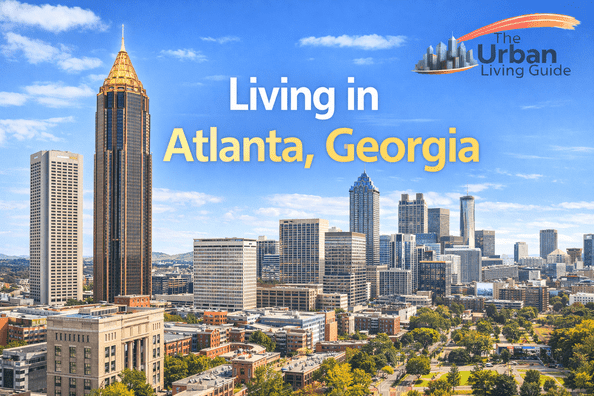
Living in Atlanta, Georgia: Southern Hospitality Meets Booming Urban Growth
Living in Atlanta, Georgia means placing yourself squarely in the center of one of the most dynamic, fast-paced, and economically powerful metropolitan areas in the southeastern United States. As the state capital, the city proper boasts a population of just over 500,000 residents, but the sprawling Atlanta Metro Area encompasses a staggering population exceeding 6 million people. What was once primarily a regional transportation hub has rapidly transformed into an international center for commerce, arts, technology, and culture.
Often referred to affectionately by locals as the Capital of the South, Atlanta manages to blend towering skyscrapers and massive corporate footprints with thick canopies of trees and fiercely independent neighborhood cultures. Relocating to this region offers immense career growth potential, a thriving culinary scene, and relatively moderate housing costs compared to coastal powerhouses like New York City or Los Angeles. However, adapting to life here requires a clear understanding of the sprawling geography, true car dependency, and the relentless summer humidity.
What Makes Atlanta So Unique & Popular
Atlanta stands out nationally because it does not fit the traditional mold of a dense, grid-based Northern city, nor is it merely a quiet Southern town. It is deeply known as the City in a Forest due to its incredible tree canopy, which covers nearly half the city—a rarity for a major metropolis. This lush environment provides a beautiful backdrop to its booming skyline and sprawling suburbs.
Furthermore, the city is a global powerhouse for civil rights history, famously serving as the cradle of the movement and the childhood home of Dr. Martin Luther King Jr. Today, it is recognized globally for its unparalleled influence on hip-hop music, its explosive growth as Y’allywood (a premier hub for U.S. film and television production), and its rich tapestry of diverse, creative communities. The balance of massive business growth with warm Southern hospitality keeps the city continually popular for incoming transplants in 2026.
Atlanta at a Glance: Key Relocation Metrics
Reviewing these baseline statistics can help you set realistic expectations for your transition to the city. These figures represent the current realities of the local market.
| Metric | Atlanta City Data | Metro Area Context |
|---|---|---|
| City & Metro Population | Over 500,000 | 6 Million+ (Spanning multiple counties) |
| Median Home Price | $400,000 – $450,000 | More affordable pricing in outer suburbs |
| Average 1BR Rent | ~$1,700 | Higher in Midtown and Buckhead |
| Average Commute | 30 – 35 Minutes | Can exceed 60+ minutes during peak rush hour |
| Top Industries | Finance, Tech, Healthcare | Film Production, Logistics, Aviation |
If you are unfamiliar with the region, the map below helps you visualize the city location and surrounding highway network.
Famous Personalities, Sports Teams & Major Brands in Atlanta
The city cultural footprint is massive. It is the hometown of iconic figures like Dr. Martin Luther King Jr., media mogul Tyler Perry, and legendary music acts like Outkast and Ludacris. Sports run deep in the city veins, supported by an incredibly passionate fanbase.
- Major Sports Teams: The Atlanta Braves (MLB) play at the vibrant Truist Park in The Battery, the Atlanta Falcons (NFL) and Atlanta United FC (MLS) dominate the stunning Mercedes-Benz Stadium, and the Atlanta Hawks (NBA) light up State Farm Arena.
- Global Brands: The city corporate identity is anchored by legendary entities. It is the global birthplace and headquarters of The Coca-Cola Company, the massive home base for Delta Air Lines, and the command center for Home Depot, UPS, and CNN.
Job Market & Business Opportunities with Major Employers
If you are moving here for career growth, you are looking at one of the strongest and most diverse job markets in the Southeast. The economy is heavily driven by finance, technology, film production, logistics, and healthcare.
Over the past decade, a major tech boom has established areas like Midtown (specifically Tech Square) as prominent innovation hubs, drawing significant investments from companies like Google, Microsoft, and NCR. Meanwhile, the region’s massive soundstages—such as Trilith Studios—host top-tier Marvel and Netflix productions, employing thousands of set designers, actors, and production crews.
- Entry-level salaries: Typically range from $50,000 – $65,000.
- Mid-level professional roles: Generally span $70,000 – $110,000.
- Tech, Finance & Medical roles: Often start at $90,000+, with substantial upward mobility.
Housing & Real Estate Overview in Atlanta
Housing remains the largest expense for incoming residents. While the city is highly competitive compared to other major U.S. markets, rapid population growth has caused prices to rise steadily. As of 2026, median home prices range closely between $400,000 and $450,000 depending heavily on the zip code and proximity to the urban core.
The rental market is equally robust. Competition is fiercest in walkable hotspots, while the sprawling suburban rings offer better square-footage value. Current average monthly rent projections are:
- Studio Apartment: $1,300 – $1,600
- 1 Bedroom Apartment: $1,500 – $1,900
- 2 Bedroom Apartment: $2,000 – $2,600
- Single-Family Home Rentals: $2,800 – $4,000+
Locals divide the real estate landscape into two distinct mindsets: ITP (Inside the Perimeter) and OTP (Outside the Perimeter). ITP living offers shorter commutes to downtown hubs and vibrant nightlife, while OTP living leans heavily into larger family homes, highly rated public school districts, and massive retail centers.
Best Neighborhoods in Atlanta: Finding Your Ideal Community
Because the city is notoriously decentralized, choosing the right neighborhood dramatically affects both your daily lifestyle and your commute. The following table highlights some of the most sought-after residential pockets.
| Neighborhood / Suburb | Location, Pricing & Community Overview |
|---|---|
| Midtown | The heart of arts and urban living. Highly walkable, packed with young professionals and tech workers. Immediate access to Piedmont Park. Premium rent prices mostly ranging from $1,800 to $2,500+ for modern high-rises. |
| Buckhead | Known as the “Beverly Hills of the South.” Features upscale luxury shopping at Phipps Plaza, fine dining, and sprawling historic mansions. Popular among executives and established professionals. Home prices frequently exceed $700,000. |
| Virginia-Highland | Offers historic bungalow charm with a highly vibrant, pedestrian-friendly dining scene. Perfect for singles and young families who want a neighborhood feel close to the city center. Expect charming but pricier historic homes. |
| West Midtown | A rapidly growing, formerly industrial hub now filled with trendy lofts, creative design agencies, and top-tier breweries. A massive draw for creatives and startup entrepreneurs. Rent averages $1,700 – $2,300. |
| Decatur (Metro Area) | An independent municipality just east of the city. Renowned for a fierce community spirit, incredible independent food scene, and top-rated public schools. The ultimate family-friendly suburban retreat with urban character. |
What It’s Really Like Living in Atlanta (Daily Life & Vibe)
Daily life here is a fascinating blend of fast-paced corporate energy and distinct, relaxed Southern charm. Weekends are rarely spent entirely indoors. Locals flock to the Atlanta BeltLine, a massive multi-use trail built on former railway corridors that connects diverse neighborhoods and is lined with street art, breweries, and green spaces.
On any given Saturday, you will find residents enjoying vibrant community festivals in Inman Park, cheering on sports teams at lively sports bars, or exploring the vast international dining scene along Buford Highway. The city is deeply diverse, socially dynamic, and highly active.
Watch a recent video by a popular vlogger to understand daily life and vibes in Atlanta:
Cost of Living in Atlanta: Monthly Expenses & Salary Needs
While costs have noticeably risen, the overall cost of living remains slightly above the national average but distinctly more forgiving than West Coast hubs. To live comfortably while saving and enjoying the city amenities, a single professional should target a median salary of roughly $75,000+, while households with children generally require $120,000+.
- Average Rent (1BR): ~$1,700
- Monthly Utilities (Electricity, Water, Internet): $150 – $250 (Expect heavy AC usage in the sweltering summer months).
- Groceries & Dining: Tracks closely to the national average, though dining out at premium intown spots can quickly inflate budgets.
- Transportation: Generally higher than average due to absolute car dependency, mandatory auto insurance rates, and gas usage during long commutes.
- Childcare Costs: Averages between $1,100 – $1,600 per month per child.
Transportation, Highway Bottlenecks & Airport Connectivity
You must prepare for the reality of traffic. The city is notoriously car-dependent. The primary public transit system, MARTA (Metropolitan Atlanta Rapid Transit Authority), is highly effective if you live and work directly on a train line (like commuting from Sandy Springs to Downtown or riding to the airport), but its geographic coverage is limited for broader suburban travel.
Driving involves navigating major bottlenecks. The I-75/I-85 Downtown Connector is infamous for crushing congestion at almost any hour, and I-285 (known as The Perimeter) constantly backs up with heavy commercial freight. The average daily commute hovers around 30 to 35 minutes each way, though residents traveling from outer suburbs like Alpharetta or Marietta often face 60-minute drives during peak rush hour.
The ultimate transportation perk, however, is global connectivity. Hartsfield-Jackson Atlanta International Airport is consistently ranked among the world’s busiest, offering residents direct flights to virtually anywhere on the globe with incredible ease.
Weather Patterns, Seasonal Realities & Climate Factors
The region operates on a humid subtropical climate. Winters are generally mild, often sitting comfortably in the 50s, though occasional brief ice storms do occur and can temporarily shut the city down. Spring is beautiful but brings the notorious “Yellow Dust”—a massive wave of tree pollen that blankets the city and challenges anyone with seasonal allergies.
Summers, however, demand respect. From June through September, expect intense heat paired with thick, heavy humidity, often culminating in sudden afternoon thunderstorms. This is the core reason air conditioning is the most critical utility in any local home.
Education, Schools & Major Universities
The region is a powerhouse for higher education and academic research. It is home to top-tier institutions like Georgia Institute of Technology (Georgia Tech) and Emory University. Furthermore, the city proudly hosts the Atlanta University Center (AUC), the largest contiguous consortium of historically Black colleges and universities (HBCUs) in the world, including Spelman College, Morehouse College, and Clark Atlanta University.
For families, K-12 public school quality varies greatly by county. Suburbs in Forsyth County, Cobb County, and the independent City of Decatur school district consistently rank among the highest in the state, making them prime real estate targets for relocating parents.
Medical Facilities, Hospitals & Healthcare Systems
Access to world-class healthcare is a massive benefit here. Emory University Hospital is nationally ranked across multiple specialties. Grady Memorial Hospital is an iconic institution and the region premier Level 1 trauma center. Additionally, the region is supported by sprawling, high-quality networks like Piedmont Healthcare and Wellstar. The city also hosts the global headquarters of the Centers for Disease Control and Prevention (CDC), making it a critical hub for public health professionals and researchers.
Popular Hotels, Cafes, Dining & Culinary Scene
The culinary and hospitality landscape here is phenomenal, merging traditional Southern comfort food with cutting-edge international gastronomy.
- Luxury Stays: High-end travelers and corporate executives frequently book rooms at The St. Regis Atlanta in Buckhead, the Four Seasons Atlanta in Midtown, or the historic Georgian Terrace.
- Cafes & Social Hubs: Ponce City Market and Krog Street Market act as massive food halls where locals gather for artisan coffee, craft cocktails, and global street food right off the BeltLine.
- Dining Culture: From classic staples to modern Michelin-recognized fine dining establishments, the city caters to every palate. The international dining corridor on Buford Highway offers some of the most authentic global cuisine in the country.
Sightseeing, Cultural Spots & Tourist Attractions
When hosting out-of-town guests, residents never run out of options. Downtown centers around Centennial Olympic Park, which is flanked by the massive Georgia Aquarium (one of the largest in the world) and the interactive World of Coca-Cola.
For a greener experience, the Atlanta Botanical Garden offers stunning floral displays right alongside the expansive meadows of Piedmont Park. For history and art lovers, the High Museum of Art and the Martin Luther King, Jr. National Historical Park are absolute must-visits.
Honest Trade-offs: Pros and Cons of Living in Atlanta
Every city has its realities. Here is the unvarnished truth for anyone planning a move in 2026:
Pros:
- Incredible job growth across resilient industries (tech, film, finance).
- Unmatched airport connectivity for frequent travelers.
- A deeply rich, diverse cultural scene and vibrant nightlife.
- Relatively lower cost of living compared to major coastal cities.
- A beautiful, tree-lined environment with mild winters.
Cons:
- Soul-crushing traffic congestion and severe urban sprawl.
- Aggressive summer heat and extreme humidity.
- Highly limited public transit outside the downtown core.
- Rapidly rising housing costs and property taxes in popular neighborhoods.
- Occasional severe spring storms and intense pollen seasons.
Who Is Atlanta Ideal For (and Who Should Avoid It?)
Ideal For: Ambitious young professionals seeking corporate or tech careers, creatives looking to break into the film industry, and diverse families looking for strong suburban school districts with immediate access to big-city amenities.
Who Should Avoid It: Individuals who despise driving or long commutes, those who prefer highly walkable grid-cities where a car is not necessary, and anyone who struggles intensely with heavy heat and thick humidity.
Real Experiences: Perspectives from Long-Term Residents (5 to 10+ Years)
Data tells one story, but daily life tells another. Here is what veteran residents have to say about navigating the reality of the city:
“The BeltLine completely changed the way we socialize, but the trade-off is the cost. I used to rent a huge apartment in Old Fourth Ward for nothing ten years ago; now it’s premium pricing. And a pro-tip for newcomers: never get on the I-75/85 Connector between 3:30 PM and 6:30 PM. Just pull over, grab a coffee, and wait it out, or you will lose your mind staring at taillights.”
[Source: r/Atlanta Community Discussions]
“People warn you about ‘Hotlanta’ (which no local actually says), but no one warns you about the pollen. For three weeks in April, your car, your porch, and your soul will be covered in yellow dust. That aside, moving to the Decatur side was the best choice for our family—you get the amazing independent food scene and neighborhood festivals without the Midtown parking headaches.”
[Source: Local Neighborhood Subreddit Threads]
Frequently Asked Questions About Living in Atlanta, Georgia
Is Atlanta an expensive place to live?
It is moderately priced compared to major coastal hubs, but costs are rising. While cheaper than New York or Seattle, rising housing costs in core neighborhoods require a solid income.
What salary do you need to live in Atlanta?
To live comfortably while managing rent and car expenses, individuals should aim for around $75,000 annually, while families typically need $120,000+.
Can you live in Atlanta without a car?
It is possible if you live and work immediately next to a MARTA station in Midtown or Downtown, but realistically, a car is heavily required for most areas.
Is Atlanta family-friendly?
Absolutely, especially in the Metro area. Suburbs like Alpharetta, Roswell, and Decatur offer excellent public schools, large parks, and highly family-oriented communities.
What is the biggest living expense?
Housing is universally the largest cost, closely followed by transportation expenses like auto insurance, gas, and car maintenance due to the heavy commuting culture.
Is Atlanta better than Charlotte?
Atlanta offers a much larger job market, greater cultural diversity, and a busier airport. Charlotte appeals to those wanting a slightly smaller scale with less crushing traffic.
🔗 Explore More Cities in Georgia
If you’re exploring more options beyond Atlanta, The Urban Living Guide has covered several other popular cities in Georgia. You can also check:
- Living in Alpharetta, Georgia
- Living in Savannah, Georgia
- Living in Macon Georgia
- Living in Augusta, Gerogia
Want to learn more about Atlanta? Check out these helpful guides:
• Cost of Living in Atlanta, Gerogia
• Pros and Cons of Living in Atlanta, Gerogia
• Best Neighborhoods in Atlanta, Gerogia
Ready to make your decision? Explore our complete guide here: Moving to Atlanta, Gerogia
These guides give you a complete picture of what it’s like living across different cities, covering everything from cost of living, housing, and job opportunities to neighborhoods, commute, weather, education, popular places, and major employers.
The Urban Living Guide brings together these local insights in one place, helping you compare cities easily and make a confident, well-informed decision based on your lifestyle and goals.