

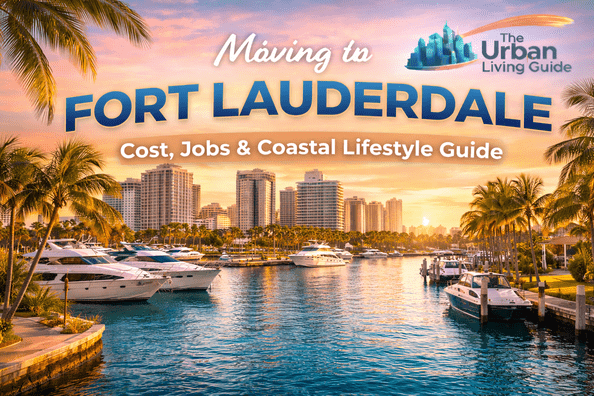
Living in Fort Lauderdale, Florida: Yachting Capital, Coastal Luxury & Relocation Guide
Living in Fort Lauderdale, Florida offers an exceptional blend of coastal luxury, tropical climate, booming corporate opportunities, and a world-renowned nautical lifestyle. As the county seat of Broward County and the central anchor of South Florida’s urban corridor between Miami and West Palm Beach, Fort Lauderdale spans over 36 square miles along the Atlantic coastline. Long affectionately nicknamed the “Yachting Capital of the World” and the “Venice of America,” the city is crisscrossed by more than 300 miles of navigable inland waterways and canals. Home to over 180,000 city residents and serving as a focal point for Broward County’s 1.9 million inhabitants, Fort Lauderdale attracts young professionals, marine industry executives, corporate transfers, remote workers, and active retirees alike.
However, relocating to Fort Lauderdale requires careful financial planning regarding rising residential rents, property insurance rates, and coastal climate exposure. While Florida imposes no individual state personal income tax, local real estate appreciation, homeowners hazard insurance premiums, and flood insurance requirements influence overall monthly household budgets. Whether you are accepting a position at a corporate headquarters in Downtown Fort Lauderdale, joining the maritime logistics sector at Port Everglades, or exploring family-friendly suburban neighborhoods along Broward Boulevard, this comprehensive relocation guide details real estate trends, career sectors, top neighborhoods, transit factors, and daily living realities in Fort Lauderdale.
If you are researching South Florida for the first time, examine the interactive map below to understand how Fort Lauderdale connects to the Intracoastal Waterway, Atlantic beaches, and surrounding Broward County municipalities.
All financial metrics, rental estimates, and neighborhood profiles in this guide are derived from municipal planning reports, regional economic databases, and long-term local resident expertise updated for 2026.
What Makes Fort Lauderdale So Unique & Popular
Fort Lauderdale occupies a distinct cultural and lifestyle position in South Florida. While neighboring Miami is famous for high-octane international nightlife and ultra-dense high-rises, Fort Lauderdale provides a somewhat more relaxed, sophisticated coastal environment focused around boating, outdoor dining, and accessible waterfront living. The city’s famous beachfront along State Road A1A features a distinctive wave-wall promenade, brick-paved pedestrian paths, and uncrowded Atlantic beaches backed by upscale oceanfront hotels.
A defining hallmark of Fort Lauderdale is its vibrant downtown riverfront along the New River and the iconic Las Olas Boulevard corridor. Las Olas serves as the architectural and social heart of the city, lined with sidewalk cafes, art galleries, independent fashion boutiques, and fine dining establishments that stretch directly to the waterfront. Combined with world-class maritime infrastructure, premier golf courses, rapid high-speed rail connections, and zero state income tax, Fort Lauderdale continues to rank among the nation’s most desirable coastal destinations.
Primary drivers attracting newcomers to Fort Lauderdale:
- Zero individual state personal income tax across Florida, maximizing net earnings
- Unrivaled boating culture with over 300 miles of canals and deep-water marina access
- Proximity to world-class Atlantic Ocean beaches and the Intracoastal Waterway
- Expanding employment clusters in marine services, aviation, healthcare, and finance
- Seamless regional rail connectivity via Brightline connecting directly to Miami and Orlando
- Slightly less urban density and traffic congestion compared to central Miami
Fort Lauderdale at a Glance: Key Relocation Metrics
Reviewing key baseline metrics provides essential financial and demographic context prior to planning a move to Greater Fort Lauderdale for 2026.
| Relocation Metric | Fort Lauderdale Local Benchmark | National / Regional Comparison |
|---|---|---|
| Total Population | 180,000+ (City) / 1.9+ Million (Broward County) | 10th largest city in Florida; 2nd largest in South Florida metro |
| Median Home Purchase Price | $520,000–$560,000 | Slightly lower than central Miami; higher than U.S. median |
| Average Monthly Rent (1-Bed) | $2,200–$3,000 | Elevated coastal rental market; reflects high demand near beach core |
| State Income Tax Rate | 0.00% | No individual state personal income tax in Florida |
| Average Property Tax Rate | 1.0%–1.3% (Effective rate in Broward) | Moderate tax rate, but higher waterfront home values increase total bill |
| Average Daily Commute Time | 26.8 Minutes | Competitive for South Florida; I-95 experiences rush-hour delays |
| Primary Economic Sectors | Marine / Yachting, Aviation, Healthcare, Finance | Global leader in mega-yacht servicing and international cruise shipping |
While state tax savings provide significant net income retention, prospective home buyers must account for Florida property hazard insurance, flood insurance policies along canals, and condominium HOA special assessments.
Famous Personalities, Sports Teams & Major Brands in Fort Lauderdale
Fort Lauderdale holds an impressive national identity across sports, entertainment, and corporate enterprise. Cultural and sports icons long associated with the area include NBA legend Scottie Pippen, tennis star 0Chris Evert (who grew up playing on local Fort Lauderdale courts), soccer legend Lionel Messi (who plays for Inter Miami CF and resides in Broward County), and movie star Dwayne “The Rock” Johnson.
Professional sports in the area are led by Inter Miami CF (MLS), who play their home matches at Chase Stadium in Fort Lauderdale, drawing international football fans to the city. Additionally, the 2024 Stanley Cup champion Florida Panthers (NHL) play nearby at Amerant Bank Arena in Sunrise, while major South Florida franchises like the Miami Dolphins and Miami Heat are easily accessible via short highway commutes.
Major corporate brands headquartered or maintaining principal operational hubs in Fort Lauderdale include automotive retail titan AutoNation, low-cost carrier Spirit Airlines, software giant Citrix Systems (Cloud Software Group), maritime services leader National Marine Suppliers, and international cruise management headquarters for Silversea Cruises.
Job Market & Business Opportunities with Major Employers
The economy in Fort Lauderdale is robust, highly diversified, and international. While tourism and oceanfront hospitality remain major economic anchors, the city has developed a powerful corporate presence across marine engineering, commercial aviation logistics, healthcare systems, and corporate finance.
The city’s industrial backbone is led by the marine sector, generating over $12 billion in regional economic impact annually. The annual Fort Lauderdale International Boat Show (FLIBS) stands as the largest in-water boat show on earth. Furthermore, Port Everglades operates as one of the busiest cruise ports in the world and a major petroleum distribution hub for South Florida.
Major corporate employers and health institutions:
- AutoNation: Fortune 500 automotive retail corporate headquarters situated in Downtown Fort Lauderdale.
- Spirit Airlines: Major commercial airline headquartered at its corporate campus in the Fort Lauderdale area.
- Citadel & Financial Services: Expanding corporate wealth management and private equity presence along the Las Olas Boulevard banking corridor.
- Broward Health: One of the ten largest public healthcare systems in the nation, operating Broward Health Medical Center near downtown.
- Holy Cross Health: Premier non-profit teaching hospital and orthopedic center located in North Fort Lauderdale.
- Nova Southeastern University (NSU): Major private research university and healthcare education center located nearby in Davie.
- Broward College: Major higher education institution employing thousands across multiple urban campuses.
Competitive compensation across marine management, aviation engineering, healthcare, and corporate finance yields high purchasing power due to Florida’s zero state income tax structure.
Housing & Real Estate Overview in Fort Lauderdale
Real estate in Fort Lauderdale is prized for its waterfront access and diverse architectural options. Housing choices range from luxury deep-water estates with private dockage in Las Olas Isles to modern urban high-rise condominiums in Flagler Village and Downtown Fort Lauderdale, as well as historic Mediterranean bungalows in Victoria Park.
The rental market features newly constructed luxury high-rise apartment towers offering resort-style pools, fitness centers, and co-working spaces near the downtown core.
Average monthly rent estimates for 2026:
- Studio Apartments: $1,900–$2,300 per month
- 1-Bedroom Apartments: $2,200–$3,000 per month
- 2-Bedroom Apartments: $2,800–$4,200 per month
- 3-Bedroom Single-Family Rental Homes: $3,500–$6,000+ per month
When buying single-family property in Fort Lauderdale, prospective home buyers must evaluate canal water depth, fixed bridge clearances for boat owners, FEMA flood zone classifications (AE or VE zones along canals mandate flood insurance), and inspect seawalls for structural integrity.
Best Neighborhoods in Fort Lauderdale: Finding Your Ideal Community
Selecting the right neighborhood in Fort Lauderdale depends on your daily commute routes, boating requirements, and preferred lifestyle rhythm. The city’s transit layout is defined by major corridors including Interstate 95, Interstate 595, US Highway 1 (Federal Highway), and State Road A1A.
| Neighborhood / Suburb | Location, Pricing & Community Overview |
|---|---|
| Las Olas Isles & Seven Isles | Waterfront Luxury Core | Median Home Price: $1,500,000–$5,000,000+ | Premier deep-water dockage, mega-yacht access, luxury waterfront mansions, steps from Las Olas dining. |
| Victoria Park | Historic Central Core | Median Home Price: $680,000–$1,400,000 | Tree-canopied streets, mix of historic homes, modern townhomes, and luxury condos near Holiday Park. |
| Flagler Village | Urban Arts District | Median Home Price: $420,000–$720,000 | Rapidly growing arts hub, modern high-rise rental apartments, walkable microbreweries, near Brightline train station. |
| Coral Ridge & Country Club | Northeast Coastal Suburb | Median Home Price: $850,000–$2,200,000 | Upscale family neighborhood, waterfront canals, golf course, top-rated public/private schools. |
| Rio Vista & Colee Hammock | Historic South Riverfront | Median Home Price: $950,000–$2,800,000 | Tree-lined historic avenues, historic architecture along New River, high-performing schools, established luxury. |
| Plantation & Weston (Suburbs) | West Broward Suburbs | Median Home Price: $480,000–$850,000 | Sprawling master-planned communities, top-ranked public school districts, family-friendly parks, accessible pricing. |
In-Depth Breakdown of Popular Neighborhood Profiles:
Las Olas Isles: A collection of finger islands branching off Las Olas Boulevard directly into Biscayne Bay and the Intracoastal. Famous for deep-water canals, zero fixed bridges to the ocean, and mega-yacht estates.
Victoria Park: Situated between Sunrise Boulevard and Broward Boulevard. Offers a charming historic atmosphere, lush tropical foliage, brick-lined paths, and walking proximity to Las Olas and Fort Lauderdale Beach.
Flagler Village: Located just north of downtown, transformed from an industrial warehouse zone into a trendy urban neighborhood featuring street art murals, craft coffee spots, industrial-chic bars, and the MASS District (Music & Arts South of Sunrise).
Rio Vista: One of Fort Lauderdale’s oldest and most prestigious neighborhoods, situated along the south side of the New River, featuring Spanish Colonial and Mediterranean Revival homes shaded by ancient canopy trees.
What It’s Really Like Living in Fort Lauderdale (Daily Life & Vibe)
Daily life in Fort Lauderdale centers around an active, outdoor, and water-focused lifestyle. Locals trade corporate suits for casual resort wear, spending mornings jogging along the A1A Wave Wall Promenade or grabbing coffee before heading out on the boat.
To view authentic visual insight into neighborhood dynamics, commute patterns, and daily coastal lifestyle realities when Living in Fort Lauderdale, Florida, watch the local vlog footage below.
The culinary and nightlife landscape is vibrant and coastal. Weekend routines include taking the Fort Lauderdale Water Taxi along the New River, brunching under the palm trees along Las Olas Boulevard, meeting friends for dockside seafood at 15th Street Fisheries, enjoying craft beer at Funky Buddha Brewery, or listening to live jazz at Coconuts while watching yachts cruise past the Intracoastal.
Cost of Living in Fort Lauderdale: Monthly Expenses & Salary Needs
Living costs in Fort Lauderdale sit above the U.S. national average, driven primarily by real estate demand near the coast, auto insurance premiums, and elevated property insurance rates.
Estimated monthly cost breakdown for a single adult in 2026:
- Housing (1-Bedroom Lease): $2,200–$3,000
- Utilities (FPL Electricity, Water, Internet): $150–$300 (Peaks during summer A/C usage)
- Groceries & Household Goods: $400–$650
- Transportation (Gasoline, Tolls, Auto Insurance): $120–$250
- Property & Hazard Insurance: Higher than national benchmarks due to coastal storm exposure
To live comfortably, cover savings, and enjoy South Florida coastal recreation while Living in Fort Lauderdale, Florida, a single worker generally requires a gross annual salary of $90,000–$120,000. Dual-income households or families purchasing single-family homes in desirable suburban school districts typically require combined annual earnings starting at $140,000–$180,000.
Transportation, Highway Bottlenecks & Airport Connectivity
Fort Lauderdale offers better urban walkability than many Florida cities within its central core, but personal automobiles remain necessary for wider suburban travel across Broward County.
Primary transit infrastructure and regional highway corridors include:
- Brightline High-Speed Rail: Modern intercity passenger train with a major station in Downtown Fort Lauderdale, connecting passengers directly to Miami, Aventura, Boca Raton, West Palm Beach, and Orlando.
- Interstate 95 (I-95): Primary north-south highway handling heavy daily commuter traffic toward Miami and Palm Beach County.
- Interstate 595 (I-595): Essential east-west expressway connecting Downtown Fort Lauderdale directly to the Florida’s Turnpike and western suburbs like Plantation and Weston.
- Water Taxi System: Scenic water transit network making scheduled stops along the New River and Intracoastal Waterway.
Air travel is handled through Fort Lauderdale-Hollywood International Airport (FLL), located just 3 miles south of downtown, serving as a major domestic and international gateway. Maritime travel is anchored by Port Everglades, operating major cruise terminals and commercial cargo facilities.
Weather Patterns, Seasonal Realities & Climate Factors
Fort Lauderdale features a tropical rainforest climate marked by long, hot summers, warm, dry winters, and year-round ocean sea breezes.
Seasonal considerations and environmental realities:
- Summers (May–October): Hot and humid. Daytime high temperatures consistently reach 88°F–92°F, accompanied by daily afternoon tropical thunderstorms. High-efficiency central air conditioning is mandatory.
- Winters (November–April): Warm, sunny, and dry. High temperatures average 75°F–82°F with low humidity, serving as peak outdoor recreational season. Overnight freezes do not occur.
- Atlantic Hurricane Season: Official season runs from June 1 through November 30. Coastal residents maintain emergency supply kits, storm shutters, and evacuation plans.
- King Tides & Localized Flooding: Autumn high tides (“King Tides”) can cause temporary localized street flooding along low-lying canal streets in coastal neighborhoods.
Education, Schools & Major Universities
Higher education institutions in Fort Lauderdale drive medical training, business management, and aviation logistics research throughout Broward County.
Major higher education anchors include:
- Nova Southeastern University (NSU): Prominent private research university located in Davie, globally recognized for osteopathic medicine, law, business, and oceanographic research.
- Broward College: Major higher education institution offering bachelor’s degrees and technical workforce programs across multiple regional campuses.
- Florida Atlantic University (FAU Fort Lauderdale): Satellite urban campus located downtown specializing in architecture and urban design.
Primary K-12 public education is managed by Broward County Public Schools, the sixth-largest school district in the nation. Top-rated public and private academies include Pine Crest School, St. Thomas Aquinas High School, and suburban public high schools in Weston (Cypress Bay High School) and Plantation.
Medical Facilities, Hospitals & Healthcare Systems
Healthcare access in Fort Lauderdale is exceptional, anchored by major public health systems and specialized private medical centers.
Key regional healthcare anchors include:
- Broward Health Medical Center: 700+ bed Level 1 Trauma Center located near downtown, serving as the flagship hospital for the public Broward Health system.
- Holy Cross Health: Non-profit teaching hospital recognized for orthopedic surgery, cardiology, and cancer research in North Fort Lauderdale.
- Memorial Healthcare System: Major non-profit network operating Memorial Regional Hospital in nearby Hollywood.
- Sylvester Comprehensive Cancer Center (UM Health): Advanced oncology treatment and research facility operating satellite centers across Broward County.
Popular Hotels, Cafes, Dining & Culinary Scene
The hospitality and culinary landscape in Fort Lauderdale combines coastal luxury with international dining. World-class resort destinations include The Ritz-Carlton, Fort Lauderdale, Four Seasons Hotel and Residences Fort Lauderdale, W Fort Lauderdale, and the historic Pelican Grand Beach Resort.
Coffee culture thrives across central urban neighborhoods, featuring popular local roasters like Wells Coffee Co. in Flagler Village, Circle House Coffee, Ann’s Florist & Coffee Bar on Las Olas, and Magnolia Caffee.
The dining scene spans dockside seafood restaurants and high-end chef-driven bistros. Acclaimed local destinations include 15th Street Fisheries for waterfront dining, Louie Bossi’s Ristorante for lively Italian on Las Olas, Coconuts for casual beachfront seafood, YOT Bar & Kitchen along the marina, and S3 (Sun, Surf, Sand) overlooking Fort Lauderdale Beach.
Sightseeing, Cultural Spots & Tourist Attractions
Fort Lauderdale provides an abundance of historical landmarks, public waterfront parks, and cultural venues across its coastal footprint.
Top cultural landmarks and recreational sights include:
- Las Olas Boulevard & Riverwalk Fort Lauderdale: Scenic pedestrian promenade and riverfront park system linking arts venues, dining, and historic sites along the New River.
- Bonnet House Museum & Gardens: Historic 35-acre subtropical estate preserving early twentieth-century coastal architecture and native barrier island habitats.
- Hugh Taylor Birch State Park: Tranquil urban state park nestled between the Intracoastal Waterway and Atlantic Ocean, offering kayaking, biking, and wildlife viewing.
- Museum of Discovery and Science (MODS): Family-friendly science museum downtown featuring IMAX theaters, interactive flight simulators, and native ecosystem exhibits.
- Broward Center for the Performing Arts: Premier multi-venue theater complex situated along the riverfront hosting Broadway touring productions and opera.
Honest Trade-offs: Pros and Cons of Living in Fort Lauderdale
Evaluating balanced trade-offs ensures Fort Lauderdale aligns with your career goals and personal lifestyle expectations before moving.
Pros of Living in Fort Lauderdale:
- Zero Individual State Income Tax: Favorable state tax environment increases net take-home earnings.
- Unrivaled Boating & Coastal Lifestyle: Miles of navigable deep-water canals, world-class marinas, and ocean access.
- Strong Career Growth in Key Sectors: High-wage job opportunities across marine services, aviation, finance, and healthcare.
- Excellent Regional Rail Connectivity: Brightline passenger rail links downtown directly to Miami, West Palm, and Orlando.
- Sophisticated Coastal Atmosphere: Less urban congestion and night-club intensity than central Miami.
Cons of Living in Fort Lauderdale:
- High Housing & Rent Costs: Real estate purchase prices and monthly rentals command significant coastal premiums.
- Elevated Insurance & Hazard Costs: Tropical weather exposure increases homeowners and flood insurance premiums.
- Intense Summer Heat & Humidity: Extended humid summer weather with daily tropical thunderstorm risks.
- Coastal Flood Vulnerability: Low-lying canal properties face King Tide seasonal street flooding risks.
- Automobile Dependence Outside Urban Core: Driving remains necessary for suburban commutes across Broward County.
Who Is Fort Lauderdale Ideal For (and Who Should Avoid It?)
Fort Lauderdale is ideal for:
- Boaters, yachting professionals, aviation executives, and healthcare specialists seeking career growth in a coastal hub.
- Remote professionals and corporate transfers seeking a sophisticated beach lifestyle with state tax benefits.
- Families looking for upscale waterfront homes or spacious suburban master-planned communities in Broward County.
Fort Lauderdale may not be ideal for:
- Individuals seeking ultra-low housing costs or budget rental markets.
- People with low tolerance for hot, humid summer heatwaves and tropical storm risks.
- Individuals who prefer cold winter seasons, mountain landscapes, or dense car-free transit networks.
Real Experiences: Perspectives from Long-Term Residents (5 to 10+ Years)
David K. (9-Year Resident in Victoria Park): “Moving from New York to Victoria Park was the best lifestyle decision I’ve ever made. I can ride my bike to Las Olas for coffee, dock my boat minutes from my house, and take the Brightline train to Miami for weekend events. Your take-home pay goes further without state income tax, but you must budget carefully for homeowners insurance.”
Amanda T. (12-Year Resident in Coral Ridge): “Coral Ridge offers the perfect coastal environment for raising a family in Broward County. Our kids attend top public schools, we spend weekends at Fort Lauderdale Beach, and the neighborhood feels safe and tight-knit. It gives you all the perks of South Florida living without the chaotic traffic of Miami.”
Frequently Asked Questions About Living in Fort Lauderdale, Florida
Is Fort Lauderdale cheaper to live in than Miami?
Fort Lauderdale is generally slightly less expensive than prime Miami coastal districts, though waterfront housing purchase prices and property insurance premiums remain elevated compared to U.S. national averages.
What salary do you need to live comfortably in Fort Lauderdale?
A single adult typically requires a gross annual salary between $90,000 and $120,000 for comfortable living, while families purchasing single-family homes in desirable suburban school districts generally need $140,000 to $180,000.
Is Fort Lauderdale safe for families?
Yes, Fort Lauderdale offers many safe, family-oriented suburban communities. Neighborhoods such as Coral Ridge, Victoria Park, Rio Vista, Plantation, and Weston rank among the safest residential areas across Broward County for raising children.
Can you live in Fort Lauderdale without owning a car?
Living without a car is possible in walkable central districts like Flagler Village, Downtown Fort Lauderdale, or Las Olas, but most residents rely on personal automobiles for daily errands and suburban commutes.
What are the primary job sectors in Fort Lauderdale?
Fort Lauderdale’s economy is led by marine and yachting services centered around Port Everglades, commercial aviation, healthcare networks, corporate technology, international finance, real estate development, and hospitality operations.
How far is Fort Lauderdale from Miami?
Fort Lauderdale is situated approximately 28 miles north of Downtown Miami along Interstate 95. Travel time typically ranges from 35 to 60 minutes depending on rush-hour traffic conditions.
🔗 Explore More Cities in Florida
If you’re exploring more options beyond Fort Lauderdale, The Urban Living Guide has covered several other popular cities in Florida. You can also check:
- Living in Miami, Florida
- Living in Orlando, Florida
- Living in Tampa, Florida
- Living in Jacksonville, Florida
Thinking about Fort Lauderdale? Here are a few must-read guides:
- Cost of Living in Fort Lauderdale
- Pros and Cons of Living in Fort Lauderdale
- Best Neighborhoods in Fort Lauderdale
And if you’re planning your move, don’t miss our complete guide: Moving to Fort Lauderdale
These guides give you a complete picture of what it’s like living across different cities, covering everything from cost of living, housing, and job opportunities to neighborhoods, commute, weather, education, popular places, and major employers.
The Urban Living Guide brings together these local insights in one place, helping you compare cities easily and make a confident, well-informed decision based on your lifestyle and goals.