

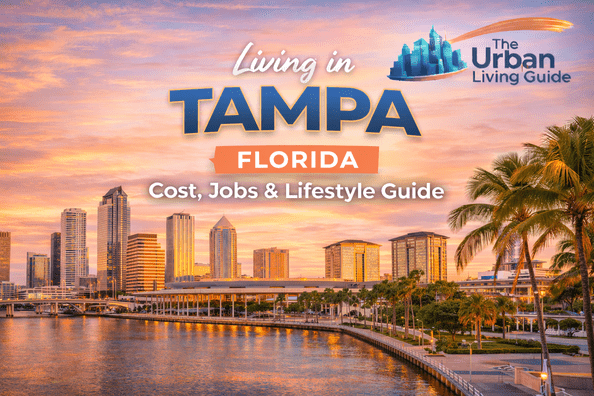
Living in Tampa, Florida: Gulf Coast Lifestyle, Job Growth & Relocation Guide
Living in Tampa, Florida offers an exceptional balance of coastal relaxation, rapid corporate expansion, vibrant cultural heritage, and relatively accessible housing costs compared to South Florida metropolitan hubs. As the largest city in Hillsborough County and the economic anchor of the Tampa Bay Area, Tampa spans over 170 square miles along Old Tampa Bay and Hillsborough Bay. Anchoring a wider regional population of more than 3.2 million residents across Hillsborough County, Pinellas County, and Pasco County, Tampa attracts thousands of finance professionals, healthcare workers, growing families, remote employees, and retirees each year.
However, relocating to Tampa requires realistic financial planning regarding property insurance premiums, hurricane preparedness, and sprawling regional highway commutes. While Florida imposes zero state personal income tax, local home purchase prices and property assessments have increased alongside rapid population growth. Whether you are transferring to a financial services hub in Westshore, joining a medical research team at Tampa General Hospital, or evaluating family-friendly suburbs in Westchase, this comprehensive guide covers real estate trends, career opportunities, top neighborhoods, transit factors, and daily living realities in Tampa.
If you are exploring the Gulf Coast of Florida for the first time, review the interactive map below to understand how Tampa connects to surrounding bay waters and neighboring coastal communities.
All financial benchmarks, rental estimates, and neighborhood insights in this guide are derived from municipal planning data, regional economic reports, and long-term local resident expertise updated for 2026.
What Makes Tampa So Unique & Popular
Tampa occupies a distinct niche among major Southeast metropolitan areas. Unlike landlocked urban hubs, Tampa features miles of continuous waterfront along Bayshore Boulevard, home to the world’s longest continuous pedestrian sidewalk at 4.5 miles, alongside urban riverfront revitalization centered around the Tampa Riverwalk and Water Street Tampa. The city blends rich nineteenth-century Cuban cigar manufacturing history in Ybor City with ultra-modern high-rise commercial development in downtown.
Beyond its urban core, Tampa benefits from immediate proximity to world-renowned Gulf Coast barrier island beaches, including Clearwater Beach and St. Pete Beach, located just 30 to 45 minutes across the bay via Howard Frankland Bridge or Courtney Campbell Causeway. Combined with a booming sports culture, booming defense simulation sectors at MacDill Air Force Base, and zero state income tax, Tampa continues to rank among the nation’s premier relocation destinations.
Primary reasons people relocate to Tampa:
- Zero individual state personal income tax across Florida
- Immediate access to top-ranked Gulf Coast beaches, boating, and deep-sea fishing
- Rapidly expanding corporate clusters in finance, technology, healthcare, and defense
- Championship professional sports environment affectionately known as “Champa Bay”
- Diverse neighborhood options ranging from historic brick-street districts to master-planned suburbs
- Lower overall living expenses and housing entry prices compared to Miami
Tampa at a Glance: Key Relocation Metrics
Reviewing key baseline metrics provides essential financial and structural perspective prior to planning a relocation to Greater Tampa for 2026.
- Major regional hub for financial technology and back-office banking
| Relocation Metric | Tampa Local Benchmark | National / Regional Comparison |
|---|---|---|
| Total Population | 400,000+ (City) / 3.2+ Million (Metro) | 3rd largest city in Florida; 18th largest metro in U.S. |
| Median Home Purchase Price | $380,000–$410,000 | More accessible than Miami; aligned with national median |
| Average Monthly Rent (1-Bed) | $1,600–$2,200 | Moderate rate compared to major coastal tech centers |
| State Income Tax Rate | 0.00% | No state personal income tax in Florida |
| Average Property Tax Rate | 1.1%–1.4% (Effective rate in Hillsborough) | Moderate tax rate; valuations reflect recent market appreciation |
| Average Daily Commute Time | 27.2 Minutes | Subject to rush-hour congestion across bay bridges |
| Primary Economic Sectors | Finance, Healthcare, Defense, Tourism |
While baseline real estate prices remain manageable, prospective home buyers should calculate Florida property insurance premiums, hurricane deductibles, and local HOA fees into their long-term housing budget.
Famous Personalities, Sports Teams & Major Brands in Tampa
Tampa possesses a high-profile national identity backed by legendary sports franchises, famous residents, and global corporate headquarters. Pop culture figures long associated with the area include professional wrestling icon Hulk Hogan, baseball legend Derek Jeter, best-selling author Michael Connelly, and NFL legend Tom Brady, who led the local football franchise to a Super Bowl championship.
Athletic culture is central to life across Hillsborough County. The region earned the moniker “Champa Bay” following championship runs by the Tampa Bay Buccaneers (NFL) playing at Raymond James Stadium, the back-to-back Stanley Cup champion Tampa Bay Lightning (NHL) at Amalie Arena in Channelside, and the Tampa Bay Rays (MLB) playing across the bay at Tropicana Field.
Major corporate brands headquartered or maintaining massive corporate hubs in Tampa include financial services leader Raymond James Financial, supermarket giant Publix (headquartered in nearby Lakeland), casual dining parent firm Bloomin’ Brands (Outback Steakhouse), global technology distributor TD SYNNEX, power utility TECO Energy, and major regional banking operations for Citi and JPMorgan Chase.
Job Market & Business Opportunities with Major Employers
The economy in Tampa is highly diversified, resilient, and expanding rapidly. While tourism and maritime trade along the Port of Tampa Bay remain historic staples, the modern Tampa job market centers heavily around commercial banking, financial technology, healthcare research, and national defense contracts.
The city’s primary corporate centers include the Westshore Business District, the largest central business district in Florida, housing over 4,000 corporate entities, and Downtown Tampa. Additionally, MacDill Air Force Base situated at the tip of South Tampa serves as the global headquarters for both U.S. Central Command (USCENTCOM) and U.S. Special Operations Command (USSOCOM), employing over 15,000 military and civilian personnel.
Major corporate employers and health institutions:
- Tampa General Hospital (TGH): Premier Level 1 Trauma Center and major academic teaching hospital on Davis Islands.
- Raymond James Financial: Global financial services corporate headquarters located in Carillon Park.
- Citi: Massive technology and operations campus employing thousands in East Tampa.
- Moffitt Cancer Center: Nationally ranked NCI-designated comprehensive cancer center located on the USF campus.
- Publix Super Markets: Dominant regional retail employer with corporate infrastructure across Hillsborough County.
- BayCare Health System: Major non-profit healthcare network operating St. Joseph’s Hospital and suburban clinics.
- University of South Florida (USF): Major Tier-One research university employing over 16,000 faculty and administrative staff.
Competitive salaries across financial management, healthcare engineering, software development, and defense consulting yield strong net purchasing power due to Florida’s zero state income tax structure.
Housing & Real Estate Overview in Tampa
Housing accessibility remains a primary driver for families and professionals relocating to Living in Tampa, Florida. The local housing market features architectural diversity, ranging from historic 1920s Craftsman bungalows in Seminole Heights and Mediterranean estates in Hyde Park to modern high-rise condos in Water Street and golf-course single-family subdivisions in Westchase.
The local rental market offers high-rise residential towers near the waterfront alongside amenity-rich suburban garden apartments across northern Hillsborough County.
Average monthly rent estimates for 2026:
- Studio Apartments: $1,400–$1,700 per month
- 1-Bedroom Apartments: $1,600–$2,200 per month
- 2-Bedroom Apartments: $2,000–$3,000 per month
- 3-Bedroom Single-Family Rental Homes: $2,600–$3,800 per month
When buying real estate in Tampa, prospective buyers must evaluate FEMA flood zone designations (AE or VE zones along Tampa Bay require mandatory flood insurance), roof age, hurricane impact window ratings, and local community development district (CDD) fees common across newer master-planned developments.
Best Neighborhoods in Tampa: Finding Your Ideal Community
Selecting the right neighborhood in Tampa depends on your daily commute routes across bay bridges, budget parameters, and desired lifestyle pace. The metropolitan area is geographically defined by primary transit corridors including Interstate 275, Interstate 4, Selmon Expressway (SR 618), and Veterans Expressway (SR 589).
- Historic Urban Core | Median Home Price: $680,000–$1,400,000+ | Walkable historic district, upscale brick streets, boutique dining at Hyde Park Village, nightlife along South Howard Avenue.
- Central Peninsula | Median Home Price: $580,000–$1,200,000+ | Established tree-canopied neighborhood, top public schools (Plant High School), convenient to MacDill AFB and downtown.
- Northwest Master-Planned | Median Home Price: $490,000–$820,000 | Premier suburban development, golf courses, walkable town center at West Park Village, highly rated public schools.
- Urban Waterfront Core | Median Home Price: $450,000–$950,000 | High-rise luxury condos, Tampa Riverwalk, dining at Sparkman Wharf, walkable urban lifestyle.
- Northeast Suburban Corridor | Median Home Price: $380,000–$620,000 | Sprawling single-family home developments, shopping plazas, lower entry pricing, popular with growing families.
- Historic Cultural Core | Median Home Price: $350,000–$580,000 | Historic brick architecture, craft breweries, vintage shops, eclectic food scene, historic bungalow restorations.
| Neighborhood / Suburb | Location, Pricing & Community Overview |
|---|---|
| Hyde Park & SoHo | |
| South Tampa | |
| Westchase | |
| Downtown Tampa & Water Street | |
| New Tampa & Wesley Chapel | |
| Ybor City & Seminole Heights |
Detailed Overview of Top Neighborhood Profiles:
South Tampa & Hyde Park: Positioned on the peninsula between Hillsborough Bay and Old Tampa Bay. Offers luxury living, tree-canopied avenues, historic homes, and top-rated public schools in Plant High School district.
Westchase: A premier 2,000-acre master-planned community situated along the Linebaugh Avenue corridor, offering 30 distinct villages, parks, tennis courts, and golf facilities.
Water Street & Channel District: Downtown’s transformative $3 billion urban development project featuring wellness-certified residential towers, luxury hotels like The Edition, green plazas, and streetcar transit.
Seminole Heights: Located just north of downtown along the Hillsborough River, famous for 1920s Craftsman bungalows, independent coffee houses, and acclaimed local gastronomy.
What It’s Really Like Living in Tampa (Daily Life & Vibe)
Daily life in Tampa revolves around outdoor waterfront activity, professional sports fandom, casual dining, and a relaxed Gulf Coast atmosphere. Locals embrace a social, outdoor lifestyle that blends urban convenience with coastal recreation.
To view authentic visual insight into neighborhood dynamics, commute patterns, and daily coastal lifestyle realities when Living in Tampa, Florida, watch the local vlog footage below.
Food culture in Tampa is celebrated for its historic Latin roots and modern waterfront food halls. Local routines include picking up authentic Cuban sandwiches baked on palmetto leaves at historic Columbia Restaurant in Ybor City, enjoying fresh seafood at Ulele along the Tampa Riverwalk, meeting friends for craft cocktails at Armature Works in Heights Market, or enjoying fine dining at the world-famous Bern’s Steak House in SoHo.
Cost of Living in Tampa: Monthly Expenses & Salary Needs
While overall expenses in Tampa remain lower than in Miami, living costs sit slightly above the U.S. national average. Household budgets must account for homeowners insurance premiums, summer utility consumption, and toll road expenses.
Estimated monthly cost breakdown for a single adult in 2026:
- Housing (1-Bedroom Apartment Lease): $1,600–$2,200
- Utilities (TECO Electricity, Water, Internet): $150–$300 (Peaks during summer cooling months)
- Groceries & Household Goods: $350–$600
- Transportation (Gasoline, Tolls, Auto Insurance): $120–$250
- Property & Hazard Insurance: Higher than national averages due to regional tropical storm exposure
To live comfortably, cover savings, and enjoy coastal recreation while Living in Tampa, Florida, a single worker generally requires a gross annual salary of $75,000–$100,000. Dual-income households or families purchasing single-family homes in desirable suburban school districts typically require combined annual earnings starting at $115,000–$150,000.
Transportation, Highway Bottlenecks & Airport Connectivity
Tampa is an automobile-dependent metropolitan area. While localized transit options exist, personal vehicles are necessary for daily commuting across the wider Tampa Bay Area.
Primary transit thoroughfares and regional highway corridors include:
- Interstate 275 (I-275): Primary north-south highway connecting downtown to South Tampa, crossing the Howard Frankland Bridge toward St. Petersburg. The downtown interchange (“Malfunction Junction”) experiences heavy rush-hour delays.
- Interstate 4 (I-4): Major east-west corridor originating in Tampa and running directly through Plant City toward Orlando.
- Selmon Expressway (SR 618): Elevated toll road connecting southern commuter suburbs in Brandon directly to Downtown Tampa and MacDill AFB.
- TECO Line Streetcar System: Historic zero-fare electric streetcar connecting Ybor City through the Channel District to Downtown Tampa.
Aviation travel is served by Tampa International Airport (TPA), consistently ranked among the nation’s top airports for passenger satisfaction, offering non-stop flights to major domestic and European destinations.
Weather Patterns, Seasonal Realities & Climate Factors
Tampa features a humid subtropical climate marked by long, hot summers, pleasantly mild winters, and abundant year-round sunshine.
Seasonal considerations and environmental realities:
- Summers (May–October): Hot, humid, and rainy. Daytime high temperatures consistently reach 90°F–93°F, accompanied by near-daily afternoon tropical thunderstorms. High-capacity central air conditioning is mandatory.
- Winters (November–April): Warm, sunny, and mild. High temperatures average 70°F–78°F with low humidity, serving as peak outdoor recreational season.
- Atlantic Hurricane Season: Runs officially from June 1 through November 30. Coastal low-lying areas along Tampa Bay are vulnerable to storm surge and tropical storm force winds, requiring evacuation plans and storm insurance.
Education, Schools & Major Universities
Higher education institutions in Tampa drive regional workforce development, medical research, and corporate innovation.
Major higher education anchors include:
- University of South Florida (USF): Major Tier-One public research university with over 50,000 students, globally recognized for medical innovation, engineering, and business (Muma College).
- University of Tampa (UT): Prestigious private university situated along the Hillsborough River in downtown, centered around the historic 1891 Plant Hall.
- Hillsborough Community College (HCC): Multi-campus college system providing technical workforce degrees and university transfer programs.
Primary K-12 public education is managed by Hillsborough County Public Schools, the nation’s seventh-largest district. Suburban high schools such as Plant High School in South Tampa, Steinbrenner High School in Lutz, and Newsome High School in Lithia consistently earn top national ratings.
Medical Facilities, Hospitals & Healthcare Systems
Healthcare is one of Tampa’s primary employment and economic anchors, boasting nationally recognized research centers and specialized trauma hospitals.
Key regional medical anchors include:
- Tampa General Hospital (TGH): 1,000+ bed non-profit hospital located on Davis Islands, serving as the region’s primary Level 1 Trauma Center and USF teaching hospital.
- Moffitt Cancer Center: Nationally ranked NCI-designated comprehensive cancer center specializing in oncology research and patient care.
- BayCare Health System: Major non-profit network operating St. Joseph’s Hospital, offering specialized pediatric and cardiac care centers.
- James A. Haley Veterans’ Hospital: Major VA medical center serving military veterans across Central Florida.
Popular Hotels, Cafes, Dining & Culinary Scene
The hospitality and culinary landscape in Tampa combines waterfront luxury with historic Latin heritage. Visitors stay at premier boutique destinations such as The Edition Water Street, Epicurean Hotel in SoHo, and the historic Hotel Haya in Ybor City.
Coffee culture thrives across central neighborhoods, featuring popular local roasters like Buddy Brew Coffee on Kennedy Boulevard, Blind Tiger Cafe in Ybor City, and Spaddy’s Coffee Co. in Seminole Heights.
The dining scene ranges from historic Cuban cafes to high-end culinary hubs. Acclaimed destinations include Columbia Restaurant for historic Spanish-Cuban fare, Bern’s Steak House for dry-aged steaks and famous dessert room tours, Ulele for native Florida-inspired dishes, and Oxford Exchange for brunch.
Sightseeing, Cultural Spots & Tourist Attractions
Tampa provides an abundance of cultural, outdoor, and family attractions across its waterfront footprint.
Top cultural landmarks and recreational sights include:
- Tampa Riverwalk: Scenic 2.6-mile pedestrian trail connecting downtown parks, museums, Armature Works, and Sparkman Wharf.
- Ybor City Historic District: Historic neighborhood famous for brick streets, roaming roosters, hand-rolled cigars, and Spanish architecture.
- Busch Gardens Tampa Bay: Major 335-acre African-themed park featuring world-class roller coasters and zoological habitats.
- The Florida Aquarium: World-class marine park located in Channelside housing over 20,000 aquatic animals and plants.
- ZooTampa at Lowry Park: Top-ranked 63-acre non-profit zoo dedicated to Florida wildlife conservation and manatee rehabilitation.
Honest Trade-offs: Pros and Cons of Living in Tampa
Evaluating balanced trade-offs ensures Tampa aligns with your career goals and lifestyle expectations before moving.
Pros of Living in Tampa:
- Zero Personal State Income Tax: Favorable tax climate allows higher net income retention.
- Strong Economic Growth: Expanding career opportunities across finance, healthcare, defense, and technology.
- Unrivaled Gulf Coast Recreation: Immediate access to top-ranked beaches, boating, and waterfront parks.
- Championship Sports Environment: Nationally recognized NFL, NHL, and MLB professional sports culture.
- Lower Cost Than South Florida: Housing purchase prices and rent rates remain lower than in Miami.
Cons of Living in Tampa:
- Intense Summer Heat & Humidity: Extended humid summer weather with daily tropical thunderstorm risks.
- Hurricane & Storm Surge Risks: Coastal bay vulnerability increases homeowners and flood insurance expenses.
- Heavy Automobile Dependency: Public transit options are limited, mandating personal vehicle ownership.
- Highway Commuter Traffic: Severe rush-hour delays on I-275, I-4, and bay bridges.
- Rising Housing Real Estate Costs: Population growth has increased housing purchase prices over historic norms.
Who Is Tampa Ideal For (and Who Should Avoid It?)
Tampa is ideal for:
- Finance managers, healthcare workers, defense contractors, and remote employees seeking steady career growth.
- Growing families seeking single-family homes in master-planned communities with top public schools.
- Boaters, beach lovers, and outdoor sports fans who value warm winter weather and vibrant sports culture.
Tampa may not be ideal for:
- Individuals seeking a dense, car-free urban environment with extensive passenger subway or train networks.
- People with low tolerance for hot, humid summer weather and tropical storm risks.
- Individuals looking for ultra-cheap real estate or low insurance rates.
Real Experiences: Perspectives from Long-Term Residents (5 to 10+ Years)
Jason M. (9-Year Resident in South Tampa): “Relocating here from the Midwest for a finance role in Westshore was the best decision my family ever made. Living in South Tampa gives our kids access to Plant High School, and we spend weekends boating on Tampa Bay. Just make sure you budget for property insurance and flood coverage if you live near the water!”
Amanda K. (12-Year Resident in Westchase): “Westchase offers a fantastic suburban lifestyle. We can walk to West Park Village for coffee, our kids ride bikes safely, and Clearwater Beach is just 30 minutes away. Commuting across the Howard Frankland Bridge during rush hour takes patience, but the coastal quality of life makes it completely worth it.”
Frequently Asked Questions About Living in Tampa, Florida
Is Tampa an expensive city to live in?
Tampa is moderately priced compared to South Florida metros like Miami. Real estate purchase prices remain accessible, though property insurance and summer utility bills increase overall monthly costs.
What salary do you need to live comfortably in Tampa?
A single adult typically needs a gross annual salary of $75,000–$100,000 to live comfortably. Families purchasing single-family homes in desirable suburban school districts generally require household earnings starting at $115,000–$150,000.
Is Tampa safe for families?
Yes, Tampa offers many safe, family-oriented suburban areas. Communities such as South Tampa, Westchase, Carrollwood, and New Tampa rank among the safest residential districts in the region.
Can you live in Tampa without owning a car?
Living without a vehicle is difficult in Tampa. While central walkable pockets exist in Downtown Tampa or Hyde Park via the TECO streetcar, regional geographic sprawl mandates personal driving for daily travel.
What are the main military and defense employers in Tampa?
Defense operations are centered at MacDill Air Force Base, home to USCENTCOM, USSOCOM, and dozens of supporting defense contractor facilities.
How far is Tampa from the Gulf Coast beaches?
Top-ranked Gulf beaches like Clearwater Beach and St. Pete Beach are located approximately 30 to 45 minutes west of Downtown Tampa across Old Tampa Bay.
🔗 Explore More Cities in Florida
If you’re exploring more options beyond Tampa , The Urban Living Guide has covered several other popular cities in Florida. You can also check:
- Living in Miami, Florida
- Living in Orland, Floridao
- Living in Jacksonville, Florida
- Living in Fort Lauderdale, Florida
Thinking about Tampa? Here are a few must-read guides:
- Cost of Living in Tampa, Florida
- Pros and Cons of Living in Tampa, Florida
- Best Neighborhoods in Tampa, Florida
And if you’re planning your move, don’t miss our complete guide: Moving to Tampa, Florida
These guides give you a complete picture of what it’s like living across different cities, covering everything from cost of living, housing, and job opportunities to neighborhoods, commute, weather, education, popular places, and major employers.
The Urban Living Guide brings together these local insights in one place, helping you compare cities easily and make a confident, well-informed decision based on your lifestyle and goals.