

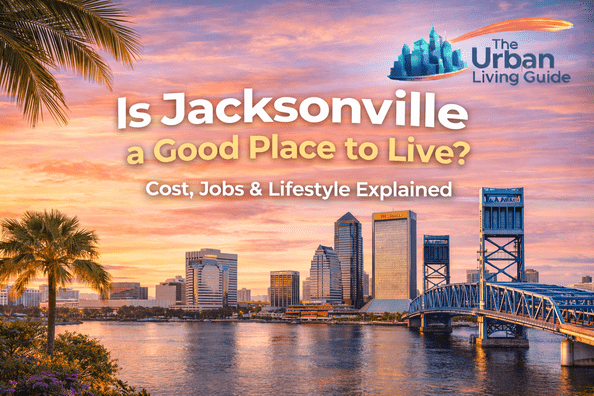
Living in Jacksonville, Florida: Coastal Sprawl, Job Growth & River City Guide
Living in Jacksonville, Florida offers a unique combination of Atlantic coastal living, sprawling suburban communities, a booming logistics and healthcare economy, and relatively accessible housing prices compared to South Florida metropolitan hubs. Positioned in the northeast corner of the state along the St. Johns River and the Atlantic Ocean, Jacksonville serves as the county seat of Duval County. Spanning an astonishing 840 square miles due to city-county consolidation in 1968, Jacksonville holds the distinction of being the largest city by land area in the contiguous United States. Anchoring a wider regional population of over 1.6 million residents across Duval County, St. Johns County, Clay County, and Nassau County, the “Bold City” continues to attract thousands of relocating families, military personnel, healthcare professionals, and remote workers every year.
However, relocating to Jacksonville requires a clear understanding of its vast geographic sprawl, heavy automobile reliance, and coastal climate risk factors. While Florida levies zero state personal income tax, local homeowners insurance premiums, hurricane deductibles, and flood risk along the riverfront represent important financial considerations for prospective buyers. Whether you are transferring to a defense assignment at Naval Air Station Jacksonville, taking a medical research position at Mayo Clinic Florida, or exploring family-friendly suburban neighborhoods along J. Turner Butler Boulevard, this comprehensive relocation guide details real estate trends, career opportunities, top neighborhoods, transit dynamics, and daily living realities in Jacksonville.
If you are researching Northeast Florida for the first time, examine the interactive map below to understand how Jacksonville is geographically structured around the St. Johns River and its surrounding coastal beaches.
All financial benchmarks, real estate metrics, and neighborhood insights in this guide are derived from municipal planning data, regional commerce reports, and long-term local resident expertise updated for 2026.
What Makes Jacksonville So Unique & Popular
Jacksonville occupies a distinct cultural and geographic identity in Florida. Unlike tourism-dominated inland cities or ultra-dense coastal enclaves like Miami, Jacksonville offers a relaxed, Southern-influenced coastal pace paired with massive industrial port capacity. The city is geographically bisected by the expansive St. Johns River—one of the few major rivers in North America that flows northward—creating miles of scenic riverfront real estate and historic deep-water commercial channels.
Furthermore, Jacksonville provides access to over 22 miles of wide, sandy Atlantic Ocean beaches—including Jacksonville Beach, Neptune Beach, and Atlantic Beach—at purchase prices substantially lower than in South Florida or the California coastline. Combined with major military installations, world-class medical networks, a booming logistics sector centered around JAXPORT, and zero state personal income tax, Jacksonville remains one of the most practical and appealing relocation destinations in the Sunbelt.
Primary reasons people relocate to Jacksonville:
- Lower housing purchase prices and rental rates compared to Miami, Tampa, and Orlando
- Zero state personal income tax across Florida, maximizing take-home earnings
- Miles of uncrowded Atlantic Ocean beaches and riverfront recreational access
- Robust military, financial services, healthcare, and deep-water port employment sectors
- Rich historic neighborhoods featuring 1920s Craftsman bungalows and oak canopies
- Proximity to top-rated public school districts in neighboring St. Johns County
Jacksonville at a Glance: Key Relocation Metrics
Reviewing key baseline metrics provides essential financial and structural perspective prior to planning a relocation to Greater Jacksonville for 2026.
| Relocation Metric | Jacksonville Local Benchmark | National / Regional Comparison |
|---|---|---|
| Total Population | 990,000+ (City) / 1.6+ Million (Metro) | Largest city by area in contiguous U.S.; 11th largest population in U.S. |
| Median Home Purchase Price | $320,000–$350,000 | Significantly lower than South Florida; below national average |
| Average Monthly Rent (1-Bed) | $1,300–$1,800 | Highly competitive across major Sunbelt metropolitan areas |
| State Income Tax Rate | 0.00% | No state personal income tax in Florida |
| Average Property Tax Rate | 1.1%–1.3% (Effective rate in Duval) | Moderate tax rate; lower assessments keep total dollar outlays manageable |
| Average Daily Commute Time | 25.4 Minutes | Faster than national average, though mileage distances are long |
| Primary Economic Sectors | Logistics, Military, Healthcare, Finance | Major East Coast deep-water port and naval defense installation hub |
While base real estate prices are reasonable, prospective buyers should calculate property insurance premiums, river and coastal flood zone classifications, and automobile fuel budgets into their monthly allocations.
Famous Personalities, Sports Teams & Major Brands in Jacksonville
Jacksonville possesses a rich tapestry of national sports traditions, famous musical icons, and major corporate headquarters. Pop culture figures born or raised in the area include Southern rock pioneers Lynyrd Skynyrd and .38 Special, Limp Bizkit frontman Fred Durst, Olympic sprinting champion Bob Hayes, and college football icon Tim Tebow, who grew up in nearby St. Johns County.
Professional athletic culture centers on the Jacksonville Jaguars (NFL), who draw enthusiastic crowds to EverBank Stadium along the downtown riverfront. Minor league baseball fans gather at 121 Financial Ballpark to support the Jacksonville Jumbo Shrimp (AAA affiliate of the Miami Marlins). Additionally, neighboring Ponte Vedra Beach hosts the global headquarters of the PGA Tour and the world-renowned THE PLAYERS Championship annually at TPC Sawgrass.
Major international corporations headquartered in Jacksonville include rail logistics giant CSX Corporation, title insurance leader Fidelity National Financial (FNF), financial technology innovator FIS, supermarket operator Southeastern Grocers (parent of Winn-Dixie), global maritime logistics leader Crowley Maritime, and contact lens manufacturer Johnson & Johnson Vision.
Job Market & Business Opportunities with Major Employers
The economy in Jacksonville is highly diversified, industrial, and resilient. Unlike cities heavily dependent on seasonal vacation tourism, Jacksonville is built on intermodal freight transportation, military installations, financial services back-office banking, and world-class medical research centers.
The city’s logistics engine is anchored by JAXPORT, one of the largest vehicle-handling sea ports in the United States, operating three public cargo terminals along the St. Johns River. Furthermore, defense installations provide massive economic stability: Naval Air Station Jacksonville (NAS Jax) in West Jacksonville and Naval Station Mayport near the coast collectively employ over 40,000 active-duty military, civilian, and contractor personnel.
Major corporate employers and health institutions:
- CSX Corporation: Premier Fortune 500 rail transportation company headquartered in Downtown Jacksonville.
- Fidelity National Financial (FNF): Fortune 500 financial and title services headquarters located along Riverside Avenue.
- Mayo Clinic Florida: World-renowned medical research and hospital campus situated off San Pablo Road near the beaches.
- Naval Air Station Jacksonville (NAS Jax): Major naval aviation master base and industrial maintenance facility in West Jacksonville.
- Naval Station Mayport: Premier Atlantic fleet naval base housing guided-missile destroyers and Coast Guard operations.
- Baptist Health: The largest non-profit healthcare system in Northeast Florida, operating major medical campuses including Wolfson Children’s Hospital.
- Ascension St. Vincent’s: Comprehensive medical network operating major health centers in Riverside and Southside.
- Deutsche Bank & Citi: Major regional operations centers employing thousands of financial technology and compliance specialists in Southside.
Salaries across supply chain management, healthcare engineering, defense contracting, and commercial banking yield strong net purchasing power due to Florida’s zero state income tax structure.
Housing & Real Estate Overview in Jacksonville
Housing affordability represents one of the primary advantages for home buyers relocating to Living in Jacksonville, Florida. Real estate options range from historic 1920s Craftsman bungalows and Mediterranean Revival homes in Riverside, Avondale, and San Marco to modern single-family subdivisions in Southside and coastal beach condos along Jacksonville Beach.
The local rental market offers amenity-rich garden-style apartment complexes in suburban districts alongside historic multi-family leases near central dining strips.
Average monthly rent estimates for 2026:
- Studio Apartments: $1,100–$1,400 per month
- 1-Bedroom Apartments: $1,300–$1,800 per month
- 2-Bedroom Apartments: $1,700–$2,500 per month
- 3-Bedroom Single-Family Rental Homes: $2,100–$3,200 per month
When purchasing single-family real estate in Duval County, home buyers should pay close attention to FEMA flood zone maps (low-lying properties along the St. Johns River and marsh estuaries require mandatory flood insurance) and evaluate roof age and hurricane shutter protection for hazard insurance compliance.
Best Neighborhoods in Jacksonville: Finding Your Ideal Community
Selecting the right neighborhood in Jacksonville depends heavily on your daily workplace location and commute tolerance across river bridges. The metro area is geographically structured by central transit thoroughfares including Interstate 95, Interstate 10, Interstate 295 (I-295 Beltway), and J. Turner Butler Boulevard (JTB / SR 202).
| Neighborhood / Suburb | Location, Pricing & Community Overview |
|---|---|
| Riverside & Avondale | Historic West Riverfront Core | Median Home Price: $380,000–$680,000 | Historic Craftsman bungalows, tree-canopied streets, walkable shopping at Five Points and Shoppes of Avondale, popular with young professionals. |
| Jacksonville Beach & Neptune Beach | Atlantic Coastal Corridor | Median Home Price: $580,000–$1,200,000+ | Coastal beach lifestyle, surfing, walkable pier dining, resort atmosphere, higher property values. |
| San Marco | Historic East Riverfront Core | Median Home Price: $420,000–$850,000 | Venetian-inspired historic square, historic estates, fine dining, quick commute to downtown hospitals. |
| Mandarin | South Riverfront Suburb | Median Home Price: $360,000–$580,000 | Established suburban feel, ancient moss-draped live oaks, riverfront parks, family-friendly housing options. |
| Southside & St. Johns Town Center | Central Commercial Corridor | Median Home Price: $320,000–$510,000 | Sprawling modern subdivisions, premier retail at St. Johns Town Center, convenient access to JTB Highway. |
| Ponte Vedra & Nocatee (St. Johns County) | South Coastal Suburbs | Median Home Price: $550,000–$1,500,000+ | Master-planned luxury developments, home to PGA Tour, top-ranked public schools in Florida. |
In-Depth Breakdown of Key Neighborhood Profiles:
Riverside & Avondale: National Historic Districts located just southwest of downtown along the St. Johns River. Famous for 1920s architecture, five-way commercial hubs at Five Points, and weekly artisan vendors at the Riverside Arts Market under the Fuller Warren Bridge.
San Marco: Located directly across the river from downtown, featuring a historic commercial square built in the 1920s modeled after Venice’s Piazza San Marco, boutique theater venues, and historic riverfront estates along San Marco Boulevard.
Southside & St. Johns Town Center: The retail and corporate heart of suburban Jacksonville. Features expansive outdoor shopping, high-end residential apartments, corporate office parks, and immediate transit access via SR 202 (JTB).
The Beaches (Jax Beach, Neptune Beach, Atlantic Beach): Independent coastal municipalities offering a classic Florida beach lifestyle, surf shops, oceanfront dining, and a relaxed golf-cart community atmosphere.
What It’s Really Like Living in Jacksonville (Daily Life & Vibe)
Daily life in Jacksonville moves to a relaxed, family-oriented, and outdoor-centric pace. The city’s massive geographic scale means residents often identify strongly with their specific neighborhood quad—whether that is the historic river neighborhoods, the sprawling Southside, or the oceanfront communities.
To gain authentic visual perspectives on neighborhood dynamics, commute routes, and local lifestyle rhythms when Living in Jacksonville, Florida, view the detailed vlog overview below.
Food culture in Jacksonville celebrates fresh wild-caught Mayport shrimp, coastal seafood, Southern barbecue, and craft coffee. Local weekend rituals include picking up fresh Mayport shrimp at local fish docks, getting breakfast biscuits at Maple Street Biscuit Company, enjoying craft espresso at Bold Bean Coffee Roasters in Five Points, grabbing wood-fired pizza at V Pizza, and watching the sunset over the St. Johns River at River & Post.
Cost of Living in Jacksonville: Monthly Expenses & Salary Needs
While overall expenses in Jacksonville sit close to the U.S. national average, living costs remain lower than in Miami, Tampa, or Orlando. Home buyers and renters must budget for summer electric bills, homeowners hazard insurance, and personal automobile fuel due to long driving distances.
Estimated monthly cost breakdown for a single adult in 2026:
- Housing (1-Bedroom Lease): $1,300–$1,800
- Utilities (JEA Electricity, Water, Sewer): $150–$280 (Peaks during summer A/C usage)
- Groceries & Household Goods: $350–$550
- Transportation (Gasoline, Auto Insurance): $150–$320 (Sprawling geography increases mileage)
- Healthcare & Personal Insurance: Moderate costs supported by extensive regional medical networks
To live comfortably, save for retirement, and enjoy coastal recreation while Living in Jacksonville, Florida, a single adult generally requires a gross annual salary of $65,000–$85,000. Dual-income households or families purchasing single-family homes in desirable suburban school districts typically require combined annual household earnings starting at $100,000–$135,000.
Transportation, Highway Bottlenecks & Airport Connectivity
Jacksonville is fundamentally an automobile-dependent metropolis. Because the city spans 840 square miles across major river basins, personal vehicles are essential for daily commuting and errands.
Primary transit thoroughfares and regional highway corridors include:
- Interstate 95 (I-95): Primary north-south highway bisecting the city center and connecting commuters toward St. Johns County.
- Interstate 10 (I-10): Major east-west highway originating in downtown Jacksonville and heading west toward Tallahassee.
- Interstate 295 (I-295 Beltway): 61-mile concentric highway loop encircling the city, crossing the river via the Dames Point Bridge and Buckman Bridge.
- J. Turner Butler Boulevard (JTB / SR 202): Key east-west express corridor linking I-95 and Southside directly to Jacksonville Beach.
- Major River Bridges: Traffic bottlenecks frequently occur during rush hour at river crossings, specifically the Buckman Bridge (I-295 South) and the Fuller Warren Bridge (I-95 Downtown).
Aviation travel is handled through Jacksonville International Airport (JAX), located 13 miles north of downtown, offering non-stop flights to major domestic business hubs.
Weather Patterns, Seasonal Realities & Climate Factors
Jacksonville features a humid subtropical climate marked by long, hot summers, mild winters, and abundant year-round sunshine.
Seasonal characteristics and weather realities:
- Summers (June–September): Hot and humid. Daytime high temperatures consistently reach 90°F–94°F, accompanied by near-daily afternoon thunderstorm downpours. Central air conditioning is mandatory.
- Winters (December–February): Mild and dry. Daytime highs average 65°F–70°F. Unlike South Florida, Jacksonville experiences occasional overnight light freezes (28°F–32°F) during winter cold snaps.
- Tropical Storms & Nor’easters: The northeast coast of Florida is vulnerable to autumn tropical storms and coastal Nor’easters, which can cause high surf, beach erosion, and storm surge flooding along low-lying sections of the St. Johns River.
Education, Schools & Major Universities
Higher education institutions in Jacksonville drive regional research, medical training, and workforce development.
Major higher education anchors include:
- University of North Florida (UNF): Leading public university enrolling over 17,000 students, situated on a 1,300-acre timberland nature preserve in Southside, excelling in business, nursing, and coastal biology.
- Jacksonville University (JU): Historic private university located along the riverfront in Arlington, renowned for nursing, marine science, and aviation programs.
- Florida State College at Jacksonville (FSCJ): Expansive higher education network offering associate and bachelor degree paths across multiple regional campuses.
Primary K-12 public education is served by Duval County Public Schools, featuring nationally ranked magnet high schools such as Stanton College Preparatory School and Paxon School for Advanced Studies. Many relocating families also choose neighboring St. Johns County School District (serving Nocatee and Ponte Vedra), consistently ranked as the top public school district in Florida.
Medical Facilities, Hospitals & Healthcare Systems
Healthcare is one of Jacksonville’s primary employment and economic pillars, anchoring a major regional medical center for the Southeast.
Key regional medical anchors include:
- Mayo Clinic Florida: World-renowned medical center and research hospital specializing in complex oncology, neurology, and organ transplantation.
- Baptist Health & Wolfson Children’s Hospital: Comprehensive healthcare system operating the region’s primary dedicated pediatric trauma center in downtown.
- Ascension St. Vincent’s Riverside & Southside: Major non-profit health network specializing in cardiovascular care and orthopedic surgery.
- UF Health Jacksonville: Major academic health center operating the region’s primary Level 1 Trauma Center and Proton Therapy Institute.
Popular Hotels, Cafes, Dining & Culinary Scene
The hospitality and dining landscape in Jacksonville blends oceanfront resort luxury with historic neighborhood charm. Visitors stay at premier boutique destinations such as One Ocean Resort & Spa in Atlantic Beach, Ponte Vedra Inn & Club, and the Hotel Indigo San Marco.
Coffee culture thrives across historic districts, featuring popular local roasters like Bold Bean Coffee Roasters in Riverside and San Marco, Sippers Coffeehouse, and Social Ground Coffee.
The dining scene spans historic seafood docks and chef-driven bistros. Popular local spots include Safe Harbor Seafood Market for fresh Mayport shrimp, River & Post for rooftop riverfront views, Maple Street Biscuit Company for Southern brunch, Black Sheep Restaurant in Five Points, and Taverna in San Marco.
Sightseeing, Cultural Spots & Tourist Attractions
Jacksonville provides an abundance of historical landmarks, public parks, and outdoor recreational attractions across its vast footprint.
Top cultural landmarks and recreational sights include:
- Jacksonville Beaches & Pier: Miles of continuous Atlantic coastline popular for surfing, beachcombing, and oceanfront dining at Jacksonville Beach Pier.
- Cummer Museum of Art & Gardens: Renowned art museum featuring European and American masterworks surrounded by historic English and Italian gardens overlooking the river.
- Fort Caroline National Memorial & Kingsley Plantation: Historic national park sites preserving sixteenth-century French Huguenot history and nineteenth-century sea island plantation structures.
- St. Johns Town Center: Sprawling 1.4 million-square-foot open-air shopping resort featuring over 175 luxury retail stores and restaurants.
- Catty Shack Ranch Wildlife Sanctuary: Non-profit sanctuary providing habitat for rescued big cats, including tigers, lions, and pumas.
Honest Trade-offs: Pros and Cons of Living in Jacksonville
Evaluating balanced trade-offs ensures Jacksonville aligns with your personal lifestyle expectations and financial goals before relocating.
Pros of Living in Jacksonville:
- Accessible Housing Real Estate: Home prices and rentals remain significantly lower than in Miami or Tampa.
- Zero Personal State Income Tax: Favorable tax climate allows higher net income retention.
- Miles of Ocean & Riverfront Recreation: Immediate access to uncrowded Atlantic beaches and boating along the St. Johns River.
- Strong Industrial & Military Economy: Diverse job stability across healthcare, logistics, financial technology, and naval bases.
- Less Tourism Congestion: Slower, more residential lifestyle compared to Central or South Florida resort hubs.
Cons of Living in Jacksonville:
- Massive Geographic Sprawl: Large distances require long driving commutes and heavy gasoline budgets.
- Heavy Automobile Dependency: Public transit options are limited outside of localized downtown routes.
- Intense Summer Heat & Humidity: Extended summer heatwaves with daily tropical thunderstorm risks.
- Storm Surge & River Flood Risks: Low-lying riverfront properties require flood insurance and hurricane preparedness.
- Slower Urban Nightlife Scene: Entertainment options are quieter and less dense than in major coastal party hubs.
Who Is Jacksonville Ideal For (and Who Should Avoid It?)
Jacksonville is ideal for:
- Healthcare professionals, supply chain managers, defense contractors, and military families seeking career stability.
- Growing families looking for spacious single-family homes near top-rated public school districts in Duval or St. Johns County.
- Surfers, boaters, and outdoor enthusiasts who value uncrowded Atlantic beaches and coastal waterway recreation.
Jacksonville may not be ideal for:
- Individuals seeking a dense, car-free urban lifestyle reliant on extensive subway or passenger rail networks.
- People with low tolerance for hot, humid summer heatwaves and tropical weather exposure.
- Individuals looking for high-density, late-night urban nightlife hubs.
Real Experiences: Perspectives from Long-Term Residents (5 to 10+ Years)
Mark T. (8-Year Resident in Mandarin): “Relocating from New York to Mandarin was the best decision for our family. We bought a spacious home under majestic live oaks, our kids attend fantastic schools in neighboring St. Johns County, and my commute along I-295 over the Buckman Bridge is manageable. Jacksonville gives you the Florida lifestyle without Miami stress.”
Rachel K. (12-Year Resident in Riverside): “Living in Riverside gives you the best historic urban vibe in North Florida. I can walk to Five Points for morning coffee at Bold Bean, shop at the Saturday Riverside Arts Market under the bridge, and enjoy dinner overlooking the St. Johns River. It’s an authentic, tight-knit community that feels like home.”
Frequently Asked Questions About Living in Jacksonville, Florida
Is Jacksonville an expensive city to live in?
No, Jacksonville is one of Florida’s most affordable major coastal cities. Real estate purchase prices and monthly rentals remain well below South Florida benchmarks, keeping overall living expenses close to the U.S. national average.
What salary do you need to live comfortably in Jacksonville?
A single adult typically needs a gross annual salary of $65,000–$85,000 to live comfortably. Families purchasing single-family homes in desirable suburban school districts generally require combined annual earnings starting at $100,000–$135,000.
Is Jacksonville safe for families?
Yes, Jacksonville features many safe, family-oriented communities. Neighborhoods such as Mandarin, San Marco, Southside, Julington Creek, and nearby Nocatee rank among the safest residential areas in Northeast Florida.
Can you live in Jacksonville without owning a car?
Living without a vehicle is difficult in Jacksonville. Due to its massive 840-square-mile geographic sprawl, personal driving is essential for daily commuting and basic errands across different city districts.
What are the main military bases located in Jacksonville?
Jacksonville hosts two major naval installations: Naval Air Station Jacksonville (NAS Jax) in West Jacksonville and Naval Station Mayport near the coastal mouth of the St. Johns River.
How far is Jacksonville from the ocean and beaches?
Atlantic Ocean beaches such as Jacksonville Beach, Neptune Beach, and Atlantic Beach are located approximately 15 to 25 minutes east of downtown along J. Turner Butler Boulevard (JTB) or Beach Boulevard.
🔗 Explore More Cities in Florida
If you’re exploring more options beyond Jacksonville , The Urban Living Guide has covered several other popular cities in Florida. You can also check:
- Living in Miami, Florida
- Living in Orlando, Florida
- Living in Tampa, Florida
- Living in Fort Lauderdale, Florida
Want to learn more about Jacksonville ? Check out these helpful guides:
- Cost of Living in Jacksonville
- Pros and Cons of Living in Jacksonville
- Best Neighborhoods in Jacksonville
Ready to make your decision? Explore our complete guide here: Moving to Jacksonville
These guides give you a complete picture of what it’s like living across different cities, covering everything from cost of living, housing, and job opportunities to neighborhoods, commute, weather, education, popular places, and major employers.
The Urban Living Guide brings together these local insights in one place, helping you compare cities easily and make a confident, well-informed decision based on your lifestyle and goals.