
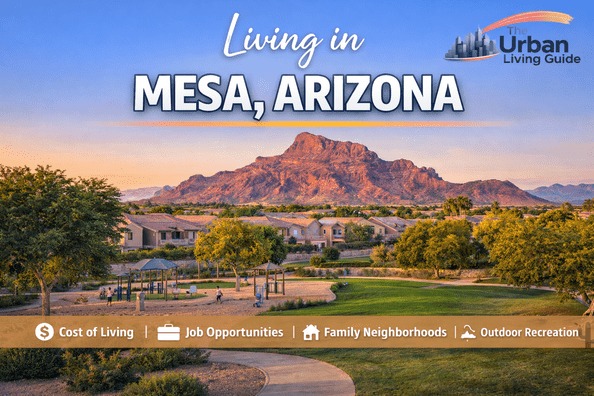
Why Families preferred Living in Mesa, Arizona for Affordable Space Near Phoenix
Living in Mesa, Arizona offers a suburban atmosphere, growing job opportunities, and more affordable housing compared to nearby Scottsdale. Mesa is the third-largest city in Arizona and part of the greater Phoenix metropolitan area. Known for its family-oriented neighborhoods, parks, and access to outdoor recreation, Mesa attracts families, retirees, and professionals seeking space at a lower cost.
At the same time, Living in Mesa, Arizona requires understanding its suburban layout and summer climate. While housing remains more accessible than Scottsdale, rising migration into Arizona has pushed prices upward. This guide covers neighborhoods, employment trends, housing costs, lifestyle factors, and relocation considerations before making a move.
👉 If you haven’t come across this city before, the map below gives you a quick view of its location.
Information is based on publicly available housing and economic reports.
What Makes Mesa So Popular?
Mesa has become a strong relocation option within the Phoenix metro.
Reasons people relocate:
-
- Lower housing costs than Scottsdale
- Family-friendly communities
- Proximity to Phoenix jobs
- Access to outdoor recreation
- Expanding healthcare and education sectors
- Suburban environment
Mesa combines affordability with metro access 🌞
📺 What It’s Really Like Living in Mesa
Mesa feels suburban and spacious, with planned communities and wide roads.
Watch a recent video by a popular vlogger to get a better feel for daily life in Mesa.
Weekend activities often include:
-
- Visiting Usery Mountain Regional Park
- Exploring downtown Mesa arts district
- Spring training baseball games
- Family-friendly parks and recreation centers
The lifestyle is calmer compared to Scottsdale nightlife-focused areas.
Major Employers & Economic Drivers
Mesa’s economy is connected to healthcare, education, and aerospace.
Major employers include:
-
- Boeing – Manufacturing presence
- Banner Health
- Mesa Public Schools
- Dexcom
Many residents also commute to Phoenix or Scottsdale for corporate roles.
🏠 Housing & Rent in Mesa
Housing is one of Mesa’s strongest advantages within the Phoenix metro area.
Average monthly rent ranges:
-
- Studio: $1,100–$1,400
- 1-bedroom: $1,300–$1,800
- 2-bedroom: $1,700–$2,500
Median home prices are typically lower than Scottsdale and slightly below central Phoenix in many neighborhoods.
Rental data reflects aggregated listing trends and housing reports.
Best Neighborhoods in Mesa
Neighborhood selection affects cost and lifestyle.
Eastmark
-
- Master-planned community
- Popular with families
- Modern amenities
Las Sendas
-
- Mountain views
- Golf community
- Higher-end homes
Downtown Mesa
-
- Revitalized district
- Apartments and condos
- Arts and entertainment
Dobson Ranch
-
- Established community
- Lakes and parks
- Moderate pricing
Red Mountain Ranch
-
- Golf course homes
- Quiet suburban vibe
- Family-friendly
Each neighborhood offers distinct pricing and amenities.
💼 Job Market & Salary Expectations
Mesa benefits from its position within the Phoenix metro economy.
Main sectors:
-
- Healthcare
- Aerospace
- Education
- Retail
- Construction
Average salary ranges:
-
- Entry-level roles: $45,000–$65,000
- Mid-level professionals: $65,000–$100,000
- Senior roles: $120,000+
Lower housing costs compared to Scottsdale make Mesa attractive for families.
💰 Cost of Living in Mesa
The cost of living in Mesa is slightly above the national average but lower than Scottsdale.
Typical monthly expenses:
-
- Rent: $1,300–$2,300
- Utilities: $170–$350 (summer AC heavy)
- Groceries: $350–$550
- Transportation: $150–$300
- Insurance: Moderate
To live comfortably while Living in Mesa, Arizona, individuals often need $65,000–$90,000 annually.
Compared to Scottsdale, Mesa offers more affordable housing but fewer luxury amenities.
🚗 Transportation & Connectivity
Mesa is car-dependent but well connected.
Transportation overview:
-
- Valley Metro Light Rail access
- Freeway connectivity
- Moderate traffic
- Served by Phoenix Sky Harbor International Airport
Commuting to Phoenix is common.
🌤 Weather & Environment
Mesa shares the desert climate of the Phoenix area.
Climate characteristics:
-
- Extremely hot summers
- Mild winters
- Low humidity
- Minimal rainfall
Air conditioning is essential during peak summer months ☀️
🎓 Education & Schools
Education is a major advantage for many families considering Mesa. The city is served by Mesa Public Schools, one of the largest and most established school districts in Arizona, offering a wide range of academic, athletic, and extracurricular programs. Higher education opportunities are also readily available throughout the East Valley.
-
- Mesa Public Schools is one of Arizona’s largest school districts
- Access to numerous charter and private school options
- Home to Mesa Community College, one of the largest community colleges in the country
- Close to Arizona State University in nearby Tempe
- Many neighborhoods are chosen specifically for school quality and educational opportunities
Families relocating to Mesa generally have a broad range of educational choices, making it easier to find a school environment that fits their needs.
👍 Pros and Cons of Living in Mesa
Pros:
-
- Affordable housing compared to Scottsdale
- Family-friendly communities
- Access to Phoenix jobs
- Outdoor recreation
- Growing infrastructure
Cons:
-
- Extreme summer heat
- Car dependency
- Limited nightlife
- Rising housing prices
- Suburban sprawl
Mesa suits families and professionals seeking balance between affordability and metro access 😊
🏡 Is Mesa a Good Place to Live?
Mesa is a popular choice for residents who want access to the opportunities of the Phoenix metro area while enjoying a more affordable and suburban lifestyle. Known for its family-friendly communities, outdoor recreation, and growing healthcare and education sectors, Mesa offers a balance of convenience, space, and long-term value.
-
- Ideal for families, retirees, and mid-career professionals
- More affordable housing than nearby Scottsdale and some parts of Phoenix
- Access to major employers throughout the Greater Phoenix region
- Strong healthcare, education, and service-sector employment opportunities
- Close to outdoor destinations such as Usery Mountain Regional Park and Salt River recreation areas
- Family-oriented neighborhoods and community amenities
- Summer temperatures can be extremely hot
- Most residents rely heavily on a personal vehicle
For many people, Mesa provides a combination of affordability, suburban comfort, and access to the Greater Phoenix economy, making it one of Arizona’s most practical places to live.
FAQs
Is Mesa cheaper than Phoenix?
Mesa is often slightly more affordable than central Phoenix, especially in family-oriented suburban neighborhoods.
What salary do you need to live comfortably in Mesa?
Most individuals require between $65,000 and $90,000 annually for comfortable living.
Is Mesa good for families?
Yes. Many neighborhoods are designed with parks, schools, and community amenities that appeal to families.
Can you live in Mesa without a car?
Living without a car is challenging in most areas due to suburban design and limited transit coverage.
Is Mesa safer than Phoenix?
Safety varies by neighborhood, but many suburban communities in Mesa are considered relatively safe.
Does Mesa get as hot as Phoenix?
Yes. Mesa shares similar desert climate conditions, including very hot summer temperatures.
🔗 Explore More Cities in Arizona
If you’re exploring more options beyond Mesa, The Urban Living Guide has covered several other popular cities in Arizona. You can also check:
Want to learn more about Mesa? Check out these helpful guides:
Ready to make your decision? Explore our complete guide here: Moving to Mesa, Arizona
These guides offer a comprehensive view of life in different cities, covering key aspects like cost of living, housing, job opportunities, neighborhoods, commute, weather, education, popular spots, and major employers.
The Urban Living Guide brings all these insights together in one place, making it easier to compare cities and choose the one that best fits your lifestyle, priorities, and long-term goals.