
Why Tucson Appeals to Outdoor Enthusiasts, Retirees, and Remote Workers
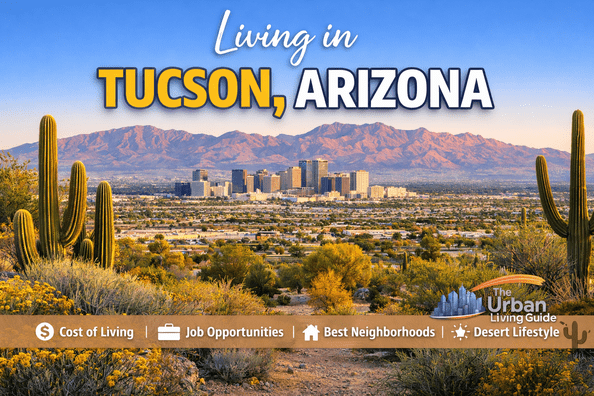
Living in Tucson, Arizona offers a slower pace of life compared to Phoenix, along with desert scenery, mountain backdrops, and a strong university presence. Tucson is Arizona’s second-largest city and is known for its affordability, arts culture, and outdoor lifestyle. With lower housing costs than Phoenix and Scottsdale, Tucson attracts retirees, students, and families seeking a quieter alternative.
At the same time, Living in Tucson, Arizona requires understanding the local job market and climate realities. While housing is more affordable, wages can be slightly lower than larger metros. The city’s desert climate means hot summers, though generally milder than Phoenix. This guide explores neighborhoods, cost of living, job opportunities, lifestyle factors, and long-term relocation insights.
👉 If this area is new to you, check the map below to see where the city is positioned geographically.
Data is based on publicly available housing trends and economic reports.
What Makes Tucson So Popular?
Tucson has carved out its own identity within Arizona.
Reasons people relocate:
-
- Lower housing costs than Phoenix
- Strong university presence
- Mountain and hiking access
- Arts and cultural scene
- Retiree-friendly communities
- Slower pace of life
The city blends affordability with outdoor recreation 🌄
📺 What It’s Really Like Living in Tucson
Tucson feels more relaxed and less corporate than Phoenix. The city’s layout is suburban, with mountain views visible from many neighborhoods.
Watch a recent video by a popular vlogger to get a better sense of daily life in Tucson.
Weekend activities often include:
-
- Hiking in Saguaro National Park
- Visiting downtown art districts
- University of Arizona sporting events
- Exploring desert trails
The lifestyle feels quieter and more community-oriented compared to larger metros.
Major Employers & Economic Drivers
Tucson’s economy is driven by education, defense, and healthcare.
Major employers include:
-
- University of Arizona – Largest employer
- Raytheon Technologies – Major defense presence
- Banner Health
- Davis-Monthan Air Force Base
The university significantly influences the city’s economy and culture.
For official information, refer to the City of Tucson.
🏠 Housing & Rent in Tucson
Housing is one of Tucson’s biggest advantages.
Average monthly rent ranges:
-
- Studio: $900–$1,200
- 1-bedroom: $1,100–$1,500
- 2-bedroom: $1,400–$2,000
Median home prices remain significantly lower than Phoenix and Scottsdale. Retirees and first-time buyers often find Tucson more financially accessible.
Rental data reflects aggregated listing trends and regional housing reports.
Best Neighborhoods in Tucson
Neighborhood choice affects lifestyle and pricing.
Catalina Foothills
-
- Upscale desert homes
- Mountain views
- Higher property values
Oro Valley
-
- Suburban feel
- Popular with retirees
- Safe community reputation
Downtown Tucson
-
- Arts district
- Walkable areas
- Student population
Rita Ranch
-
- Family-friendly
- Affordable housing
- Near Air Force Base
Sam Hughes
-
- Historic homes
- Close to university
- Strong community vibe
Each area offers distinct price points and amenities.
💼 Job Market & Salary Expectations
Tucson’s job market is stable but smaller than Phoenix.
Main sectors:
-
- Education
- Defense & Aerospace
- Healthcare
- Tourism
- Retail
Average salary ranges:
-
- Entry-level roles: $40,000–$60,000
- Mid-level professionals: $60,000–$90,000
- Senior roles: $110,000+
Lower housing costs help offset moderate salary levels.
💰 Cost of Living in Tucson
The cost of living in Tucson is close to the national average and lower than Phoenix.
Typical monthly expenses:
-
- Rent: $1,100–$1,800
- Utilities: $150–$300
- Groceries: $300–$500
- Transportation: $120–$250
- Insurance: Moderate
To live comfortably while Living in Tucson, Arizona, individuals often need $60,000–$80,000 annually.
Compared to Phoenix, Tucson offers lower housing costs but fewer high-paying job opportunities.
🚗 Transportation & Connectivity
Tucson is car-dependent but smaller in scale than Phoenix.
Transportation overview:
-
- Sun Tran bus system
- Limited streetcar route downtown
- Moderate traffic
- Served by Tucson International Airport
Most residents rely on personal vehicles.
🌤 Weather & Environment
Tucson has a desert climate similar to Phoenix but slightly cooler due to elevation.
Climate characteristics:
-
- Hot summers
- Mild winters
- Low humidity
- Monsoon season storms
Outdoor activities are common year-round except peak summer months ☀️
🎓 Education & Universities
The city is anchored by:
-
- University of Arizona
Public school quality varies by district.
👍 Pros and Cons of Living in Tucson
Pros:
-
- Affordable housing
- Mountain scenery
- Strong community feel
- University influence
- Slower pace of life
Cons:
-
- Smaller job market
- Hot summers
- Car dependency
- Limited nightlife
- Lower average wages
Tucson suits retirees, students, and families seeking affordability 😊
🏡 Is Tucson a Good Place to Live?
Tucson is a great place to live for people who value affordability, outdoor recreation, sunny weather, and a relaxed lifestyle. Surrounded by the stunning Sonoran Desert and mountain ranges, the city offers a unique blend of natural beauty, cultural heritage, and everyday convenience. Tucson is especially popular with retirees, university professionals, remote workers, and families looking for lower housing costs than many larger Western U.S. cities. While the job market is smaller than Phoenix or other major metros, many residents appreciate the city’s slower pace, strong sense of community, and access to outdoor activities year-round.
-
- More affordable housing than many major cities in the Southwest
- Home to the University of Arizona, a major employer and research institution
- Strong industries include aerospace, defense, healthcare, education, and technology
- Access to hiking, cycling, golf, and outdoor recreation throughout the year
- Beautiful mountain views and proximity to Saguaro National Park
- Rich Southwestern culture, history, and a nationally recognized food scene
- Popular among retirees and remote workers seeking a lower-cost lifestyle
- Slower pace of life than Phoenix while still offering urban amenities
- Summer temperatures can be extremely hot
- Fewer corporate headquarters and large-scale job opportunities compared to larger metros
For many residents, living in Tucson offers an appealing combination of affordability, natural beauty, and outdoor-focused living that is difficult to find elsewhere in the Southwest. 🌵
FAQs
Is Tucson cheaper than Phoenix?
Yes. Tucson generally offers lower rent and home prices compared to Phoenix. However, job salaries can also be slightly lower.
What salary do you need to live comfortably in Tucson?
Most individuals require between $60,000 and $80,000 annually for comfortable living, depending on housing choice.
Is Tucson good for retirees?
Yes. Many retirees choose Tucson due to affordable housing, desert climate, and slower pace of life.
Can you live in Tucson without a car?
Living without a car is difficult in most areas due to suburban design and limited public transit options.
Is Tucson safer than Phoenix?
Safety varies by neighborhood in both cities. Suburban areas and communities like Oro Valley are generally considered safer.
Does Tucson get as hot as Phoenix?
Tucson experiences hot summers but is slightly cooler on average due to higher elevation.
🔗 Explore More Cities in Arizona
If you’re exploring more options beyond Tucson, The Urban Living Guide has covered several other popular cities in Arizona. You can also check:
- Living in Phoenix,Arizona
- Living in Mesa, Arizona
- Living in Chandler, Arizona
- Living in Scottsdale, Arizona
New to Tucson? These resources can help you get started:
- Cost of Living in Tucson, Arizona
- Pros and Cons of Living in Tucson, Arizona
- Best Neighborhoods in Tucson, Arizona
For a complete moving guide, read: Moving to Tucson, Arizona
These guides offer a comprehensive view of life in different cities, covering key aspects like cost of living, housing, job opportunities, neighborhoods, commute, weather, education, popular spots, and major employers.
The Urban Living Guide brings all these insights together in one place, making it easier to compare cities and choose the one that best fits your lifestyle, priorities, and long-term goals.