

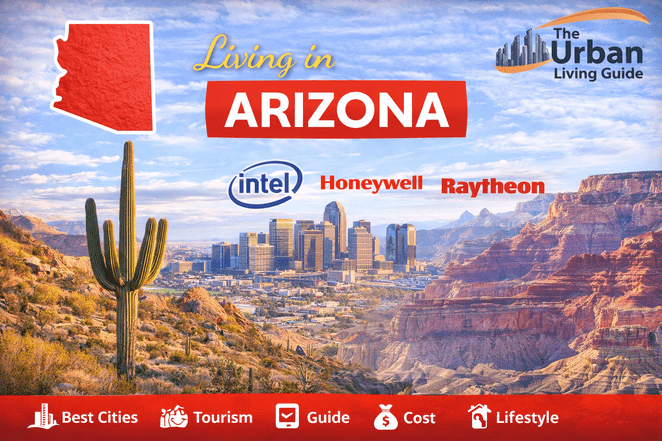
Living in Arizona: Desert Metro Growth, Sonoran Wilderness, and Southwestern Lifestyle Realities in 2026
Establishing your life in Arizona in 2026 means stepping into a dynamic southwestern landscape spanning over 113,990 square miles, bordered by the Colorado River, rugged mountain ranges, and sweeping desert basins. As a long-term local resident will tell you, the Grand Canyon State is defined by a massive economic and climatic dichotomy. From the high-velocity semiconductor manufacturing towers of the Phoenix Metropolitan Area to the quiet academic corridors of Tucson and the cool, pine-shaded peaks of the High Country, everyday life here is characterized by rapid urban expansion, a population of nearly 7.4 million residents, and a globally connected identity shaped by rich Indigenous heritage and pioneering desert engineering. For official administrative guidelines, state tax forms, and civic resources, residents frequently consult the Official State of Arizona Portal.
| Quick Facts Snapshot: Arizona (2026) | |
|---|---|
| Time Zone | Mountain Standard Time (MST / UTC-7 year-round; Arizona does not observe Daylight Saving Time) |
| State Population | Approx. 7.4 Million (One of the fastest-growing states in the U.S.) |
| State Income Tax | Flat individual income tax rate of 2.5% |
| Median Home Price | $400,000 – $550,000+ (Significant divergence between Valley master-planned suburbs and rural desert towns) |
| Average Rent Range | $1,200 – $1,800+ per month (Dependent heavily on Phoenix/Scottsdale vs. Southern Arizona pricing) |
| Sales Tax Baseline | 5.6% state base, with municipal and county transaction privilege tax additions pushing combined rates between 6.5% and 11.2% |
What It Is Really Like to Live Here (The Macro Reality & Cultural Identity)
Living across Arizona requires mastering a unique environmental rhythm where intense summer heat, master-planned suburban infrastructure, and historic Southwestern traditions meet modern technology corridors. Locals quickly understand that day-to-day existence depends entirely on your ability to adapt to the “inverted season”—where summer forces indoor routines with air conditioning, while winter transforms the desert into the world’s premier outdoor playground. Explore regional heritage and lifestyle guides via the Arizona Office of Tourism.
- Cultural Vibe: A powerful melting pot driven by deep Native American sovereign nation influences, historic Mexican-border traditions, Western pioneer roots, and a booming influx of modern tech and corporate professionals.
- Pace of Life: Distinctly relaxed yet car-dependent—ranging from the fast-growing suburban hustle of the Valley of the Sun to the slow-paced, arts-focused rhythm of southern desert communities and mountain enclaves.
- The Resident Trade-Off: Long-term locals accept extreme summer temperatures exceeding 110°F and heavy reliance on personal vehicles in exchange for year-round sunshine, no daylight saving time shifts, and robust economic momentum.
Regional Diversity, Geography & Economic Zones
Because Arizona stretches from the blistering Sonoran lowlands to the high-elevation pine forests of the Colorado Plateau, its geography encompasses starkly contrasting zones that dictate entirely separate daily living experiences.
Coastal Corridors, Metro Hubs & Suburban Enclaves
- The Phoenix “Valley of the Sun”: Encompassing Phoenix, Scottsdale, Mesa, Chandler, and Gilbert—serving as the economic powerhouse, financial anchor, and semiconductor manufacturing core of the state.
- The Southern Tucson Corridor: Anchored by Tucson, featuring a distinct border-adjacent cultural identity, aerospace research hubs, and a relaxed academic atmosphere framed by mountain ranges.
- The West Valley Growth Pockets: Fast-developing suburban enclaves like Surprise and Goodyear, balancing master-planned residential communities with massive logistics and warehousing developments.
Mountain, Inland, Agricultural & Resource Belts
- The High Country (Flagstaff & Prescott): Sitting at over 7,000 feet of elevation, offering four-season weather, heavy winter snowfall, dense ponderosa pine forests, and vibrant tourism economies.
- Agricultural River Basins: Encompassing Yuma and parts of Pinal County, serving as the winter vegetable basket of North America powered by extensive irrigation systems along the Colorado River.
- Inland Mining & Energy Towns: Historic copper-mining and energy centers like Globe, Safford, and Page, maintaining a rugged blue-collar character and proximity to landmark reservoirs like Lake Powell.
Infrastructure, Power Grids, Water Systems & Transport Networks
Sustaining over 7 million residents in an arid desert environment demands world-class civil engineering, massive water aqueduct projects, and reliable electrical grids.
Water Resources, Aqueducts & Watersheds
- The Central Arizona Project (CAP): A 336-mile master engineering marvel that pumps water uphill from the Colorado River across the desert to sustain municipal, industrial, and agricultural users in Phoenix and Tucson.
- The Salt River Project (SRP): A historic system of dams and reservoirs along the Salt River and Verde River that provides dependable irrigation water and hydroelectric power to the metropolitan core. Track conservation data via the Arizona Department of Water Resources.
Power Generation & Clean Energy Frameworks
- Diverse Grid Mix: Electrical infrastructure is heavily reliant on the massive Palo Verde Nuclear Generating Station (the largest nuclear plant in the nation), natural gas peaking plants, and rapidly expanding utility-scale solar installations.
- Grid Resilience: Utilities like Arizona Public Service (APS) and Salt River Project maintain robust summer-load protocols, while residential rooftop solar adoption combined with battery storage continues to surge among homeowners.
Statewide Transit, Rail, Air & Port Connectivity
- Global Aviation Gateways: International and domestic travel is anchored by Phoenix Sky Harbor International Airport (PHX), supported by Tucson International Airport (TUS) and regional air hubs.
- Interstate Highway Grid: Critical freight and commuter movement relies on major transcontinental corridors including Interstate 10 (I-10), Interstate 17 (I-17), and Interstate 40 (I-40).
- Rail & Logistics Corridors: Extensive freight rail networks operated by Union Pacific connect Arizona manufacturing plants directly to West Coast ports and national distribution centers.
Statewide Economy, Job Markets & Major Industries
Arizona has successfully diversified its economic base, transforming from a traditional retirement and tourism state into a high-tech manufacturing and semiconductor titan.
- Economic Momentum: Generating a robust state GDP fueled by advanced manufacturing, aerospace engineering, defense contracting, healthcare, and software development.
- Dominant Sectors: Semiconductor fabrication, aerospace defense systems, biotech research, hospitality and tourism, renewable energy technology, and commercial real estate development.
- Corporate Footprint: Major operations for global enterprises such as Intel, Taiwan Semiconductor Manufacturing Company (TSMC), Raytheon Technologies, Honeywell, and GoDaddy. Monitor statewide economic incentives through the Arizona Commerce Authority.
Salary Realities Across Economic Corridors
- High-Tech & Engineering Hubs: Specialized roles in semiconductor engineering, aerospace design, and corporate tech management command strong professional salaries ranging from $80,000 to $140,000+ annually.
- Regional Wage Variance: Traditional service, hospitality, and administrative positions align closer to regional cost benchmarks, balancing out against competitive housing demands in urban sub-markets.
Cost of Living Realities & Housing Market Variance
While Arizona was historically prized for its low-cost living advantage, explosive population growth over the past decade has compressed affordability margins closer to national norms.
- Housing Market Index: Master-planned communities in Scottsdale and suburban Phoenix command elevated real estate pricing, whereas southern markets like Tucson and eastern rural counties offer significantly higher purchasing value.
- Utility Expenses: Extreme summer cooling demands drive up monthly electricity bills significantly between June and September, making energy-efficient home insulation and modern HVAC units critical budget factors.
- Tax Burdens: A flat state income tax structure combined with municipal transaction privilege taxes creates a predictable, business-friendly fiscal environment for households.
| Expense Category | Cost Range / Index Reality |
|---|---|
| Housing (Metro vs. Regional) | $1,400 – $2,500+ monthly rent in Phoenix/Scottsdale; $950 – $1,500 in Tucson and outlying hubs |
| Utilities & Cooling | Above national averages during peak summer months due to intensive residential A/C operation |
| Transportation & Auto | Heavy car-dependency statewide; fuel costs fluctuate moderately around national medians |
| Groceries & Everyday Goods | Aligns very closely with national averages across major metropolitan grocery networks |
State Tax Climate, Business Environment & Government Policies
Arizona operates under a highly pro-business regulatory model characterized by low, simplified personal income taxation and streamlined corporate compliance frameworks.
- Income Tax Structure: Imposes a flat individual income tax rate of 2.5%, eliminating complex multi-tier bracket calculations. Review official compliance instructions via the Arizona Department of Revenue.
- Property Assessment Standards: Local property taxes are calculated using limited property value assessments, keeping baseline real estate tax liabilities lower than many northern and coastal states.
- Regulatory Posture: Comprehensive right-to-work labor laws, streamlined commercial licensing, and supportive corporate governance attract heavy commercial investment.
Legal & Lifestyle Governance Quirks
- At-Will Employment Framework: Standard employment practices follow at-will guidelines, supporting a fast-moving labor market across corporate and industrial sectors.
- Constitutional Carry Laws: Arizona permits concealed carry of firearms without a state-issued permit for eligible residents, reflecting strong local cultural values of personal liberty.
- Driver Licensing & Titling: Legal mandates require new residents to secure an official Arizona driver’s license and transfer vehicle registrations through the Motor Vehicle Division (MVD) within 30 days of establishing residency.
Climate, Weather Extremes & Natural Geography
Arizona is globally renowned for its arid desert climate, boasting over 300 days of sunshine annually alongside distinct microclimates created by elevation changes.
- Seasonal Variations: Low desert regions experience scorching summers with temperatures topping 115°F and mild, comfortable winters, while high-elevation mountain towns experience crisp alpine conditions and heavy winter snows.
- The Monsoon Season: Occurring annually from July through September, bringing dramatic dust storms (haboobs), intense flash lightning, and sudden desert downpours that temporarily cool down the landscape.
- Natural Wonders: From the breathtaking geological chasms of the Grand Canyon National Park to the towering, iconic saguaro cacti of Saguaro National Park.
Insurance Cost Realities (Wildfire & Heat Risks)
- Wildfire Exposure: Properties situated near wildland-urban interfaces in forested mountain regions like Flagstaff or Prescott require specialized wildfire mitigation and hazard insurance underwriting.
- Extreme Heat Property Claims: Intense solar radiation and thermal expansion create unique wear-and-tear considerations for residential roofing, exterior paint, and foundational plumbing systems.
- Flood & Drainage Precautions: Desert flash floods require careful attention to local property grading; standard homeowners insurance typically excludes flood damage, making supplemental policies essential in designated basin zones.
Education Systems & Major Healthcare Networks
Access to tier-one research universities and world-class clinical facilities anchors Arizona’s institutional reputation for innovation and family development.
- Higher Education Framework: Home to major research powerhouses including Arizona State University (ASU), the University of Arizona, and Northern Arizona University, driving regional workforce talent.
- Advanced Healthcare: Elite medical networks such as the Mayo Clinic Hospital (Phoenix), Banner Health, and the Tucson medical corridor provide cutting-edge clinical treatment and specialized research. Track public health initiatives via the Arizona Department of Health Services.
- Public Education Variance: School district performance varies considerably; master-planned suburban neighborhoods in districts like Gilbert and Scottsdale feature top-tier public schools, while urban cores utilize school open-enrollment programs.
Culture, Outdoor Recreation & Lifestyle Shifts
Daily life in Arizona seamlessly balances high-energy metropolitan cultural amenities with world-class desert and mountain outdoor recreation.
- Outdoor Living: Hiking rugged trails up Camelback Mountain or Superstition Mountain, golfing across championship desert courses in Scottsdale, and boating along the Colorado River chain.
- Culinary Heritage: Famed for authentic Sonoran-style Mexican cuisine, wood-fired Southwestern dining, craft breweries in Flagstaff, and burgeoning culinary arts scenes in downtown Phoenix.
- Arts & Entertainment: A vibrant cultural ecosystem anchored by spring training Cactus League baseball, world-class art museums in Phoenix and Tucson, and historic western towns like Tombstone. Explore recreation resources via Arizona State Parks & Trails.
Relocation & State Residency Essentials
Establishing official legal residency in Arizona involves straightforward statutory compliance governing motor vehicles, voter registration, and tax domicile status.
- MVD Licensing Window: New residents must transfer out-of-state driver’s licenses and register personal motor vehicles at an Arizona MVD office within 30 days of establishing residency.
- Emissions & Smog Inspections: Vehicle emissions testing is mandatory for vehicles registered in the Phoenix and Tucson metropolitan ozone-nonattainment areas prior to registration renewal.
- Voter Registration: Eligible citizens can easily register to vote online through the Arizona Secretary of State portal to participate in municipal, state, and federal elections.
Major Counties and Rural Living Realities in Arizona
Beyond the bustling urban corridors of the Valley, Arizona’s diverse administrative counties maintain unique regional identities and community frameworks.
- Maricopa County: The most populous county, anchored by Phoenix, representing the economic, financial, and political epicenter of the state.
- Pima County: Anchored by Tucson, encompassing Southern Arizona’s academic, aerospace, and historic desert cultural landscapes.
- Pinal County: Rapidly growing residential and agricultural corridor situated directly between Phoenix and Tucson, offering expanding suburban housing options.
- Coconino County: Sprawling northern county encompassing Flagstaff, Native American sovereign lands, and the iconic Grand Canyon wilderness.
Major Regional Hubs and Cities to Explore
Major Urban Hubs and Economic Centers at a Glance
| City / Hub | Primary Economic Driver | Vibe & Lifestyle Profile |
|---|---|---|
| Phoenix | Tech, Corporate HQs, Manufacturing | Sprawling metro engine, professional sports, diverse cultural pockets |
| Tucson | Higher Education, Aerospace, Defense | Relaxed desert authenticity, deep historic roots, university town feel |
| Scottsdale | Luxury Tourism, Golf, High-End Retail | Resort-style aesthetic, upscale dining, pristine suburban communities |
| Mesa | Healthcare, Education, Aerospace Tech | Family-oriented neighborhoods, accessible housing, quiet suburban atmosphere |
| Flagstaff | Tourism, University, Outdoor Recreation | Four-season mountain town, ponderosa pines, active outdoor culture |
Detailed Breakdown of Key Regional Hubs and Cities
Phoenix — The Sprawling Valley of the Sun Engine
Serving as the massive urban core of the state, Phoenix is defined by expansive scale, diverse residential neighborhoods, and an economy driven by advanced tech and corporate services. Life here revolves around career ambition, professional sports, and modern desert living.
Tucson — The Academic and Sonoran Desert Cultural Heart
Nestled in the desert valley surrounded by mountain ranges, Tucson offers a slower, deeply authentic Southwestern culture. Anchored by the university, it appeals to those who prioritize local arts, culinary heritage, and scenic desert views over corporate flash.
Scottsdale — The Resort-Style Luxury and Golf Enclave
Bordering Phoenix to the east, Scottsdale represents the pinnacle of desert luxury living. Renowned for championship golf courses, high-end shopping districts, and pristine master-planned neighborhoods, it prioritizes aesthetics and safety.
Mesa — The Family-Oriented Suburban Powerhouse
As one of the largest suburban cities in the nation, Mesa offers a balanced blend of housing affordability and family programming. It is the practical choice for professionals seeking quieter residential lots with easy freeway access to the Valley’s job centers.
Flagstaff — The High-Country Mountain and University Town
Sitting high on the Colorado Plateau, Flagstaff feels worlds away from the desert floor. It delivers crisp four-season weather, heavy winter skiing, and immediate access to alpine wilderness for professionals working remotely or within the university network.
Pros and Cons of Making Arizona Your Home
| Advantages (Pros) | Systemic Drawbacks (Cons) |
|---|---|
| Abundant year-round sunshine and warm winter climate | Extreme, unrelenting summer heat exceeding 115°F |
| Robust, rapidly expanding tech and manufacturing job market | Heavy reliance on personal motor vehicles and sprawling infrastructure |
| World-class access to national parks and outdoor recreation | Rising cost of housing and increased competition in prime suburbs |
| Flat individual income tax and business-friendly policies | Long-term water management and Colorado River allocation concerns |
Frequently Asked Questions About Living in Arizona
Is Arizona a good state to live in?
Yes, especially for professionals seeking career growth, retirees wanting warm winters, and families looking for master-planned communities, provided you adapt to the desert climate.
What is the actual cost of living in Arizona?
It is moderate to upper-mid tier; housing costs have risen notably in the Phoenix and Scottsdale metro areas, while southern cities like Tucson remain significantly more budget-friendly.
Which region or city is best to settle down in?
It depends on your lifestyle priorities: Phoenix or Chandler for career growth, Scottsdale for luxury suburban living, Tucson for cultural authenticity, and Flagstaff for four-season mountain weather.
Does Arizona enforce high taxes?
No, the state maintains a flat individual income tax rate of 2.5% and conservative property tax assessments, creating a highly competitive fiscal climate.
How safe is everyday life across the state?
Safety varies significantly by municipality; master-planned suburban neighborhoods offer exceptional security, while urban centers reflect standard metropolitan crime trends.
What industries dominate Arizona’s job market?
Semiconductor fabrication, aerospace and defense manufacturing, healthcare services, tourism, and high-tech software development drive regional employment.
What is the weather like across the state?
Low desert areas experience extremely hot summers and mild, sunny winters, whereas northern high-elevation regions experience true four-season weather with heavy winter snow.
What are the vehicle registration rules for new residents?
New residents must transfer their driver’s licenses and register vehicles through the Arizona MVD within 30 days of establishing permanent residency.
How rigorous are water supply security measures?
State water authorities and municipalities strictly regulate groundwater usage and long-term storage credits, keeping urban water planning tightly managed.
Explore Detailed City Guides Across Arizona
We have compiled comprehensive resources and detailed guides to help you understand what daily living feels like across different urban hubs and regional centers throughout the state.
- Living in Phoenix, Arizona
- Living in Tucson, Arizona
- Living in Scottsdale, Arizona
- Living in Mesa, Arizona
At The Urban Living Guide , our mission is to deliver research-backed, data-driven insights, lifestyle breakdowns, and practical guidance to help you navigate modern urban living decisions with complete clarity.