

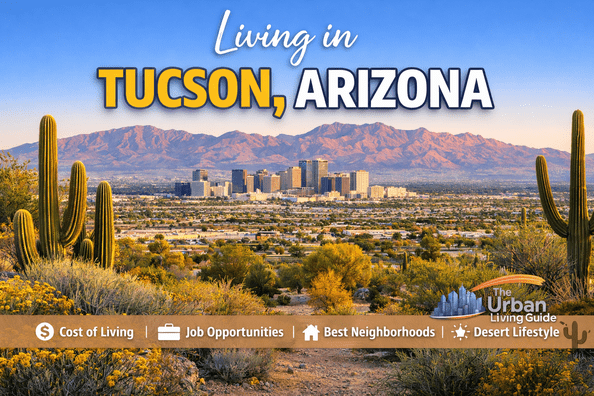
Living in Tucson, Arizona: A Desert Haven Shaped by Academic Energy, Sonoran Heritage, and Mountain Horizons
Living in Tucson, Arizona offers a distinctive rhythm of life that sets it apart from the high-octane corporate sprawl of Phoenix just two hours north. Nestled inside the sweeping expanse of the Sonoran Desert and surrounded by five distinct mountain ranges—including the towering Catalina Mountains and the jagged peaks of the Rincon Mountains—Tucson serves up a unique blend of southwestern history, academic innovation, and laid-back outdoor living. As Arizona’s second-largest city and the cultural anchor of Pima County, the city accommodates roughly 540,000 residents within city limits while maintaining a tight-knit community feel that instantly draws in newcomers seeking authenticity over mass-produced suburbia.
To explore official municipal resources, public services, and regional planning announcements, residents and researchers frequently utilize the City of Tucson Official Portal.
If you are exploring the layout of the Salt River Valley’s southern counterpart for the first time, the geographic positioning map below outlines the city’s key thoroughfares and surrounding natural boundaries.
All quantitative metrics, housing insights, and regional data points compiled within this living guide are synthesized from official municipal resources, regional economic boards, and verified long-term resident feedback.
What Makes Tucson So Unique & Popular
Over the past decade, Tucson has emerged as an attractive destination for remote professionals, academic researchers, and retirees looking for a lower cost of living without sacrificing cultural depth. Key factors driving this popularity include:
- UNESCO City of Gastronomy Recognition: Celebrated worldwide for its rich culinary heritage, blending Sonoran Mexican traditions with indigenous ingredients. Discover local food initiatives via the Visit Tucson Culinary Guide.
- Immediate Wilderness Access: Pristine wilderness areas like Saguaro National Park sit directly on the eastern and western edges of the municipal boundary.
- Academic Vitality: The presence of the University of Arizona infuses the municipality with youthful intellectual energy, progressive arts programming, and year-round cultural events.
- Architectural Preservation: Adobe brick structures stand alongside mid-century modern masterpieces designed by disciples of Frank Lloyd Wright.
Tucson at a Glance: Key Relocation Metrics
| Evaluation Metric | Local Data Overview & Regional Reality |
|---|---|
| Population | Approx. 540,000 within city limits (2nd largest municipality in Arizona) |
| Median Home Price | Ranges from $330,000 to $390,000 depending on the specific neighborhood pocket |
| Average Monthly Rent | $1,100 to $1,800 covering apartments, townhomes, and rental houses |
| Primary Economic Pillars | Higher education, defense manufacturing, aerospace engineering, healthcare, and tourism |
| State Income Tax | Flat 2.5% individual income tax structure across Arizona |
| Average Summer High | Routinely surpasses 100°F to 105°F during peak July and August afternoons |
| Primary Transit Mode | Car-dependent layout supplemented by the Sun Tran bus network and downtown streetcar |
Famous Personalities, Sports Teams & Major Brands in Tucson
Tucson has cultivated a surprisingly rich legacy of creative minds, athletic legends, and commercial innovators. Notable local figures and brands include:
- Edward Abbey: Legendary writer and conservationist who spent decades chronicling the rugged beauty of the surrounding desert, anchoring his literary activism in southern Arizona.
- Linda Ronstadt: Multi-Grammy-winning icon who grew up singing in the historic neighborhoods of the city, frequently infusing her heritage into her legendary recordings. Learn more through the Tucson Heritage and Culture Archives.
- Arizona Wildcats Athletics: The collegiate sports programs of the University of Arizona serve as a unifying cultural force across McKale Center and Arizona Stadium.
- Raytheon Technologies: Operates massive defense engineering and manufacturing facilities right on the city’s south side, driving advanced technology development (Raytheon Technologies Official Site).
Job Market & Business Opportunities with Major Employers
The employment landscape in Tucson offers strong stability anchored by public sector institutions, higher education, and aerospace defense contractors. Key employment drivers include:
- University of Arizona: The single largest economic driver in the region, employing thousands of faculty, researchers, and administrative personnel (University of Arizona Portal).
- Raytheon Technologies: Operates one of the largest missile systems development and manufacturing facilities in the world, providing high-paying engineering careers (RTX Careers Portal).
- Banner Health: Anchors regional healthcare via premier facilities like Banner University Medical Center Tucson (Banner Health Network).
- Davis-Monthan Air Force Base: Housing key aerospace wings and supporting thousands of military and civilian defense jobs (Davis-Monthan AFB Official Site).
Housing & Real Estate Overview in Tucson
Navigating the real estate market in Tucson reveals one of the region’s most compelling financial advantages:
- Price Accessibility: Real estate remains remarkably accessible for first-time home buyers, remote workers, and retirees compared to Phoenix and coastal markets.
- Architectural Variety: Historic red-brick bungalow homes featuring original wood floors near the university, sprawling contemporary ranch properties in northern foothills, and solar-equipped suburban houses.
- Rental Market Inventory: Average monthly overhead spans $900 to $1,200 for compact studios, $1,100 to $1,500 for one-bedroom units, and $1,400 to $2,000 for multi-bedroom rentals.
- Utility Considerations: Prospective homeowners must evaluate summer energy efficiency and HVAC maintenance to manage electrical overhead during extreme summer months.
Best Neighborhoods in Tucson: Finding Your Ideal Community
| Neighborhood Name | Vibe & Lifestyle Character | Housing & Price Profile |
|---|---|---|
| Catalina Foothills | Upscale hillside living, dramatic mountain backdrops, private country clubs, and quiet luxury. | High-end custom desert estates, luxury properties, and premium valuations. |
| Oro Valley | Master-planned suburban enclave north of the city, highly family-oriented, clean parks, and safety. | Modern single-family homes, gated communities, and mid-to-high pricing. |
| Downtown Tucson | Urban core revitalization, highly walkable arts districts, microbreweries, and historic streetscapes. | Converted industrial lofts, modern apartments, and historic adobe restorations. |
| Rita Ranch | Established southeastern suburban community popular with defense workers and growing households. | Affordable single-family homes, quiet cul-de-sacs, and family-centric layouts. |
| Sam Hughes | Historic neighborhood adjacent to the university featuring tree-lined streets and strong civic pride. | Historic 1920s and 1930s brick bungalows, high demand, and steady appreciation. |
What It’s Really Like Living in Tucson (Daily Life & Vibe)
Daily existence in Tucson is defined by an unhurried, outdoor-centric rhythm that values personal wellness and community connection:
- Idyllic Cooler Months: From October through April, residents spend weekends cycling down the Loop Shared-Use Path or hiking the rugged trails of Sabino Canyon. Check trail maps via the USDA Forest Service Sabino Canyon Portal.
- Culinary Evenings: Evenings are routinely spent dining on patios illuminated by string lights, sampling authentic Sonoran street tacos, or attending outdoor film screenings in historic plazas.
- Summer Elevation Escapes: When summer temperatures soar, residents make weekend trips up the winding Catalina Highway to Mount Lemmon, where elevations drop temperatures by twenty degrees.
- Social Atmosphere: Warm, unpretentious, and deeply welcoming, allowing newcomers to integrate quickly into active neighborhood networks.
Cost of Living in Tucson: Monthly Expenses & Salary Needs
The cost of living in Tucson hovers close to the national average, making it one of the most economically forgiving metropolitan areas in the Southwest:
- Rent / Housing: $1,100 to $1,800 for a standard apartment or modest suburban home.
- Utilities & Power: $150 to $300, with electrical bills spiking during heavy summer air conditioning use in July and August.
- Groceries & Household: $300 to $500 depending on local market selections and shopping habits.
- Transportation & Fuel: $120 to $250 covering vehicle insurance, maintenance, and gas.
- Required Income: Single individuals or households typically require an annual income between $60,000 and $80,000 to live comfortably without financial strain.
Transportation, Highway Bottlenecks & Airport Connectivity
Tucson is structured around an automobile-dependent grid system with manageable commute times:
- Primary Regional Artery: Interstate 10 bisects the city diagonally and connects commuters to industrial parks and downtown destinations.
- Alternative Transit: The Sun Tran Bus System and the modern Sun Link Streetcar provide reliable connectivity linking the university campus directly through downtown.
- Airport Connectivity: Anchored by Tucson International Airport, located just south of downtown with streamlined security and direct domestic flights.
Weather Patterns, Seasonal Realities & Climate Factors
The environmental heartbeat of Tucson is its classic subtropical desert climate:
- Scorching Summers: Between June and September, daytime high temperatures consistently exceed 100°F, making functional residential air conditioning an absolute requirement.
- Breathtaking Winters: From November through March, daytime temperatures hover comfortably between 65°F and 75°F under brilliant blue skies.
- Precipitation Patterns: Rainfall is sparse, arriving primarily during winter frontal storms and the dramatic summer monsoon season in July and August.
Education, Schools & Major Universities
Educational infrastructure across the metropolitan area offers diverse academic pathways:
- K-12 School Districts: Families research individual public districts, charter networks, and private academies within communities like Oro Valley and the Catalina Foothills.
- University of Arizona: Serves as a premier research institution, land-grant university, and medical center driving regional innovation (University of Arizona Official Portal).
Medical Facilities, Hospitals & Healthcare Systems
Healthcare infrastructure in Tucson is advanced and supported by world-class medical networks:
- Banner University Medical Center Tucson: Operates as the primary teaching hospital for the medical school, offering advanced tertiary care (Banner UMC Tucson Portal).
- Tucson Medical Center (TMC): A leading regional medical center providing comprehensive emergency and specialized clinical services (TMC Official Site).
- Carondelet St. Mary’s Hospital: Historic regional hospital providing advanced surgical and emergency care (Carondelet Health Network).
Popular Hotels, Cafes, Dining & Culinary Scene
The culinary and hospitality landscape of Tucson holds official designation as a UNESCO City of Gastronomy:
- El Charro Café: Recognized nationally as the nation’s oldest continuously operating Mexican restaurant run by the same family (El Charro Café Official Site).
- Arizona Inn: Historic luxury desert property offering timeless adobe architecture and classic southwestern hospitality (Arizona Inn Official Portal).
- Fourth Avenue Cafes: Bustling coffeehouse cultures and artisan bakeries thrive along historic corridors like Fourth Avenue and Congress Street.
Sightseeing, Cultural Spots & Tourist Attractions
Cultural exploration and sightseeing celebrate a unique intersection of natural wonders and desert artistry:
- Arizona-Sonora Desert Museum: Immersive outdoor campus blending a zoo, botanical garden, and natural history museum (Arizona-Sonora Desert Museum Portal).
- Mission San Xavier del Bac: Breathtaking historic Spanish colonial mission known locally as the White Dove of the Desert (Mission San Xavier del Bac Official Site).
- Tohono Chul Park: Cultural facility featuring native plant exhibits, art galleries, and serene desert walking trails (Tohono Chul Official Portal).
Honest Trade-offs: Pros and Cons of Living in Tucson
Evaluating the authentic trade-offs of Tucson helps prospective residents establish grounded expectations:
- Pros: Affordable housing compared to Phoenix, direct access to national parks and mountain ranges, vibrant culinary culture, and mild winter climates.
- Cons: Prolonged summer heat waves requiring indoor confinement, smaller corporate job market with modest average salary ceilings, and automobile dependency.
Who Is Tucson Ideal For (and Who Should Avoid It?)
Tucson is exceptionally well-suited for academic professionals, remote workers seeking financial breathing room, outdoor enthusiasts, and active retirees. Conversely, career professionals chasing fast-paced corporate ladder climbs in massive Fortune 500 headquarters, individuals who detest high summer heat, or those relying strictly on dense mass transit will find the desert environment challenging.
Real Experiences: Perspectives from Long-Term Residents (5 to 10+ Years)
“I relocated down here from Seattle twelve years ago for a tech role, and while adjusting to July and August took a solid summer of locking myself indoors with the AC running, I would never trade it back. The winter and spring weather here is absolute perfection—you are hiking Sabino Canyon every weekend, grabbing coffee in the historic districts, and enjoying a cost of living that let us actually buy a home with a yard.”
[Source: r/Tucson Community Discussions]
“The big reality check for anyone moving here is wages versus housing. Housing is way cheaper than Phoenix or California, but local salaries can be modest unless you are locked into healthcare, the university, or Raytheon. If you work remotely making coastal pay while living here, you win big. Also, pick a home with an updated AC unit because your July electric bill will humble you quickly.”
[Source: Local Neighborhood Survey & Resident Panels]
Frequently Asked Questions About Living in Tucson, Arizona
Is Tucson expensive to live in compared to other major southwestern U.S. cities?
Tucson maintains a moderate cost of living that sits very close to the national average. While home prices have risen with inbound migration, living expenses remain substantially lower than Phoenix and coastal California markets.
What level of annual salary do individuals need to live comfortably in Tucson?
Most single professionals and households require an annual income between $60,000 and $80,000 to comfortably cover housing, utilities, vehicle maintenance, and discretionary spending across the metropolitan area without severe financial stress.
Is Tucson considered a good city for raising families and children?
Yes. Established suburban communities like Oro Valley and Rita Ranch are exceptionally popular among families due to safe neighborhood layouts, community parks, family-oriented recreational facilities, and access to well-regarded local schools.
Can residents successfully live in Tucson without owning a personal vehicle?
Living without a car is difficult across most of the valley due to its expansive suburban layout. While the Sun Tran bus network and downtown streetcar serve core corridors effectively, daily errands generally require personal vehicle ownership.
How intense does summer weather get in Tucson during peak months?
Summer temperatures routinely exceed 100°F from June through September. Because the local climate features very low humidity, the heat is dry rather than muggy, but proper hydration and functional residential air conditioning remain essential for daily safety.
🔗 Explore More Cities in Arizona
If you’re exploring more options beyond Tucson, The Urban Living Guide has covered several other popular cities in Arizona. You can also check:
- Living in Phoenix,Arizona
- Living in Mesa, Arizona
- Living in Chandler, Arizona
- Living in Scottsdale, Arizona
New to Tucson? These resources can help you get started:
- Cost of Living in Tucson, Arizona
- Pros and Cons of Living in Tucson, Arizona
- Best Neighborhoods in Tucson, Arizona
For a complete moving guide, read: Moving to Tucson, Arizona
These guides offer a comprehensive view of life in different cities, covering key aspects like cost of living, housing, job opportunities, neighborhoods, commute, weather, education, popular spots, and major employers.
The Urban Living Guide brings all these insights together in one place, making it easier to compare cities and choose the one that best fits your lifestyle, priorities, and long-term goals.