

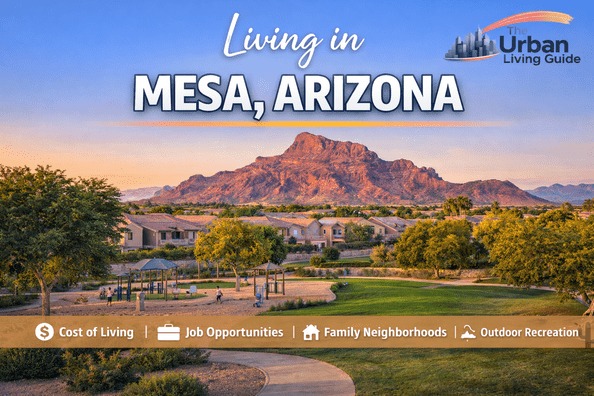
Living in Mesa, Arizona: The East Valley Powerhouse Balancing Suburban Comfort, Desert Landscapes, and Metropolitan Access
Living in Mesa, Arizona offers a distinctive suburban experience characterized by master-planned neighborhoods, expanding economic opportunities, and more accessible housing options compared to neighboring upscale enclaves like Scottsdale. Positioned as the third-largest city in Arizona with a population exceeding 500,000 residents, Mesa serves as a massive anchor within the eastern portion of the Greater Phoenix metropolitan area. Known historically for its agricultural roots and deep-seated community values, the modern municipality has evolved into a dynamic technological, educational, and healthcare hub that draws families, mid-career professionals, and retirees looking for space and long-term value.
For official municipal updates, public services, and local governance details, residents and researchers frequently utilize the City of Mesa Official Portal.
If you are exploring the layout of the East Valley for the first time, the geographic positioning map below outlines the city’s key thoroughfares and surrounding municipal boundaries.
All insights, economic metrics, and community data points compiled within this living guide are synthesized from official municipal resources, regional economic reports, and verified long-term resident feedback.
What Makes Mesa So Unique & Popular
Over the past decade, Mesa has emerged as one of the premier destination choices for individuals and families relocating to the Southwest. Key factors driving this continuous growth include:
- Family-Oriented Suburban Design: Designed around spacious residential parcels, community parks, and master-planned developments that prioritize outdoor recreation. Explore regional leisure guides via the Visit Mesa Tourism Guide.
- Immediate Wilderness Procreation: Immediate access to stunning natural preserves, including Usery Mountain Regional Park and the meandering waters of the Salt River.
- Cultural Innovation Hub: Anchored by the world-class Mesa Arts Center, providing a vibrant hub for visual arts, live theatrical performances, and community festivals.
- Agricultural Roots & Modern Tech: Century-old citrus groves stand alongside cutting-edge manufacturing facilities and master-planned high-tech employment corridors.
Mesa at a Glance: Key Relocation Metrics
| Evaluation Metric | Local Data Overview & Regional Reality |
|---|---|
| Population | Approx. 510,000+ within city limits (3rd largest municipality in Arizona) |
| Median Home Price | Ranges from $410,000 to $470,000 depending on the specific neighborhood pocket |
| Average Monthly Rent | $1,300 to $2,300 covering apartments, townhomes, and single-family rentals |
| Primary Economic Pillars | Healthcare, aerospace manufacturing, education, technology, and municipal services |
| State Income Tax | Flat 2.5% individual income tax structure across Arizona |
| Average Summer High | Routinely surpasses 100°F to 108°F during peak July and August afternoons |
| Primary Transit Mode | Car-dependent layout supplemented by the Valley Metro Light Rail extension |
Famous Personalities, Sports Teams & Major Brands in Mesa
Mesa has fostered an impressive legacy of cultural figures, athletic milestones, and industrial pioneers. Notable entities and local icons include:
- Danielle Fishel: Acclaimed actress and television director who grew up in the East Valley, maintaining strong ties to the greater Phoenix artistic community. Learn more via the Mesa Arts Center Cultural Archives.
- Chicago Cubs Spring Training: Fans pack Sloan Park every spring, creating a festive community atmosphere that draws visitors from across the country.
- Boeing Defense Operations: Maintains massive helicopter manufacturing and defense operations at Phoenix-Mesa Gateway Airport.
- Dexcom Corporation: Established massive operational footprints and high-tech manufacturing facilities driving East Valley employment growth.
Job Market & Business Opportunities with Major Employers
The employment landscape in Mesa operates as a robust sub-market within the broader Greater Phoenix economic engine. Key employment drivers include:
- Boeing Defense, Space & Security: Operates massive aerospace and helicopter assembly operations near Phoenix-Mesa Gateway Airport, providing advanced engineering careers (Boeing Official Site).
- Banner Health Network: Anchored by major medical complexes like Banner Desert Medical Center, offering extensive clinical, nursing, and administrative career paths (Banner Health Portal).
- Mesa Public Schools: One of the largest and most established public school districts in Arizona, providing extensive educational and administrative employment (Mesa Public Schools Portal).
- Dexcom Global Operations: Operates state-of-the-art medical device manufacturing facilities supporting local high-tech job diversification (Dexcom Official Site).
Housing & Real Estate Overview in Mesa
Navigating the real estate market in Mesa reveals one of the most compelling financial advantages for families relocating to the East Valley:
- Space & Affordability: Offers significantly more square footage and lot size for your financial investment compared to adjacent Scottsdale or central Phoenix.
- Diverse Architectural Stock: Established mid-century neighborhoods featuring mature citrus trees, sprawling single-story ranch homes with private pools, and modern master-planned communities. Check valuation trends via the Maricopa County Assessor Portal.
- Rental Market Inventory: Average monthly overhead spans $1,100 to $1,400 for modern studio apartments, $1,300 to $1,800 for one-bedroom units, and $1,700 to $2,500 for multi-bedroom single-family rentals.
- Energy Efficiency Needs: Prospective homeowners must evaluate roof insulation, dual-pane windows, and HVAC efficiency to manage summer electrical overhead.
Best Neighborhoods in Mesa: Finding Your Ideal Community
| Neighborhood Name | Vibe & Lifestyle Character | Housing & Price Profile |
|---|---|---|
| Eastmark | Massive master-planned community in the East Valley, highly active, family-centric, and modern. | Contemporary single-family homes, new constructions, and mid-to-high pricing. |
| Las Sendas | Upscale hillside golf community nestled against the foothills, dramatic views, and quiet luxury. | Custom desert luxury properties, gated enclaves, and premium valuations. |
| Downtown Mesa | Urban core revitalization, walkable arts and dining districts, microbreweries, and light rail access. | Converted lofts, modern apartments, and historic bungalow restorations. |
| Dobson Ranch | Established mature community featuring lakes, community pools, parks, and central location. | Well-maintained single-family homes, mature landscaping, and moderate pricing. |
| Red Mountain Ranch | Scenic golf course community in northeast Mesa offering a quiet suburban environment. | Spacious family homes, hillside lots, and steady property value appreciation. |
What It’s Really Like Living in Mesa (Daily Life & Vibe)
Daily existence in Mesa is defined by an active, community-oriented rhythm that prioritizes family life and outdoor recreation:
- Active Cooler Months: From October through April, residents spend weekends hiking desert trails at Usery Mountain Regional Park or golfing at courses like Las Sendas Golf Club. Explore state park trails via the Lost Dutchman State Park Guide.
- Community Engagement: Attending community events, farmers markets, and cultural festivals in the revitalized downtown district.
- Summer Adjustments: Outdoor activities migrate to early morning hours before sunrise, while indoor recreation centers and public pools serve as community sanctuaries.
- Social Environment: Down-to-earth, welcoming, and family-focused, allowing newcomers to integrate quickly into active neighborhood networks.
Cost of Living in Mesa: Monthly Expenses & Salary Needs
The cost of living in Mesa hovers slightly above the national average, driven primarily by housing market adjustments:
- Rent / Housing: $1,300 to $2,300 for a standard apartment or suburban single-family home.
- Utilities & Power: $170 to $350, with electrical bills peaking significantly during heavy summer air conditioning use in July and August.
- Groceries & Household: $350 to $550 depending on local market selections and shopping habits.
- Transportation & Fuel: $150 to $300 covering vehicle maintenance, insurance, and gas. Review regional economic data via the Bureau of Labor Statistics Phoenix MSA Portal.
- Required Income: Single individuals or households typically require an annual income between $65,000 and $90,000 to live comfortably without financial strain.
Transportation, Highway Bottlenecks & Airport Connectivity
Mesa is structured around an expansive automobile-dependent grid system with extensive freeway connectivity:
- Primary Regional Arteries: The Superstition Freeway (US-60) running east-west and the Loop 202 (Santan and Red Mountain Freeways) encircling the East Valley.
- Public Transit: The eastern extension of the Valley Metro Light Rail provides direct high-capacity rail connectivity linking downtown Mesa through Tempe and Phoenix (Valley Metro Official Portal).
- Airport Connectivity: Anchored by proximity to Phoenix Sky Harbor International Airport for global flights and Phoenix-Mesa Gateway Airport for domestic low-cost carrier routes.
Weather Patterns, Seasonal Realities & Climate Factors
The environmental heartbeat of Mesa is its classic desert climate:
- Extreme Summer Heat: Between June and September, daytime high temperatures consistently surpass 100°F to 108°F, making functional residential air conditioning an absolute requirement.
- Idyllic Winters: From November through March, daytime temperatures hover comfortably between 68°F and 76°F under brilliant blue skies.
- Monsoon Storms: Rainfall is sparse overall, arriving primarily during winter storm systems and the late-summer monsoon season in July and August. Track regional forecasts via the National Weather Service Phoenix Portal.
Education, Schools & Major Universities
Educational infrastructure stands as one of the primary reasons families choose to relocate to Mesa:
- Mesa Public Schools: One of the largest and most established school districts in Arizona, offering robust academic programs and magnet schools (Mesa Public Schools Official Portal).
- Mesa Community College: One of the largest community colleges in the country, providing vital technical training and associate degree pathways (Mesa Community College Portal).
- A.T. Still University: Houses medical and professional program expansions supporting healthcare education in the East Valley (A.T. Still University Official Site).
Medical Facilities, Hospitals & Healthcare Systems
Healthcare infrastructure in Mesa is advanced, highly accessible, and supported by world-class medical networks:
- Banner Desert Medical Center: Operates as a premier regional hospital offering advanced emergency care, pediatric services, and specialized surgical units (Banner Desert Medical Center Portal).
- Mountain Vista Medical Center: A leading regional medical facility providing comprehensive emergency care and specialized cardiovascular treatments (Mountain Vista Medical Center Official Site).
- Banner Baywood Medical Center: Offers specialized acute care, orthopedic services, and senior health programs across east Mesa (Banner Health Network).
Popular Hotels, Cafes, Dining & Culinary Scene
The culinary and hospitality landscape of Mesa reflects historic roots and modern multicultural growth:
- Delta Hotels by Marriott Phoenix Mesa: Premium lodging option located near the arts district offering modern amenities and convention facilities (Delta Hotels Phoenix Mesa Portal).
- Courtyard by Marriott Phoenix Mesa Gateway Airport: Convenient modern lodging option serving business travelers and aerospace professionals near the gateway airport.
- Downtown Cafes & Eateries: Independent roasters, artisan bakeries, and diverse culinary spots thrive along historic main street corridors near the arts center.
Sightseeing, Cultural Spots & Tourist Attractions
Cultural exploration and sightseeing in Mesa celebrate a unique intersection of natural wonders and artistic expression:
- Mesa Arts Center: The largest multidisciplinary arts facility in the Southwest, hosting touring Broadway productions and contemporary art exhibitions (Mesa Arts Center Official Portal).
- Usery Mountain Regional Park: Offers panoramic valley overlooks, desert wildlife viewing, and extensive hiking trails.
- Arizona Museum of Natural History: Features colossal dinosaur skeletons, regional history exhibits, and interactive science displays (Arizona Museum of Natural History Portal).
Honest Trade-offs: Pros and Cons of Living in Mesa
Evaluating the authentic trade-offs of Mesa helps prospective residents establish grounded expectations:
- Pros: Affordable housing and larger lot sizes compared to Scottsdale, top-tier educational infrastructure, direct access to Usery Mountain Regional Park, and warm winter climates.
- Cons: Intense summer heat waves requiring indoor confinement, high automobile dependency across suburban street grids, and traffic congestion along US-60 during peak hours.
Who Is Mesa Ideal For (and Who Should Avoid It?)
Mesa is exceptionally well-suited for growing families, mid-career professionals, healthcare practitioners, and active retirees who value spacious suburban living paired with economic stability. Conversely, individuals chasing ultra-dense urban nightlife, those who detest high summer heat, or people relying strictly on walking or heavy rail mass transit will find the suburban environment challenging.
RealExperiences: Perspectives from Long-Term Residents (5 to 10+ Years)
“We moved our family out here from Denver eight years ago primarily for the schools and housing value, and choosing Eastmark in Mesa was the best decision we could have made. The neighborhood feel is incredible for kids, and you get so much more square footage for your money here compared to Scottsdale. Yes, July and August are brutal and you live in the AC, but from October through May, the weather is pure magic. We spend every weekend hiking Usery Mountain or heading up to the Salt River.”
[Source: r/phoenix Community Discussions]
“The big reality check for newcomers is commuting and utility bills. If you work out in Phoenix or Scottsdale, heading down US-60 during rush hour takes patience, and your August electric bill will shock you if your home insulation isn’t up to par. But once you get used to the rhythm of the city, the quality of life is fantastic. The local healthcare network is top-notch, downtown Mesa has come alive with arts and dining, and you never have to shovel snow.”
[Source: Local Neighborhood Survey & Resident Panels]
Frequently Asked Questions About Living in Mesa, Arizona
Is Mesa expensive to live in compared to other major southwestern U.S. cities?
Mesa maintains a moderate cost of living that sits slightly above the national average. While home prices have risen with regional growth, living expenses remain notably lower than neighboring Scottsdale and major California coastal markets.
What level of annual salary do individuals need to live comfortably in Mesa?
Most single professionals and households require an annual income between $65,000 and $90,000 to comfortably cover housing, utilities, vehicle maintenance, and discretionary spending across the metropolitan area without severe financial stress.
Is Mesa considered a good city for raising families and children?
Yes. Established master-planned communities like Eastmark and Dobson Ranch are exceptionally popular among families due to safe neighborhood layouts, community parks, family-oriented recreational facilities, and access to Mesa Public Schools.
Can residents successfully live in Mesa without owning a personal vehicle?
Living without a car is difficult across most of the valley due to its expansive suburban layout. While the Valley Metro Light Rail serves central corridors effectively, daily errands generally require personal vehicle ownership.
How intense does summer weather get in Mesa during peak months?
Summer temperatures routinely exceed 100°F to 108°F from June through September. Because the local climate features very low humidity, the heat is dry rather than muggy, but proper hydration and functional residential air conditioning remain essential for daily safety.
🔗 Explore More Cities in Arizona
If you’re exploring more options beyond Mesa, The Urban Living Guide has covered several other popular cities in Arizona. You can also check:
Want to learn more about Mesa? Check out these helpful guides:
Ready to make your decision? Explore our complete guide here: Moving to Mesa, Arizona
These guides offer a comprehensive view of life in different cities, covering key aspects like cost of living, housing, job opportunities, neighborhoods, commute, weather, education, popular spots, and major employers.
The Urban Living Guide brings all these insights together in one place, making it easier to compare cities and choose the one that best fits your lifestyle, priorities, and long-term goals.