

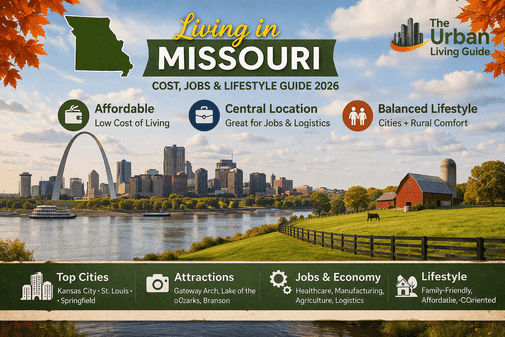
Living in Missouri: Heartland Stability, Cultural Fusion & Economic Value in 2026
Establishing your life in Missouri in 2026 means tapping into the literal crossroads of the United States—a state spanning over 69,704 square miles that bridges the gap between the industrial Midwest and the hospitality-focused South. As a long-term local resident will tell you, the “Show Me State” is defined by a deep-seated pragmatism, a rich tapestry of cultural influences from the Mississippi River to the Ozark Highlands, and a cost-of-living profile that makes homeownership a reality for families and professionals alike.
From the revitalized historic districts of St. Louis and the high-tech, entertainment-rich corridors of Kansas City to the academic and research-heavy atmosphere of Columbia, everyday life here is characterized by a comfortable, balanced pace, a population of approximately 6.2 million residents, and a robust, recession-resilient economy anchored by logistics, finance, healthcare, and advanced manufacturing.
For official administrative guidelines, state tax forms, and civic resources, residents frequently consult the Official State of Missouri Portal.
| Quick Facts Snapshot: Missouri (2026) | |
|---|---|
| Time Zone | Central Time Zone (CT / UTC-6, Daylight Saving UTC-5) |
| State Population | Approx. 6.2 Million (Stable growth across major metropolitan hubs) |
| State Income Tax | Graduated individual income tax brackets (currently phasing toward a lower flat-rate structure) |
| Median Home Price | $220,000 – $350,000+ (Highly accessible compared to national coastal averages) |
| Average Rent Range | $1,000 – $1,800+ per month (Dependent on downtown urban core vs. suburban proximity) |
| Sales Tax Baseline | 4.225% state base, with local city/county additions pushing totals between 6.0% and 9.0% |
What It Is Really Like to Live Here (The Macro Reality & Cultural Identity)
Living in the Show Me State is an experience in authentic, unpretentious American living. Locals quickly realize that day-to-day existence is dictated by a culture that prioritizes family, sports, and a slow-but-steady professional growth mindset. Unlike the frenetic pace of coastal metropolises, Missouri offers a predictable lifestyle where your dollar stretches significantly further, allowing for larger homes and more accessible recreational opportunities. The state’s history as a river-based commerce hub—anchored by the Mississippi and Missouri rivers—has left a legacy of resilience and hard work that remains evident in the local workforce today. For those interested in regional recreation and cultural planning, the Missouri Division of Tourism is the primary resource.
- Cultural Vibe: A powerful melting pot driven by Midwestern neighborliness and Southern-adjacent hospitality, highlighted by world-renowned culinary traditions like Kansas City BBQ and St. Louis-style cuisine.
- Pace of Life: Highly balanced—locals embrace the “hard work” mantra but prioritize weekend time at Lake of the Ozarks or attending professional sports events (like St. Louis Cardinals baseball or Kansas City Chiefs football).
- The Resident Trade-Off: Long-term locals accept that urban growth may be more measured than in “boom-town” states, in exchange for a significantly lower cost of living and a community-oriented, safe environment for raising children.
Regional Diversity, Geography & Economic Zones
Because Missouri bridges the Great Plains and the Interior Highlands, its geography offers diverse living zones that cater to entirely different lifestyle goals.
Urban Metros & Suburban Corridors
- The St. Louis Metro: A historic industrial and healthcare titan on the eastern border, defined by its architecture, museums, and proximity to the Illinois state line.
- The Kansas City Metro: A thriving, forward-looking economic hub on the western border, known for tech innovation, finance, and an internationally recognized culinary and arts scene.
- Springfield & The Ozarks: Serving as the gateway to the Ozark Mountains, this region provides a hybrid of professional job markets and dense, forest-covered recreational wilderness.
Agricultural, Plains & Mountain Belts
- The Northern Plains: Wide-open agricultural landscapes supporting the state’s massive soy and corn production, perfect for those seeking rural privacy.
- The Missouri River Valley: A fertile agricultural and logistics spine that facilitates commerce across the entire state.
Infrastructure, Power Grids, Water Systems & Transport Networks
Sustaining the state’s central logistics role demands massive investments in river engineering, highway durability, and energy grid stability.
Water Resources & River Logistics
- The River Spines: The Missouri River and Mississippi River are not just aesthetic features; they are active transportation arteries for agricultural products and industrial cargo. Learn more via the Missouri Department of Natural Resources.
Power Generation & Energy Frameworks
- Grid Stability: Electricity is supplied by a network of utilities including Ameren Missouri and Evergy, maintaining a mix of coal (transitioning toward natural gas) and hydroelectric power.
Statewide Transit, Rail, Air & Port Connectivity
- Global Logistics Gateways: International travel is anchored by St. Louis Lambert International (STL) and Kansas City International (MCI), while freight rail and river barges cement Missouri as a critical North American distribution node.
- Highway Artery: Major interstates like I-70 and I-44 facilitate the efficient movement of goods from the Midwest to the West Coast.
Statewide Economy, Job Markets & Major Industries
Missouri’s economy has successfully transitioned from traditional manufacturing to a high-value sector mix featuring medical, logistics, and technical innovation.
- Economic Footprint: Anchored by the central location in the U.S., which reduces distribution costs for retail and manufacturing giants.
- Dominant Sectors: Healthcare and biomedical research, aerospace manufacturing, financial services, and large-scale agricultural technology.
- Corporate Presence: Operational HQs for major entities like Stifel, Emerson Electric, Bayer (Crop Science), and Edward Jones. Track development via the Missouri Department of Economic Development.
Salary Realities Across Economic Corridors
- Professional Earning Potential: Specialized roles in medical diagnostics, financial software, and corporate management in Kansas City command salaries well above the Midwest median.
- Regional Wage Variance: Wages in smaller regional cities align with lower regional costs, often resulting in higher net disposable income than in coastal metros.
Cost of Living Realities & Housing Market Variance
Living in Missouri is arguably one of the most cost-effective ways to access a high-quality lifestyle in the U.S.
| Expense Category | Cost Range / Index Reality |
|---|---|
| Housing (Urban vs. Rural) | $1,100–$1,900 monthly in KCMO/STL; $700–$1,200 in inland county seats |
| Utilities | Very competitive; moderate energy demands and reliable grid rates |
| Transportation | Auto-centric, but stable fuel costs and manageable vehicle registration fees |
| Groceries & Everyday Goods | Consistently below national averages due to agricultural proximity |
State Tax Climate, Business Environment & Government Policies
The state maintains a conservative fiscal policy designed to minimize barriers for small businesses and families. Review compliance via the Missouri Department of Revenue.
- Tax Strategy: The state is actively reducing individual income tax rates to foster a more competitive regional business environment.
- Property Taxes: Generally manageable, with local assessments supporting community services and school funding without reaching the extremes of the Northeast.
Legal & Lifestyle Governance Quirks
- Driver Licensing: New residents must transfer out-of-state driver’s licenses and register vehicles through the Department of Revenue within 30 days.
- Voter Registration: Easily handled via the Secretary of State’s office, with multiple local and state channels for registration.
Climate, Weather Extremes & Natural Geography
Missouri experiences a four-season humid continental climate with warm-to-hot summers and chilly winters.
- Seasonal Variations: Summers can be humid, creating lush landscapes, while winters offer classic Midwestern snowfall without the extreme prolonged sub-zero cycles of the upper north.
- Natural Hazards: Being in the heart of the Midwest, residents should be aware of severe weather protocols, specifically regarding spring thunderstorm activity.
Education Systems & Major Healthcare Networks
Missouri anchors the Midwest’s clinical research and higher-education landscape. Explore state health metrics at the Missouri Department of Health and Senior Services.
- Higher Education: Home to institutions like the University of Missouri (Mizzou), Washington University in St. Louis, and Saint Louis University.
- Healthcare: Elite medical networks like BJC HealthCare and Mercy provide extensive, high-quality care across the state.
Culture, Outdoor Recreation & Lifestyle Shifts
Daily life in Missouri balances urban excitement and sprawling nature. Explore parks via Missouri State Parks.
- Outdoor Living: Exploring the sprawling Ozark National Scenic Riverways, float trips on the Current River, and urban park systems like Forest Park in St. Louis.
- Arts & Entertainment: Deeply proud of its music history—jazz in KC, blues in St. Louis—and a massive, family-friendly sports culture (Cardinals, Chiefs).
Relocation & State Residency Essentials
- Licensing: Secure your MO license/title at a Department of Revenue branch office within 30 days.
- Voter Registration: Register via the Secretary of State’s office before upcoming election cycles.
Major Counties and Rural Living Realities in Missouri
- Jackson County: The urban hub of the Kansas City metropolitan area.
- St. Louis County: The massive historic and economic engine of the eastern border.
- Greene County: Home to Springfield, representing the growth of the Ozark region.
Major Regional Hubs and Cities to Explore
Major Urban Hubs at a Glance
| City / Hub | Primary Driver | Vibe & Lifestyle Profile |
|---|---|---|
| Kansas City | Finance, Tech, BBQ | Innovative, artsy, cultural |
| St. Louis | Healthcare, Manufacturing | Historic, resilient, diverse |
| Springfield | Growth, Education | Family-focused, balanced, accessible |
| Columbia | Education | Collegiate, active, modern |
| Independence | Commerce | Suburban, traditional, comfortable |
Detailed Breakdown of Key Regional Hubs
Kansas City — The Innovative Heartland Hub
Kansas City is widely recognized for its rapid tech growth and professional sports culture. It offers a walkable downtown, thriving music venues, and one of the nation’s most iconic culinary identities.
St. Louis — The Historic Gateway
Positioned on the Mississippi, St. Louis blends deep colonial history with an affordable urban environment. It features iconic architecture and robust medical research anchors.
Springfield — The Gateway to the Ozarks
Springfield balances big-city career potential with small-town hospitality. It acts as the primary service and trade hub for the southern half of the state.
Columbia — The Central Academic Anchor
Columbia sits at the geographic center of the state, fueled by university innovation and providing a reliable, stable environment for students and families.
Independence — The Suburban Residential Hub
Independence provides residents with a traditional suburban experience that remains deeply connected to the broader Kansas City employment landscape.
Pros and Cons of Making Missouri Your Home
| Advantages (Pros) | Systemic Drawbacks (Cons) |
|---|---|
| Consistently low cost of living and housing | Slower urban economic growth than coastal hubs |
| Zero state income tax potential (with reform) | Requires car-centric lifestyle in most areas |
| Diverse, accessible recreational nature | Humidity during summer months |
| Strong, stable community and family culture | Healthcare service disparities in rural zones |
| Central U.S. location for logistics | Severe storm risks during spring months |
Frequently Asked Questions About Living in Missouri
Is Missouri a good state to live in?
Yes, it is highly attractive for those seeking a high value-for-money lifestyle, stable career paths, and an active community culture centered on family and outdoor living.
What is the actual cost of living in Missouri?
It is remarkably affordable, particularly when compared to the national average. Housing, groceries, and services are significantly cheaper than in coastal states.
Which region or city is best to settle down in?
It depends on your lifestyle: Kansas City offers a dynamic urban career atmosphere, while the smaller regional hubs provide excellent affordability for families and first-time buyers.
Does Missouri have high taxes?
The tax burden is moderate. With ongoing state-wide efforts to lower individual income tax rates, the fiscal environment is becoming increasingly friendly for families and businesses.
How safe is everyday life across the state?
Safety is consistently high in Missouri’s suburban and rural counties. As with any state, urban metropolitan centers follow standard metropolitan safety trends that require typical city awareness.
What industries dominate Missouri’s job market?
Manufacturing, advanced healthcare, logistics, and professional financial services are the primary economic drivers supporting the job market.
What is the weather like?
Missouri has a four-season climate with hot, humid summers and cool winters, providing a true seasonal experience without the extreme cold found in northern states.
Explore Detailed City Guides Across Missouri
At The Urban Living Guide (TULG), our core mission is to provide deeply researched regional insights and city-level navigation tools to help you evaluate your relocation options with total confidence. To discover what daily life, housing patterns, and local economies look like across our featured municipal centers throughout the Show Me State, explore our comprehensive resident hub guides below:
- Living in Kansas City, Missouri
- Living in St. Louis, Missouri
- Living in Springfield, Missouri
- Living in Columbia, Missouri
- Living in Independence, Missouri
Whether you are comparing career prospects in the Kansas City tech sector or evaluating lifestyle shifts in the historic river districts of St. Louis, our editorial team remains dedicated to delivering research-backed, data-driven frameworks to support your relocation and residency decisions with complete clarity.