

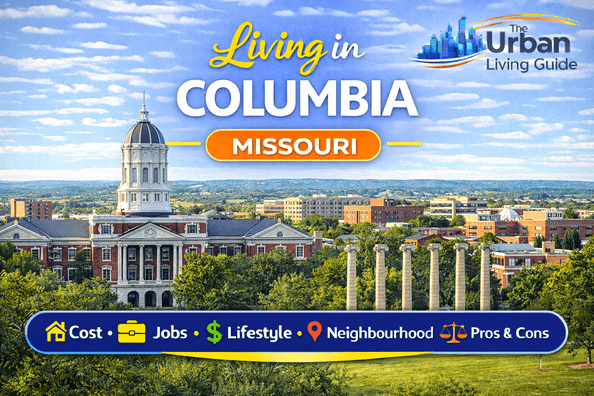
Living in Columbia, Missouri in 2026: The Complete Local Guide to Mizzou Culture, CoMo Community Life, and Central Missouri Innovation
Stretching across the fertile rolling hills of central Missouri along the historic corridor between Kansas City and St. Louis, living in Columbia, Missouri offers an extraordinary fusion of vibrant Big Ten college-town energy, a robust healthcare and research economy, and a deeply connected Midwestern community spirit. Affectionately known locally as “CoMo,” Columbia serves as the intellectual and commercial heart of Boone County, anchoring a rapidly expanding metropolitan population that exceeds 125,000 residents within city limits.
Universally celebrated as the home of the University of Missouri (Mizzou)—the state’s flagship public university and a premier tier-one research institution—Columbia commands a dynamic, youthful identity that defies the sleepy stereotypes of standard mid-sized Midwestern enclaves. Whether you are strolling past the historic red-brick columns of the Francis Quadrangle, cycling through the shaded canopy of the MKT Nature Trail, or exploring the eclectic local boutiques, independent roasters, and live music venues packed into The District, life here delivers an intellectually stimulating, art-infused, and remarkably accessible standard of living. Municipal governance, neighborhood development programs, and public safety initiatives are centrally administered through the official City of Columbia Government Portal under the guidance of local city leadership.
Why Columbia Has Evolved Into Central Missouri’s Premier Hub
Over recent decades, Columbia has captured national acclaim as a premier destination for academics, healthcare professionals, families, and remote workers seeking major-city cultural amenities paired with down-to-earth hospitality. Key factors driving its sustained popularity include:
- World-Class Academic and Research Ecosystem: Immediate presence of the prestigious University of Missouri, driving breakthrough scientific discoveries, lifelong learning programs, and diverse cultural events. Explore regional educational initiatives via the Columbia Convention and Visitors Bureau Portal.
- Robust Healthcare and Corporate Employment: A recession-resistant economy anchored by massive medical centers, insurance giants, and innovative financial technology startups.
- Exceptional Walkability and Trail Networks: An award-winning park system and extensive multi-use trail networks seamlessly integrated into everyday urban and suburban life.
- Thriving Independent Arts and Culinary Scene: A celebrated creative community featuring independent film festivals, local farm-to-table dining, and vibrant live music showcases.
Columbia At a Glance: Key Living Metrics
| Evaluation Metric | Local Data Overview & Regional Reality |
|---|---|
| Population | Approx. 125,000 within municipal city limits (Boone County population exceeds 185,000) |
| Median Monthly Rent | Ranges from $700 to $1,700+ depending on student housing proximity, unit size, and neighborhood district |
| Average Annual Salary | Typically spans $60,000 to $95,000 across higher education, healthcare, finance, and insurance sectors |
| Primary Economic Pillars | Higher education, clinical healthcare and medical research, insurance, finance, government, and technology |
| State Income Tax | Progressive Missouri state income tax structure ranging up to 4.8% across standard taxable brackets |
| Average Summer High | Routinely reaches 85°F to 95°F during warm, sun-drenched July and August afternoons |
| Primary Transit Mode | COMO Connect public bus system, extensive cycling greenways, and regional air service |
Famous Personalities, Local Icons & Major Brands in Columbia
Columbia has a proud history of nurturing international music superstars, acclaimed Hollywood actors, legendary business moguls, and powerhouse collegiate athletic traditions:
- Sheryl Crow: The globally celebrated, multi-Grammy Award-winning singer-songwriter and musician who maintains deep historical and personal roots in Columbia (Sheryl Crow Official Portal).
- Jon Hamm: The acclaimed Emmy-winning actor, producer, and cultural icon who grew up in St. Louis and maintained formative educational connections throughout central Missouri (Jon Hamm IMDb Profile).
- Sam Walton: The visionary retail entrepreneur and founder of Walmart who graduated from the University of Missouri and launched his legendary commercial journey in the region.
- Missouri Tigers Athletics: Elite NCAA Division I athletic programs competing in the powerhouse Southeastern Conference (SEC), driving massive community spirit at Faurot Field and Mizzou Arena (Missouri Tigers Official Athletic Portal).
- MU Health Care & Veterans United Home Loans: Major corporate and healthcare leaders maintaining massive regional operations and employing thousands of local professionals (Veterans United Home Loans Portal).
Job Market & Business Opportunities with Major Employers
The employment landscape in Columbia offers exceptional stability, professional diversity, and robust career pathways across education, medicine, and corporate finance:
- Higher Education and Academic Research: Anchored by the University of Missouri, supporting thousands of faculty, research scientists, and administrative careers. Track regional employment data via the Missouri Department of Elementary and Secondary Education.
- Healthcare and Advanced Clinical Services: A booming medical hub driven by MU Health Care, specializing in trauma care, specialized medicine, and biomedical research.
- Finance, Insurance and Real Estate (FIRE): Home to prominent corporate headquarters like Shelter Insurance and Veterans United, providing extensive white-collar professional roles.
- Technology and Startup Innovation: An emerging entrepreneurial ecosystem supported by university incubators, venture networks, and software engineering firms.
Housing & Real Estate Overview in Columbia
Navigating the real estate market in Columbia reveals an attractive mix of historic neighborhood preservation, student-adjacent rentals, and rapidly growing suburban subdivisions:
- Diverse Architectural Stock: Features charming early 20th-century Craftsman homes in Old Southwest, historic brick houses in East Campus, and expansive modern developments across South Columbia. Track property assessments via the Boone County Assessor Portal.
- Market Valuations: While student housing demand near campus commands steady pricing, overall real estate values remain significantly more accessible than coastal hubs or larger Missouri metros.
- Rental Market Inventory: Average monthly rent spans $700 to $950 for studio units, $900 to $1,300 for one-bedroom apartments, $1,200 to $1,700 for two-bedroom properties, and $1,900 to $3,200+ for single-family rental homes.
- Suburban and Rural Alternatives: Surrounding Boone County communities offer quiet rural acreage and small-town charm with short commutes into the city core.
Best Neighborhoods in Columbia: Finding Your Ideal Community
| Neighborhood Name | Vibe & Lifestyle Character | Housing & Price Profile |
|---|---|---|
| Old Southwest | Historic, highly desirable residential neighborhood featuring mature tree-lined streets and historic period architecture. | Historic Craftsman and Colonial homes, established blocks, and stable residential valuations. |
| Downtown Columbia / The District | Vibrant, energetic urban core packed with local boutiques, independent coffee shops, theaters, and nightlife. | Modern loft apartments, historic multi-family conversions, and dynamic urban pricing. |
| East Campus | Charming historic academic neighborhood nestled directly alongside the university campus and Francis Quadrangle. | Historic faculty homes, student-adjacent rentals, and high-demand community valuations. |
| South Columbia | Thriving suburban district known for master-planned subdivisions, top-tier public schools, and modern retail centers. | Spacious single-family homes, family parks, and competitive suburban pricing. |
| North Columbia | Up-and-coming residential corridor offering fantastic property value and growing neighborhood commercial investments. | Affordable bungalows, newer residential construction, and excellent value for first-time buyers. |
Watch a recent video by a popular vlogger to understand daily life and vibes in Columbia.
What It’s Really Like Living in Columbia
Daily life in Columbia is characterized by an active, intellectually curious, and community-driven rhythm that seamlessly bridges academic life with outdoor recreation:
- Weekend Trail and Park Traditions: Residents spend weekends hiking the sandstone bluffs of Rock Bridge Memorial State Park or cycling along the historic MKT Nature Trail. Check municipal recreation schedules via the Columbia Parks and Recreation Portal.
- Downtown Cafes and Farmers Market Culture: Saturday mornings begin at the award-winning Columbia Farmers Market, followed by afternoon visits to independent bookstores and roasters in The District.
- Arts and Festival Engagement: Participating in world-class independent film festivals, seasonal music showcases, and campus cultural events throughout the year.
- Social Atmosphere: Welcoming, progressive, highly educated, and passionately supportive of local makers, neighborhood businesses, and Mizzou athletics.
👉 If you’re exploring this city for the first time, use the map below to get a sense of where it sits.
Cost of Living in Columbia: Monthly Expenses & Salary Needs
The cost of living in Columbia sits comfortably below the national average, making it an exceptional financial haven for families, professionals, and retirees:
- Housing Overhead: $1,100 to $1,600 covering standard apartment rentals and family housing across popular districts. Review regional economic data via the Bureau of Labor Statistics Midwest Information Office.
- Utilities & Power: $120 to $200 monthly for municipal electricity, water, heating, and waste services, reflecting efficient local utility management.
- Groceries & Household Goods: $280 to $420 depending on household size and shopping preferences between local organic markets and major supermarkets.
- Transportation Expenses: $90 to $160 covering public bus fares, fuel, and routine vehicle maintenance.
- Required Household Income: Single professionals or working families typically require an annual household income between $60,000 and $85,000 to comfortably manage living expenses and long-term financial goals.
Transportation, Commute Dynamics & Transit Realities
Columbia provides a compact, highly efficient transportation network that keeps daily transit times remarkably brief:
- COMO Connect Public Bus Service: Comprehensive municipal bus routes connecting university campus hubs, residential wards, and commercial shopping centers (COMO Connect Transit Portal).
- Extensive Cycling and Walking Infrastructure: Dedicated multi-use trails and bike lanes designed specifically for commuter and recreational cyclists.
- Highway Connectivity: Excellent regional freeway access via Interstate 70 and U.S. Highway 63, ensuring smooth travel across central Missouri.
- Commute Times: Average daily commutes remain wonderfully brief at approximately 18 minutes during peak traffic hours.
- Aviation Convenience: Proximity to Columbia Regional Airport (COU) offering direct commercial flights to major national hubs (COU Airport Official Portal).
Weather Patterns, Seasonal Realities & Climate Factors
The environmental rhythm of Columbia follows a classic humid continental climate featuring four distinct, gorgeous seasons:
- Warm, Sunlit Summers: Summer daytime highs routinely average 85°F to 95°F, providing ideal conditions for swimming, hiking, and evening patio dining. Track active meteorological forecasts via the National Weather Service St. Louis / Central Missouri Portal.
- Crisp, Manageable Winters: Winter seasons bring cool temperatures and occasional snowfall, maintaining a picturesque landscape without severe alpine storms.
- Splendid Transition Seasons: Spring and autumn deliver vibrant campus blooms, spectacular Ozark-edge fall foliage, and crisp, refreshing air.
Education, Schools & Major Universities
Educational excellence stands as the foundational anchor of Columbia’s economy, intellectual vitality, and workforce development:
- University of Missouri (Mizzou): Flagship public research university offering comprehensive undergraduate, graduate, medical, and veterinary degree programs (University of Missouri Official Portal).
- Columbia College: Respected private liberal arts institution providing flexible undergraduate and graduate education programs downtown (Columbia College Official Portal).
- Stephens College: Historic women’s college known for excellence in performing arts, fashion design, and health sciences.
- Columbia Public Schools: Operating numerous high-achieving neighborhood elementary, middle, and magnet high schools.
Medical Facilities, Hospitals & Healthcare Systems
Healthcare infrastructure in Columbia is advanced, highly specialized, and serves as the premier medical destination for central Missouri:
- MU Health Care: Comprehensive academic health system operating level-one trauma facilities, children’s hospitals, and specialized clinical care networks (MU Health Care Official Portal).
- Boone Health & The University of Missouri Hospital: Leading regional medical centers delivering exceptional acute care, surgical specialties, and patient wellness programs.
- Specialized Outpatient Clinics: Extensive network of rehabilitation facilities, urgent care centers, and specialized pediatric specialists across the city.
Popular Hotels, Cafes, Dining & Culinary Scene
The hospitality and culinary identity of Columbia reflects chic boutique hotel elegance, artisan coffee mastery, and a farm-to-table culinary movement:
- The Broadway Columbia: Sophisticated boutique hotel located in downtown Columbia, featuring striking contemporary design, fine dining, and rooftop hospitality (The Broadway Columbia Portal).
- The Tiger Hotel & Stoney Creek Hotel: Historic luxury landmarks offering timeless elegance and premier guest accommodations near campus.
- Independent Cafes & Breweries: Acclaimed neighborhood roasters, craft microbreweries, and farm-to-table bistros serving innovative local ingredients.
Sightseeing, Cultural Spots & Tourist Attractions
Landmark cultural institutions and natural destinations significantly enhance the daily quality of life for local residents:
- Rock Bridge Memorial State Park: Sprawling state park featuring subterranean caves, underground streams, and scenic hiking trails.
- MKT Nature Trail: Historic converted railway trail offering miles of shaded cycling and running paths through scenic creek valleys.
- Museum of Art and Archaeology: Cultural institution housing extensive classical antiquities and fine art collections on the university campus.
Regional Trade-offs: Pros and Cons of Living in Columbia
Pros
- Exceptionally affordable housing and rental markets compared to national university city averages.
- Robust higher education and healthcare employment sectors providing strong economic stability.
- Vibrant, walkable downtown district packed with independent dining, arts, and entertainment.
- Short, stress-free average daily commutes hovering around 18 minutes.
- Active, progressive community atmosphere combined with beautiful parks and outdoor greenways.
Cons
- Smaller private-sector corporate job market compared to major multi-million resident metros.
- University football games and academic semesters temporarily increase local traffic and parking congestion.
- Public transportation infrastructure is more limited outside central campus and downtown corridors.
- Warm, humid summer afternoons requiring air-conditioned indoor environments.
- Fewer large-scale international entertainment arenas and 24-hour subterranean transit options.
Who Is Columbia Ideal For — And Who Should Avoid It?
Who Columbia Is Ideal For
- Students and Academics: Individuals pursuing higher education or faculty careers at Mizzou, Columbia College, or Stephens College.
- Healthcare Professionals: Medical practitioners seeking advanced clinical careers within major academic health systems.
- Families and Homebuyers: Residents looking for safe neighborhoods, excellent schools, and strong community engagement.
- Active Urbanites: People who value a walkable downtown, local coffee culture, and cycling greenways.
Who Should Avoid It
- Mega-City Nightlife Seekers: Residents looking for 24-hour ultra-dense metropolitan club districts and massive urban skylines.
- Subway and Heavy-Rail Purists: Individuals who rely entirely on underground heavy-rail transit systems without driving a personal vehicle.
- High-Altitude Alpine Enthusiasts: People seeking rugged mountain peaks over rolling central Missouri hills and forested river valleys.
- Corporate Conglomerate Climbers: Workers requiring massive Fortune 500 tech and financial headquarters found only in top-tier global metros.
Real Experiences: Perspectives from Long-Term Residents (5 to 10+ Years)
“Moving to the Old Southwest neighborhood ten years ago after finishing my degree at Mizzou was the best decision of my life. The historic homes, the mature trees, and being able to bike downtown or jump straight onto the MKT trail on a Saturday morning is an absolute dream. It has all the intellectual energy of a big city with the warmth of a small town.”
[Source: r/columbiamo Community Discussions — u/OldSouthwestHiker, resident of 11 years]
“Taking a clinical role at MU Health Care brought my family here six years ago, and we’ve been continually impressed by how livable CoMo is. Housing is reasonable, commutes are under twenty minutes, and the local food and farmers market scene is top-notch. You definitely notice when students return in the fall, but the trade-offs are completely worth it.”
[Source: Local Resident Panels & Community Forums — Sarah Jenkins M., South Columbia homeowner of 7 years]
Frequently Asked Questions About Living in Columbia, Missouri
Is Columbia expensive to live in compared to other U.S. university cities?
No, Columbia maintains a highly affordable cost of living that sits comfortably below the national average, with housing remaining one of its most prominent financial advantages.
What level of annual salary do individuals need to live comfortably in Columbia?
Most single professionals and working households require an annual household income between $60,000 and $85,000 to comfortably cover housing, utilities, transportation, and discretionary spending.
Can residents successfully navigate daily life in Columbia without owning a personal vehicle?
Yes, particularly if you live near the Mizzou campus or Downtown Columbia, where walking, cycling, and COMO Connect bus routes make daily travel manageable, though many residents still prefer owning a car.
What are the standout residential neighborhoods recommended for new residents?
Top residential districts include Old Southwest for historic charm, Downtown for energetic urban lofts, East Campus for academic proximity, and South Columbia for modern family subdivisions.
How do daily commute dynamics function for working professionals across the city?
Commuters primarily utilize Interstate 70 and U.S. Highway 63, enjoying remarkably brief average daily commute times of around 18 minutes during standard peak hours.
What core cultural and natural highlights define the local Columbia experience?
Residents enjoy exploring Rock Bridge Memorial State Park, biking the MKT Trail, attending Mizzou SEC athletic events, and shopping at the Columbia Farmers Market.
🔗 Explore More Cities in Missouri
If you’re exploring more options beyond Columbia, The Urban Living Guide has covered several other popular cities in Missouri. You can also check:
- Living in Kansas City, Missouri
- Living in St. Louis, Missouri
- Living in Springfield, Missouri
- Living in Independence, Missouri
If you want to know more about living in Columbia, explore these guides:
- Cost of Living in Columbia, Missouri
- Pros and Cons of Living in Columbia, Missouri
- Best Neighborhoods in Columbia, Missouri
For a complete overview, check our full guide: Moving to Columbia, Missouri
These guides offer a comprehensive view of life in different cities, covering key aspects like cost of living, housing, job opportunities, neighborhoods, commute, weather, education, popular spots, and major employers.
The Urban Living Guide brings all these insights together in one place, making it easier to compare cities and choose the one that best fits your lifestyle, priorities, and long-term goals.