

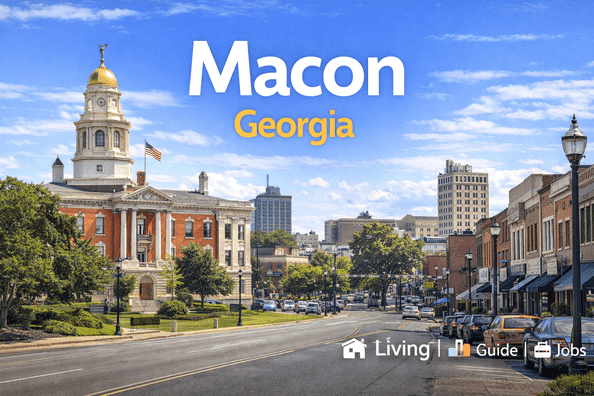
Living in Macon, Georgia: Budget-Friendly Southern Charm and Music History
Living in Macon, Georgia offers a highly affordable, slower-paced lifestyle paired with incredibly rich historic charm and a growing wave of downtown redevelopment. Strategically located right in the center of the state—earning it the nickname the “Heart of Georgia”—Macon sits approximately 85 miles south of Atlanta. With a population of around 160,000 residents, it serves as the primary regional hub for healthcare, higher education, and logistics for central Georgia.
Nationally recognized for its unparalleled music history, the city is a pilgrimage site for fans of Southern rock, soul, and R&B. Beyond its musical roots, Macon boasts stunning antebellum architecture and significant cultural landmarks. In recent years, the city has poured massive investments into revitalizing its downtown core, bringing historic lofts, breweries, and boutique businesses back to life. Many remote workers, retirees, and young families relocate here seeking massive relief from the soaring housing costs of Atlanta, all while maintaining access to major regional business corridors like I-75 and I-16.
What Makes Macon So Unique & Popular
Macon is uniquely defined by its incredible cultural footprint, outsized music heritage, and an undeniable commitment to historic preservation. It provides genuine Southern hospitality and deep historical roots at a fraction of the cost of larger metropolitan areas. Every spring, the city explodes in pink during the International Cherry Blossom Festival, boasting over 350,000 Yoshino cherry trees—far more than Washington D.C. For newcomers looking to explore local events, the Visit Macon official portal is a go-to resource.
- Musical Heritage: Known globally as the birthplace of Southern Rock and a foundational city for soul music.
- The Cherry Blossom Festival: A massive two-week spring event that draws visitors from all over the world and unites the local community.
- Indigenous History: Home to the Ocmulgee Mounds National Historical Park, preserving over 17,000 years of continuous human habitation.
- Unbeatable Affordability: Offers one of the lowest cost-of-living index scores for a city of its size in the Southeast.
Macon at a Glance: Key Relocation Metrics
Reviewing these baseline statistics provides a realistic expectation of what central Georgia living entails in the current economic landscape.
| Metric | Macon City Data | Regional Context |
|---|---|---|
| City Population | ~160,000 Residents | Hub of the Middle Georgia region |
| Median Home Price | $180,000 – $250,000 | Significantly below national and state averages |
| Average 1BR Rent | ~$1,150 | Highly affordable compared to Atlanta |
| Average Commute | 15 – 20 Minutes | Low traffic outside of the I-16/I-75 interchange |
| Top Industries | Healthcare, Education, Logistics | Defense (Robins AFB nearby) and Manufacturing |
If this area is new to you, check the map below to see where the city is positioned geographically.
Famous Personalities, Sports Teams & Major Brands in Macon
Macon has historically punched far above its weight class when it comes to cultural impact and corporate presence. It is legendary for producing pioneering artists who shaped modern American music, while its central location makes it a strategic hub for major national brands and massive regional employers.
- Musical Legends: The city is the hometown of architect-of-rock Little Richard, soul legend Otis Redding, and country music star Jason Aldean. The Allman Brothers Band also made Macon their home base in the 1970s.
- Major Brands: The regional economy is bolstered by massive corporate operations, including a major regional hub for GEICO, massive manufacturing facilities for YKK AP and Kumho Tire, and logistics centers for Amazon.
- Collegiate Athletics: The city rallies around the Mercer Bears, competing in NCAA Division I athletics and bringing high-energy sports culture to the downtown area.
Job Market & Business Opportunities with Major Employers
While the overall job market is less diversified than Atlanta, Macon offers incredible stability in essential sectors. Healthcare, higher education, and logistics are the backbone of the local economy. Furthermore, the city heavily benefits from its proximity to Robins Air Force Base (located just south in Warner Robins), which employs over 24,000 civilians and military personnel, making it the largest single-site industrial complex in Georgia.
Locally, Atrium Health Navicent and Mercer University are massive employment anchors. The city’s position at the intersection of I-75 and I-16 has also led to a boom in warehousing and distribution centers.
- Entry-level salaries: Generally range from $38,000 – $50,000.
- Mid-level professional roles: Typically sit between $55,000 – $75,000.
- Healthcare & Specialized roles: Registered nurses, medical specialists, and university faculty frequently earn $70,000+.
Housing & Real Estate Overview in Macon
Housing is unquestionably Macon’s biggest advantage. For the price of a small condo in a major coastal city, buyers here can often afford a historic, multi-bedroom home on a large lot. In 2026, median home prices hover comfortably between $180,000 and $250,000, though fully restored historic mansions in Vineville or luxury builds in North Macon will price higher.
The rental market is steady, catering to Mercer University students, young medical professionals, and budget-conscious families. Current average monthly rent projections are:
- Studio Apartment: $800 – $1,000
- 1 Bedroom Apartment: $1,000 – $1,300
- 2 Bedroom Apartment: $1,300 – $1,800
- Family Home Rentals: $1,700 – $2,500
Best Neighborhoods in Macon: Finding Your Ideal Community
Neighborhood selection in Macon is critical, as property values, school zones, and overall lifestyle vary significantly from street to street. The table below outlines the most popular and stable residential pockets.
| Neighborhood / Suburb | Location, Pricing & Community Overview |
|---|---|
| North Macon | The premier suburban area of the city. Highly sought after for its newer construction, perceived safety, and immediate access to major shopping centers like The Shoppes at River Crossing. |
| Ingleside Village | A quirky, highly walkable historic district packed with mid-century bungalows, independent antique shops, and local favorites like Ingleside Village Pizza. Extremely popular with young professionals. |
| Downtown Macon | The heart of the city’s revitalization. Features stunning historic loft conversions located steps away from breweries, cocktail bars, and live music venues. Ideal for singles and remote workers. |
| Vineville | A massive historic district lined with towering oak trees and stunning Victorian and Craftsman mansions. Offers immense architectural charm for those willing to invest in older properties. |
| Lake Wildwood | A private, gated residential community built around a massive man-made lake. Highly family-friendly, offering a clubhouse, pool, and a strong neighborhood association. |
What It’s Really Like Living in Macon (Daily Life & Vibe)
Life in Macon feels incredibly community-driven. Unlike the relentless hustle of Atlanta, residents here enjoy a relaxed pace where commutes are short and weekend schedules revolve around local gatherings. First Fridays in Downtown Macon act as a monthly block party where art galleries open their doors, local bands play on the streets, and restaurants are packed.
Outdoor life is anchored by Amerson River Park, a stunning green space along the Ocmulgee River offering miles of paved trails and kayaking opportunities. While the entertainment options are more localized than a major metropolis, the deeply authentic Southern culture, rich music scene, and friendly atmosphere make it highly endearing to long-term residents.
Watch a recent video by a popular vlogger to understand daily life and vibes in Macon:
Cost of Living in Macon: Monthly Expenses & Salary Needs
The cost of living here is a massive draw, sitting well below the national average. Because housing takes up such a small percentage of monthly income compared to coastal cities, residents can enjoy a high quality of life on a modest income. A single professional can live comfortably targeting $50,000+, while households generally thrive on $75,000+.
- Average Rent (1BR): ~$1,150 average for updated units.
- Monthly Utilities (Electricity, Water, Internet): $130–$190 (Spikes during heavy summer AC usage).
- Groceries & Dining: Falls below the national average, making dining out at local soul food and BBQ spots highly accessible.
- Transportation: Affordable, driven by short commute times and lower-than-average gas prices.
- Childcare Costs: Very reasonable, averaging $700–$1,000 per month per child.
Transportation, Highway Bottlenecks & Airport Connectivity
Macon is entirely car-dependent. While the Macon Transit Authority (MTA) operates local bus routes, the vast majority of residents rely heavily on personal vehicles. The upside to this is that the average commute is an incredibly brief 15–20 minutes.
The primary traffic headache for locals is the ongoing, multi-year construction mega-project at the I-16 and I-75 interchange, which frequently causes sudden delays and lane closures.
For air travel, the Middle Georgia Regional Airport (MCN) offers limited commercial flights (primarily to Baltimore). For extensive domestic and international travel, residents utilize shuttle services like Groome Transportation for the easy 75-minute drive north to Hartsfield-Jackson Atlanta International Airport.
Weather Patterns, Seasonal Realities & Climate Factors
Macon sits in a humid subtropical climate, heavily influenced by its location on the geographic “fall line” of Georgia.
- Summers: Long, intensely hot, and highly humid, with temperatures regularly sitting in the mid-90s from June to September. Macon is infamously located below the “Gnat Line,” meaning summer months come with an abundance of pesky sand gnats.
- Winters: Very mild and short. Snow is a highly rare occurrence, and residents comfortably enjoy outdoor activities year-round.
- Spring: Breathtakingly beautiful, defined by the blooming of hundreds of thousands of cherry blossoms, though it brings heavy pollen.
Education, Schools & Major Universities
Higher education is a massive pillar of the local community. The prestigious Mercer University (a top-tier private research university) drives local innovation, law, and medicine. The city also hosts Wesleyan College (the first college in the world chartered to grant degrees to women) and Middle Georgia State University.
For K-12 education, the Bibb County School District manages the public schools. Performance varies widely by zone, which drives many families to specifically seek housing in North Macon, or to utilize the area’s robust network of private and charter school options.
Medical Facilities, Hospitals & Healthcare Systems
Macon provides world-class healthcare to the entire central Georgia region. Atrium Health Navicent serves as a massive medical hub, operating the region’s only Level 1 Trauma Center, a dedicated children’s hospital, and extensive specialized care units. Furthermore, Piedmont Macon Medical Center provides an additional layer of comprehensive hospital services, ensuring residents never need to travel to Atlanta for top-tier medical attention.
Popular Hotels, Cafes, Dining & Culinary Scene
The local culinary scene is deeply rooted in Southern comfort, elevated by a wave of modern downtown chefs.
- Local Stays: Visitors frequently book the historic 1842 Inn for a classic Southern experience, or the modern, upscale Hotel Forty Five located right downtown.
- Cafes & Social Hubs: Coffee shops like Z Beans are massive hubs for Mercer students and remote workers.
- Dining Culture: You cannot live in Macon without experiencing the legendary H&H Soul Food (famous for feeding the Allman Brothers). Downtown favorites like The Rookery serve up incredible burgers, while Ocmulgee Brewpub offers fantastic craft beer and artisan food.
Sightseeing, Cultural Spots & Tourist Attractions
Macon protects its history fiercely, offering residents and tourists a rich tapestry of museums and landmarks.
- The Big House: The Allman Brothers Band Museum preserves the home where the legendary band lived and created their greatest hits.
- Indigenous Heritage: The Ocmulgee Mounds National Historical Park features ancient earthwork mounds built by the Mississippian culture over 1,000 years ago.
- The Tubman Museum: The largest museum in the Southeast dedicated to the art, history, and culture of African Americans.
Honest Trade-offs: Pros and Cons of Living in Macon
Every city has its realities. Here is the unvarnished truth for anyone planning a move to central Georgia:
Pros:
- Exceptionally affordable housing and lower overall cost of living.
- Very low traffic congestion and short daily commutes.
- Incredible historic character, architecture, and music history.
- A thriving, rapidly redeveloping downtown core.
- Access to world-class healthcare facilities.
Cons:
- Limited job diversity, particularly in high-paying corporate tech sectors.
- Fewer massive entertainment and nightlife options compared to Atlanta.
- Complete car dependency with highly limited public transit.
- Lower median salary levels across general industries.
- Intense summer heat paired with annoying coastal gnats.
Who Is Macon Ideal For (and Who Should Avoid It?)
Ideal For: Remote workers seeking to maximize their salary, budget-conscious first-time homebuyers, retirees looking for a mild climate, and medical or academic professionals moving to work at Navicent or Mercer.
Who Should Avoid It: Ambitious corporate climbers looking for a fast-paced Fortune 500 job market, individuals who despise driving, and those who require massive big-city nightlife and endless weekend entertainment options.
Real Experiences: Perspectives from Long-Term Residents (5 to 10+ Years)
Metrics only tell part of the story. Here is what veteran locals have to say about navigating daily life in the Heart of Georgia:
“The I-16/I-75 interchange construction has been going on for what feels like a lifetime, so learning the backroads through Vineville is an absolute must. That being said, seeing downtown come back to life over the last decade has been incredible. You can buy a gorgeous historic home here for the price of a one-bedroom apartment in Midtown Atlanta.”
[Source: r/Macon Community Discussions]
“People will warn you about the ‘Macon divide’—basically pushing everyone to buy in North Macon for the school zones—but neighborhoods like Ingleside have so much more character. The hardest adjustment for newcomers is usually the summer weather. Once the gnats arrive in May, you either adapt or stay indoors. But grabbing a Jimmy Carter burger at The Rookery on a Friday night makes it feel like home.”
[Source: Local Neighborhood Subreddit Threads]
Frequently Asked Questions About Living in Macon, Georgia
Is Macon, Georgia expensive?
No, Macon is widely considered highly affordable. Housing costs, property taxes, and everyday utilities sit significantly below the national average and are vastly cheaper than living in Atlanta or Savannah.
What salary do you need to live comfortably in Macon?
Because of the low cost of housing, a single adult can live comfortably on around $50,000 per year. Families typically require between $70,000 and $80,000 depending on their neighborhood and lifestyle choices.
Is Macon a safe place to live?
Safety varies significantly by neighborhood. Areas like North Macon, Ingleside, and gated communities like Lake Wildwood are generally considered very safe, while other pockets face urban challenges. Standard city awareness is required.
Is Macon family-friendly?
Yes, especially in the suburban sectors. The city offers massive parks like Amerson River Park, local sports leagues, and highly affordable large homes that attract budget-conscious families.
What is the biggest expense in Macon?
Housing is the largest monthly expense, though it remains highly manageable. Transportation (car payments, gas, insurance) is the second largest, as vehicle ownership is mandatory.
Can you live in Macon without a car?
It is incredibly difficult. While the downtown core is walkable, living a normal life, commuting, and running errands across the sprawling city limits absolutely requires a personal vehicle.
Is Macon better than Atlanta?
It depends entirely on your goals. Macon is vastly more affordable, offers historic charm, and has almost no traffic. Atlanta is superior for career growth, massive salaries, public transit, and high-end entertainment.
🔗 Explore More Cities in Georgia
If you’re exploring more options beyond Macon, The Urban Living Guide has covered several other popular cities in Georgia. You can also check:
- Living in Atlanta, Georgia
- Living in Alpharetta, Georgia
- Living in Savannah, Georgia
- Living in Augusta, Georgia
Want to learn more about Macon? Check out these helpful guides:
- Cost of Living in Macon, Georgia
- Pros and Cons of Living in Macon, Georgia
- Best Neighborhoods in Macon, Georgia
Ready to make your decision? Explore our complete guide here: Moving to Macon, Georgia
These guides give you a complete picture of what it’s like living across different cities, covering everything from cost of living, housing, and job opportunities to neighborhoods, commute, weather, education, popular places, and major employers.
The Urban Living Guide brings together these local insights in one place, helping you compare cities easily and make a confident, well-informed decision based on your lifestyle and goals.