
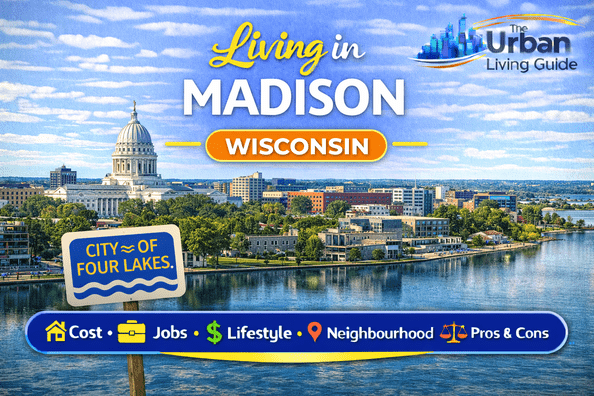
Living in Madison, Wisconsin – Introduction
Living in Madison, Wisconsin offers a unique blend of college-town energy, scenic lakes, and a thriving technology and research economy. Located in south-central Wisconsin, Madison is the state capital and home to around 280,000 residents. The city sits beautifully between Lake Mendota and Lake Monona, giving it one of the most picturesque landscapes among U.S. state capitals.
Often referred to as “The City of Four Lakes,” Madison is known for its outdoor lifestyle, biking culture, and vibrant university atmosphere. The presence of the University of Wisconsin–Madison, one of the top public universities in the United States, strongly influences the city’s culture, economy, and innovation ecosystem.
Many people consider living in Madison, Wisconsin because of its strong job market in technology, education, healthcare, and government. The city also consistently ranks among the best places to live in the U.S. due to its high quality of life, safety, and beautiful environment.
Residents enjoy scenic lakeside parks, farmers markets around the Wisconsin State Capitol, and cultural events throughout the year. Combined with strong economic growth and a welcoming community, Madison offers an excellent lifestyle for students, professionals, and families.
Watch a recent video by a popular vlogger to understand daily life and vibes in Madison.
Information in this guide is compiled from publicly available data, official city resources, economic reports, and local housing databases to ensure accuracy and reliability.
What Makes Madison So Popular
Key reasons why people move here include:
• Beautiful lakefront environment around Lake Mendota and Lake Monona
• Home to the University of Wisconsin–Madison
• Thriving technology and startup ecosystem
• Strong biking culture with extensive trails
• High quality of life and safety
Madison is widely known as “The City of Four Lakes.”
Famous Personalities, Sports & Major Brands from Madison
Madison has produced several notable personalities and institutions.
• Chris Farley – Legendary comedian and actor from Wisconsin
• Frank Lloyd Wright – Famous architect connected with Wisconsin’s design heritage
• Eric Heiden – Olympic gold medalist speed skater from Madison
Sports culture in Madison is strongly connected to college athletics.
Major teams include:
• Wisconsin Badgers (NCAA athletics)
Major companies connected with Madison include:
• Epic Systems (Healthcare Software)
• American Family Insurance Headquarters
• Exact Sciences Corporation
Best Neighborhoods in Madison
Madison offers a variety of neighborhoods with scenic views and vibrant communities.
Downtown Madison
Urban district near the Capitol with restaurants, cafes, and nightlife.
Capitol Square
Historic area surrounding the Wisconsin State Capitol with farmers markets and events.
Willy Street (Williamson Street)
Popular neighborhood known for arts, cafes, and local businesses.
Shorewood Hills
Upscale residential neighborhood near Lake Mendota.
Middleton
Suburban community with family-friendly neighborhoods and parks.
Near West Side
Residential area near the university popular with students and professionals.
👉 If you’re new to this region, the map below will help you get a clear idea of the city’s location.
Housing & Rent in Madison
Madison’s housing market has grown significantly due to strong demand.
Typical monthly rent estimates include:
• Studio apartment – $1,100 – $1,500
• 1 Bedroom – $1,400 – $1,900
• 2 Bedroom – $1,900 – $2,700
• Family home – $3,000 – $4,800
Waterfront properties near the lakes typically command higher prices.
Rental figures are based on aggregated listing data and recent market trends.
Job Market & Business Opportunities
Madison has one of the strongest economies in Wisconsin.
Major industries include:
• Technology and software development
• Healthcare and medical research
• Education and universities
• Government and public services
• Biotechnology and life sciences
Major employers such as Epic Systems and the University of Wisconsin drive the local economy.
Average salaries typically range between $75,000 and $120,000 depending on profession.
Major Companies & Headquarters in Madison
Several major companies are headquartered in the Madison area.
Key employers include:
• Epic Systems
• American Family Insurance
• Exact Sciences Corporation
• Promega Corporation
• University of Wisconsin Health
These organizations support thousands of jobs.
What It’s Really Like Living in Madison, Wisconsin
Daily life in Madison revolves around lakeside recreation, university events, and community activities. Residents often spend weekends biking around the lakes, visiting farmers markets at the Capitol Square, or enjoying outdoor concerts and festivals.
The city is also known for its progressive culture, sustainability initiatives, and vibrant arts scene.
For many residents, living in Madison, Wisconsin provides a high quality of life with access to education, nature, and innovation.
Cost of Living in Madison
Madison has a moderate cost of living compared to major U.S. cities.
Typical monthly costs include:
• Rent – $1,800 – $2,400
• Utilities – $150 – $230
• Groceries – $320 – $480
• Transportation – $110 – $190
• Healthcare – $330 – $500
Compared to nearby cities like Milwaukee, Madison tends to have slightly higher housing costs.
Transportation & Commute
Madison offers several transportation options.
• Extensive biking infrastructure
• Public bus network operated by Madison Metro Transit
• Major highways connecting Wisconsin cities
Average commute time is around 21 minutes.
Dane County Regional Airport provides regional flights.
Weather & Environment
Madison experiences a humid continental climate.
Summer: Warm around 75–85°F
Winter: Cold with heavy snowfall
Spring/Fall: Beautiful foliage and lake views
The nearby lakes influence both weather and outdoor recreation.
Popular Hotels, Cafes & Restaurants
Madison has a vibrant food and hospitality scene.
Popular hotels include:
• The Edgewater Hotel
• Graduate Madison Hotel
• AC Hotel by Marriott Madison
The city is well known for farm-to-table restaurants, craft breweries, and local cafes.
Sightseeing & Attractions
Madison offers many cultural and natural attractions.
• Wisconsin State Capitol
• University of Wisconsin Arboretum
• Olbrich Botanical Gardens
• Henry Vilas Zoo
• Monona Terrace Convention Center
These attractions highlight the city’s culture and natural beauty.
Budget Stay / Hostels
Visitors can find affordable accommodations.
Examples include:
• Budget hotels near downtown Madison
• Guesthouses near the university
• Affordable short-term rentals
Quick Snapshot of Living in Madison, Wisconsin
• Population – ~280,000
• Average Rent – $2,000/month
• Average Salary – $95,000/year
• Average Commute Time – 21 minutes
• Climate – Warm summers and snowy winters
Education & Universities
Madison is one of the biggest education centers in the Midwest.
• University of Wisconsin–Madison
• Edgewood College
• Madison Area Technical College
These institutions attract students from around the world.
Pros and Cons of Living in Madison, Wisconsin
Pros
• Beautiful lakes and outdoor lifestyle
• Strong technology and research economy
• High quality of life and safety
• Vibrant university culture
• Excellent biking infrastructure 🙂
Cons
• Cold winters with heavy snowfall
• Rising housing prices
• Limited public transit compared to large cities
• Smaller nightlife compared to major metros
• University crowds during sports seasons
Is Madison a Good Place to Live?
For many residents, living in Madison, Wisconsin offers an exceptional balance of natural beauty, education, and economic opportunity. The city’s lakes, parks, and vibrant university culture create an environment that is both lively and peaceful.
Madison’s strong job market in technology, healthcare, and research attracts professionals, while its safe neighborhoods and quality schools make it appealing for families.
Overall, Madison continues to rank among the best cities in the United States for quality of life.
FAQs
Is Madison expensive to live in?
Madison has a moderate cost of living with slightly higher housing prices than other Wisconsin cities.
What salary is needed to live comfortably in Madison?
A salary between $80,000 and $110,000 per year is typically comfortable.
Is Madison a safe place to live?
Yes, Madison is generally considered a safe and family-friendly city.
What are the best neighborhoods in Madison?
Downtown Madison, Shorewood Hills, and Middleton are popular areas.
Can you live in Madison without a car?
Yes, biking and public transit make it possible in many areas.
What is Madison known for?
Madison is known for the University of Wisconsin and its scenic lakes.
🔗 Explore More Cities in Wisconsin
If you’re considering options beyond Madison, The Urban Living Guide has also explored several other well-known cities across Wisconsin. You may also want to check:
Each of these guides highlights what daily life looks like in different cities, including insights on cost of living, housing trends, job opportunities, local neighborhoods, commute patterns, weather conditions, education options, popular areas, and major employers.
With The Urban Living Guide, all this information is organized in one place so you can easily compare cities and decide which one suits your lifestyle, budget, and future plans.