

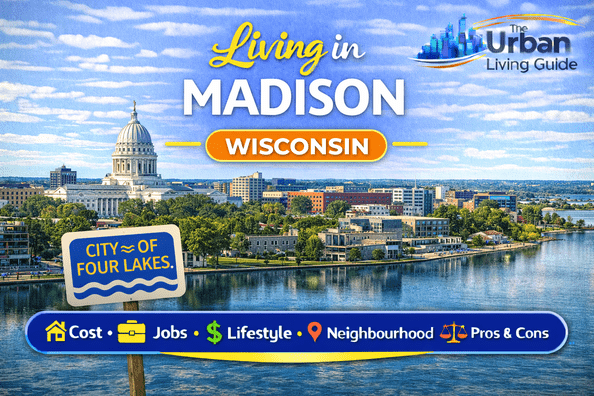
Living in Madison, Wisconsin in 2026: The Complete Local Guide to Four-Lake Culture, UW-Madison Innovation, and State Capitol Living
Stretching across the narrow, scenic isthmus framed by the glittering freshwater expanses of Lake Mendota and Lake Monona in south-central Wisconsin, living in Madison, Wisconsin offers an extraordinary fusion of dynamic Big Ten university energy, progressive urban design, robust technology employment, and unmatched natural beauty. As the state capital and the county seat of Dane County, Madison supports a thriving municipal population of approximately 280,000 residents, anchoring a rapidly growing metropolitan region that exceeds 700,000 people.
Universally celebrated as “The City of Four Lakes,” Madison is renowned for its pristine waterways, award-winning park systems, an extraordinary biking infrastructure, and a community identity driven by sustainable living and civic engagement. Whether you are browsing the bustling producer stalls around the Wisconsin State Capitol during the Saturday farmers market, cycling past the grand neoclassical architecture of the campus, or catching sweeping sunset views from the terrace of the University of Wisconsin–Madison, living here delivers a uniquely green, intellectually stimulating standard of living. Municipal governance, public safety programs, and community initiatives are centrally administered through the official City of Madison Government Portal.
If you’re new to this region, the map below will help you get a clear idea of the city’s location.
What Makes Madison So Popular & Unique
Over recent decades, Madison has captured international attention as a model for progressive urbanism, environmental sustainability, and high-tech economic innovation. Key factors driving its sustained popularity include:
- Iconic Four-Lake Shorelines: Immediate access to natural water wonders like Lake Mendota, Lake Monona, Lake Waubesa, and Lake Kegonsa, providing endless boating, sailing, and shoreline trails. Explore regional tourism initiatives via the Visit Madison Official Tourism Portal.
- World-Class Biking & Transit Infrastructure: An award-winning network of bike paths, greenways, and public transit anchored by the extensive Madison Metro Transit system.
- Legendary Farmers Market & Culinary Scene: A nationally celebrated local food culture encompassing the massive Capitol Square farmers market, artisan coffee roasters, and farm-to-table dining.
- Thriving Biotech & Tech Economy: A dynamic job market fueled by software giants, medical device manufacturing, and groundbreaking university research.
Madison At a Glance: Key Living Metrics
Famous Personalities, Local Icons & Major Brands in Madison
Madison has a proud history of nurturing legendary comedians, visionary architects, Olympic athletes, and global software empires:
- Chris Farley: The legendary, high-energy comedian, actor, and Saturday Night Live icon who spent his early years rooted in Wisconsin culture (Chris Farley Foundation Portal).
- Frank Lloyd Wright: The world-renowned, visionary architect who spent his formative design years in the region, deeply influencing Wisconsin’s architectural legacy (Frank Lloyd Wright Foundation Portal).
- Eric Heiden: The legendary Olympic gold medalist speed skater who swept five gold medals at the 1980 Winter Olympics and studied at UW–Madison.
- Wisconsin Badgers Athletics: The powerhouse NCAA Division I athletic programs that unite the community with legendary game-day traditions at Camp Randall Stadium (Wisconsin Badgers Official Portal).
- Epic Systems & American Family Insurance: Major corporate leaders maintaining massive campus operations and driving economic influence across the metropolitan area (Epic Systems Official Portal).
Job Market & Business Opportunities with Major Employers
The employment landscape in Madison offers diverse professional opportunities, high average salaries, and strong innovation sectors:
- Healthcare Software and Technology: Anchored by Epic Systems, supporting thousands of software engineers, database architects, and technical support careers. Track regional economic indicators via the Bureau of Labor Statistics Midwest Information Office.
- Biotechnology and Life Sciences: A thriving research corridor dedicated to genomics, medical devices, and pharmaceutical development.
- Higher Education and Research: The University of Wisconsin–Madison driving extensive academic, scientific, and administrative employment.
- Government and Public Administration: Serving as the state capital, offering stable careers in public service, policy, and state agency administration.
Housing & Real Estate Overview in Madison
Navigating the real estate market in Madison requires understanding its geographic isthmus constraints, historic preservation, and university demand:
- Diverse Architectural Stock: Features charming craftsman homes in near-west neighborhoods, historic Victorians near downtown, luxury lakefront condominiums, and modern suburban developments throughout Dane County. Track property assessments via the Dane County Property Assessment Portal.
- Market Valuations: Strong geographical isthmus boundaries and high demand from incoming professionals have elevated property values and rental rates over past decades, rewarding long-term homeowners.
- Rental Market Inventory: Average monthly rent spans $1,100 to $1,500 for studio units, $1,400 to $1,900 for one-bedroom apartments, $1,900 to $2,700 for two-bedroom properties, and $3,000 to $4,800+ for single-family home rentals.
- Suburban Alternatives: Surrounding cities like Middleton and Fitchburg offer alternative housing options with strong community amenities and excellent public schools.
Best Neighborhoods in Madison: Finding Your Ideal Community
- Downtown Madison
- Vibrant urban district stretching across the isthmus near the Capitol, packed with trendy restaurants, cafes, and nightlife venues. Features modern high-rise apartments, historic lofts, and premium urban valuations.
- Capitol Square
- Historic cultural center surrounding the Wisconsin State Capitol, celebrated for its legendary Saturday farmers markets and community festivals. Offers upscale condominiums, historic townhomes, and competitive pricing.
- Willy Street (Williamson Street)
- Bohemian, eclectic neighborhood known for independent art galleries, organic co-ops, eclectic dining, and live music spots. Features historic bungalows, artistic multi-family homes, and vibrant community pricing.
- Shorewood Hills
- Upscale, picturesque residential community nestled quietly along the southern shore of Lake Mendota. Features grand estate homes, manicured wooded blocks, and premium real estate valuations.
- Middleton
- Award-winning suburban community offering family-friendly neighborhoods, pristine parks, and a charming local downtown. Features spacious single-family houses, townhomes, and stable residential valuations.
- Near West Side
- Established residential area adjacent to the university campus, popular with medical professionals, faculty, and students. Features classic architecture, walkable blocks, and competitive neighborhood demand.
Watch a recent video by a popular vlogger to understand daily life and vibes in Madison.
What It’s Really Like Living in Madison (Daily Life & Vibe)
Daily life in Madison is defined by an active, eco-conscious, and intellectually driven rhythm that celebrates the outdoors:
- Active Lake and Trail Routines: Residents spend weekends cycling around the 12-mile Lake Monona loop, sailing on Lake Mendota, or hiking through the UW Arboretum. Explore park guidelines via the Madison Parks and Recreation Portal.
- Farmers Market & Food Culture: Saturday mornings begin at the Capitol Square farmers market, followed by afternoon visits to neighborhood cafes and farm-to-table eateries.
- Arts and Festival Engagement: Participating in vibrant local art walks, summer music concert series on the Capitol lawn, and community craft fairs.
- Social Atmosphere: Progressive, eco-friendly, intellectually curious, and fiercely supportive of local independent businesses and community initiatives.
Cost of Living in Madison: Monthly Expenses & Salary Needs
Transportation, Commute Dynamics & Transit Realities
Madison provides exceptional public transportation and cycling infrastructure that makes alternative commuting highly practical:
- Madison Metro Transit System: Comprehensive public bus network connecting campus, downtown, and surrounding suburbs (Madison Metro Transit Portal).
- World-Class Biking Networks: Extensive bike lanes, off-street paths, and the famed Southwest Bike Path designed specifically for bicycle commuters.
- Highway Connectivity: Excellent freeway access via Interstate 94, Interstate 39, and U.S. Highway 12/18, ensuring smooth regional travel.
- Commute Times: Average daily commutes hover around a manageable 21 minutes during standard hours.
- Aviation Convenience: Proximity to award-winning Dane County Regional Airport (MSN) for domestic and regional travel (MSN Airport Official Portal).
Weather Patterns, Seasonal Realities & Climate Factors
The environmental rhythm of Madison follows a classic humid continental climate featuring warm summers and snowy winters:
- Warm, Pleasant Summers: Summer daytime high temperatures routinely average 75°F to 85°F with magnificent lake breezes, providing ideal weather for outdoor dining and lake recreation. Track active forecasts via the National Weather Service Madison Portal.
- Cool, Snowy Winters: Winter seasons bring brisk temperatures and consistent snowfall, keeping cross-country skiers and ice skaters active on the frozen lakes.
Education, Schools & Major Universities
Educational infrastructure stands as a premier anchor for academic excellence, scientific research, and workforce development:
- University of Wisconsin–Madison (UW–Madison): A globally prestigious public research university offering world-class undergraduate and graduate programs (UW–Madison Official Portal).
- Edgewood College: Respected private liberal arts college providing exceptional education programs downtown (Edgewood College Official Portal).
- Madison Area Technical College (Madison College): Comprehensive technical college supporting career training and continuing education.
- Madison Metropolitan School District: Operating numerous neighborhood schools focused on academic achievement and progressive education.
Medical Facilities, Hospitals & Healthcare Systems
Healthcare infrastructure in Madison is advanced, highly specialized, and anchored by premier regional medical networks:
- UW Health University Hospital: Premier academic medical center and level-one trauma facility delivering groundbreaking clinical care and medical research (UW Health Official Portal).
- UnityPoint Health – Meriter & SSM Health St. Mary’s Hospital: Major regional hospital networks operating comprehensive acute care facilities, emergency departments, and specialty clinics.
- Specialized Outpatient Centers: Extensive network of community health clinics and specialized medical practices across every neighborhood ward.
Popular Hotels, Cafes, Dining & Culinary Scene
The hospitality and culinary identity of Madison reflects historic boutique hotel elegance, farm-to-table mastery, and world-class craft beverage culture:
- The Edgewater Hotel: Sophisticated luxury hotel perched directly on the shores of Lake Mendota, featuring striking contemporary design, fine dining, and refined hospitality (The Edgewater Hotel Portal).
- Graduate Madison & AC Hotel Downtown: Stylish design accommodations offering vibrant rooftop bars and timeless Midwestern elegance.
- Farm-to-Table Dining & Breweries: Acclaimed neighborhood restaurants, artisan coffee roasters, and microbreweries serving innovative local flavors.
Sightseeing, Cultural Spots & Tourist Attractions
Landmark cultural institutions and natural wonders significantly enhance the daily quality of life for local residents:
- Wisconsin State Capitol: Historic 1917 granite dome building offering free tours, stunning interior murals, and panoramic observation deck views.
- University of Wisconsin Arboretum: Sprawling 1,260-acre ecological research facility housing restored prairies, woodlands, and scenic walking trails (UW Arboretum Portal).
- Olbrich Botanical Gardens: Stunning 16-acre outdoor garden and tropical conservatory featuring exotic plants and Thai pavilions (Olbrich Botanical Gardens Portal).
Regional Trade-offs: Pros and Cons of Living in Madison
Who Is Madison Ideal For — And Who Should Avoid It?
Who Madison Is Ideal For
- Tech and Biotech Professionals: Workers pursuing careers at Epic Systems, Exact Sciences, and regional research labs.
- Academics and Students: Individuals drawn to UW–Madison’s world-class educational and scientific research environment.
- Lakefront and Cycling Enthusiasts: Residents who prioritize weekend sailing, lake recreation, and extensive bike greenways.
- Families and Quality-Seekers: People looking for safe neighborhoods, excellent public schools, and vibrant community parks.
Who Should Avoid Madison
- Year-Round Warmth Seekers: Individuals who struggle with freezing winter weather, snowstorms, and extended cold seasons.
- Ultra-Low Budget Homebuyers: Buyers seeking bargain real estate markets with minimal living costs.
- Mega-City Nightlife Seekers: Residents looking for massive 24-hour ultra-dense metropolitan club districts.
- Public Transit Purists: People requiring massive subterranean heavy-rail subway systems without driving.
Real Experiences: Perspectives from Long-Term Residents (5 to 10+ Years)
“Moving to the Near West Side eight years ago after taking a software engineering role was the best lifestyle change I could have made. The biking culture here is unmatched, the lakes are literally minutes away from anywhere, and the energy around Capitol Square during the farmers market is magical. Winters are cold, but the community warmth makes up for every snowflake.”
[Source: r/madisonwi Community Discussions — u/IsthmusTechDev, resident of 9 years]
“The big reality check for newcomers is learning to navigate the housing market demand and embracing the winter snow months. However, the trade-off is completely worth it. The healthcare system is world-class, the schools are fantastic for raising kids, and the local food scene punches way above its weight class. It’s a wonderful, intelligent city.”
[Source: Local Resident Panels & Community Forums — Dr. Elizabeth Vance, Shorewood Hills homeowner of 12 years]
Frequently Asked Questions About Living in Madison, Wisconsin
Is Madison expensive to live in compared to other U.S. cities?
Madison maintains a cost of living moderately above the national average, reflecting its strong economic demand and high quality of urban infrastructure.
What level of annual salary do individuals need to live comfortably in Madison?
Most single professionals require an annual salary of $80,000 to $110,000 to comfortably cover rent, utilities, transportation, and discretionary spending in popular neighborhoods.
Can residents successfully live in Madison without owning a personal vehicle?
Yes. Many residents live car-lite by utilizing the Madison Metro Transit bus network and extensive bike paths, especially near downtown and the university campus.
What are the best residential neighborhoods to consider in Madison?
Top neighborhoods include Downtown Madison for urban energy, Capitol Square for cultural walkability, Willy Street for bohemian charm, and Shorewood Hills for upscale lakefront living.
How does commuting work for professionals working across Madison?
Commuters primarily utilize major highways like US-12/18 and Madison Metro bus lines, enjoying average daily commute times of around 21 minutes during standard hours.
What are the primary natural and cultural highlights of Madison?
Residents enjoy exploring the Wisconsin State Capitol, biking around Lake Monona, touring Olbrich Botanical Gardens, and relaxing at the UW Memorial Union Terrace.
🔗 Explore More Cities in Wisconsin
If you’re considering options beyond Madison, The Urban Living Guide has also explored several other well-known cities across Wisconsin. You may also want to check:
- Living in Milwaukee, Wisconsin
- Living in Green Bay, Wisconsin
- Living in Kenosha, Wisconsin
- Living in Racine, Wisconsin
Whether you’re relocating for work, family, or a lifestyle change, these guides are worth reading:
- Cost of Living in Madison, Wisconsin
- Pros and Cons of Living in Madison, Wisconsin
- Best Neighborhoods in Madison, Wisconsin
You can also explore our complete guide: Moving to Madison, Wisconsin
Each of these guides highlights what daily life looks like in different cities, including insights on cost of living, housing trends, job opportunities, local neighborhoods, commute patterns, weather conditions, education options, popular areas, and major employers.
With The Urban Living Guide, all this information is organized in one place so you can easily compare cities and decide which one suits your lifestyle, budget, and future plans.