

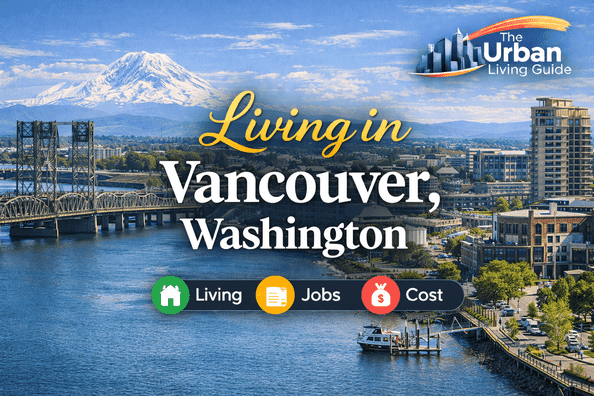
From Columbia River Views to No State Income Tax: What Living in Vancouver, Washington Really Feels Like in 2026
Situated in southwest Washington directly across the interstate from Portland, Oregon along the magnificent Columbia River, Living in Vancouver, Washington provides an exceptional blend of suburban comfort, metropolitan accessibility, and major tax advantages. As one of the oldest cities in the state—originally developed around the historic fur-trading post of Fort Vancouver—the city has blossomed into a fast-growing urban center supporting roughly 200,000 residents within the greater Portland-Vancouver metropolitan economic zone.
Relocating to this Southwest Washington hub appeals heavily to professionals, families, and remote workers looking to escape high living costs while capitalizing on Washington’s unique tax structure, which features no state personal income tax. Propelled by anchor employers like ZoomInfo Technologies and nearby corporate campuses, the local economy supports stable careers while maintaining a relaxed, nature-forward lifestyle. However, thriving here requires adjusting to bridge commuter traffic into Oregon and managing rising real estate values. Whether you want a quiet residential retreat in Felida or a modern loft near the revitalized Vancouver Waterfront, the city delivers a strategic and rewarding Pacific Northwest lifestyle.
What Makes Vancouver So Popular & Unique
Vancouver captures regional and national attention because it offers a tax-friendly sanctuary just north of the Oregon border, allowing residents to work or shop in Portland without paying Oregon state income tax while earning Washington wages. Centered around the pedestrian-friendly Vancouver Waterfront Park and historic downtown corridors, the city functions as a bustling residential and recreational magnet. For newcomers looking to access municipal services, utility maps, or community event schedules, the official City of Vancouver portal serves as an essential digital gateway.
- No State Income Tax Advantage: Living on the Washington side of the Columbia River allows residents to retain a larger portion of their annual earnings.
- The Revitalized Waterfront: A stunning multi-billion-dollar riverfront district featuring urban parks, local tasting rooms, fine dining, and pedestrian piers.
- Proximity to Portland Economy: Immediate access to the vast career, culinary, and cultural opportunities of the greater Portland metropolitan region.
- Rich Historical Heritage: Home to landmarks like the Fort Vancouver National Historic Site and the Pearson Air Museum.
Vancouver at a Glance: Key Relocation Metrics
Reviewing these baseline statistics can help set realistic expectations for your transition to Clark County. These figures reflect current southwest Washington market conditions and regional economic benchmarks.
| Metric | Vancouver City Data | Metropolitan Context |
|---|---|---|
| City Population | ~200,000 Residents | Fourth-largest city in Washington; part of Portland metro |
| Median Home Price | $450,000 – $650,000 | Often offers superior square-footage value compared to Portland suburbs |
| Average 1BR Rent | $1,300 – $1,700 | Competitive rental market across urban and suburban districts |
| Average Commute | 20 – 35 Minutes | Longer across I-5 and I-205 bridges during Portland rush hour |
| Top Industries | Healthcare, Tech, Manufacturing, Logistics | Professional services, retail, and cross-border commerce |
If you’re exploring this city for the first time, use the map below to get a sense of where it sits.
Famous Personalities, Sports Fanbases & Major Brands in Vancouver
Vancouver’s cultural identity is shaped by notable figures in sports and entertainment, alongside thriving regional technology and fitness enterprises.
- Notable Personalities: The city is proud to be associated with Olympic figure skater Tonya Harding, legendary Hollywood western actor Sam Elliott, and former NFL quarterback Derek Anderson.
- Sports Loyalties: While Vancouver features passionate local high school and recreational sports, professional sports fandom aligns entirely with nearby Portland franchises, including deep support for the Portland Trail Blazers (NBA) and the Portland Timbers (MLS).
- Corporate Footprint: The local economy is driven by innovative regional enterprises such as ZoomInfo Technologies, Nautilus Inc., PeaceHealth Medical Group, and nearby corporate campuses for HP Inc. and Fisher Investments.
Job Market & Business Opportunities with Major Employers
Vancouver’s job market is exceptionally robust, benefiting from both local tech and healthcare employers and the massive employment engine of the Portland metropolitan area just across the Columbia River. Key local sectors include advanced healthcare administration, corporate technology offices, manufacturing logistics, and public education.
Key employers providing thousands of stable careers include ZoomInfo Technologies, Nautilus Inc., PeaceHealth Medical Group, and Washington State University Vancouver. Official economic reference data from the Washington State Employment Security Department highlights that average local salaries range comfortably between $60,000 and $110,000 annually, providing strong middle-class financial stability.
- Entry-level salaries: Typically range between $45,000 – $60,000 across administrative, retail, and hospitality sectors.
- Mid-career professionals: Generally span $65,000 – $95,000 for experienced nurses, engineers, and corporate analysts.
- Senior technology or healthcare roles: Frequently scale to $110,000+, supporting comfortable homeownership across Clark County.
Housing & Real Estate Overview in Vancouver
Housing affordability has historically driven homebuyers to Vancouver from high-cost cities like Seattle and Portland. In 2026, median home prices range between $450,000 and $650,000, allowing buyers to acquire spacious suburban homes, modern townhouses, or waterfront properties while benefiting from Washington’s tax structure.
The rental market remains active and diverse, offering everything from urban waterfront apartments to family-oriented rental houses. Current average monthly rent projections are:
- Studio Apartment: $1,100 – $1,400
- 1 Bedroom Apartment: $1,300 – $1,700
- 2 Bedroom Apartment: $1,800 – $2,300
- Family Home Rentals: $2,500 – $3,500+
Securing property here provides outstanding long-term equity potential, making swift action essential in desirable school districts.
Best Neighborhoods in Vancouver: Finding Your Ideal Community
Choosing the right neighborhood in Vancouver defines your daily commute, school access, and architectural surroundings. Each district offers an entirely unique character. Neighborhood insights are based on local housing trends, safety reports, and resident surveys. The table below outlines the most prominent residential zones.
| Neighborhood / Category | Location, Pricing & Community Overview |
|---|---|
| Felida (Desirable & Scenic) | One of Vancouver’s most prestigious and sought-after areas. Offers quiet residential streets, excellent parks, and breathtaking scenic views of the Columbia River. |
| Fishers Landing (Suburban Family Hub) | A popular suburban neighborhood known for top-tier local schools, modern housing developments, and convenient shopping centers near major highway corridors. |
| Downtown Vancouver (Urban Core) | Has experienced massive revitalization. Features urban loft apartments, award-winning restaurants, local breweries, and direct access to Vancouver Waterfront Park. |
| Cascade Park (Affordable & Convenient) | A family-friendly community known for its broad housing affordability, established parks, and fast, convenient access to Interstate 205. |
| Salmon Creek (North Suburban) | Located in north Vancouver, popular for its peaceful suburban environment, medical office parks, and immediate proximity to Washington State University Vancouver. |
What It’s Really Like Living in Vancouver, Washington (Daily Life & Vibe)
Daily life in Vancouver combines a relaxed Pacific Northwest community atmosphere with easy access to big-city amenities. Residents enjoy a comfortable routine filled with weekend strolls along the Columbia River Waterfront Park, shopping at local farmers markets, and exploring nearby forest trails. Because Vancouver is smaller than Seattle or Portland, neighborhood interactions feel personal and community-focused.
Weekends are practically designed for outdoor exploration, whether that means hiking in the nearby Cascade foothills, wine tasting in the Columbia Gorge, or taking a quick drive across the bridge into downtown Portland for dining and entertainment. While bridge traffic during rush hour requires patience, the city’s tax benefits, scenic beauty, and family-friendly pacing create an exceptionally rewarding place to call home.
Step into the rhythm of southwest Washington and explore everyday sights through the lens of local creators:
Cost of Living in Vancouver: Monthly Expenses & Salary Needs
Vancouver offers a moderate cost of living that remains more approachable than nearby Portland or Seattle, bolstered heavily by tax savings. Cost estimates are derived from official statistics and city-level cost databases. To maintain a secure, comfortable standard of living and achieve homeownership, an individual professional should target a salary of $65,000+, while households generally require $100,000+.
- Average Rent: $1,300 to $2,300 depending on apartment size and neighborhood.
- Monthly Utilities: $150 – $220 (Covering electricity, water, and heating).
- Groceries & Household Goods: $350 – $600 per month based on household needs.
- Transportation: $120 – $250 for public transit passes or vehicle operation.
- Healthcare Costs: Aligned with regional benchmarks, supported by major health networks.
Transportation, Commute Dynamics & Transit Realities
Getting around Vancouver and connecting to the wider Pacific Northwest region is supported by a robust multi-modal transportation network:
- C-TRAN Public Bus Network: Providing extensive local bus routes across Vancouver alongside express commuter service directly into downtown Portland.
- Interstate Highways: Immediate access to Interstate 5 and Interstate 205, providing direct driving routes north toward Seattle or south into Oregon.
- Airport Proximity: Portland International Airport (PDX) is located just a short drive south across the Columbia River, offering exceptional global flight connectivity.
- Commute Times: Average daily commute times range between 20 and 35 minutes locally, though bridge crossings during peak hours can add significant delays.
- Vehicle Preference: While public transit serves urban corridors well, many residents prefer personal vehicles to navigate suburban errands and regional mountain recreation.
Weather Patterns, Seasonal Realities & Climate Factors
Vancouver experiences a mild Pacific Northwest marine climate characterized by distinct seasonal conditions:
- Spring: Mild temperatures and blossoming flora, offering wonderful conditions for exploring regional parks and riverfront trails.
- Summer: Pleasant, warm, and dry, with daytime temperatures hovering comfortably between 70°F and 80°F.
- Autumn: Crisp coastal air accompanied by frequent overcast skies and transition rain showers.
- Winter: Cool with frequent rain and overcast days, though heavy snow remains rare in the immediate river valley basin.
- Climate Reference: Official meteorological tracking and climate data are provided by the National Weather Service Western Washington region.
Education, Schools & Major Universities
Higher education serves as an important intellectual anchor for the local community. Vancouver hosts respected higher education institutions such as Washington State University Vancouver, Clark College, and easy cross-border access to the University of Portland. For families navigating K-12 schooling, the city offers public options across several well-regarded local school districts.
Medical Facilities, Hospitals & Healthcare Systems
Access to advanced medical care is one of Vancouver’s greatest community strengths. The city is home to massive regional health networks, anchored by PeaceHealth Southwest Medical Center, Legacy Salmon Creek Medical Center, and local Vancouver Clinic facilities. These premier hospital systems provide comprehensive emergency care, specialized surgical units, and wellness clinics locally.
Popular Hotels, Cafes, Dining & Culinary Scene
Vancouver’s hospitality and culinary scene has blossomed significantly, blending historic downtown spaces with modern riverfront dining.
- Popular Hotels: Visitors and executive travelers frequently book stays at standout local properties like the Hilton Vancouver Washington, AC Hotel Vancouver Waterfront, or the cozy Heathman Lodge.
- Cafes & Social Hubs: Artisan coffee roasters and historic bakeries thrive throughout Downtown Vancouver and the Waterfront Park district, acting as popular morning gathering spots.
- Restaurants: From fresh Pacific seafood and farm-to-table bistros along the Columbia River to independent gastropubs and craft breweries, Vancouver’s food scene is diverse and thriving.
Sightseeing, Cultural Spots & Tourist Attractions
Residents live surrounded by world-class museums, historic maritime sites, and stunning coastal parks.
- Fort Vancouver National Historic Site: Explore the historic 19th-century fur trading post and reconstructed stockade grounds.
- Vancouver Waterfront Park: A gorgeous public space featuring the iconic Grant Street Pier jutting out over the Columbia River.
- Esther Short Park: The oldest public square in Washington State, hosting summer concerts, farmers markets, and community festivals.
- Pearson Air Museum: Celebrating early aviation history and historic aircraft displays adjacent to the fort.
Regional Trade-offs: Pros and Cons of Living in Vancouver
Every major city requires compromise. Here is the unvarnished reality for anyone planning a move to southwest Washington in 2026:
Pros:
- No state personal income tax in Washington, providing huge annual savings for workers.
- Direct access to the vast career and cultural job market of Portland, Oregon.
- Scenic riverfront parks, trails, and stunning views of Mount Hood and Mount St. Helens.
- A growing economy, modern infrastructure, and expanding commercial developments.
- Family-friendly residential communities and safe neighborhoods.
Cons:
- Frustrating bridge traffic bottlenecks on I-5 and I-205 during peak Portland commutes.
- Cool, rainy winter weather with frequent overcast skies.
- Rising real estate prices and housing costs driven by steady population growth.
- A more modest late-night nightlife and entertainment infrastructure than Portland.
- Some outer suburban areas are still developing commercial density.
Who Is Vancouver Ideal For (and Who Should Avoid It?)
Ideal For: Commuters working in Portland who want to save on income taxes, families seeking safe suburban neighborhoods, outdoor recreation enthusiasts, and retirees looking for Pacific Northwest comfort.
Who Should Avoid It: Individuals who require a zero-commute urban core lifestyle directly inside Portland, buyers expecting cheap rural home prices, and those who despise rainy winter climates.
Real Experiences: Perspectives from Long-Term Residents (5 to 10+ Years)
Data gives you the metrics, but daily life gives you the truth. Here is what veteran locals have to say about navigating Vancouver:
“Working in Portland but living in Vancouver and paying zero state income tax is an absolute financial game-changer. The bridge traffic during evening rush hour is brutal if you time it wrong, but the new waterfront development, the parks, and not dealing with Oregon income tax make it completely worth it.”
[Source: r/vancouverwa Community Discussions]
“We moved up from California looking for a family-friendly spot with good schools and natural beauty, and Felida has been amazing. You get all the perks of the Portland food and airport scene twenty minutes away, but your kids grow up in a quiet, safe Washington neighborhood.”
[Source: Local Neighborhood Survey Threads]
Frequently Asked Questions About Living in Vancouver, Washington
Is Vancouver, Washington expensive to live in?
Vancouver is moderately expensive due to its Pacific Northwest location, but it remains generally more affordable than nearby Seattle and many Portland neighborhoods.
What salary do you need to live comfortably in Vancouver?
Many residents find that an annual salary between $65,000 and $100,000 provides a comfortable lifestyle, depending heavily on housing choices and family size.
How does Washington’s income tax policy affect Vancouver residents?
Washington has no state personal income tax. Many residents work in Oregon and pay Oregon income tax on those earnings, but living in Washington provides significant tax savings on total household income.
How do commuters travel from Vancouver to Portland?
Commuters frequently drive south across the Columbia River via Interstate 5 or Interstate 205, or utilize C-TRAN express buses connecting directly into downtown Portland.
What are the best neighborhoods for families in Vancouver?
Felida, Fishers Landing, and Cascade Park are widely praised for their excellent local schools, family parks, and community safety.
What is Vancouver best known for geographically?
Vancouver is celebrated for its stunning Columbia River waterfront, historic Fort Vancouver roots, and acting as the gateway to Southwest Washington nature.
🔗 Explore More Cities in Washington
If you’re exploring more options beyond Vancouver, The Urban Living Guide has covered several other popular cities in Washington. You can also check:
Want to learn more about Vancouver? Check out these helpful guides:
Ready to make your decision? Explore our complete guide here: Moving to Vancouver, Washington
These guides give you a complete picture of what it’s like living across different cities, covering everything from cost of living, housing, and job opportunities to neighborhoods, commute, weather, education, popular places, and major employers.
The Urban Living Guide brings together these local insights in one place, helping you compare cities easily and make a confident, well-informed decision based on your lifestyle and goals.