
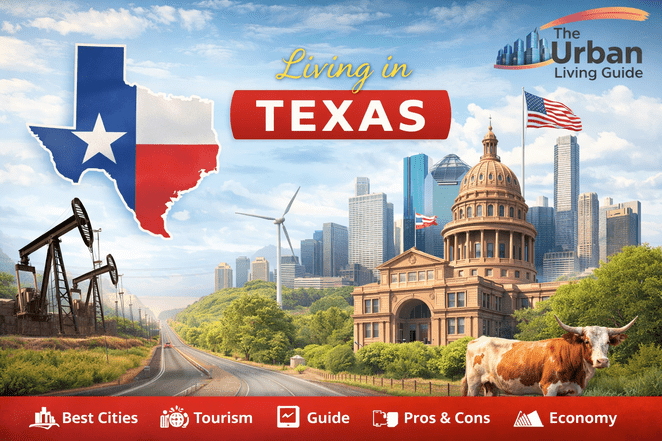
Living in Texas – Overview
Texas, located in the southern region of the United States, is the second-largest state by area and population, known for its massive economy, cultural diversity, and independent spirit. Often associated with oil, ranches, and big cities, Texas today is a powerful mix of energy, technology, agriculture, and manufacturing industries.
If you’re considering moving here, Texas offers a strong combination of job opportunities, affordable living (in many areas), and diverse lifestyle options. Cities like Austin and Dallas are booming with tech jobs, while Houston leads in energy and healthcare.
Compared to states like California, Texas stands out for its lower cost of living and business-friendly environment, attracting both professionals and entrepreneurs. The state contributes nearly 8–9% to the total US GDP, making it one of the most economically influential states in the country.
From fast-paced urban hubs to quiet rural towns, living in Texas can feel very different depending on where you choose to settle.
What Makes Texas Unique
Texas is a landlocked state with a surprisingly diverse landscape. It features deserts in the west, forests in the east, plains in the north, and a long Gulf Coastline in the southeast. Major rivers like the Rio Grande and Colorado River play a vital role in agriculture and water supply.
Culturally, Texas blends Southern traditions, Mexican influences, and modern American urban life. This mix is reflected in its food (Tex-Mex, BBQ), festivals, and daily lifestyle.
Unlike many northern states, Texas has a strong sense of identity and independence, often reflected in its governance and policies. Many people choose this state because it offers a balance of economic opportunity and personal freedom.
🗺️ View the map of Texas to understand its regions and layout
Location, Geography & Climate
Texas spans multiple climate zones. West Texas is dry and desert-like, while East Texas is humid and green. Coastal areas experience mild winters but can be prone to hurricanes.
Summers are typically hot across the state, with temperatures often crossing 35°C. Winters are mild compared to northern states, though occasional cold snaps do occur.
This geographic diversity allows residents to choose between coastal living, urban environments, or quiet countryside life within the same state.
Top Cities in Texas
Texas has several major cities, each with a distinct identity and economic role:
- Houston – The energy capital of the world, also strong in healthcare and aerospace. Diverse and affordable compared to other major US cities.
- Austin – A fast-growing tech hub known for startups, music culture, and a young professional population.
- Dallas – A major business and corporate center with strong finance, real estate, and tech sectors.
- San Antonio – Rich in history and culture, offering a slower pace of life with lower living costs.
- Fort Worth – Known for its Western heritage and growing economy, often considered more relaxed than Dallas.
Each city offers a very different lifestyle, making Texas suitable for a wide range of people.
🎥 Watch this video by a popular vlogger to explore the best cities to live in Texas –
Tourism, Attractions & Things to Do in Texas
Texas offers a mix of natural beauty and urban attractions:
- Big Bend National Park – Desert landscapes and stargazing
- San Antonio River Walk – A vibrant cultural and dining area
- Galveston Beaches – Coastal relaxation and tourism
- Austin Live Music Scene – Known as the “Live Music Capital of the World”
- Dallas Arts District – One of the largest urban arts districts in the US
From road trips to cultural festivals, there’s always something to explore in Texas.
Cost of Living in Texas
The cost of living in Texas is generally lower than the national average, especially when compared to coastal states.
Housing remains one of the biggest advantages. Cities like Houston and San Antonio offer relatively affordable homes, while Austin has seen rising prices due to tech growth.
Compared to New York, Texas provides significantly more affordable housing and lower daily expenses. However, property taxes can be higher, which balances some of the savings.
Overall, Texas is considered a cost-effective state for families and professionals.
Job Market & Economy
Texas has a highly diversified economy. Major industries include:
- Energy (oil, gas, renewable)
- Technology (especially in Austin)
- Healthcare (Houston)
- Manufacturing and logistics
The state consistently ranks among the top for job creation. Salaries vary by industry, but the absence of state income tax increases take-home pay.
Major Industries & Economic Strength
Texas is a leader in:
- Oil and gas production
- Wind energy
- Technology startups
- Agriculture (cotton, cattle, grains)
Compared to many Midwest states, Texas has a more dynamic and fast-growing economy.
Rural Living in Texas
Rural Texas offers a completely different lifestyle compared to its cities. Areas like Hill Country, East Texas towns, and West Texas regions provide open spaces and peaceful living.
Agriculture plays a major role, with cattle ranching, cotton farming, and dairy production being common.
Living costs are significantly lower in rural areas, making them attractive for remote workers or retirees.
Pros:
- Affordable housing
- Quiet and spacious environment
Cons:
- Limited job opportunities
- Fewer healthcare facilities
Top Counties in Texas
- Harris County – Home to Houston; strong in energy and healthcare
- Travis County – Includes Austin; tech-driven economy
- Dallas County – Business and financial hub
- Collin County – Rapid suburban growth and high-income communities
- Bexar County – Cultural center around San Antonio
Infrastructure & Connectivity
Texas has a strong transportation network:
- Major international airports (Dallas, Houston, Austin)
- Extensive highway system
- Growing rail and logistics infrastructure
Government, Safety & Policies
Texas is known for its business-friendly policies and lower taxes. Safety levels vary by city, with suburban areas generally considered safer.
Lifestyle & Culture
Daily life in Texas includes a mix of urban convenience and traditional values. Food, music, and festivals play a big role in social life.
Education & Healthcare
Texas has major universities like UT Austin and strong healthcare systems, especially in Houston.
Pros and Cons of Living in Texas
Pros:
- No state income tax
- Strong job market
- Affordable housing (in many areas)
- Diverse lifestyle options
- Business-friendly environment
Cons:
- Hot summers
- Property taxes can be high
- Urban sprawl and traffic
- Weather risks (hurricanes, storms)
- Healthcare access varies in rural areas
Who Should Move to Texas
- Professionals looking for job growth
- Families seeking affordable living
- Entrepreneurs and business owners
- Retirees wanting lower costs
Major Companies & Investments
Texas hosts major companies like ExxonMobil, Dell, Oracle, and Tesla, making it a strong business hub.
Transport & Connectivity (Expanded)
With multiple international airports and interstate highways, Texas offers excellent connectivity within the US.
Final Thoughts
Living in Texas offers a unique mix of affordability, opportunity, and lifestyle flexibility. Whether you prefer a fast-paced city like Austin or a quiet rural town, Texas provides options for almost everyone. If you’re planning a move, choosing the right city within Texas can make a significant difference in your overall experience.
FAQs
Is Texas a good state to live in?
Yes, especially for job opportunities and affordable living compared to many US states.
What is the cost of living in Texas?
It is generally lower than the national average, especially for housing.
Which city is best to live in Texas?
Austin, Dallas, and Houston are popular choices depending on lifestyle and job needs.
Does Texas have state income tax?
No, Texas does not have a state income tax.
Is Texas safe to live in?
Safety varies by area, but many suburban regions are considered safe.
What jobs are in demand in Texas?
Tech, healthcare, energy, and logistics sectors offer strong opportunities.
How is the weather in Texas?
Mostly hot summers with mild winters, varying by region.