

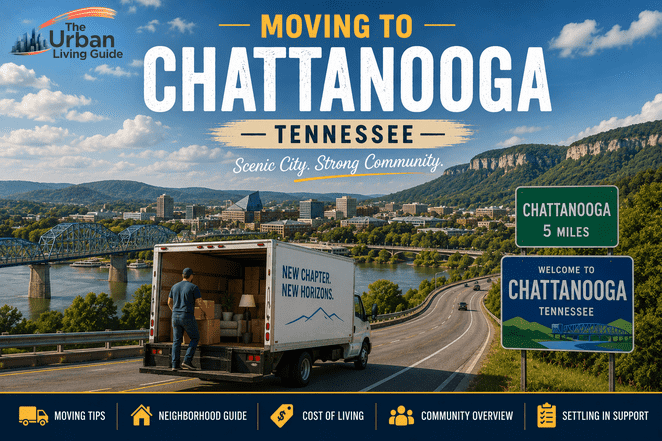
Moving to Chattanooga, Tennessee – Where Tech, Trails, and the Tennessee River Converge
Chattanooga earned the nickname ‘Gig City‘ before most American metros knew what gigabit internet was. In 2015, it became the first U.S. city to offer municipal 10-gigabit fiber to residents and businesses – a decision that quietly positioned Chattanooga as one of the most forward-thinking mid-sized cities in the country. That same deliberate energy has driven a downtown revival, a nationally recognized outdoor recreation economy, and what the 2026 cost of living data reflects as one of the best affordability-to-quality ratios in Tennessee. The cost of living index sits around 89 — about 11% below the national average. The median home price runs approximately $350,000. Two-bedroom rents average around $1,666/month. And the Tennessee River runs directly through the city, putting the natural world within walking distance of downtown in a way that most American cities can only approximate.
Chattanooga has been on relocation shortlists for several years now, and in 2026 the reality has largely caught up with the reputation. The downtown is genuinely revitalized – not aspirationally described as revitalized. The outdoor recreation access is real, not just proximity to a national park. And the tech and logistics job market, while smaller than Nashville’s, has real depth for people in the right fields.
Moving to Chattanooga, Tennessee – Move Planning by Origin
Chattanooga sits at the geographic crossroads of Tennessee, Georgia, and Alabama — and that position translates into unusually easy regional access. I-24 connects to Nashville in about two hours; I-75 runs straight to Atlanta in under two hours in light traffic. That connectivity makes Chattanooga a practical base for professionals who need regional flexibility without paying Nashville or Atlanta prices.
-
- Same-State Move (from Nashville, Knoxville, or Memphis): Tennessee-internal moves into Chattanooga are simple. A local crew handles most volumes in a single day. Budget $400–$1,000. The drive from Nashville via I-24 is straightforward at about two hours.
- Interstate Move (from Georgia, Alabama, North Carolina): Chattanooga’s regional positioning makes it particularly accessible from the Southeast corridor. Budget $800–$2,500. Most Chattanooga residential areas are truck-friendly with good street access.
- Long-Distance Move (from the Northeast, Midwest, West Coast): Full-service movers run $3,500–$9,000. Many cross-country relocators to Chattanooga cite the Atlanta proximity as a key comfort factor — major airport access, major city amenities, two hours away when you need them.
Many people relocating from larger coastal cities are surprised by how quickly Chattanooga’s geography becomes a daily pleasure rather than just a selling point. The Tennessee River, Lookout Mountain, Signal Mountain, and the surrounding ridges are not weekend destinations — they’re the backdrop to ordinary Tuesdays in a way that changes how you experience the city over time.
Explore the real Chattanooga atmosphere through this video by a well-known local vlogger — the Tennessee Riverwalk footage and the North Shore neighborhood shots capture why people who visit once often start looking for apartments.
Who Finds Chattanooga Hard to Leave
Chattanooga tends to attract people looking for something increasingly rare: a city with outdoor recreation, modern infrastructure, and a manageable cost of living all in the same place.
Chattanooga may be a strong fit if you are:
-
- An outdoor enthusiast who wants quick access to Lookout Mountain, Raccoon Mountain, hiking trails, climbing areas, and the Tennessee River
- A remote worker or tech professional looking to take advantage of EPB’s gigabit fiber network
- An entrepreneur, freelancer, or startup founder interested in Chattanooga’s growing innovation ecosystem and organizations such as The Company Lab
- A family seeking affordable housing, outdoor recreation, and a growing selection of public, private, and charter school options
- A retiree looking for mountain scenery, walkable riverfront districts, and a lower cost of living than cities such as Asheville
- Someone who values lifestyle, recreation, and community as much as career growth
When Chattanooga May Not Be the Right Fit
Chattanooga offers a unique lifestyle, but it does come with trade-offs.
You may find Chattanooga challenging if you:
-
- Need the job-market depth of larger cities such as Nashville, Atlanta, or Charlotte
- Work in industries that rely heavily on large corporate, finance, entertainment, or legal networks
- Prefer living without a car, as most of the metro remains vehicle-dependent
- Want the cultural scale and nightlife options of a major metropolitan area
- Require a broad range of highly specialized career opportunities
- Dislike hot, humid summers common across the Tennessee Valley
👉 Chattanooga works best for people who prioritize quality of life, outdoor access, and flexibility over big-city scale, which is why many newcomers end up staying far longer than they originally planned.
Moving Logistics and Transportation
Chattanooga is straightforward to move into logistically. I-24 and I-75 provide direct highway access from most directions, residential streets in the suburbs and North Shore are wide and truck-accessible, and the city doesn’t carry the permit requirements or parking complexity of denser urban markets. The main variable is downtown — narrower historic streets in the Southside and near the North Shore bridge may require smaller trucks or more careful routing.
-
- Local Chattanooga moves: $300–$800 for a one to two bedroom with a professional crew
- Regional interstate moves from TN, GA, AL, NC: $800–$2,500
- Cross-country moves: $3,500–$9,000 with full-service movers
- Truck rental: readily available without seasonal scarcity; 16-foot trucks run approximately $100–$180/day
- CARTA (Chattanooga Area Regional Transportation Authority): bus service plus the free downtown electric shuttle — useful for downtown living, limited for suburban needs
- Chattanooga Metropolitan Airport (CHA): small regional airport; most Chattanooga residents use Atlanta Hartsfield-Jackson (1.5–2 hours) for major travel needs
- I-24 to Nashville: approximately 2 hours in normal traffic — useful for regional connectivity
- I-75 to Atlanta: approximately 1.5–2 hours — practical for flights, major city access, and professional networking
Chattanooga’s position between Nashville and Atlanta is one of its genuine practical advantages — it’s often described by residents as getting two major metro areas for occasional use without paying either city’s cost of living.
Housing Strategy in Chattanooga
Chattanooga’s housing market has been appreciating as more people discover the city, but it remains significantly more accessible than Nashville or Knoxville’s tightest segments. The median home price around $350,000 gives buyers real options, and the rental market at $1,414 average for one-bedrooms is among the more affordable in the state for a city with this level of urban infrastructure and outdoor access.
-
- North Shore: The city’s most popular neighborhood for young professionals and newcomers. Walkable, restaurant-dense, close to the Riverwalk and Coolidge Park. Rents run $1,400–$2,000 for one-bedrooms. Very competitive — inventory moves fast.
- Southside: Redeveloped arts and brewery district south of downtown. Younger demographic, industrial-conversion lofts, and a growing independent food and coffee scene.
- Lookout Mountain / Signal Mountain: Suburban ridge communities with spectacular views, quieter character, and family-friendly feel. Higher commute times to downtown but unmatched scenery.
- East Brainerd / Ooltewah: Eastern suburbs with new construction, good school districts, and more moderate pricing. The fastest-growing residential corridor in the metro.
- Elmo: Historic neighborhood at the base of Lookout Mountain. Charming older homes, increasingly popular with buyers wanting character and proximity to the mountain.
- Short-term housing: North Shore Airbnbs are popular and fairly available. Corporate housing in the eastern suburbs covers multi-week relocation stays.
Setup and Storage in Chattanooga
Getting settled in Chattanooga is generally simple, and the city’s utility infrastructure is one of its underrated advantages.
Before moving, keep these essentials in mind:
-
- Housing varies significantly by location, with more compact options in Downtown Chattanooga and North Shore, while suburban communities often offer larger homes and yards
- If you need temporary storage, Public Storage and CubeSmart operate multiple locations throughout the Chattanooga area
- EPB (Electric Power Board) provides both electricity and the city’s nationally recognized fiber internet service
- Chattanooga Gas serves many homes that use natural gas
- Combined utility costs typically range between $150–$250 per month, depending on household size and seasonal usage
- EPB’s high-speed fiber network is widely considered one of the best residential internet services in the country and is a major advantage for remote workers
👉 Many newcomers are surprised to learn that Chattanooga’s technology infrastructure often rivals much larger cities, making it especially attractive for remote professionals and digital workers.
The First Few Weeks in Chattanooga — What to Actually Expect
Chattanooga has a pace and a visual identity that tend to make a strong first impression — the Tennessee Riverwalk, the view from the Walnut Street Bridge at dusk, the Northshore’s weekend farmer’s market energy. What takes longer to discover is the city’s depth: the climbing community around Rocktown, the cycling culture on Signal Mountain, the startup ecosystem at The Company Lab, the genuinely excellent restaurant scene developing in the Southside. Most people describe a six-to-eight-week period before Chattanooga starts feeling like a full city rather than a beautiful place they’re visiting.
-
- Riverwalk as daily infrastructure: The 16-mile Tennessee Riverwalk is not a special occasion destination — it’s where people walk dogs, run in the morning, and decompress after work. Living within walking distance of it meaningfully changes daily life.
- Atlanta proximity: Many Chattanooga residents make Atlanta a monthly or bi-monthly trip for concerts, major sporting events, airport connectivity, and big-city experiences. Budget for this as a normal line item.
- Heat in the valley: Chattanooga’s valley position can trap summer heat. July and August in the bowl between the ridges is genuinely intense. AC reliability is essential.
- The outdoor community: Chattanooga has a disproportionately active outdoor community for its size. If you’re into climbing, mountain biking, paddling, or hiking, you’ll find your people quickly.
Before You Call Chattanooga Home
A few practical details can make your transition to Chattanooga much smoother:
-
- Tennessee has no state income tax, which can increase take-home pay from your first paycheck
- Combined local and state sales tax is approximately 9.25%
- New residents must transfer their driver’s license after establishing Tennessee residency
- EPB provides both electricity and Chattanooga’s nationally recognized fiber internet service
- Many residents use Atlanta Hartsfield-Jackson International Airport for international travel and major domestic routes
- Complete your Tennessee driver’s license process before registering your vehicle, as state requirements typically make this the easier path
Why Residents Fall in Love with Chattanooga
Chattanooga’s appeal goes well beyond mountain views and outdoor recreation. Many newcomers arrive expecting a smaller Southern city and leave surprised by the quality of life, cultural offerings, and strong sense of place.
Locals often point to:
-
- The Hunter Museum of American Art, overlooking the Tennessee River
- The revitalized North Shore and Southside districts
- A growing dining scene that has gained regional and national attention
- Community events, festivals, and live music throughout the year
- Outdoor access that includes hiking, climbing, cycling, paddling, and riverfront recreation
- A culture that balances innovation, outdoor living, and community identity
👉 Chattanooga’s greatest strength may be its ability to feel both adventurous and livable at the same time—a combination that continues to attract newcomers from across the country.
Quick Moving Checklist
Chattanooga moves are logistically manageable and the city is not subject to the same level of moving-season chaos as larger metros. The main preparation priority is neighborhood selection and the EPB utility/internet setup.
30 Days Before:
-
- Choose your target neighborhood: North Shore, Southside, eastern suburbs, or ridge communities — each offers a distinct lifestyle
- Book moving company or truck rental (2–4 weeks advance is sufficient)
- Contact EPB for electricity and fiber internet setup — one call, one provider
- Contact Chattanooga Gas for gas service if your new home uses gas heating
- Begin housing search with in-person tours — North Shore inventory moves fast
- Confirm Atlanta airport access plan for future travel needs
1 Week Before:
-
- Confirm all moving logistics in writing
- Schedule EPB fiber internet installation — worth doing before arrival if possible
- Prepare move-in funds: first month + security deposit; broker fees uncommon
- Pack with Tennessee summers in mind — functional AC is a day-one requirement
- Download CARTA transit app for downtown navigation, Waze for I-24 and I-75 commute awareness
Moving Day:
-
- Photograph old residence before departure
- Confirm EPB electricity is active at new address
- Get landlord or building contact information and building-specific access details
- Walk the Tennessee Riverwalk within your first 48 hours — the best orientation to the city’s character
- Drive Signal Mountain or Lookout Mountain in your first week for a proper geographic overview
Final Thoughts: Is Chattanooga Worth It in 2026?
Chattanooga has quietly become one of the most attractive relocation destinations in the Southeast, offering a combination of outdoor access, technology infrastructure, and affordability that few cities can match.
Chattanooga may be worth considering if you want:
-
- Easy access to hiking, climbing, cycling, and riverfront recreation
- One of the country’s best municipal fiber internet networks through EPB
- A revitalized downtown with walkable districts such as North Shore and Southside
- Lower housing costs than many fast-growing Southern metros
- A city that balances outdoor lifestyle, community, and career opportunities
You may want to think carefully if you:
-
- Need the job-market depth of larger cities such as Nashville or Atlanta
- Work in highly specialized industries with limited local opportunities
- Prefer the amenities and scale of a major metropolitan area
- Expect extensive public transportation options
👉 Chattanooga’s biggest advantage is its combination of lifestyle and livability. Few cities offer mountain access, fast internet, a revitalized urban core, and relative affordability in a single package, making Chattanooga one of the Southeast’s most underrated relocation choices in 2026.
FAQs — Moving to Chattanooga, Tennessee
What makes Chattanooga the ‘Gig City’?
Chattanooga became the first U.S. city to offer municipal gigabit internet through its public utility EPB, beginning in 2010. As of 2026, EPB offers speeds up to 25 gigabits and the service is available to all city residents and businesses.
What is the average rent in Chattanooga in 2026?
One-bedroom apartments average approximately $1,414/month. North Shore and downtown run higher ($1,500–$2,000). Eastern suburban areas like Ooltewah offer lower entry points ($1,100–$1,400).
How far is Chattanooga from Atlanta?
Approximately 1.5–2 hours on I-75 in normal traffic. Many Chattanooga residents use Atlanta Hartsfield-Jackson as their primary airport and make monthly Atlanta trips for major events, concerts, and professional networking.
Is the job market in Chattanooga strong?
Growing, with strength in tech, logistics (Amazon, Volkswagen), outdoor economy, and public sector. Thinner than Nashville in finance, healthcare mega-employers, and entertainment. Remote workers benefit from the infrastructure without depending on local job market.
What outdoor recreation is accessible from Chattanooga?
Lookout Mountain, Signal Mountain, Tennessee River paddling, Raccoon Mountain trails, Rock City, Ruby Falls, and sandstone sport climbing at Rocktown (one of the top bouldering destinations in the Southeast) are all within 30–60 minutes.
Helpful Local Resources Before Moving
The resources that actually matter when settling into Chattanooga:
- City of Chattanooga: New resident services, permit information, and city department contacts.
- EPB (Electric Power Board of Chattanooga): Your electricity AND gigabit fiber internet provider. One call for both services — one of Chattanooga’s most genuinely useful logistical advantages.
- CARTA (Chattanooga Transit): Bus routes, schedules, and the free downtown electric shuttle — useful for car-light downtown living.
- Outdoor Chattanooga: The city’s official outdoor recreation resource — trail maps, gear rental locations, event calendars, and the best starting point for exploring the city’s natural surroundings.
Explore More With The Urban Living Guide
These companion guides cover Chattanooga from every angle that matters for a serious relocation decision:
- Living in Chattanooga, Tennessee
- Cost of Living in Chattanooga, Tennessee
- Pros and Cons of Living in Chattanooga, Tennessee
- Best Neighborhoods in Chattanooga, Tennessee